
Kashimashi: Girl Meets Girl Review — An Alien Accident Turns a Shy Boy Into a Girl, and Two People Who Love Him Have to Recalibrate
by Satoru Akahori (story) / Yukimaru Katsura (art)
Read the first volume. If it doesn't hook you, put it down. It'll hook you.
Buy Kashimashi: Girl Meets Girl on Amazon →*Affiliate link — I earn a small commission at no extra cost to you.
I read Kashimashi the year I was figuring out how to come out to my friends about something I had been keeping quiet. The manga did not give me a script for the conversation. It did give me a story about people figuring out how to keep loving someone they had thought they understood. That was, in the end, more useful.
Quick Take
- Satoru Akahori's 2004–2007 yuri manga with sci-fi premise: alien spacecraft accident turns a teenage boy into a girl
- 5 volumes, complete in English. Anime, manga, and novel have three different endings
- Age rating: T (Teen) — gender transformation, yuri romance, identity themes; nothing explicit
What Is Kashimashi About?
Hazumu Osaragi (大佛 はずむ) is a sixteen-year-old high school boy. He is gentle, shy, more interested in plants than in sports, conventionally feminine in his interests and demeanor. He has been quietly in love with his beautiful classmate Yasuna Kamiizumi (神泉 やす菜) for a long time.
The manga opens with Hazumu confessing his feelings to Yasuna. Yasuna rejects him — kindly but clearly. Hazumu runs to the local mountain (Mt. Kashimayama) to cry.
While he is sitting on the mountain, a UFO crashes into him. The accident kills him.
The aliens — a pair of researchers who landed on Earth — revive Hazumu using their reconstruction technology. The reconstruction is not perfect. Hazumu wakes up in a female body. The aliens, whose culture values transparency, publicly announce the incident to Hazumu's family, school, and the surrounding community within a day. There is no possibility of hiding what has happened. Hazumu's transition from male to female becomes public knowledge immediately.
The next 5 volumes follow Hazumu navigating:
- The new body — Hazumu is still recognizably the same person (gentle, quiet, plant-loving) but in a different physical form. The manga depicts the adjustment with care
- The reactions of others — Friends, family, classmates each respond differently. Some accept easily, some struggle, some take volumes to find their footing
- Yasuna — Who, it turns out, has a condition: she cannot clearly perceive male humans. Most boys are blurry to her. Hazumu before the transformation was an exception (because of his gentle near-feminine quality). Hazumu after the transformation is fully visible to Yasuna in a way no one else is. Yasuna's rejection of pre-transformation Hazumu's confession was complicated; her response to post-transformation Hazumu is now also complicated, in a different way
- Tomari Kurusu (来栖 とまり) — Hazumu's childhood friend, a tomboyish athletic girl who has known Hazumu since they were small. As Hazumu adjusts to her new body, Tomari begins to realize what she has actually felt about Hazumu for years. Her feelings predate the transformation but become articulable only after it
- The aliens — Hazumu Hitoshi (no relation; an alien named after his accidental adoptive son) and Sora Hitoshi remain on Earth across the series, continuing to study humans. The aliens are the manga's quieter thematic engine — they treat human gender categories with the detachment of outside observers, which lets the manga's questions about gender be examined without becoming polemical
The series resolves at the end of volume 5. Importantly: the manga, the 2006 anime adaptation, and the light novel each have different endings. Akahori made specific choices for each medium that lead to different resolutions of the love triangle. The differences are intentional and have been discussed extensively by fans across the years.
Manga vs Anime vs Novel: Three Endings
This is one of the most-asked questions about Kashimashi, so let me address it directly.
- The 2004–2007 manga ends with one resolution. Which character Hazumu ends up with, and what happens with her identity, is the manga's specific answer
- The 2006 TV anime (12 episodes + 1 DVD-only OVA, J.C.Staff) ends with a different resolution. The anime's choice was somewhat divisive among manga readers
- The light novel (by Akahori, separate from the manga even though same original story) ends with a third resolution
This is intentional. Akahori was working with multiple media simultaneously and chose to let each medium reach its own conclusion rather than enforcing a single canonical ending. Different fans prefer different endings. The "correct" ending is whichever one resonates with you.
For first-time readers: I recommend starting with the manga (the most thoroughly developed version) and then watching the anime if you want to see the alternative ending.
Who Is This Manga For?
- Yuri readers who want romance with identity content
- Sci-fi premise enjoyers who like accidental-transformation stories
- Readers of mid-2000s yuri — Kashimashi is a foundational title in the genre's mainstream period
- Anyone interested in gender transformation handled with care rather than as gag premise
- Anime watchers who saw the 2006 adaptation and want the source
Content Warnings & Age Rating
Age Rating: T (Teen) — 13+ Content Warnings: Gender transformation as central premise; yuri romance throughout (gentle, not explicit); identity themes that may be heavy for some readers; love triangle with sustained emotional tension
The T rating is accurate. No explicit content.
Characters
Hazumu Osaragi — The protagonist. Akahori writes her as a person whose core qualities (gentleness, plant love, shyness) survive the transformation intact. Hazumu post-transformation is the same person; the body is different. The manga's argument is that gender does not change who you are at the core — but it does change how the world receives you, and that change is the manga's subject.
Yasuna Kamiizumi — The classmate. Beautiful, withdrawn, with the specific condition that male humans appear blurry to her (the manga frames this as a psychosomatic condition tied to past trauma). Yasuna's feelings for Hazumu have specific history; the manga unpacks this gradually.
Tomari Kurusu — Childhood friend. Tomboyish, athletic, protective of Hazumu since they were small. Tomari is the manga's most emotionally honest character. Her realization that what she has always felt for Hazumu is romantic love is one of the manga's better arcs.
Hazumu Hitoshi & Sora Hitoshi (the aliens) — The two alien researchers who caused the accident. They remain on Earth as observers. Their casual relationship to human gender categories provides the manga's thematic background.
Asuta Soro — Hazumu's male best friend before the transformation. His arc — a teenage boy whose best friend is now a girl, and the recalibrations that requires — is one of the manga's quieter threads.
Art Style
Yukimaru Katsura's art is clean Dengeki Daioh-style shoujo-adjacent. Character designs are distinct. Emotional expressions are clear. The art is appropriate to the gentle tone of the manga. Not visually distinctive but consistently good at what it needs to do.
Cultural Context
Kashimashi ran in Monthly Dengeki Daioh from 2004 to 2007, during the period when mainstream yuri publishing was expanding from niche specialty magazines into broader-circulation manga magazines. Kashimashi is one of the works that helped that expansion — yuri romance presented through a sci-fi premise that gave the manga additional non-yuri readership.
The 2006 anime adaptation (J.C.Staff, 12 TV episodes + 1 DVD-only episode) used a creative release strategy: the 13th episode was available only on the DVD volume, which became known in Japanese marketing terminology as the "Anone shouhou" (アノネ商法, roughly "you'd-better-buy-the-DVD strategy"). This was somewhat controversial but commercially successful.
Satoru Akahori is a major Japanese light novel and anime writer with a career spanning decades. His other works include Sorcerer Hunters (魔法陣グルグル-adjacent fantasy comedy), various other anime projects. Kashimashi is one of his more emotionally serious works.
What I Love About It
The chapter where Tomari realizes.
I won't spoil specifics. Somewhere in the middle of the manga, Tomari is alone with Hazumu after the transformation. They are doing something ordinary — eating lunch, walking home, the manga's pacing is gentle so the precise scene blurs in memory. What happens is small. Tomari is looking at Hazumu. Hazumu is doing something Hazumu has always done (looking at flowers, smiling, being herself). And Tomari has the realization — clearly, fully — that what she feels has always been there.
What I love is what the chapter does not say. Tomari does not have an inner monologue articulating her epiphany. The reader sees her face. The reader sees Hazumu's face. The reader sees what Tomari has just understood without Tomari speaking it.
The honesty of this scene is the manga's central gift. Tomari's love was always there. The transformation did not create it. The transformation made it possible for Tomari to recognize it — because the change in Hazumu's gender removed the social script that had told Tomari her feelings were friendship rather than love. Once that script was gone, Tomari could see what was actually inside her.
I think about this when I think about my own coming-out. The thing I had been hiding from my friends had not been a transformation of me. It had been a recognition of what was already there. The script I had been following told me to call it something else. Once I dropped the script, I had to do the work of telling people what I had always been.
Tomari's realization is the moment Akahori makes the manga's gender-identity themes click. It is not that the transformation creates new feelings. It is that the transformation removes the social fiction that had been preventing some feelings from being recognized. That is what coming out actually is, for a lot of people. Kashimashi made that visible to me when I needed it visible.
What English-Speaking Fans Say
Kashimashi has a small but devoted English-language fan base. It is considered a foundational early-2000s yuri manga in English-language yuri communities, often recommended to readers exploring the genre's history.
The most common discussions are about the multiple endings (manga vs anime vs novel) and which characters' resolution readers prefer. The discourse remains active.
The 2006 anime is generally well-regarded among English yuri anime fans. Some prefer the anime's pacing and conclusion; others consider the manga's resolution more emotionally satisfying.
Memorable Scene ⚠️ Light Spoiler
The end of the manga.
Without spoiling specifics: the manga's final volume brings the love triangle to a resolution. The choice Hazumu makes is specific and earned across 5 volumes of character development. Some readers find the choice emotionally devastating; others find it satisfying. Either response is defensible.
The closing pages of the manga depict Hazumu's life after the resolution — a small epilogue showing what the post-resolution version of these characters' lives looks like. Akahori draws the epilogue with quiet care; the manga ends without forcing a final declarative statement.
The manga earns its ending. Whether you like the ending is a separate question from whether the manga earned it.
Similar Manga
| Title | Its Approach | How Kashimashi Differs |
|---|---|---|
| Bloom Into You | Modern yuri with serious emotional examination | Bloom is contemporary realism; Kashimashi is sci-fi-premise |
| Whispered Words | Yuri romance with classic earnestness | Whispered Words is more conventional; Kashimashi is more thematic |
| Hourou Musuko | Trans/gender identity in a quieter register | Hourou Musuko is more realistic; Kashimashi uses sci-fi for similar territory |
| Yuri Kuma Arashi | Yuri with allegorical premise | Yuri Kuma is more abstract; Kashimashi is more straightforward romance |
Reading Order / Where to Start
Volume 1. Read straight through.
For the multiple endings: read the manga first, then watch the 2006 anime if you want the alternative resolution. The light novel is harder to access in English.
Official English Translation Status
Seven Seas Entertainment published all 5 volumes in English in print and digital. The series is complete. The 2006 anime adaptation by J.C.Staff is available with English subtitles on some streaming services. The original light novels are not translated into English.
Pros & Cons
Pros
- Gender transformation handled with rare emotional care
- Both love interests (Yasuna and Tomari) are well-developed
- 5 volumes complete with a real ending
- Foundational mid-2000s yuri title
- The "three different endings" structure is a unique creative choice
Cons
- Sci-fi premise is thin beyond the origin event
- The chosen manga ending may not satisfy all readers
- Art is competent but not visually distinctive
- The mid-2000s yuri register is an acquired taste. It won't land for everyone, especially modern yuri readers used to contemporary realism.
Is Kashimashi Worth Reading?
For yuri readers, gender-identity-themed romance readers, or anyone interested in mid-2000s yuri history: yes. The 5-volume length makes it a low-commitment read. The emotional care Akahori takes with the central premise rewards the time.
Format Comparison
| Format | Notes |
|---|---|
| Physical (Seven Seas) | All 5 volumes available in English |
| Digital | Available via Seven Seas digital, Kindle |
| Anime (J.C.Staff, 2006) | 12 TV episodes + 1 DVD-only OVA |
| Light Novel | Untranslated; Japanese only |
Where to Buy
Read the first volume. If it doesn't hook you, put it down. It'll hook you.
This post contains affiliate links. If you purchase through these links, I may earn a small commission at no extra cost to you. As an Amazon Associate, I earn from qualifying purchases.
*Affiliate link — I earn a small commission at no extra cost to you.
More Manga You Might Like

Romance / Drama
Girl Friends
Yu's review of Girl Friends — Mari Kumakura is a quiet, bookish girl with no real friends; Akko Oohashi is pretty, popular, and inexplicably interested in her; their friendship grows into something more complicated than either of them has words for, which is the point.

Romance / Music
Whisper Me a Love Song
Yu's review of Whisper Me a Love Song — Himari falls in love at first sight after hearing her senpai Yori perform at a school concert; when she confesses to Yori that she loves her, Yori thinks Himari means as a fan; the series follows the slow clarification of what both of them actually feel.
Romance
Love Me For Who I Am
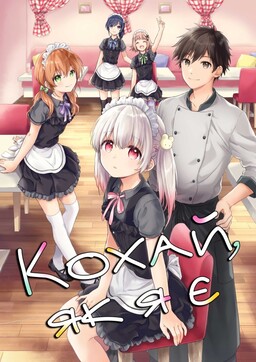
Yu's review of Love Me For Who I Am — Mogumo is non-binary; they're hired to work at a maid café called 'Queer Egg' that specifically employs gender-nonconforming staff; the café's owner Tetsu initially misunderstands Mogumo's identity; Kata Konayama's manga about finding the people who see you as you actually are.

Romance
Fragtime
Yu's review of Fragtime — Moritani can stop time for three minutes per day; she uses this ability to observe Murakami Haruka, the class representative, without being noticed; on the day she stops time, Murakami is still moving — and she has seen everything Moritani has been watching.

Romance
Failed Princesses
Yu's review of Failed Princesses — Nanaki Fujishiro is the beautiful, popular girl at school whose social world collapses when her boyfriend cheats on her; Kurokawa Nao is the plain, unnoticed girl who witnesses this and offers help; their unexpected friendship develops into something more as Nanaki discovers a different kind of value.

Romance / Drama
Even Though We're Adults
Yu's review of Even Though We're Adults — Akari is a schoolteacher who runs into Ayano, her first love from high school, at a bar; they reconnect; Ayano is not married, but Akari is; the series follows two adult women navigating a love that is real but has a cost.
Written by
Yu
Manga Enthusiast from Japan
I grew up in Japan and manga literally saved me during a tough time in elementary school. My English isn't perfect, but my love for manga is real — and I want to share it with you.
Disclosure: This post contains affiliate links. As an Amazon Associate, I earn from qualifying purchases at no extra cost to you.