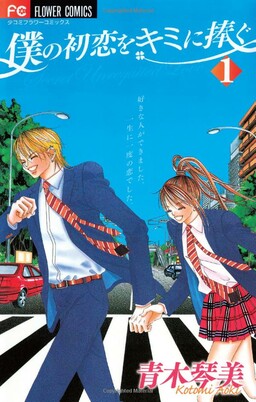
Kare First Love Review: A Plain Girl Who Believes She's Invisible Falls in Love With the Boy Who Actually Sees Her
by Kaho Miyasaka
Read the first volume. If it doesn't hook you, put it down. It'll hook you.
Buy Kare First Love on Amazon →*Affiliate link — I earn a small commission at no extra cost to you.
Quick Take
- A classic early-2000s shojo romance with the self-esteem arc at its center — Karin's belief that she's invisible is the obstacle the series works through, and the work is genuine rather than simply a journey to the first kiss
- Kiriya's consistent, patient interest in Karin is the series' romantic engine — he sees her before she can see herself, and the series earns the weight of that
- 10 volumes complete; one of VIZ's most reliable early shojo completions from this era
Who Is This Manga For?
- Readers who want classic shojo with the low-self-esteem protagonist done with genuine care
- Anyone who enjoys romances centered on a character learning to believe they deserve good things
- Fans of early-2000s shojo aesthetics and storytelling
- Readers who want complete 10-volume shojo with full resolution
Content Warnings & Age Rating
Age Rating: T (Teen) Content Warnings: Shojo romance; Karin's low self-esteem is depicted with some specificity; jealousy and rival dynamics are present; school setting
A T rating appropriate for teen readers.
Yu's Rating
| Category | Score |
|---|---|
| Story Depth | ★★★☆☆ |
| Art Style | ★★★★☆ |
| Character Development | ★★★★★ |
| Accessibility for Non-Japanese Readers | ★★★★★ |
| Reread Value | ★★★★☆ |
Story Overview
Karin Karino is a high school girl who has concluded, based on a lifetime of being overlooked, that she is simply unremarkable — neither beautiful nor interesting enough to attract genuine attention. She exists on the margins of her school's social landscape and has made peace with this.
Then Kiriya Aoi — genuinely popular, actually attractive, pursued by many people — starts noticing her specifically. His attention is persistent and specific rather than accidental, and Karin cannot understand why.
The series follows their developing relationship through Karin's difficulty accepting that someone this way could genuinely want to be with her, and what both of them have to understand about each other to make the relationship work.
Characters
Karin Karino — Her self-underestimation is the series' central subject — the series is careful not to make her simply wrong about herself (she is genuinely quiet, genuinely unglamorous) but to show that this is not the same as being unworthy of love. Her growth is the story.
Kiriya Aoi — His attraction to Karin is never unexplained by the series — she has specific qualities he responds to, and the series makes them legible to readers as he perceives them. His patience with her self-underestimation is real rather than saintly.
The supporting cast — Classmates and rivals who provide the usual shojo social world, but whose presence serves to test and develop rather than simply obstruct.
Art Style
Miyasaka's art has the clean, expressive quality of mid-period Bessatsu Margaret shojo — characters are beautiful without being unrealistic, and the emotional moments are given the visual space they need. The 2003 publication date shows in the fashion and technology but not in the emotional content.
Cultural Context
The "plain girl who doesn't know she's special" is a common shojo premise, but Kare First Love is notable for taking the "plain" designation seriously — Karin is not secretly beautiful, she is genuinely understated, and the romance is about a person who sees value in specifically that rather than value in disguised conventional beauty.
What I Love About It
The series made me think about the specific cruelty of having convinced yourself that you're not worth being seen — and how much work it takes to revise that conviction even when you're being directly shown evidence against it. Karin's process is recognizable and genuinely earned.
What English-Speaking Fans Say
Western readers who discovered shojo through VIZ's early-2000s releases describe Kare First Love as one of the more emotionally honest titles from that era — the self-esteem arc is treated with genuine seriousness rather than simple resolution, and the romance is satisfying because it's built on something specific.
Memorable Scene ⚠️ Spoiler Warning
The chapter where Karin explicitly articulates what she believes about herself to Kiriya — in full, without softening — and his response, which is neither dismissal nor sentimental correction but genuine engagement with what she's said, is the series' most important romantic moment.
Similar Manga
- Kimi ni Todoke — Low-self-perception protagonist, similar growth arc
- Honey So Sweet — Similar quiet protagonist, gentle romance
- Say I Love You — Quiet protagonist learning to accept being loved
- High School Debut — Self-improvement romantic comedy, brighter tone
Reading Order / Where to Start
Volume 1 — Karin's situation and Kiriya's first attention are established immediately.
Official English Translation Status
VIZ Media published all 10 volumes. Complete and available.
Pros & Cons
Pros
- Self-esteem arc handled with genuine specificity
- Complete 10-volume run with satisfying resolution
- Kiriya's attraction to Karin is legible and specific
- Classic shojo with reliable emotional honesty
Cons
- Early-2000s conventions show in some storytelling choices
- Low-self-esteem protagonist can frustrate readers who want more active heroines
- Some rival dynamics are conventional shojo tropes
Format Comparison
| Format | Notes |
|---|---|
| Individual Volumes | VIZ Media; complete |
| Digital | Limited availability |
Where to Buy
Read the first volume. If it doesn't hook you, put it down. It'll hook you.
This post contains affiliate links. If you purchase through these links, I may earn a small commission at no extra cost to you. As an Amazon Associate, I earn from qualifying purchases.
*Affiliate link — I earn a small commission at no extra cost to you.
More Manga You Might Like
Romance
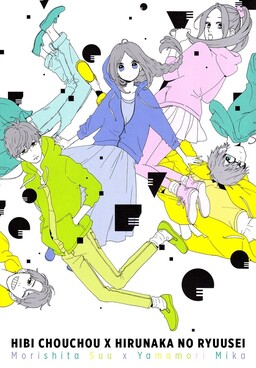
Hibi Chouchou: Everyday Butterflies
Yu's review of Hibi Chouchou: Everyday Butterflies — Suiren Shibazeki is so beautiful and quiet that people find her unapproachable; Kawasumi is so internally focused that he barely notices others; they notice each other, and what follows is one of the most unhurried and genuinely tender slow-burn romances in shojo manga.
Romance
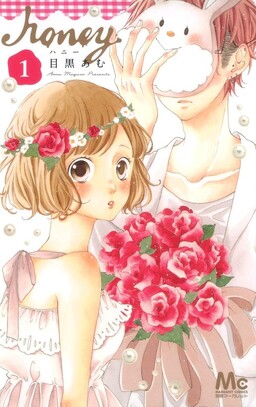
Honey So Sweet
Yu's review of Honey So Sweet — Nao Kogure is terrified of Taiga Onise, the scariest-looking boy in school, until she realizes he has been secretly looking after her because of a connection to her family; what follows is a gentle romance between a girl learning to receive care and a boy who has always expressed love through action rather than words.

Romance
Nagareboshi Lens
Yu's review of Nagareboshi Lens — Risa Hoshino has never had close friends; she sees the world through metaphorical glass; she meets Touga Okamoto through a lens at school; Yayoi Ogawa's romance manga about seeing someone clearly for the first time and being seen in return.
Romance
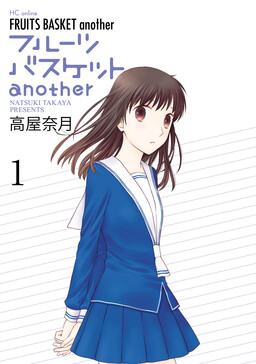
Fruits Basket Another
Yu's review of Fruits Basket Another — set in the next generation after the events of Fruits Basket, Sawa Mitoma is a girl with low self-esteem who encounters the children of the original series' characters; the story centers on Sawa finding her place and the friendships she makes with the new Sohma generation.

Romance
Cactus's Secret
Yu's review of Cactus's Secret (サボテンの秘密) by Nana Haruta — Miku Yamada has crushed on clueless Kyohei Fujioka since middle school, but when she tries to confess he treats it as a joke and nicknames her 'cactus' for being so prickly around him. A breezy four-volume Ribon romance where the girl makes the first move.
Romance / Comedy
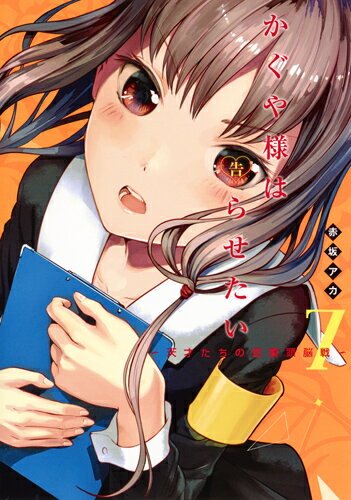
Kaguya-sama: Love Is War
Aka Akasaka's 28-volume romantic comedy (2015–2022) about Miyuki Shirogane and Kaguya Shinomiya, two student council officers at Japan's most elite high school who are both in love and both certain that whoever confesses first loses. Complete in English from VIZ Media.
Written by
Yu
Manga Enthusiast from Japan
I grew up in Japan and manga literally saved me during a tough time in elementary school. My English isn't perfect, but my love for manga is real — and I want to share it with you.
Disclosure: This post contains affiliate links. As an Amazon Associate, I earn from qualifying purchases at no extra cost to you.