
Imadoki! Review — A Country Girl Brings a Dandelion to Tokyo's Most Prestigious School and Refuses to Be Ashamed of It
by Yuu Watase
Read the first volume. If it doesn't hook you, put it down. It'll hook you.
Buy Imadoki! on Amazon →*Affiliate link — I earn a small commission at no extra cost to you.
I grew up in Tokyo. The kids I went to school with were the kind of kids who went to schools like Meiooh Academy in this manga. I knew a Tanpopo, in a different shape — a girl who transferred from the inaka and was, gently and constantly, made aware that she did not belong. I do not know what happened to her after middle school. I think about her when I think about this manga.
Quick Take
- Yuu Watase's 5-volume Shoujo Comic series (2000–2001) — a contained shoujo romance with social-class dynamics
- The dandelion metaphor is the whole manga: a wildflower in an arranged garden
- Age rating: T (Teen) — class-based bullying handled directly; no graphic content
What Is Imadoki About?
Tanpopo Yamazaki (山崎 たんぽぽ — "Yamazaki" is the family name; "Tanpopo" means "dandelion") moves from Hokkaido to Tokyo. Her family is sending her to the prestigious Meiooh Academy to give her opportunities her rural upbringing did not provide.
Tanpopo arrives in Tokyo with a suitcase and the memory of a single specific encounter — a boy she met while planting dandelions, who said something kind to her, whose face she remembers vividly. She believes (correctly, eventually) that this boy is at Meiooh.
Meiooh is everything Tanpopo's rural upbringing did not prepare her for. The students are uniformly wealthy. The social hierarchy is rigid. Tanpopo's Hokkaido accent, her cheap clothes, her lack of expensive accessories mark her as an outsider from the first day. The senior students notice her and decide that she is appropriate to bully.
Tanpopo's response: she plants a dandelion in the school garden.
The garden at Meiooh is meticulously curated — exotic flowers, formal arrangement, status display. A dandelion (which Japanese gardeners consider a weed) is a deliberate provocation. Tanpopo refuses to remove it. She announces the formation of a "greening committee" (緑化委員会, Ryokka Iinkai) — a school club dedicated to caring for and expanding the school's plant life.
She invites — actively, persistently, without taking no for an answer — other students to join. Her first recruits are the school's outcasts. Across the 5 volumes, the greening committee becomes a real club, a genuine social space, and the catalyst for Tanpopo's romantic plot.
Tanpopo and the Kugiou Brothers
The boy from Tanpopo's memory is Koki Kugiou (九卿 公暉) — the eldest son of Meiooh Academy's chairman. Koki is, on the surface, the school's golden boy: handsome, popular, top of his class. He is also, at home, in the middle of an arranged engagement to a girl from another wealthy family.
His younger brother Yoji Kugiou (九卿 耀司) is the other significant male character. Yoji is more openly rebellious than Koki. He notices Tanpopo. He acts on his attraction more directly than his brother is able to.
The Tanpopo-Koki-Yoji triangle is the manga's primary romantic engine across 5 volumes. Watase makes specific choices about who is right for whom; the resolution is earned across the series.
Who Is This Manga For?
- Yuu Watase fans who want her shorter, contained work
- Shoujo romance readers who like school-setting class-dynamics drama
- Early-2000s shoujo manga fans — Imadoki! is a representative work of its era
- Readers wanting short complete shoujo — 5 volumes is a weekend read
- Not for: readers wanting fantasy elements (this is grounded contemporary shoujo)
Content Warnings & Age Rating
Age Rating: T (Teen) — 13+ Content Warnings: Class-based bullying (depicted directly, not sanitized); arranged-marriage complications; some emotional confrontations; no graphic content; no sexual content beyond shoujo-typical romance moments
The T rating is accurate. Younger teen readers can handle the manga.
Characters
Tanpopo Yamazaki — The protagonist whose specific quality is refusal to be ashamed. She is poor. She is from the countryside. She has the wrong accent and the wrong clothes. She knows all of this. She also does not, on any visible level, accept that any of these things makes her less of a person than the wealthy Tokyo students surrounding her. Her dignity is her superpower. The dandelion she plants is her thesis: a wildflower deserves to exist in any garden.
Koki Kugiou — The chairman's older son. Handsome, expected to inherit the family's social position, currently engaged to an appropriate girl. His feelings for Tanpopo are the manga's primary romantic complication. Watase writes him with care — he is not weak, he is not cruel, he is in a position with real constraints and is trying to navigate them honestly.
Yoji Kugiou — The younger brother. More openly rebellious, more direct in his pursuit of Tanpopo. His role in the love triangle complicates over the volumes.
The greening committee members — Various students who join Tanpopo's club. Each is an outcast in their own way. The committee becomes the manga's found-family element.
Poplar (ポプラ) — Tanpopo's pet. Recurring presence; sometimes plot-relevant.
Art Style
Yuu Watase's classic shoujo style — clean linework, large expressive eyes, detailed floral motifs, occasional dramatic full-page emotional spreads. The plant/flower imagery is consistent throughout.
The art is appropriate to the manga's tone — gentle but with capacity for high emotion in the dramatic moments.
Cultural Context
Yuu Watase is one of the most successful Japanese shoujo manga creators of the past three decades. Her major works include Fushigi Yuugi (her breakout series), Ayashi no Ceres, Absolute Boyfriend, and various other shoujo titles. Watase has been working continuously since the early 1990s.
Imadoki! is one of Watase's shorter, more grounded works — without the fantasy elements that mark Fushigi Yuugi or Ceres. The manga ran from 2000 to 2001 in Shoujo Comic (Shogakukan's flagship shoujo magazine, also known as Sho-Comi).
The class-dynamics shoujo subgenre — wealthy schools, poor protagonist, romantic complications — was a recognized 1990s–2000s pattern. Other examples include Hana Yori Dango. Imadoki! uses the convention without subverting it, but with Watase's specific attention to the protagonist's interior dignity.
The dandelion symbolism (タンポポ) is a recurring Japanese poetic motif — a humble flower that grows anywhere, often used in folk songs and literature to represent quiet resilience. Tanpopo's name is doing thematic work throughout the manga.
What I Love About It
The greening committee scenes.
Across the manga, Tanpopo recruits members to her improbable club. Each recruitment is a small specific moment of someone discovering they have value beyond what Meiooh Academy has been telling them. The committee meets in a small greenhouse on the corner of the school grounds. The students who join garden together, eat lunch together, talk about things they have not talked about with anyone else.
What I love is the texture of these scenes. Watase draws the greenhouse with care — the light, the plants, the small space that has become a refuge from the school's larger hierarchy. The committee is not a power group within the school. It is a refuge from the school. The students who find their way to it find a version of themselves that the school did not have room for.
That is the manga's whole project. The dandelion is not just Tanpopo's symbol. The dandelion is the manga's argument: that there is a kind of dignity and beauty that the formal gardens cannot accommodate, and that this dignity continues to exist regardless of whether the gardeners approve.
I think about this when I think about the friend who transferred to my middle school from the countryside. I do not know if she had a greenhouse to retreat to. I hope she did. I hope someone planted dandelions for her.
What English-Speaking Fans Say
Imadoki! is a relatively lesser-known Watase work in English-speaking communities, overshadowed by Fushigi Yuugi and Absolute Boyfriend. Readers who find it generally appreciate it as a grounded, contained shoujo with strong protagonist work. The brevity (5 volumes) is consistently praised.
Memorable Scene ⚠️ Light Spoiler
The first dandelion in the formal garden.
Without spoiling specifics: somewhere in the early chapters, after Tanpopo has been bullied by senior students for her perceived lack of class, she plants a dandelion in the formal school garden. The act itself is small. She digs a hole with her hands. She plants the seed. She covers it. She walks away.
The next morning, the school discovers the dandelion. The garden committee is outraged. The senior students who have been bullying Tanpopo demand its removal. The school's administration debates what to do.
The dandelion remains.
That sequence is the manga's emotional thesis in compressed form. A single act of refusal — small, deliberate, made without seeking approval — becomes the visible center of the entire school's social politics. The dandelion does not know it is contested. The dandelion just grows. Tanpopo, watching the school argue about her flower, understands that her project is going to work, because the people who oppose it are taking it seriously.
I love this scene because Watase trusts the reader to feel its weight without melodramatic underlining. A dandelion. A girl. A school. The contest is established and is going to play out across the rest of the manga.
Similar Manga
| Title | Its Approach | How Imadoki Differs |
|---|---|---|
| Hana Yori Dango | Class-dynamics shoujo with wealthy school | HanaDan is longer and more dramatic; Imadoki is gentler |
| Ouran High School Host Club | Wealthy school comedy-romance | Ouran is parody; Imadoki is sincere |
| Absolute Boyfriend (Watase) | Same author's later sci-fi romance | Different premise; same Watase emotional register |
| Fushigi Yuugi (Watase) | Watase's most famous work | Fushigi Yuugi is fantasy; Imadoki is contemporary |
Reading Order / Where to Start
Volume 1. 5 volumes; weekend read.
Official English Translation Status
VIZ Media published all 5 volumes in English in print. The series is complete. Out-of-print physical copies are available on secondhand markets; digital availability may vary.
Pros & Cons
Pros
- Tanpopo is one of Watase's most carefully written protagonists
- 5 volumes complete; minimal commitment for satisfying arc
- The dandelion symbolism is consistent and earned
- Class dynamics are taken seriously rather than romanticized
- The greening committee is a delightful found-family subplot
Cons
- Lesser-known compared to Watase's fantasy works
- Physical English copies are out of print; digital availability mixed
- The grounded shoujo style is an acquired taste. It won't land for everyone, especially readers wanting Watase's fantasy register.
Is Imadoki! Worth Reading?
For Watase fans who haven't yet read it: yes. For shoujo readers who like school-setting class drama: yes. For brief weekend romance reads: yes.
For readers seeking fantasy: read Fushigi Yuugi or Ayashi no Ceres instead.
Format Comparison
| Format | Notes |
|---|---|
| Physical (VIZ) | All 5 volumes published; out of print; available secondhand |
| Digital | Availability varies by region |
| Japanese | Available in 5 volumes + 3 bunko editions |
Where to Buy
Read the first volume. If it doesn't hook you, put it down. It'll hook you.
This post contains affiliate links. If you purchase through these links, I may earn a small commission at no extra cost to you. As an Amazon Associate, I earn from qualifying purchases.
*Affiliate link — I earn a small commission at no extra cost to you.
More Manga You Might Like

Romance / Comedy
Kaguya-sama: Love Is War
Aka Akasaka's 28-volume romantic comedy (2015–2022) about Miyuki Shirogane and Kaguya Shinomiya, two student council officers at Japan's most elite high school who are both in love and both certain that whoever confesses first loses. Complete in English from VIZ Media.
Romance / Slice of Life
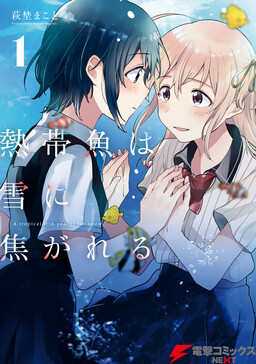
A Tropical Fish Yearns for Snow
Yu's review of A Tropical Fish Yearns for Snow — Konatsu Amano moves to a new town after her father is transferred abroad; she joins her new school's aquarium club, which has only one other member: Koyuki Honami, a capable and quietly withdrawn girl who runs it alone; their friendship becomes something more specific as they teach each other about themselves.

Romance
Hibi Chouchou: Everyday Butterflies
Yu's review of Hibi Chouchou: Everyday Butterflies — Suiren Shibazeki is so beautiful and quiet that people find her unapproachable; Kawasumi is so internally focused that he barely notices others; they notice each other, and what follows is one of the most unhurried and genuinely tender slow-burn romances in shojo manga.

Romance
His and Her Circumstances
A review of His and Her Circumstances (Kare Kano) — the 1990s shoujo manga about two high school students whose obsessive need for recognition brings them together and forces them to confront who they really are.

Romance / Comedy
W Juliet
Yu's review of W Juliet — Makoto Amano is a beautiful boy who has been living as a girl named Ito to fulfill a bet with his father; when he joins the drama club, the tomboy Ito Miura discovers his secret and becomes his protector; a shoujo romance about performance, identity, and two people who understand each other's hidden selves.

Romance / Comedy
So Cute It Hurts!!
Yu's review of So Cute It Hurts!! (Kobayashi ga Kawai sugite Tsurai) — twins Megumu and Mitsuru Kobayashi swap schools after Mitsuru fails a history exam; Megumu (a girl) attends his school disguised as a boy while he attends hers, and both fall in love; a shoujo romantic comedy about gender performance, twins, and the chaos that follows when you try to live someone else's life.
Written by
Yu
Manga Enthusiast from Japan
I grew up in Japan and manga literally saved me during a tough time in elementary school. My English isn't perfect, but my love for manga is real — and I want to share it with you.
Disclosure: This post contains affiliate links. As an Amazon Associate, I earn from qualifying purchases at no extra cost to you.