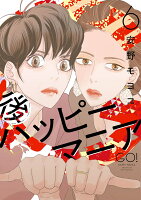
Happy Mania Review: A Woman Who Wants Love So Badly She Keeps Destroying Her Chances at It
by Moyoco Anno
Read the first volume. If it doesn't hook you, put it down. It'll hook you.
Buy Happy Mania on Amazon →*Affiliate link — I earn a small commission at no extra cost to you.
She wants love more than anything. She's also the main reason she doesn't have it. Ten volumes about what it actually takes to understand that.
Quick Take
- Moyoco Anno (Sakuran, In Clothes Called Fat) at her most relentless — a josei comedy that refuses to let its protagonist off the hook for her own self-destruction
- Shigeta Kayoko is one of manga's most honestly drawn female protagonists: messy, delusional, and recognizable in ways that are funny and uncomfortable simultaneously
- For adult readers who want josei manga with actual teeth
Who Is This Manga For?
- Adult readers who want josei romance that doesn't sanitize its protagonist's flaws
- Fans of Moyoco Anno's other work who haven't read this earlier series
- People interested in 1990s josei manga and how it handled adult relationships
- Readers who can appreciate a protagonist who is her own worst enemy
Content Warnings & Age Rating
Age Rating: M (Mature) Content Warnings: Sexual content, adult relationships, dysfunctional dynamics, frank language
This is an adult josei manga aimed at adult women. Content is appropriate to that.
Yu's Rating
| Category | Score |
|---|---|
| Story Depth | ★★★★☆ |
| Art Style | ★★★★☆ |
| Character Development | ★★★★★ |
| Accessibility for Non-Japanese Readers | ★★★★☆ |
| Reread Value | ★★★★☆ |
Story Overview
Shigeta Kayoko is a woman in her late twenties working a retail job she barely notices while spending all her energy on finding, pursuing, and catastrophically handling romantic relationships. She is not passive about wanting love — she is aggressively, almost violently invested in it — and the series' comedy comes from watching her sabotage every opportunity with the same patterns she can't see in herself.
Anno is not cruel about Shigeta. The comedy is sharp but the underlying portrait is empathetic — Shigeta's desperation comes from a recognizable place, and her failures are drawn with enough specificity that the punchline of each chapter lands differently from simple mockery. She is embarrassing in ways that feel uncomfortably accurate.
Over ten volumes, the series tracks whether Shigeta can develop enough self-awareness to change her patterns — or whether wanting love badly enough is sufficient without understanding how to actually have it.
Characters
Shigeta Kayoko — The chaos engine. Her determination is genuine; her self-awareness is limited; her capacity for both growth and backsliding is the series' dramatic engine. Anno draws her without either excusing her or condemning her.
Takahashi — The recurring love interest whose patience with Shigeta is a character study in itself. His relationship with her is the series' emotional through-line.
Art Style
Anno's art in Happy Mania is expressive josei with strong comedic instinct — the exaggerated facial expressions are the series' visual signature. Her line work is confident and the character design is appealing in an unconventional way. The art evolved noticeably across the ten volumes as Anno refined her style.
Cultural Context
Happy Mania was serialized in Feel Young in the 1990s, a josei magazine that consistently published manga about adult women's lives with more honesty than mainstream publications. Anno went on to become one of josei manga's most distinctive voices; Happy Mania is where that voice first fully emerged.
The portrait of women's relationships with romantic love and self-worth in the series reflects 1990s Japan in specific ways — the professional stagnation, the social pressure, the particular texture of that era's urban young adult life — without being inaccessible to readers outside that context.
What I Love About It
Anno's refusal to resolve Shigeta through easy growth arcs. Other romance manga would have Shigeta have her realization and change. Anno keeps making her make the same mistakes slightly differently, the way people actually do, until the change comes from accumulation rather than epiphany.
What English-Speaking Fans Say
Considered a landmark josei manga among readers who know the genre. Frequently cited alongside Nana and Paradise Kiss as josei that treats adult women as complex rather than aspirational. The protagonist's flaws are either the main appeal or the main barrier depending on the reader. Consistently described as "uncomfortable but true."
Memorable Scene ⚠️ Spoiler Warning
The late-series chapter where Shigeta finally articulates what she has been looking for — and realizes the articulation is the first step toward actually being able to receive it — is the moment that recontextualizes everything before it.
Similar Manga
| Title | Its Approach | How Happy Mania Differs |
|---|---|---|
| Nana | Josei with adult relationships and emotional honesty | Nana is more dramatic; Happy Mania is more comedic and less tragic |
| In Clothes Called Fat | Same author; honest portrait of a woman's self-destruction | Fat is darker and more focused on body image; Happy Mania is broader and funnier |
| Paradise Kiss | Josei romance with self-discovery arc | Paradise Kiss has a more romantic register; Happy Mania is more ruthlessly comedic |
Reading Order / Where to Start
Volume 1, straight through.
Official English Translation Status
Tokyopop published all 10 volumes in English. Complete. Availability varies due to Tokyopop's closure.
Pros & Cons
Pros
- One of the most honest portraits of female romantic self-destruction in josei manga
- Moyoco Anno's art and comedic timing are distinctive and excellent
- Character development that accumulates realistically rather than resolving cleanly
- An important piece of josei manga history
Cons
- Shigeta's repeated mistakes can frustrate readers who want forward momentum
- The mature content is not for all readers
- Tokyopop closure affects availability
- The 1990s setting dates some of the workplace and social dynamics
Is Happy Mania Worth Reading?
For adult josei readers who want honesty over comfort — yes, absolutely. For readers who need a sympathetic or redemptive protagonist, this will frustrate.
Format Comparison
| Format | Pros | Cons |
|---|---|---|
| Physical | Complete 10-volume set | Tokyopop closure; availability varies |
| Digital | More accessible | Limited platforms |
| Omnibus | No omnibus | — |
Where to Buy
Read the first volume. If it doesn't hook you, put it down. It'll hook you.
This post contains affiliate links. If you purchase through these links, I may earn a small commission at no extra cost to you. As an Amazon Associate, I earn from qualifying purchases.
*Affiliate link — I earn a small commission at no extra cost to you.
More Manga You Might Like
Romance / Josei
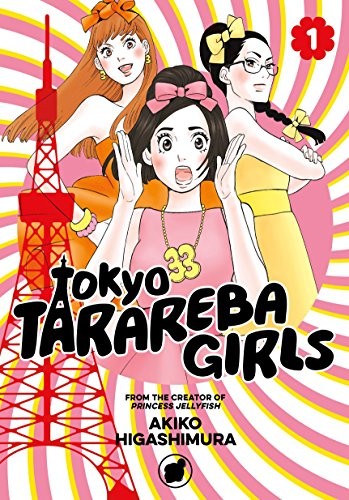
Tokyo Tarareba Girls
A review of Tokyo Tarareba Girls, Akiko Higashimura's brutally honest josei manga about three women in their thirties confronting their romantic failures.

Romance
Recovery of an MMO Junkie
A review of Recovery of an MMO Junkie — the manga about a 30-year-old woman who quits her job and retreats into an online game, where she forms a close bond with another player who is actually her neighbor in real life.
Romance / Comedy
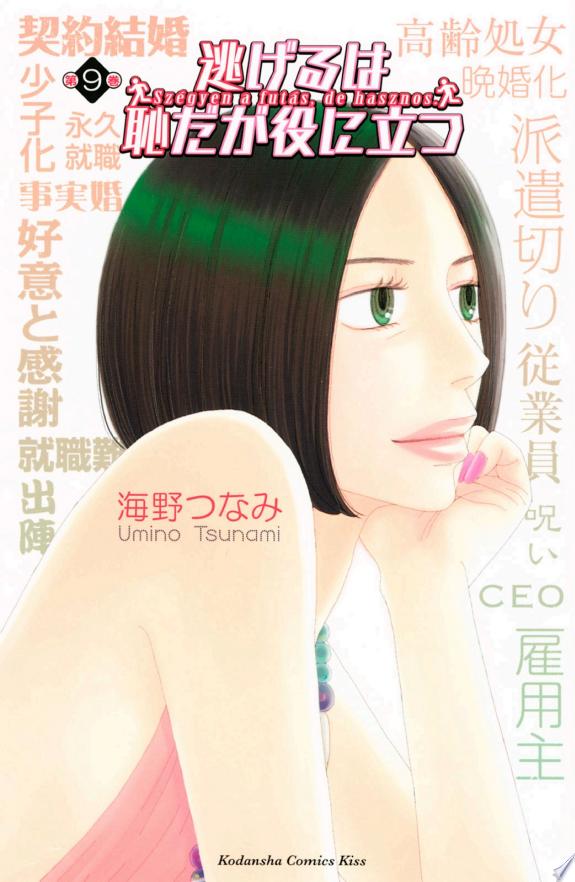
We Married as a Job!
We Married as a Job! follows Mikuri Moriyama, an unemployed graduate student, and Hiramasa Tsuzaki, a workaholic IT professional, who enter a 'professional marriage' contract — an arrangement that gradually becomes complicated by real feelings.
Romance / Drama
Nana
Yu's review of Nana — two young women named Nana meet on a train to Tokyo and become inseparable, even as their lives move in opposite directions through love, music, and loss.
Romance / Slice of Life
Happy-Go-Lucky Days
A review of Happy-Go-Lucky Days by Wandering Son's Takako Shimura — a collection of short BL stories about love found in everyday moments.
Romance / Slice of Life
Honey and Clover
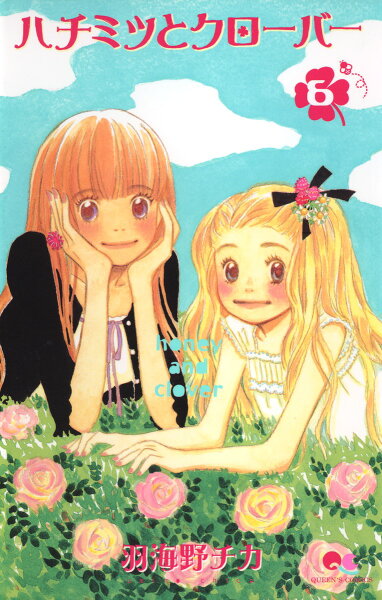
Yu's review of Honey and Clover — five art school students love each other in various permutations that cannot all resolve, while each navigates the question of what their talent means and who they want to become.
Written by
Yu
Manga Enthusiast from Japan
I grew up in Japan and manga literally saved me during a tough time in elementary school. My English isn't perfect, but my love for manga is real — and I want to share it with you.
Disclosure: This post contains affiliate links. As an Amazon Associate, I earn from qualifying purchases at no extra cost to you.