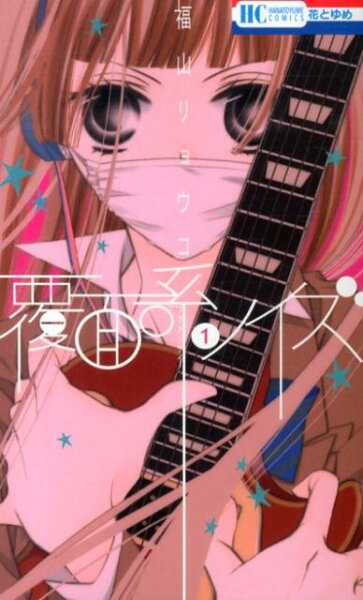
Fukumenkei Noise Review: Music, First Love, and the Voice That Can't Stop Screaming
by Ryoko Fukuyama
*Affiliate link — I earn a small commission at no extra cost to you.
Quick Take
- A music romance shoujo with a genuinely unusual protagonist — she sings to hurt, not to perform.
- The love triangle is complicated in ways that respect everyone involved.
- 18 volumes, complete — fully satisfying ending.
Who Is This Manga For?
- Fans of music manga fans — the in-universe songs and performances feel genuinely important
- Readers who enjoy romance readers who want more emotional complexity than a straightforward love story
- Anyone interested in anyone who has used art as an outlet for grief — Nino's relationship to singing is unusually honest
- People who like fans of Nana or Beck who want music-centered romance
Content Warnings & Age Rating
Age Rating: T (Teen) Content Warnings: emotional drama, first love themes, music industry themes
Safe for most readers.
Yu's Rating
| Category | Score |
|---|---|
| Story Depth | ★★★★☆ |
| Art Style | ★★★★☆ |
| Character Development | ★★★★★ |
| Accessibility for Non-Japanese Readers | ★★★★☆ |
| Reread Value | ★★★★☆ |
Overall: 4/5 — Unusual protagonist with genuine emotional honesty about music as grief — a strong music shoujo.
Story Overview
Nino Arisugawa learned to sing loudly as a child — so loud that the boy next door, Momo, could hear her and know she was thinking of him. When Momo disappeared, she kept singing, covering her face and screaming into the void. Years later in high school, Nino joins an indie band and discovers that her raw, uncontrolled voice is exactly what their music needs. Somewhere in the music world, both boys from her past are listening.
Characters
The cast of Fukumenkei Noise is built around contrasting personalities that force each other to grow. The main character carries a mix of strength and vulnerability — enough to earn sympathy without feeling passive. Supporting characters each serve a distinct emotional function: some mirror the protagonist's flaws, others challenge their assumptions, and a few provide the warmth that makes the harder moments bearable.
Art Style
Ryoko Fukuyama's visual style suits the story it tells. Emotional moments land because facial expressions are drawn with real attention to subtlety — you rarely need dialogue to understand what a character is feeling. Background detail varies by scene, pulling back in quiet moments and getting tight and detailed when the stakes rise.
Cultural Context
Fukumenkei Noise comes from the Japanese indie music scene and session band culture, and the masked performer motif where identity can be partially separated from performance. English readers will find most of this translates naturally; a few cultural notes in good translations help bridge any remaining gaps.
What I Love About It
Nino's voice is written as something genuinely transgressive. She doesn't sing beautifully — she sings desperately, loudly, in a way that's almost uncomfortable. The manga treats this as a feature rather than a flaw. The arc where the music industry tries to smooth her edges and she resists is one of the most interesting sections. The love triangle is also genuinely difficult in a good way — there's no obviously 'wrong' choice, and the resolution required the series to earn it.
What English-Speaking Fans Say
Western readers who find this series often describe it as something they wish they'd found sooner. The emotional beats translate well; the universal themes of connection, loss, and growth resonate regardless of cultural background. Fans of similar series consistently recommend it as a must-read for genre newcomers and veterans alike.
Memorable Scene ⚠️ Spoiler Warning
There is a moment — usually in the middle or final act — where the story does something unexpected with a character you thought you understood. The setup is careful and patient. The payoff is sudden and complete. Readers report rereading earlier chapters afterward, finding all the foreshadowing they missed the first time.
Similar Manga
If you enjoyed Fukumenkei Noise, try:
- Nana by Ai Yazawa — music, romance, more adult in tone
- Beck — music manga with more focus on band dynamics
- Given — music romance, BL, similarly earnest about what music means
Reading Order / Where to Start
Start from volume 1. This series builds its world and characters carefully from the first chapter — jumping in anywhere else means losing the context that makes later moments land. Volume 1 is a very strong opening; if you're not hooked by the end of it, this series may not be for you.
Official English Translation Status
Fukumenkei Noise has been fully published in English. All 18 volumes are available.
Pros & Cons
Pros:
- Complete story with no wait for new volumes
- Strong character work and genuine emotional investment
- Complete series with satisfying ending — no loose ends
Cons:
- Love triangle frustrates some readers during the middle volumes
- Anime ending differs from manga — must read the manga for the real conclusion
Format Comparison
| Format | Pros | Cons |
|---|---|---|
| Physical | Best art reproduction | May require ordering online |
| Digital | Instant access, cheaper | Less collector value |
| Used | Very affordable | Condition and availability vary |
Where to Buy
Find Fukumenkei Noise on Amazon:
👉 Search for Fukumenkei Noise on Amazon
This post contains affiliate links. If you purchase through these links, I may earn a small commission at no extra cost to you. As an Amazon Associate, I earn from qualifying purchases.
*Affiliate link — I earn a small commission at no extra cost to you.
Written by
Yu
Manga Enthusiast from Japan
I grew up in Japan and manga literally saved me during a tough time in elementary school. My English isn't perfect, but my love for manga is real — and I want to share it with you.
Disclosure: This post contains affiliate links. As an Amazon Associate, I earn from qualifying purchases at no extra cost to you.