
Fruits Basket Review: The Manga That Taught Me It's Okay to Be Loved
by Natsuki Takaya
Read the first volume. If it doesn't hook you, put it down. It'll hook you.
Buy Fruits Basket on Amazon →*Affiliate link — I earn a small commission at no extra cost to you.
Quick Take
- A girl with nothing left moves in with a family carrying a supernatural curse and centuries of trauma, and her simple, genuine kindness begins to change everything
- One of the most emotionally devastating and ultimately healing romance manga ever written
- 23 volumes, complete, with a deeply satisfying ending that earns every tear it costs
Who Is This Manga For?
- Readers who want romance that takes emotional damage seriously rather than using it as decoration
- Anyone who grew up feeling unwanted or unlovable and needs to see that story told with care
- Fans of shojo manga looking for something that will stay with them for years
- Readers who are okay with crying — this manga will make you cry, repeatedly, and it is worth it
Content Warnings & Age Rating
Age Rating: T (Teen) Content Warnings: Emotional and psychological abuse (particularly toward the Sohma family by Akito), themes of depression, isolation, and self-worth; some mild violence
The abuse depicted in this manga is taken seriously. It is not glamorized. Recovery from it is shown as slow and imperfect.
Yu's Rating
| Category | Score |
|---|---|
| Story Depth | ★★★★★ |
| Art Style | ★★★★☆ |
| Character Development | ★★★★★ |
| Accessibility for Non-Japanese Readers | ★★★★☆ |
| Reread Value | ★★★★★ |
Story Overview
Tohru Honda is sixteen and living in a tent. Her mother, who was everything to her, died in an accident. Her grandfather's house is being renovated. Rather than burden anyone, she camps in the forest and walks to school every day with a smile on her face.
The forest, it turns out, is on the Sohma property. The Sohmas discover her and invite her to stay. This is how Tohru discovers the Sohma family secret: thirteen members are cursed to transform into animals of the Chinese zodiac whenever embraced by someone of the opposite sex. The family's head, Akito, controls them through a bond that is part supernatural and entirely psychological.
Fruits Basket is the story of what Tohru's presence does to people who have been taught they cannot be loved. One by one, the Sohma family members whose lives were shaped by shame and isolation begin to open, slowly, imperfectly, like plants turning toward a light they have never seen before.
Characters
Tohru Honda — One of the most debated protagonists in shojo manga. Some readers find her too selfless, too good. I think the manga knows this — her compulsive self-erasure is not presented as virtue but as damage, and her arc is about learning to accept care as well as give it.
Kyo Sohma — The cat who was excluded from the zodiac, carrying shame so deep it has become identity. His relationship with Tohru is the central romance and it is handled with patience and care.
Yuki Sohma — The rat, Akito's favored one, struggling with what being favored by someone abusive has cost him. His arc is about learning what real respect feels like.
Akito Sohma — The antagonist, and eventually something more complicated. Takaya's handling of Akito — the truth behind the cruelty, the context that does not excuse it — is some of the most difficult and rewarding writing in the manga.
Shigure, Hatsuharu, Momiji, Hiro, Ritsu, Ayame — Each zodiac member has a story, and Takaya gives most of them enough space to matter.
Art Style
Takaya's early art is scratchy and rough, with proportions that are sometimes awkward. By the later volumes, it has become expressive and precise. Do not judge the manga by the early volumes' art — it grows significantly. The emotional expressiveness of the faces, even in the earlier rougher style, is always strong.
Cultural Context
The Chinese zodiac that structures the curse is a concept familiar across East Asia but might require context for Western readers: twelve animals plus the cat (who was tricked out of the zodiac in folklore). The manga uses this structure to explore different kinds of personality and different kinds of damage. The curse is a metaphor for family systems that shape children before they can choose who to become.
What I Love About It
I did not expect Fruits Basket to hit me as hard as it did. I started it thinking it was a light romance with a cute animal gimmick. By volume 5, I was reading at 2am with my hands shaking.
What Takaya understands is that people who have been deeply hurt often hurt the people who try to love them. That love given freely, without asking for anything in return, is terrifying to someone who has only ever experienced love as transaction or control. That healing is not a moment but a direction, slow and nonlinear and worth every step.
The scene where Kyo, for the first time, lets someone see what he really is and is not rejected — I cannot write about it without feeling it again.
What English-Speaking Fans Say
Fruits Basket occupies a specific place in Western manga fandom as one of the works that defined shojo manga for an entire generation. Readers who grew up with the early 2000s Tokyopop edition have deep nostalgia for it. The newer Yen Press edition (which the current Amazon editions are from) restores content that was cut from the Tokyopop release. Western readers consistently rate it among the greatest romance manga, with particular praise for the depth of its character work and the handling of trauma.
Memorable Scene ⚠️ Spoiler Warning
Kyo's true form — the monstrous shape that lies beneath his cat form, the secret so shameful Akito used it to break him — and Tohru's response to seeing it are the emotional center of the entire manga. Her response is not what Kyo expected. It is not what I expected either. I am not going to tell you what it is. Just read to it.
Similar Manga
- Clannad (manga adaptation) — Similar themes of family, loss, and healing
- Nana — Adult romance with equal emotional depth, much darker
- Your Lie in April — Music, grief, and learning to live again
- Horimiya — Lighter in tone, but genuine warmth in its character work
Reading Order / Where to Start
The Collector's Edition released by Yen Press collects two volumes per book and is the recommended format — better paper, larger size, and the translation is excellent. Start at Collector's Edition Volume 1.
Official English Translation Status
Yen Press holds the current license and has published the complete series, including a Collector's Edition and individual volumes. The Tokyopop editions from the early 2000s are out of print — use the Yen Press editions.
Pros & Cons
Pros
- One of the deepest explorations of trauma, healing, and love in shojo manga
- Every major character has a real arc with a real conclusion
- The ending is genuinely satisfying — pays off everything it set up
- The Yen Press Collector's Edition is a beautiful physical object
Cons
- Early volumes have noticeably rougher art
- Pacing in the middle can feel slow as the large cast gets their moments
- Tohru's extreme selflessness can frustrate readers who want a more active protagonist
Format Comparison
| Format | Notes |
|---|---|
| Collector's Edition | Highly recommended — 2-in-1, excellent paper, beautiful covers |
| Individual Volumes | Available; the Collector's Edition is better value |
| Digital | Available on Kindle; fine but print is recommended for this one |
Where to Buy
Read the first volume. If it doesn't hook you, put it down. It'll hook you.
This post contains affiliate links. If you purchase through these links, I may earn a small commission at no extra cost to you. As an Amazon Associate, I earn from qualifying purchases.
*Affiliate link — I earn a small commission at no extra cost to you.
More Manga You Might Like
Romance / Drama
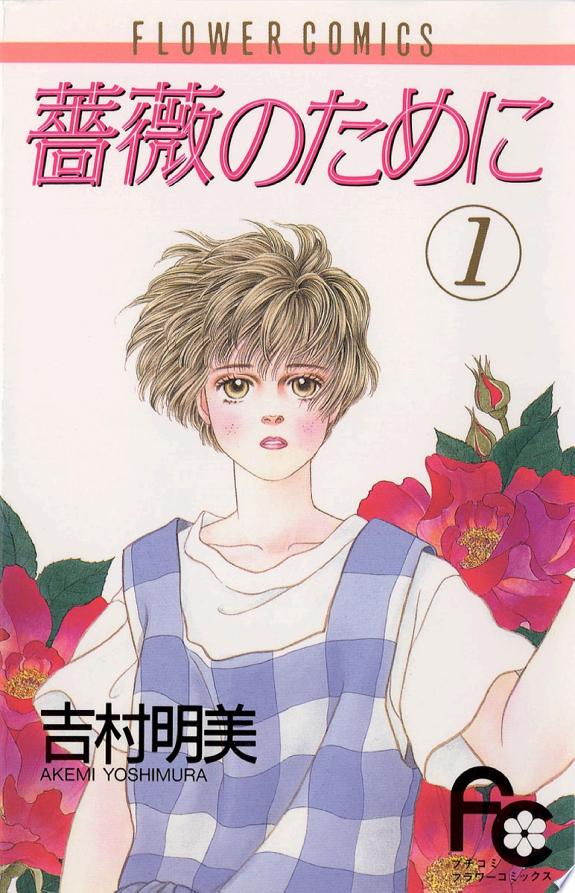
Bara no Tame ni
Bara no Tame ni follows Yuri Makurano, a plain, orphaned girl who learns her actress 'mother' is alive — along with three glamorous half-siblings — and a buried secret about her real parentage. An award-winning Shogakukan shojo drama by Akemi Yoshimura.
Romance / Drama
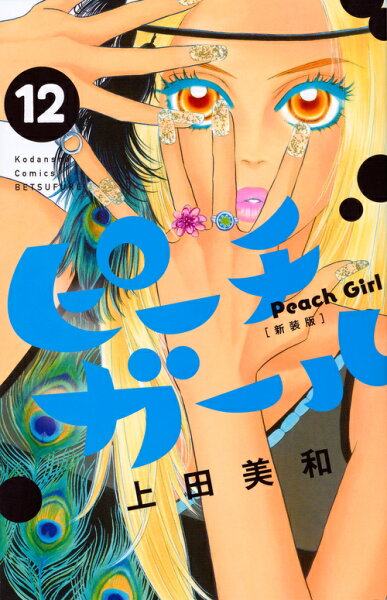
Peach Girl
Yu's review of Peach Girl — Momo Adachi's tan skin from swimming makes others assume she's a gyaru; her best friend Sae is actually her manipulative enemy; she is caught between two boys while Sae engineers situations against her.
Romance / Drama
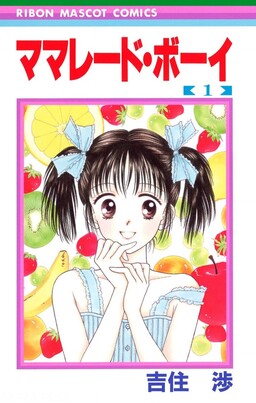
Marmalade Boy
Yu's review of Marmalade Boy — Miki Koishikawa's parents announce they are divorcing and remarrying other people; the other couple happens to have a son, Yuu, who moves into the same house; the series follows Miki's developing feelings for Yuu in this extremely unusual living situation.
Romance / Drama
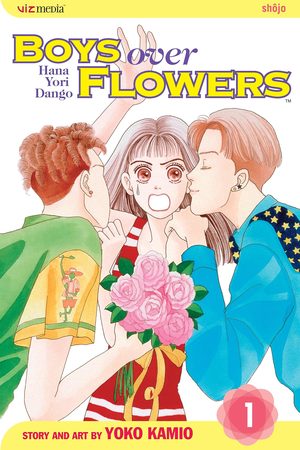
Boys Over Flowers (Hana Yori Dango)
Yu's review of Boys Over Flowers — Tsukushi Makino is a working-class scholarship student at Eitoku Academy, a school ruled by the F4. When she fights back against their bullying instead of breaking, she becomes the obsession of their leader, Tsukasa Domyoji.
Romance / Drama
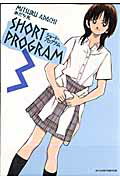
Short Program
Short Program collects Mitsuru Adachi's short story manga — brief, precise studies of the moment when two people almost connect, or do connect, or miss each other by a margin that changes everything.
Romance / Drama
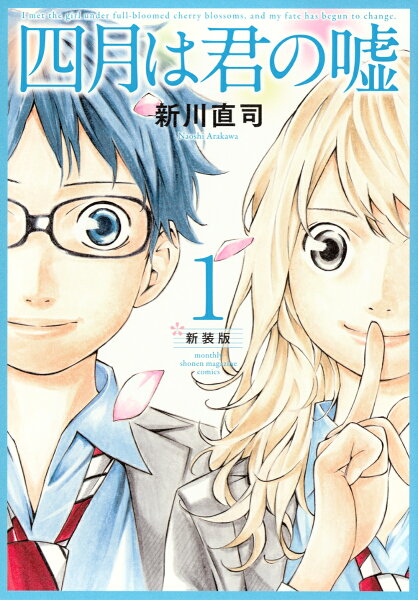
Your Lie in April
Yu's review of Your Lie in April — a piano prodigy who lost his ability to hear his own music after his mother's death meets a violinist who plays like she is throwing everything she has at the sky.
Written by
Yu
Manga Enthusiast from Japan
I grew up in Japan and manga literally saved me during a tough time in elementary school. My English isn't perfect, but my love for manga is real — and I want to share it with you.
Disclosure: This post contains affiliate links. As an Amazon Associate, I earn from qualifying purchases at no extra cost to you.