Emma Review: A Victorian Maid and a Gentleman Fall in Love — and Victorian Society Has Opinions About That
by Kaoru Mori
Read the first volume. If it doesn't hook you, put it down. It'll hook you.
Buy Emma on Amazon →*Affiliate link — I earn a small commission at no extra cost to you.
Quick Take
- Kaoru Mori's Victorian romance is drawn with the most carefully researched period detail in manga history — the clothing, the household objects, the social protocols of the 1895 English upper class are rendered with genuine historical care
- The Emma/William romance is moving precisely because the series understands exactly how difficult what they're trying to do is
- 10 volumes complete; among the essential romance manga regardless of genre or era preference
Who Is This Manga For?
- Readers who want historical romance with genuine period research rather than period aesthetics
- Anyone who appreciates manga where the class divide creates real dramatic weight rather than convenient obstacle
- Fans of A Bride's Story who want Mori's craft applied to Victorian England
- Readers who want completed romance with genuine emotional payoff
Content Warnings & Age Rating
Age Rating: T (Teen) Content Warnings: Victorian class structure and social restrictions are the central obstacle — not played for nostalgia but depicted with understanding of their real weight; mild romantic content; the series includes the practical realities of domestic service
The T rating is accurate. Warm and appropriate for most readers.
Yu's Rating
| Category | Score |
|---|---|
| Story Depth | ★★★★★ |
| Art Style | ★★★★★ |
| Character Development | ★★★★★ |
| Accessibility for Non-Japanese Readers | ★★★★☆ |
| Reread Value | ★★★★★ |
Story Overview
Emma works as a maid for Mrs. Stownar, a retired governess who educated many of England's upper-class children. William Jones — one of her former students, now a young gentleman from a wealthy merchant family — visits and meets Emma.
He falls in love with her. She is aware of her position. Both of them are aware of what Victorian society permits and does not permit between a gentleman and a maid.
The series follows their attempt to navigate the class barrier — William's family's response, Emma's understanding of the situation, the alternative relationships that develop as complications — across ten volumes that culminate in one of manga's most earned romantic resolutions.
The world around the main couple is detailed with care: Emma's household work, the parallel lives of William's merchant-class family and the aristocratic families they associate with, the lives of Emma's fellow domestic servants.
Characters
Emma — Quiet, perceptive, and practically intelligent, she understands her situation with unusual clarity. Her feelings for William are genuine; her understanding of what those feelings cost is equally genuine.
William Jones — His specific form of privileged uncertainty — he loves Emma without fully understanding what he is asking of her — is drawn with honesty. His growth involves learning to see the situation from her position rather than only his own.
The supporting cast — Each member of both their worlds is drawn with individual character. Emma's fellow servants, William's family members, the aristocratic families who represent what William could have chosen — all contribute to the world's texture.
Art Style
Mori's art is at full strength — the Victorian clothing, the household objects, the specific visual texture of late-Victorian England are drawn with the same obsessive care as the Central Asian embroidery in A Bride's Story. The character designs communicate class and social position through clothing and posture with historical accuracy. This is art that rewards slow page-turning.
Cultural Context
Emma ran in Monthly Comic Beam — Enix's alternative manga magazine — and represents an unusual project: a Japanese manga artist researching Victorian England through historical sources and producing what became a definitive romance manga. Mori's research included period household manuals, clothing references, and social histories of domestic service. The result has been cited by historians as unusually accurate.
What I Love About It
The servants' hall sequences. The parts of Emma that follow the domestic servants — their hierarchy, their specific work, their social lives within the household — are the most purely fascinating historical documentation in the series. Emma's world, seen from inside rather than observed as backdrop, is drawn with as much love as the romance itself.
What English-Speaking Fans Say
Western readers — particularly readers with knowledge of Victorian history — consistently cite Emma as the most accurate period manga they have read. The class-divide romance is praised for treating the obstacle as genuinely serious rather than as something to be charmed away. Mori's art is cited as the reason non-romance readers find themselves compelled.
Memorable Scene ⚠️ Spoiler Warning
The specific manner in which William finally acts to resolve the class barrier — and Emma's response — after a sequence of events that the series has been building toward across the full ten volumes, is among the most emotionally satisfying resolutions in romance manga.
Similar Manga
- A Bride's Story — Same author, Central Asian historical romance with similar craft investment
- Vinland Saga — Historical fiction with similar research investment
- Crest of the Stars — Historical epic romance, different setting
- Downton Abbey (not manga) — If you love Emma, you likely love this British equivalent
Reading Order / Where to Start
Volume 1 — Emma and William's first meeting establishes the romance and the class situation in the first chapter.
Official English Translation Status
Yen Press published the complete 10-volume run. All volumes available.
Pros & Cons
Pros
- Mori's art is the finest historical illustration in manga
- The class divide is treated with genuine seriousness
- Complete with a deeply satisfying ending
- The world-building is as valuable as the romance
Cons
- The T rating may underwhelm readers expecting more explicit content — this is genuinely appropriate for the period
- Victorian social protocol may require some reader patience
- Some readers find the pacing slow relative to the romance content
Format Comparison
| Format | Notes |
|---|---|
| Individual Volumes | Yen Press; standard |
| Omnibus | Available in collected editions |
| Digital | Available |
Where to Buy
Read the first volume. If it doesn't hook you, put it down. It'll hook you.
This post contains affiliate links. If you purchase through these links, I may earn a small commission at no extra cost to you. As an Amazon Associate, I earn from qualifying purchases.
*Affiliate link — I earn a small commission at no extra cost to you.
More Manga You Might Like
Romance / Historical
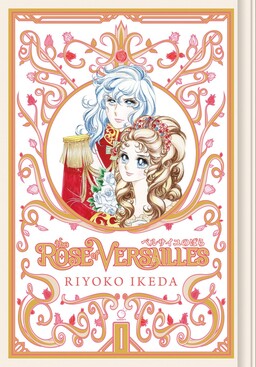
The Rose of Versailles
Yu's review of The Rose of Versailles — Oscar François de Jarjayes is raised by her father as a son and commander of the royal guard; she navigates the court of Louis XVI and Marie Antoinette, torn between duty to the aristocracy and growing awareness of what the common people suffer; as the French Revolution approaches, the world she has served is ending.
Romance
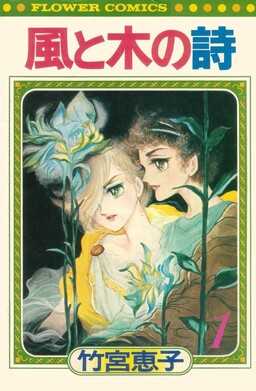
Kaze to Ki no Uta
Yu's review of Kaze to Ki no Uta — set in a 19th century French boarding school, the relationship between Serge, a half-Japanese student with a traumatic past, and Gilbert, a beautiful and sexually promiscuous boy whose behavior conceals something devastating; the manga that essentially created the Boys' Love genre, published between 1976 and 1984.
Romance / Historical
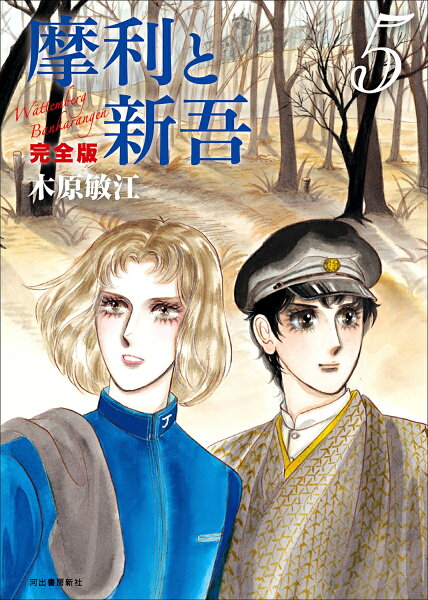
Mari to Shingo
Mari to Shingo follows two young men at an elite Taisho-era Japanese school — the aristocratic Mari and the street-smart Shingo — whose complicated bond defines the series and refuses to be categorized by the vocabulary available to either character.
Romance
Taisho Otome Fairy Tale
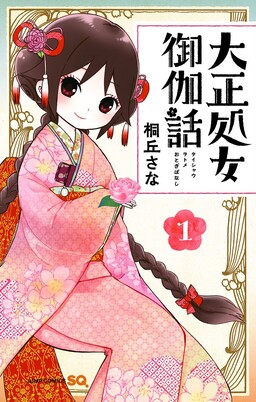
Yu's review of Taisho Otome Fairy Tale — Tamahiko Shima is a sickly, bitter young man exiled to the countryside after an accident; his father sends Yuzuki Tachibana as a bride without asking; she is cheerful, capable, and changes his life; Sana Kirioka's Taisho era romance about someone who stopped hoping being given reason to hope.
Romance / Drama
Stepping on Roses
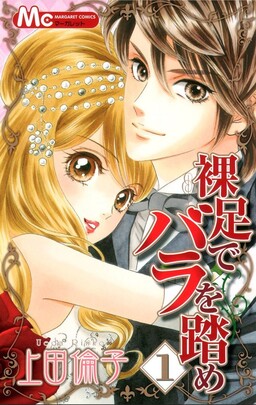
Yu's review of Stepping on Roses — set in Meiji-era Japan, Sumi is a poor girl burdened with her brother's debts and siblings to care for; she agrees to marry a wealthy man, Soichiro Ashida, in a loveless contract marriage for the money; the marriage predictably becomes complicated.
Romance
The Story of Saiunkoku
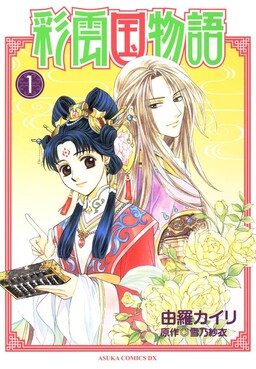
Yu's review of The Story of Saiunkoku — Shuurei Hong is a noblewoman in a historical Chinese-inspired kingdom who wants to become a government official, but women are barred from the civil service; the Emperor Ryuuki asks her to teach him responsibility; Sai Yukino's historical fantasy about a woman who refuses to be excluded from the world she's qualified for.
Written by
Yu
Manga Enthusiast from Japan
I grew up in Japan and manga literally saved me during a tough time in elementary school. My English isn't perfect, but my love for manga is real — and I want to share it with you.
Disclosure: This post contains affiliate links. As an Amazon Associate, I earn from qualifying purchases at no extra cost to you.