
Clannad Manga Review: The Adaptation That Trusts You to Sit With Grief
by Key / Jun Maeda (original), Juri Misaki (manga)
Read the first volume. If it doesn't hook you, put it down. It'll hook you.
Buy Clannad on Amazon →*Affiliate link — I earn a small commission at no extra cost to you.
I came to Clannad the way a lot of people my age did — backwards. I knew the anime first, knew the reputation it had for wrecking grown adults, and I avoided it for years because I didn't think I wanted to cry on purpose. When I finally picked up Juri Misaki's manga version (the one Key calls the Official Comic), I expected a softer, prettier retelling. It is not softer. It is the same story told slowly, panel by panel, and there is something about reading it at your own pace — being able to stop, close the book, and breathe — that made the back half hit me harder than the screen ever did.
What stayed with me most was how patient it is. This is not a manga in a hurry to make you feel something. It earns every bit of it.
Quick Take
- Misaki's manga adapts the full Clannad arc faithfully — the School Life half (Nagisa and the drama club) and the longer After Story half that almost no romance manga is brave enough to attempt.
- It's the closest a manga gets to the original visual novel's tone: dialogue cut from the anime is kept in, and Tomoya's drift from hollow delinquent into reluctant father is the real spine of the book.
- Age rating: T (Teen) — no graphic content, but the grief, illness, and loss are heavy, so it's a "you should be in the right headspace" Teen.
Story Overview
The story opens on Tomoya Okazaki, a third-year at Hikarizaka High who has more or less given up. His mother died when he was young, his relationship with his alcoholic father is poisoned, and a shoulder injury — caused by that father — ended the one thing he was good at. He coasts through school as a delinquent with his equally aimless friend Youhei Sunohara. On a slope one morning he meets Nagisa Furukawa, a shy, frail girl repeating a year because illness kept her from finishing. She wants to reopen the school's disbanded drama club, and almost in spite of himself, Tomoya starts helping her. That's the whole engine of the first three volumes: a boy with no reason to try, gradually pulled back toward the world by someone who needs him.
The turning point is the manga's structure itself. Most romance stories would end at the confession or the graduation. Clannad keeps going. From volume four on, the manga moves into the After Story — Tomoya and Nagisa marry, he takes a job, and they have a daughter, Ushio. And then the story does the thing it's famous for: Nagisa dies, and the warmth the whole book built up collapses.
The ending is what makes it more than a tragedy. Years after Nagisa's death, a hollowed-out Tomoya — who has been living on autopilot, barely able to look at his own daughter — is more or less pushed by Nagisa's parents into taking Ushio on a trip, just the two of them. The final stretch of the manga is that journey: a man slowly remembering how to be a parent, and through that, finding his way back toward reconciling with his own father. It's not a clean fairy-tale fix. It's about choosing to keep going.
Characters
Tomoya Okazaki carries the book. He starts as the classic burnt-out delinquent, but the manga is careful to show why — the shoulder injury, the dead mother, the father he can't forgive. His arc isn't "delinquent gets a girlfriend." It's a man who has decided the world has nothing for him, slowly being proven wrong, then losing it all, then having to decide whether to come back a second time. The After Story version of Tomoya, numb and avoidant around little Ushio, is genuinely hard to watch in the best way.
Nagisa Furukawa is the heroine the School Life half is built around (the other heroines get shorter side stories slotted in later). She's shy, lonely, and chronically ill, with the small odd habit of muttering the names of foods she likes to psych herself up. What I appreciate is that the manga doesn't make her a passive object to be saved — reopening the drama club is her dream, and her quiet stubbornness is what drags Tomoya back into living.
Akio and Sanae Furukawa, Nagisa's parents, run the family bakery and are the warm center of the book — loud, kind, deeply human. Their importance pays off enormously in After Story, when they're the ones who help raise Ushio and the ones who refuse to let Tomoya disappear into his grief. Akio in particular gets some of the manga's most quietly devastating moments.
Youhei Sunohara is Tomoya's friend, a soccer player thrown off the team who now drifts through school like Tomoya does. He's the comic relief, but he matters more than that — and there's a fun bit of trivia here: Jun Maeda reportedly chose Misaki to draw the manga specifically because she drew Sunohara so appealingly. In a story this heavy, the friend who keeps it from being unbearable is load-bearing.
What I Love About It
The thing I love about Misaki's version is that it trusts grief to be slow. There's a long stretch in After Story where almost nothing "happens" in plot terms — Tomoya goes to work, comes home, can't bring himself to be a father to Ushio, and the days just blur. On screen that section flies by. In the manga, it sits there. You turn pages of a man being quietly, undramatically broken, and because it's a book you control, you feel the weight of how long it's been for him. The manga doesn't rush you toward the catharsis. It makes you live in the flat gray part first.
That patience is exactly why the final journey lands the way it does. By the time Nagisa's parents push Tomoya into taking Ushio away on a trip, you've spent so many pages in his numbness that the smallest things on that journey — Ushio reaching for his hand, him actually seeing her — read like enormous events. I remember closing the book after the trip section and just sitting there. It's the rare romance manga where the most powerful image isn't two people falling in love, it's a father finally able to look at his kid. The fact that the manga keeps the original visual novel's blunter dialogue, the lines the anime softened, gives those moments a rawness I wasn't expecting from a "tie-in" comic.
Memorable Scene ⚠️ Spoiler Warning
The scene that stays with me is the setup for that final journey — the moment Nagisa's parents step in. Tomoya has spent years treating Ushio almost like a stranger, leaving her with the Furukawas, unable to face the daughter whose birth he can't separate from Nagisa's death. And it's Akio and Sanae, the people who arguably have the most right to resent him for it, who instead engineer the trip that forces him to be alone with his own child.
What makes it hurt is the absence of blame. There's no big confrontation, no speech telling Tomoya he's a bad father. They just quietly arrange for him to take Ushio and go. The manga lets the silence do the work — these grieving grandparents choosing to save their son-in-law rather than condemn him. When the journey actually starts and Tomoya, stiff and unsure, has to figure out how to talk to this small person who is half Nagisa, the manga finally lets a little light back in. After volumes of accumulated loss, watching him reach back toward being a parent is the payoff the whole book was building. It's not a resurrection. It's just a man deciding to stay.
Pros & Cons
Pros:
- Adapts the complete arc — School Life and the full After Story — which is rare and brave for a romance/drama manga.
- Stays closer to the original visual novel's tone than the anime, keeping dialogue and bluntness the anime trimmed.
- Akio, Sanae, and the family material give the grief somewhere warm to land instead of just being misery.
Cons:
- The side heroines (Tomoyo, Kyou, Kotomi and others) are compressed into short stories, so if you came for their routes you'll feel shortchanged.
- The pacing is deliberate to the point of slow, especially in the gray middle of After Story.
- There is no licensed English print edition, so reading it legally means the Japanese release — that alone will make this one a no-go for plenty of readers, and it won't work for everyone.
Is Clannad Worth Reading?
If you want a romance manga that's honest about the fact that love is also the thing you eventually lose, yes — Clannad is worth it. Misaki's adaptation is patient, faithful, and unafraid of the back half that gives the story its reputation. The catch is access: there's no official English manga, so unless you read Japanese (or are happy to read it as a companion to the anime), this is a tougher recommendation than it should be.
Where to Buy
No English release yet. That just means you find it before everyone else does.
Find the Japanese edition on Amazon.co.jp →
This post contains affiliate links. If you purchase through these links, I may earn a small commission at no extra cost to you. As an Amazon Associate, I earn from qualifying purchases.
*Affiliate link — I earn a small commission at no extra cost to you.
More Manga You Might Like

Romance
Season of Blossom
A review of Season of Blossom — the Korean romance manhwa about high school students navigating first love against the backdrop of a friend's death and the grief that follows.
Romance / Music
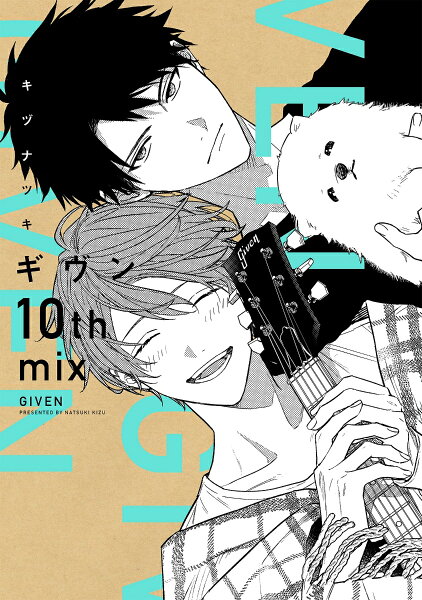
Given
A review of Given, the BL music manga about a guitarist who falls for a beautiful boy with an extraordinary voice and a devastating past.
Romance / Drama
Sweet Blue Flowers
Yu's review of Sweet Blue Flowers — Fumi Manjoume and Akira Okudaira were childhood best friends who lost contact; they meet again in high school; Fumi is going through a heartbreak and beginning a new relationship with a senior girl while discovering who she is; Akira watches, loves, and cannot yet name it.
Romance / Drama
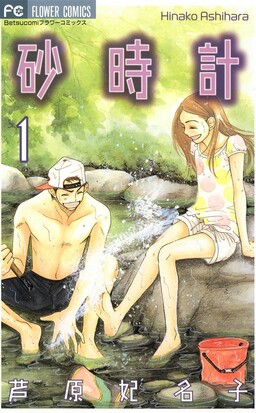
Sand Chronicles
Yu's review of Sand Chronicles — Ann Uekusa moves from Tokyo to rural Shimane after her parents' separation; her mother's death by suicide shapes everything that follows; the series follows Ann from childhood through adulthood with unflinching attention to grief, depression, and the slow work of becoming a whole person.
Romance
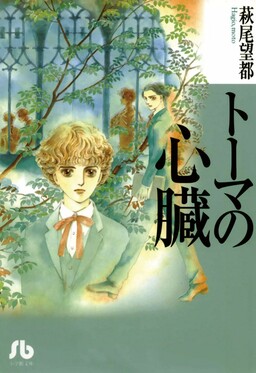
The Heart of Thomas
Yu's review of The Heart of Thomas — Thomas Werner falls from a bridge at a European boarding school, leaving behind a letter declaring his love for Juli; Juli, the student Thomas adored, must now live with having rejected Thomas's love, while a new student who resembles Thomas arrives at the school.

Romance / Drama
Girl Friends
Yu's review of Girl Friends — Mari Kumakura is a quiet, bookish girl with no real friends; Akko Oohashi is pretty, popular, and inexplicably interested in her; their friendship grows into something more complicated than either of them has words for, which is the point.
Written by
Yu
Manga Enthusiast from Japan
I grew up in Japan and manga literally saved me during a tough time in elementary school. My English isn't perfect, but my love for manga is real — and I want to share it with you.
Disclosure: This post contains affiliate links. As an Amazon Associate, I earn from qualifying purchases at no extra cost to you.