
Cheeky Brat Review: The Shojo Where the Pushy Underclassman Sees Through the Girl Who Hides Everything
by Mitsubachi Miyuki
Read the first volume. If it doesn't hook you, put it down. It'll hook you.
Buy Cheeky Brat on Amazon →*Affiliate link — I earn a small commission at no extra cost to you.
I have a soft spot for characters who learned too early how to keep their face still. When I was a kid hiding in the library at lunch, I got very good at looking like nothing was wrong — and that habit doesn't leave you. So when I picked up Cheeky Brat (なまいきざかり。, Namaikizakari) and met Yuki Machida, a girl who raised five younger siblings and learned to swallow every feeling before it shows, I felt like I already knew her. The whole hook of this manga is that one loud, shameless boy refuses to let her keep hiding. That landed for me harder than I expected from a series with a title this silly.
Quick Take
- A shojo basketball romance built on a great mismatch: a guarded older-girl manager and a younger boy who is too direct to let her pretend she's fine
- The slow turn from "this kid is annoying" to "this kid actually sees me" is the engine, and Mitsubachi Miyuki keeps the comedy running the whole way
- Rated T (Teen): school-life romance with some flirty harassment played for laughs early on; nothing graphic
Story Overview
Yuki Machida is a second-year high schooler who manages her school's basketball team. She's calm, capable, and emotionally closed off — partly because, as the eldest of six, she spent her childhood raising five younger siblings and learned to keep her own feelings invisible. The reason she joined the team in the first place was a quiet crush on the captain, Kido.
The story turns a week before the Winter Cup qualifier, when Yuki finds out Kido has a girlfriend and breaks down crying alone in the clubroom. The person who finds her is Sho Naruse — a brash, good-looking first-year who already knows about her feelings for Kido. Instead of comforting her gently, he needles her, and she writes him off as a cocky kid. But during that Winter Cup game, Naruse plays through an injured foot, partly so the team wins and Yuki doesn't have to be disappointed again. After the loss, while she's wrapping his ankle, he kisses her and tells her he likes her.
From there it's a long, stubborn courtship. Yuki keeps her distance; Naruse keeps closing it. She slowly stops thinking about Kido and starts looking forward to Naruse, and around the end of the early arc she finally admits her own feelings — to which Naruse, characteristically, says he can wait. The series follows them through high school and into Osaki University, where Naruse keeps playing basketball and Yuki keeps managing, eventually setting up their lives together as adults.
Characters
Yuki Machida — The real protagonist. Her flat, composed exterior isn't coldness, it's armor built from years of being the responsible eldest child. Her arc is about unlearning that armor: going from a girl whose "first love" was a safe, distant crush on Kido to someone who can actually let a person close enough to hurt her — and choosing to anyway.
Sho Naruse — The "cheeky brat" of the title. He starts as a shameless tease (his literal first scene is accidentally groping a classmate and bragging about it) and is easy to dismiss. But the joke of the series is that he's the only one who reads Yuki accurately. He stays bratty to the end, but he matures where it counts, and his patience — telling Yuki he'll wait — is the opposite of the pushiness he leads with.
Kido — The team captain and Yuki's first love. He's the reason she's a manager at all, and his getting a girlfriend is the wound that opens the story. He functions less as a rival and more as the thing Yuki has to let go of.
Shizuka Hakamada — Naruse's childhood friend, a transfer student who falls for Yuki himself. He's a quiet romantic rival to Naruse, and he steps back only after seeing how completely Yuki has fallen for Naruse.
What I Love About It
It's the clubroom scene at the very start. Yuki, who never lets anyone see her cry, is finally crying — over Kido — and the person who catches her is the worst possible witness: this smug first-year who already knows her secret. My stomach dropped reading it, because that's the nightmare. You spend your whole life keeping the mask on and then you break in front of exactly the person you'd never choose.
What I love is what the series does with that. Naruse doesn't hand her a tissue and a soft speech. He pokes at her, he's annoying, he even tries to bargain for it. And yet — he saw her. That's the thing she's been terrified of and the thing she secretly needed. The manga understands that being truly seen is uncomfortable before it's a relief, and that a guarded person won't fall for the gentle boy who respects every wall; she falls for the loud one who walks straight through. Naruse playing the Winter Cup match on a hurt foot so Yuki won't be disappointed again, right after this, is the whole relationship in miniature: he's reckless and immature, but his attention is always pointed at her. That contrast — careless on the surface, dead serious underneath — is why the romance works instead of feeling like a joke.
Memorable Scene ⚠️ Spoiler Warning
After Ryuhoku loses the Winter Cup qualifier 72-65, Naruse sits getting his injured ankle wrapped — by Yuki. It's a small, ordinary post-game moment, the manager doing her job. And then he kisses her and tells her he likes her. It's the first chapter's closing beat, and it's perfect placement: he confesses not in a romantic spot but in the middle of defeat, sweat and tape and a lost game, which is exactly the unguarded register Yuki lives in. Later, when she finally confesses back near the end of the early arc, Naruse's answer — that he can wait half a year for her — is the quiet payoff that recontextualizes all his earlier pushiness as someone who actually knows how to be patient when it matters.
Pros & Cons
Pros
- A genuinely well-built central couple — the "guarded girl, blunt boy" dynamic has real emotional logic
- Yuki is a stronger, more specific heroine than the shojo average, with a backstory that explains her
- Naruse stays funny without the romance becoming a joke
- The complete 23-volume Japanese run means the story actually has somewhere to go (high school into university)
Cons
- The early "cheeky" comedy includes flirty harassment played for laughs, which has aged unevenly
- 23 volumes is a long commitment for a single romance
- The English release is still catching up, so you can't binge the whole thing in English yet — that's either a dealbreaker or a non-issue depending on how you read, so it won't work for everyone
Is Cheeky Brat Worth Reading?
Yes, if you like slow-burn shojo with a heroine who feels real and a love interest whose pushiness actually pays off as devotion. The early harassment comedy and the long volume count are the main caveats, and the English edition is still ongoing rather than complete — but the central relationship is one of the better ones in the genre.
Where to Buy
Read the first volume. If it doesn't hook you, put it down. It'll hook you.
This post contains affiliate links. If you purchase through these links, I may earn a small commission at no extra cost to you. As an Amazon Associate, I earn from qualifying purchases.
*Affiliate link — I earn a small commission at no extra cost to you.
More Manga You Might Like
Romance
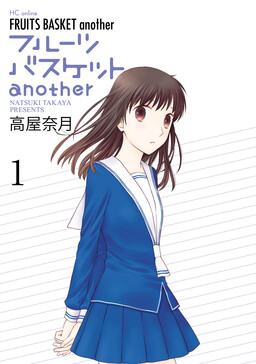
Fruits Basket Another
Yu's review of Fruits Basket Another — set in the next generation after the events of Fruits Basket, Sawa Mitoma is a girl with low self-esteem who encounters the children of the original series' characters; the story centers on Sawa finding her place and the friendships she makes with the new Sohma generation.
Romance
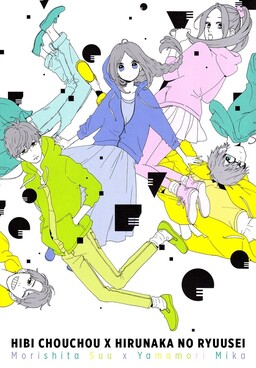
Hibi Chouchou: Everyday Butterflies
Yu's review of Hibi Chouchou: Everyday Butterflies — Suiren Shibazeki is so beautiful and quiet that people find her unapproachable; Kawasumi is so internally focused that he barely notices others; they notice each other, and what follows is one of the most unhurried and genuinely tender slow-burn romances in shojo manga.

Romance / Sports
Blue Box
Blue Box follows Taiki Inomata, a hardworking badminton player quietly in love with basketball star Chinatsu Kano — until her parents move abroad and she moves into his house, turning his crush into a roommate, a rival, and the person across the breakfast table.
Romance / Comedy
Kaichou wa Maid-sama!
Yu's review of Kaichou wa Maid-sama! — Misaki Ayuzawa is the strict student council president of a recently co-ed school; she secretly works at a maid cafe to support her family; when the most popular boy at school, Usui Takumi, discovers her secret, he keeps it — and keeps showing up at her workplace across 18 volumes.
Romance / Comedy
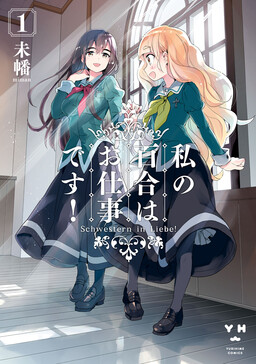
Yuri Is My Job!
Yu's review of Yuri Is My Job! — Hime Shiraki's entire identity is performing perfect femininity for public approval; working at Liebe Girls Academy café requires her to act out romantic yuri relationships with her coworkers for customers; her assigned partner Mitsuki hates her genuinely, and Hime begins to develop feelings that are not performance.
Romance
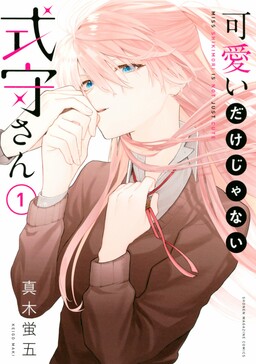
Shikimori's Not Just a Cutie
Yu's review of Shikimori's Not Just a Cutie — Izumi is a boy with the worst luck who is dating Shikimori, a girl who is sweet and feminine most of the time; but when Izumi is in danger, Shikimori shifts into a cool, intense mode that is completely different from her usual self, and which Izumi finds extremely appealing.
Written by
Yu
Manga Enthusiast from Japan
I grew up in Japan and manga literally saved me during a tough time in elementary school. My English isn't perfect, but my love for manga is real — and I want to share it with you.
Disclosure: This post contains affiliate links. As an Amazon Associate, I earn from qualifying purchases at no extra cost to you.