
Cat Street Review: A Burned-Out Child Star Finds a School for People Who Don't Fit Anywhere
by Yoko Kamio
Read the first volume. If it doesn't hook you, put it down. It'll hook you.
Buy Cat Street on Amazon →*Affiliate link — I earn a small commission at no extra cost to you.
I read Boys Over Flowers when I was younger because everyone around me had, and I remember thinking the F4 and that whole rich-school fantasy was fun but very far from my own life. Then years later I picked up Cat Street, by the same artist Yoko Kamio, almost by accident, and it knocked the wind out of me in a way Boys Over Flowers never did. As a kid I spent a lot of time not wanting to go to school, sitting at home with manga because the regular world felt like a room I didn't have a key to. Cat Street is about a girl who literally cannot make herself go to a normal school anymore, and it is the first time I saw that exact feeling drawn out honestly instead of brushed aside. I finished all eight volumes in basically one sitting.
Quick Take
- Yoko Kamio (Boys Over Flowers) at her most grounded — this trades the rich-school fantasy for a quiet, honest story about a girl learning to exist around people again
- El Liston, the free school where the cast meets, is the heart of the series — a place built for kids the normal system couldn't hold
- 8 volumes, completed; age rating T (Teen) — anxiety and social withdrawal are handled seriously, but nothing graphic
Story Overview
Keito Aoyama was a celebrated child actress until, during a stage play, she froze. She stood there unable to move or speak in front of an audience, and the failure ended her career and pushed her out of public life entirely. By the time the story opens she is sixteen and has spent years shut away, having dropped out of ordinary school and lost almost everyone except one childhood friend, Taiyou.
The turning point comes when she meets the principal of El Liston, a tuition-free school made specifically for kids who, for one reason or another, can't function in the regular school system. She enrolls reluctantly. There she meets Rei, Kouichi, and Momiji — three students with their own histories of not fitting in — and for the first time in years she is around people who don't expect her to be the polished child star she used to be.
The series follows her slow reentry into life: relearning how to make friends, repairing her relationship with her family, and eventually working her way back toward acting on her own terms. By the end Keito has rekindled her career, reconciled with the people she'd shut out, and she and her El Liston friends take over running the school so it can keep doing for other kids what it did for them. The romance threads through all of this, but the real subject is recovery.
Characters
Keito Aoyama — Her whole personality is shaped by one specific, public failure, and Kamio never lets you forget the precise shape of it. She isn't vaguely shy; she is someone whose talent broke in front of an audience and who has spent years convinced she has nothing left. Her recovery is gradual and stumbling rather than a single triumphant switch, which is exactly why it lands.
Kouichi Mine — A computer genius (the manga gives him an IQ of 200) and one of the El Liston students. He and Keito don't fall for each other instantly; they understand each other first, and the feelings grow out of that. He's the one who quietly looks out for her — at one point even building a company partly named after her — and his is the relationship the series ends up centering.
Rei Saeki — A former soccer prodigy and Keito's first love interest at El Liston. He's hot-tempered and gets jealous of how close Keito and Kouichi become. His arc is one of the most quietly painful in the book: he steps aside so the two of them can be together, and he leaves to chase his own soccer dream abroad in Brazil.
Momiji Noda — A gothic-lolita fashion designer who is defined by being completely, unapologetically herself. In a cast of kids who've been told they're wrong for not fitting in, she's the one who shows Keito that "not fitting" can just be a way of being, not a wound.
What I Love About It
The thing I love most is how Cat Street treats the act of simply going somewhere. There's no dragon to slay, no rival to beat. The drama is whether a girl who hasn't been able to walk into a school for years can make herself walk through the gate of El Liston — and Kamio gives that small, ordinary act the full emotional weight it deserves. I have lived a version of that exact fear, that the building is fine and the people are fine and the broken thing is only you, and watching Keito push against it page by page felt like someone had read my own diary.
What makes it work is that the series earns its quiet. It spends so long establishing what Keito lost on that stage — not just the career, but her sense that she could be seen by people without falling apart — that every tiny step forward carries real stakes. By the time she's standing among the El Liston kids and actually wanting to be there, it doesn't feel small at all. Kamio's art, looser and warmer than her Boys Over Flowers days, makes El Liston look like the kind of place you wish had existed when you were the kid hiding at home. That's the rare manga that made me feel both seen and a little bit healed.
Memorable Scene ⚠️ Spoiler Warning
The moment that stayed with me longest is Rei's. For most of the series he's the obvious first romance — the loud, athletic boy Keito notices first — and his jealousy over how close she and Kouichi grow builds and builds. But near the end he steps back on purpose. He gives up his own feelings, lets Keito and Kouichi find each other, and goes off to chase his soccer career in Brazil. One review I read described crying when Rei "revealed he had no one" just so the two of them could be together, and that's exactly the gut-punch of it. It would have been easy to make Rei the bitter loser of a love triangle. Instead Kamio lets him choose the harder, kinder thing and then walk away to build his own life, and it turns what could have been a cheap shojo triangle into something that actually respects all three people in it.
Pros & Cons
Pros
- Kamio's most emotionally honest and grounded work — recovery, not fantasy
- Keito's healing is slow and earned instead of a sudden transformation
- El Liston is a setting with real heart, and the supporting cast all get real arcs
- The romance grows naturally out of friendship rather than dominating the story
Cons
- No official English release, so legitimately reading it in English is hard right now
- Readers expecting Boys Over Flowers' high-drama intensity will find this much quieter
- The pacing is deliberately gentle and internal — that's either the whole appeal or a dealbreaker depending on you, so it won't work for everyone
Is Cat Street Worth Reading?
Yes — especially if you've ever felt like the regular world's structure just doesn't fit you. It's Kamio's quietest and, to me, her best work: a patient, warm story about a girl learning to exist around people again, with a love story that earns its ending and a school you'll wish you could have attended. Just know going in that it's gentle and internal, not the splashy drama of Boys Over Flowers.
Where to Buy
No English release yet. That just means you find it before everyone else does.
Search the Japanese edition on Amazon.co.jp →
This post contains affiliate links. If you purchase through these links, I may earn a small commission at no extra cost to you. As an Amazon Associate, I earn from qualifying purchases.
*Affiliate link — I earn a small commission at no extra cost to you.
More Manga You Might Like

Romance / Drama
Sand Chronicles
Yu's review of Sand Chronicles — Ann Uekusa moves from Tokyo to rural Shimane after her parents' separation; her mother's death by suicide shapes everything that follows; the series follows Ann from childhood through adulthood with unflinching attention to grief, depression, and the slow work of becoming a whole person.
Romance / Drama
Orange
Yu's review of Orange — on the first day of high school, Naho receives a letter from herself ten years in the future, listing the regrets she has about a classmate named Kakeru, and warning her to save him before it's too late.

Romance / Drama
Fruits Basket
Yu's review of Fruits Basket — a girl who has lost everything moves in with a family cursed to transform into animals of the Chinese zodiac, and slowly melts the ice that generations of abuse built around their hearts.

Romance / Fantasy
Ceres: Celestial Legend
Yu's review of Ceres: Celestial Legend — on her 16th birthday Aya Mikage learns she is the reincarnation of the celestial maiden Ceres, and that her own family tests and kills its children to stop Ceres's revenge. Yuu Watase's darkest, most adult shojo.
Romance / Drama
Bara no Tame ni
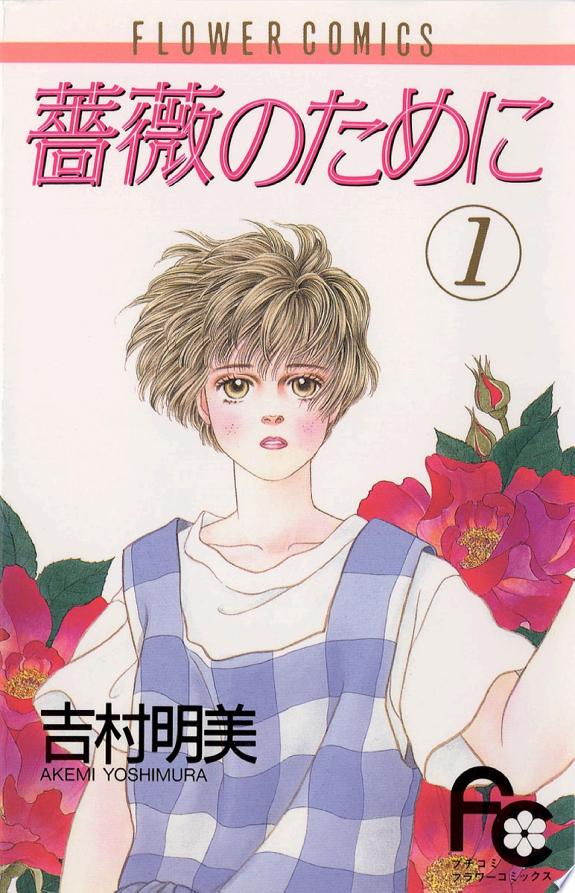
Bara no Tame ni follows Yuri Makurano, a plain, orphaned girl who learns her actress 'mother' is alive — along with three glamorous half-siblings — and a buried secret about her real parentage. An award-winning Shogakukan shojo drama by Akemi Yoshimura.

Romance / Drama
V.B. Rose
Yu's review of V.B. Rose — Ageha helps out at VB Rose, a boutique wedding dress shop run by two young men; her sister is getting married and Ageha becomes involved in making the dress; the craft focus and the shop's atmosphere form the backdrop for a romance with one of the shop's owners.
Written by
Yu
Manga Enthusiast from Japan
I grew up in Japan and manga literally saved me during a tough time in elementary school. My English isn't perfect, but my love for manga is real — and I want to share it with you.
Disclosure: This post contains affiliate links. As an Amazon Associate, I earn from qualifying purchases at no extra cost to you.