
Cactus's Secret Review: When the Girl Confesses First and Gets Called an Alien
by Nana Haruta
Read the first volume. If it doesn't hook you, put it down. It'll hook you.
Buy Cactus's Secret on Amazon →*Affiliate link — I earn a small commission at no extra cost to you.
I confessed to someone once, in middle school, and the boy laughed. He genuinely thought I was joking — that some friend had dared me to do it. I spent the rest of that year being extra cold to him so he'd never guess I'd meant it, which of course just made everything worse. So when I opened the first volume of Cactus's Secret and watched Miku Yamada get the exact same laugh, then get nicknamed "cactus" for going prickly every time her crush came near, I made a noise out loud. This was my exact teenage failure, drawn in Ribon's soft round lines.
That's the thing about this little four-volume series. It's not deep and it doesn't pretend to be. But Nana Haruta builds the whole story around something most shojo skips: the girl confesses first, gets rejected, and then has to keep showing up at school anyway.
Quick Take
- A shojo romance where the heroine makes the first move and gets crushed — then has to live with it
- Nana Haruta's comedy timing carries four breezy, complete volumes
- T (Teen) — gentle high school romance, nothing graphic
Story Overview
Miku Yamada has liked her classmate Kyohei Fujioka since middle school. When she finally works up the nerve to act on it, Kyohei is so oblivious he treats the whole thing as a gag. Worse, he starts calling her "cactus" — because whenever he's around, she gets defensive and prickly, all spines and no softness.
The first real gut-punch comes on Valentine's Day. Miku plans to hand Kyohei chocolate and confess for real. But Kyohei, having no idea he's the target, cheerfully volunteers to be her "practice partner" so she can rehearse her confession on him before the real thing. She confesses — to his face, meaning every word — and he rejects her, saying he only thinks of her as a friend.
That rejection is the engine of the series. Instead of disappearing, Miku has to keep sitting in the same classroom as the boy who just turned her down. The complication arrives in the form of Itsuki Natsukawa, the student council president, who witnesses how Kyohei treated her and decides to step in. His attention forces Kyohei to actually notice what he stands to lose. By chapter 12, the obliviousness finally breaks and Kyohei is the one confessing.
Characters
Miku Yamada — The reason this works. Miku is smart and stubborn, and after the rejection she doesn't curl into the whiny-doormat shape that shojo heroines so often take. She keeps her self-respect. Her arc is learning to stop being defensive — to put the spines down and let Kyohei actually see her — without pretending the rejection didn't hurt.
Kyohei Fujioka — A former delinquent type, and almost comically dense about feelings. The "cactus" nickname is his, and it's affectionate before he understands it's affectionate. His arc is slow realization: he doesn't dislike Miku, he just never processed what her prickliness meant, and watching someone else pursue her is what finally connects the wires.
Itsuki Natsukawa — The student council president and the romantic complication. He sees Kyohei reject Miku and takes matters into his own hands, becoming the rival who pressures the central pair forward. He's the catalyst that turns Kyohei's cluelessness into action.
What I Love About It
The "practice confession" scene. Miku has decided this is the day. She has the chocolate, she has the words. And Kyohei, with the best intentions and zero awareness, offers to let her rehearse on him — never realizing that the rehearsal is the real one. She says it to his actual face, and he pats it down as practice and then, separately, rejects her as a friend.
What I love is how cruel that is without anyone being cruel. Kyohei isn't a villain; he's just dense. Miku isn't pathetic; she did the brave thing and aimed straight. The comedy and the heartbreak are the same beat. Haruta gets that the worst rejections aren't the mean ones — they're the ones where the other person is being nice and still doesn't see you. That scene is why the "cactus" nickname lands: of course she goes prickly. She has to. It's the only armor she's got.
Memorable Scene ⚠️ Spoiler Warning
The reversal in chapter 12. After eleven chapters of Miku being the one reaching out and getting nothing back — after the rejection, after Natsukawa's interference, after Kyohei being clueless to the point of comedy — it's Kyohei who finally says it. The boy who couldn't tell a real confession from a practice run is the one who confesses.
It works because the series earned the inversion. The whole structure has been Miku doing the emotional labor; flipping it so Kyohei has to be vulnerable for once is the payoff. The cactus finally gets to lower her guard, because for the first time the other person reached first.
Pros & Cons
Pros
- The girl-confesses-first structure gives the rejection real weight
- Haruta's comedy timing is reliable
- Complete and self-contained at four volumes
- Miku keeps her dignity — no doormat heroine
Cons
- Short and light; the premise doesn't go anywhere unexpected
- Kyohei's denseness can test your patience
- A breezy read, not a deep one — if you want emotional complexity, this won't be it for you
Is Cactus's Secret Worth Reading?
If you want a short, complete shojo where the heroine makes the first move and the rejection actually costs something, yes. It's four volumes of warm Ribon comedy with one genuinely sharp idea at its center. If you're after depth or surprise, look elsewhere — this is comfort food, and it's good at being exactly that.
Similar Manga
| Title | Its Approach | How Cactus's Secret Differs |
|---|---|---|
| Lovely★Complex | Mismatched-pair comedy where banter masks feelings | Tighter and shorter; built around one rejection rather than a long mismatch gag |
| Kimi ni Todoke | Slow-burn first love through deep social misunderstanding | Faster and lighter; Miku is forward where Sawako is hesitant |
| High School Debut | Bright Ribon-adjacent romance about trying to be loved | Centers the girl confessing first and surviving the no |
Where to Buy
Read the first volume. If it doesn't hook you, put it down. It'll hook you.
VIZ Media (under its Shojo Beat imprint) released the complete four-volume English series in 2010, in print and digital.
This post contains affiliate links. If you purchase through these links, I may earn a small commission at no extra cost to you. As an Amazon Associate, I earn from qualifying purchases.
*Affiliate link — I earn a small commission at no extra cost to you.
More Manga You Might Like

Romance
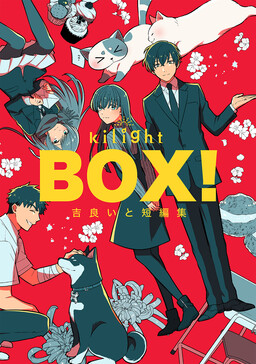
Nagareboshi Lens
Yu's review of Nagareboshi Lens — Risa Hoshino has never had close friends; she sees the world through metaphorical glass; she meets Touga Okamoto through a lens at school; Yayoi Ogawa's romance manga about seeing someone clearly for the first time and being seen in return.
Romance / Comedy
My Love Mix-Up!
Yu's review of My Love Mix-Up! — Aoki has a crush on his classmate Hashimoto; he borrows her eraser and notices it says 'Ida' on it, which he assumes means she likes their classmate Ida; when Ida catches him looking at the eraser, he assumes Aoki likes him; Aoki, rather than correct this misunderstanding, goes along with it — and discovers his feelings are more complicated than he thought.
Romance / Comedy
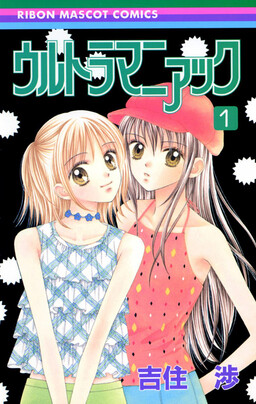
Ultra Maniac
Yu's review of Ultra Maniac — Nina is a witch from the Magic Kingdom studying abroad at a regular Japanese middle school; she is terrible at concealing her magic; Ayu, her only friend who knows her secret, tries to manage the chaos while pursuing her own low-key romance.
Romance
Ultra Romantic
Yu's review of Ultra Romantic — Tsurezure Ito is so shy his face literally overheats when flustered; Rika Yakumo is so direct she'll say anything she's thinking; together they are trying to figure out their feelings; Bolze's Jump romance comedy about two extremes finding each other.
Romance / Comedy
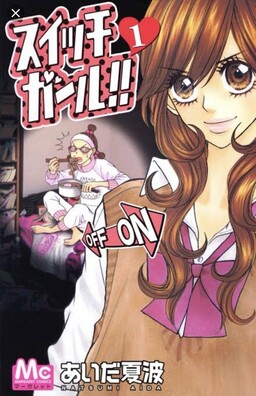
Switch Girl!!
Yu's review of Switch Girl — Nika Tamiya is perfectly put-together at school and a lazy slob at home; her neighbor Arata Kamiyama accidentally discovers her real self; he has his own switch — impressive at school, feral at home — and they become an unlikely pair built on mutual knowledge of each other's real selves.
Romance / Fantasy
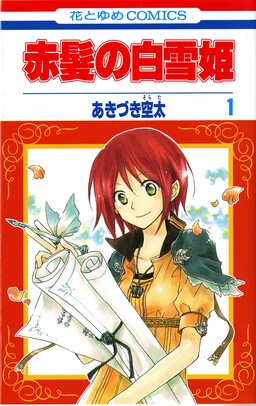
Snow White with the Red Hair
Yu's review of Snow White with the Red Hair — Shirayuki is an herbalist with distinctive red hair who flees her country when its prince demands her as his concubine; she crosses into the neighboring kingdom of Clarines and meets Prince Zen, who helps her without expecting anything in return; the series follows her life in Clarines as she trains to become a court herbalist while her relationship with Zen develops.
Written by
Yu
Manga Enthusiast from Japan
I grew up in Japan and manga literally saved me during a tough time in elementary school. My English isn't perfect, but my love for manga is real — and I want to share it with you.
Disclosure: This post contains affiliate links. As an Amazon Associate, I earn from qualifying purchases at no extra cost to you.