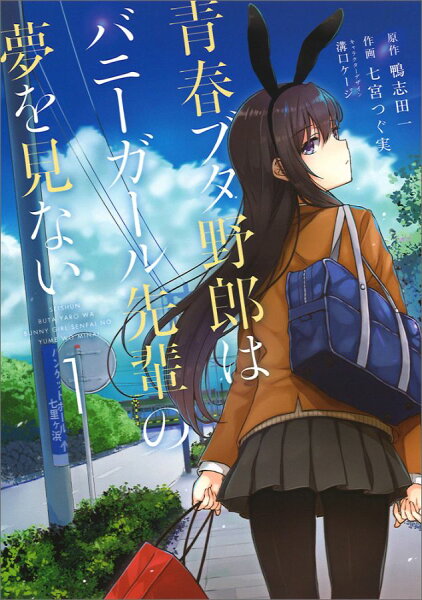
Rascal Does Not Dream of Bunny Girl Senpai Review: A Love Story Where Being Seen Is the Whole Point
by Hajime Kamoshida (story), Tsugumi Nanamiya (art), Keiji Mizoguchi (character design)
Read the first volume. If it doesn't hook you, put it down. It'll hook you.
Buy Rascal Does Not Dream of Bunny Girl Senpai on Amazon →*Affiliate link — I earn a small commission at no extra cost to you.
I remember being twelve and walking through a hallway full of classmates and feeling like none of them could actually see me. Not in a dramatic way. Just — I'd say something and it wouldn't land, I'd stand somewhere and people would move around me like furniture. Back then I thought there was something wrong with me. So when I read the first volume of the Rascal Does Not Dream of Bunny Girl Senpai manga and the whole supernatural hook turned out to be a famous girl literally becoming invisible because everyone has stopped noticing her, I felt that twist in my chest. The bunny suit is the joke on the cover. The thing underneath — the fear of being forgotten while you're still standing right there — is the part that stayed with me.
This is a review of the manga, specifically: Tsugumi Nanamiya's adaptation, not the light novel and not the anime. It's a tight two-volume telling of the first arc, and I think the compression actually works in its favor.
Quick Take
- A supernatural school romance where the "ghost" is a real, living girl that the world has quietly agreed to stop seeing.
- Tsugumi Nanamiya's art adapts Keiji Mizoguchi's character designs cleanly and gives the quiet conversations room to breathe.
- Age rating: T (Teen) — some bunny-suit fanservice and frank dialogue, but nothing graphic.
Story Overview
Sakuta Azusagawa is a second-year high school student in a seaside town near Fujisawa, with a reputation he didn't ask for and a sister he's fiercely protective of. During the Golden Week holiday, in a near-empty public library, he sees a girl walking around in a full bunny-girl costume. The girl is Mai Sakurajima — a teen actress on hiatus, the most famous person at his school. And the strangest part isn't the costume. It's that nobody else reacts to her at all.
Mai is wearing the costume on purpose, as a test. She's developing what the series calls Adolescence Syndrome — a phenomenon where intense, unspoken teenage feelings break out into physical reality. Because she put her acting career on hold and pulled away from everyone, the people around her have slowly, literally, stopped perceiving her. Sakuta can still see her, so she latches onto him as the one piece of evidence that she still exists.
The arc tracks the syndrome getting worse. Mai fades further until even Sakuta starts to forget her between encounters, and she's terrified she'll disappear entirely from the world's memory. The turning point — and the emotional core — is Sakuta's response to that: he stops being clever and does the loudest, most direct thing possible. After that, the question is whether being seen by one person, out loud, is enough to put a person back into the world.
Characters
Sakuta Azusagawa — The narrator and the engine of the whole thing. He's blunt, dry, and allergic to pretense, which reads as rude until you notice he's the only character who refuses to look away from anyone's pain. Interestingly, the manga softens him slightly compared to the novel and anime, making his bluntness feel more like loyalty than edge. His arc here is small but real: he goes from treating Mai's syndrome as a problem to solve to deciding her existence is worth publicly embarrassing himself over.
Mai Sakurajima — Not the cool, untouchable senpai the cover sells. Mai is composed on the surface and quietly unraveling underneath. She stepped back from acting and from people, and the syndrome is the cost of that withdrawal. Her arc is about learning to let someone insist she matters when she's stopped believing it herself — and she fights that help every step of the way, which is what keeps her from being a passive damsel.
Rio Futaba — Sakuta's science-club friend and the rational voice. She frames Adolescence Syndrome through observation and a Schrödinger's-cat-style logic: a person nobody observes drifts toward not existing. She's the one who gives the supernatural a shape Sakuta can actually act on.
Tomoe Koga and Kaede Azusagawa — Both sit at the edges of this first arc. Tomoe, a first-year, is set up here before her own time-loop story takes over later in the larger series; Kaede, Sakuta's younger sister, is the reason his protectiveness reads as lived-in rather than performed. In a two-volume manga they're seeds more than full arcs, but they ground Sakuta's world.
What I Love About It
The thing I keep coming back to is how the manga uses being unseen as its central image and then trusts the art to carry it. Nanamiya draws Mai with this small, deliberate visual logic — as the syndrome worsens, the framing isolates her, the world around her stops acknowledging her, and you feel the loneliness in the composition before any character explains it. Because it's a manga and not prose, it can sit on a single quiet panel of Mai's face and let the discomfort breathe. The library scene works for exactly this reason: the bunny costume should be ridiculous, and instead it's heartbreaking, because the whole point is that she dressed up in the most attention-grabbing outfit imaginable and still couldn't make anyone look.
What I love is that the romance and the horror are the same thing. Mai's deepest fear — being forgotten while she's still here — is also the wound the relationship has to close. Sakuta doesn't fix her with a grand speech about her worth. He fixes it by refusing to let her become invisible to him, and then by making the rest of the world catch up. The metaphor is clean: love, in this story, is just sustained attention. Someone deciding to keep seeing you on the days you've decided to disappear.
Memorable Scene ⚠️ Spoiler Warning
The scene that defines the arc is the public confession. As Mai is fading out of everyone's awareness — to the point where Sakuta himself struggles to hold onto her — he stops trying to be subtle. He stands in the schoolyard and shouts to the entire student body that he loves Mai Sakurajima, broadcasting her name and her existence as loudly as he physically can.
It lands because of everything the manga withheld before it. Sakuta spends the whole story being dry and indirect, deflecting with sarcasm. So the moment he drops all of that and just yells her name into a crowd, the contrast does the emotional work. And the mechanic underneath it is brutally simple and exactly right: she was disappearing because no one would acknowledge her, so the cure is forced, deafening acknowledgment. The whole school suddenly seeing her again isn't a magic spell — it's a boy deciding her existence is worth humiliating himself in public, and the world agreeing he's right. After that they start dating, and the relationship earns the warmth because we watched it get built out of that one loud refusal to let her vanish.
Pros & Cons
Pros:
- A supernatural premise that's actually a precise metaphor for adolescent isolation, not just window dressing.
- Nanamiya's adaptation arguably tells this arc better than the novel — Sakuta is more sympathetic and the visuals sell the loneliness.
- Self-contained: two Japanese volumes, one English omnibus, a complete beginning-to-end arc.
Cons:
- The manga only covers the first arc. If you want Tomoe's, Rio's, and Kaede's full stories, you're moving to the light novels or anime.
- The bunny-suit fanservice and some banter lean on light-novel conventions that won't be everyone's taste.
- It's a quiet, talky romance with a small cast — if you want big supernatural set-pieces, this is the wrong door.
Is Rascal Does Not Dream of Bunny Girl Senpai Worth Reading?
Yes, if you want a short, emotionally intelligent romance where the supernatural hook is really a story about loneliness and the simple act of being seen. It's a complete arc you can finish in a sitting, and the public confession alone justifies the read. Skip it only if fanservice framing or slow, conversation-driven pacing is a dealbreaker for you.
Similar Manga
| Title | Its Approach | How Bunny Girl Senpai Differs |
|---|---|---|
| The Melancholy of Haruhi Suzumiya | Adolescent emotions warp reality on a cosmic, plot-driven scale | Keeps the supernatural small and intimate — one girl, one fear, one school |
| Your Lie in April | Emotional school romance built on loss and performance | Trades the tragedy for a hopeful arc and a sci-fi-flavored "syndrome" framework |
| Bakemonogatari (manga) | Wordy supernatural romance where talk is the main event | Lighter and more grounded, with a single clean metaphor instead of dense wordplay |
Official English Translation Status
The Bunny Girl Senpai arc manga is completely available in English. Yen Press collects Tsugumi Nanamiya's two Japanese volumes into a single 2-in-1 omnibus, released August 18, 2020. So the entire first arc is one book in English — no waiting, no missing chapters.
Where to Buy
Read the first volume. If it doesn't hook you, put it down. It'll hook you.
This post contains affiliate links. If you purchase through these links, I may earn a small commission at no extra cost to you. As an Amazon Associate, I earn from qualifying purchases.
*Affiliate link — I earn a small commission at no extra cost to you.
More Manga You Might Like

Romance / Comedy
Midori Days
A review of Midori Days — Kazuro Inoue's eight-volume romantic comedy about high school delinquent Seiji Sawamura who wakes up one morning to find a miniature girl named Midori has replaced his right hand.
Romance / Comedy / Supernatural
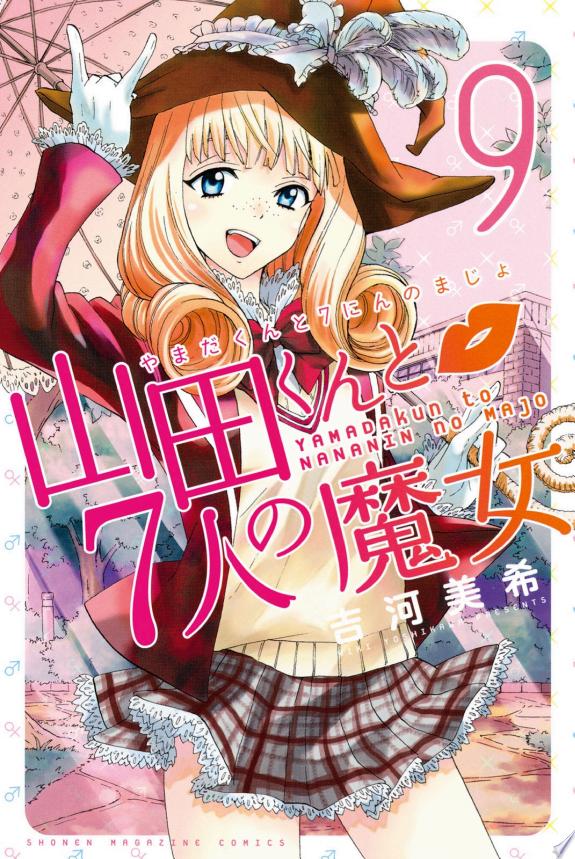
Yamada-kun and the Seven Witches
Yu's review of Yamada-kun and the Seven Witches — Ryu Yamada is a failing delinquent; Urara Shiraishi is the top student; when they fall down stairs together and accidentally kiss, Yamada discovers he has switched bodies with her; this supernatural power connects to seven witches in their school and to a larger mystery about their student council.

Romance / Comedy
A.I. Love You
A review of A.I. Love You — Ken Akamatsu's early romantic comedy series about a lonely programmer whose AI creation manifests as a real girl after a lightning strike; all the DNA of Love Hina in its earliest form, before Akamatsu found his full voice.
Romance / Supernatural
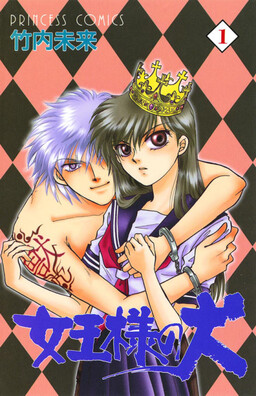
Her Majesty's Dog
Yu's review of Her Majesty's Dog — Amane Kamori comes from a family with the ability to command spirit beings; her partner is Hyoue, who appears human but is a demon dog spirit bound to her bloodline; as they navigate high school with Amane's spiritual obligations, Hyoue's feelings for her complicate the master-servant dynamic they have maintained.

Romance / Comedy
Kaguya-sama: Love Is War
Aka Akasaka's 28-volume romantic comedy (2015–2022) about Miyuki Shirogane and Kaguya Shinomiya, two student council officers at Japan's most elite high school who are both in love and both certain that whoever confesses first loses. Complete in English from VIZ Media.
Romance / Comedy
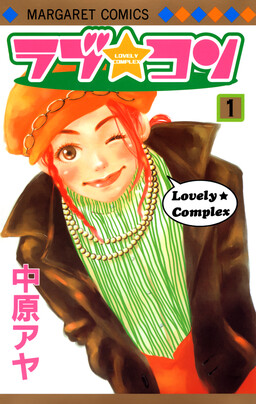
Love★Com
Love★Com follows tall girl Risa and short boy Otani, always mistaken for a comedy duo, as they help each other with their love lives and slowly realize their feelings for each other.
Written by
Yu
Manga Enthusiast from Japan
I grew up in Japan and manga literally saved me during a tough time in elementary school. My English isn't perfect, but my love for manga is real — and I want to share it with you.
Disclosure: This post contains affiliate links. As an Amazon Associate, I earn from qualifying purchases at no extra cost to you.