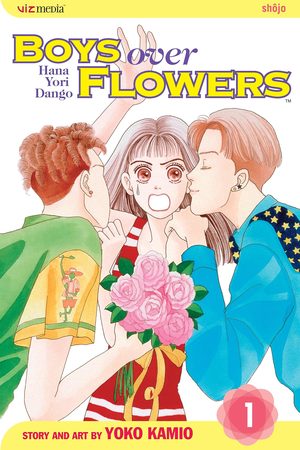
Boys Over Flowers Review: The Scholarship Girl Who Roundhouse-Kicked the Richest Boy in Japan
by Yoko Kamio
Read the first volume. If it doesn't hook you, put it down. It'll hook you.
Buy Boys Over Flowers (Hana Yori Dango) on Amazon →*Affiliate link — I earn a small commission at no extra cost to you.
I grew up reading shonen — Naruto, One Piece, boys punching their way toward dreams. Romance manga felt like a foreign country I wasn't allowed into. So when I finally picked up Boys Over Flowers, what surprised me wasn't the romance. It was the punch.
Three chapters in, the heroine roundhouse-kicks the most powerful boy in the school in the head and declares war on him. I sat there thinking: oh. This is a shojo manga, but the protagonist would fit right into the shonen I love. Tsukushi Makino doesn't wait to be rescued. She decides, very early, that she would rather be destroyed standing up than survive on her knees. I read all 37 volumes faster than I expected to.
Quick Take
- The shojo manga that defined the "poor girl / powerful rich boys" template and spawned dramas across all of Asia
- Tsukushi Makino is one of shojo's most combative protagonists — she fights back instead of breaking
- 37 volumes, complete in English; T (Teen), but the early-volume bullying is intense
Story Overview
Tsukushi Makino is a middle-class girl whose parents have enrolled her in Eitoku Academy, an elite school for the children of Japan's wealthiest families. She wants nothing more than to keep her head down and graduate unnoticed. Eitoku is ruled by the F4 — four heirs from the richest families in the country: Tsukasa Domyoji, Rui Hanazawa, Sojiro Nishikado, and Akira Mimasaka. When the F4 slip a "red notice" (red tag) into a student's locker, the entire school turns on that person as a sanctioned target.
The setup holds until Tsukushi's friend Makiko is humiliated by Tsukasa. Pushed past her breaking point, Tsukushi tells him off — and the next day finds the red tag in her locker. The school begins tormenting her. But instead of fleeing, she fights back, calling herself a "weed" that won't be pulled out. She tracks down Tsukasa and kicks him in the head, declaring war. Tsukasa, who has never met anyone willing to defy him, is dumbfounded — and then obsessed.
That kick is the turning point of the entire series. From there the story becomes a long, contentious romance: Tsukushi is initially drawn to the gentle Rui, who is quietly in love with the model Shizuka Todou, while Tsukasa's blunt, possessive attraction to Tsukushi slowly forces both of them to change. Their relationship is opposed at every turn by Tsukasa's cold, controlling mother Kaede, who sees Tsukushi as beneath her son and the Domyoji empire.
Characters
Tsukushi Makino — The reason the series works. She is not impressed by wealth or power, and she does not back down regardless of the cost. Her arc isn't about being rescued from poverty; it's about staying herself inside a world built to grind her down. She starts as a girl who wants to be invisible and ends as someone who refuses to let anyone — including a billionaire heir's mother — tell her who she's allowed to love.
Tsukasa Domyoji — The F4 leader and heir to a massive enterprise. He begins as a bully whose entitlement is so total it's almost childlike. Tsukushi's defiance is the first thing his money can't fix, and discovering she's "the one thing money cannot buy" is what cracks his armor. His arc is the slow, clumsy transformation from tyrant to someone capable of genuine devotion — though he stays blunt and inarticulate the whole way.
Rui Hanazawa — The quiet, sensitive member of the F4 and Tsukushi's first romantic interest. He carries a long-standing love for the older model Shizuka Todou. Rui is the "road not taken" — his connection to Tsukushi creates the triangle that keeps the series tense, but he ultimately steps aside rather than damage his friendship with Tsukasa.
Kaede Domyoji — Tsukasa's mother and the series' true antagonist. Cold and controlling, she repeatedly engineers separations between Tsukasa and Tsukushi to protect the family's status. She's the structural obstacle that gives the romance its stakes across 37 volumes.
What I Love About It
The roundhouse kick. Three chapters in, Tsukushi finds the red tag in her locker, watches the whole school turn against her, and instead of crumbling she goes looking for Tsukasa and kicks him square in the head. What I love is that the series puts this before the romance. Most shojo would have the heroine endure and then be noticed for her quiet strength. Kamio has Tsukushi physically retaliate against the most powerful person in her world, on page, in volume one.
What makes it land is Tsukasa's face afterward — pure bewilderment. He genuinely cannot process that someone, "let alone a girl," would defy him. That confusion is the seed of the whole romance: he falls for her precisely because she's the first thing in his life that doesn't bend to money. The kick isn't a cute meet-cute; it's a thesis statement. The poor girl's only weapon is that she won't break, and the manga makes that weapon literal.
Memorable Scene ⚠️ Spoiler Warning
Late in the series, after Tsukushi has confessed her feelings to Tsukasa as he leaves for the United States, Tsukasa is injured protecting Tsukushi's younger brother Susumu — and loses his memory of her entirely. The amnesia arc is brutal in a quiet way: Tsukushi has finally won him, and now she has to win him again, from zero.
What sticks with me is how the manga refuses to make it easy or romantic. Tsukushi tries to jog his memory by re-enacting their history — she reenacts their first confrontation by punching him, and he reacts badly and throws her out of the room; she tries recreating their first date, and that fails too. She keeps performing the person she used to be, not realizing that's not who he fell for. It's a painfully honest scene about how love can't just be reset and replayed. After all that fighting to be together, the manga asks whether their bond can survive being forgotten — and it makes you feel every awkward, failed attempt.
Cultural Context
Hana Yori Dango tapped into real anxieties about Japanese class stratification during the bubble era and the years after. A girl with no money or status surviving inside a world built for the ultra-wealthy resonated far beyond Japan, generating live-action adaptations in Japan, Taiwan (Meteor Garden), South Korea (Boys Over Flowers / Boys Before Flowers), and China — each one a cultural event in its own right. With over 61 million copies in circulation, it's one of the best-selling shojo manga ever made, and it won the Shogakukan Manga Award in 1996.
What English-Speaking Fans Say
Many Western readers came to this story backward — through the Korean drama or the Taiwanese Meteor Garden first, then the manga. A recurring sentiment in English fan discussion is that the manga's Tsukushi is more combative and harder-edged than most of the screen versions, and that the source material is more satisfying because of it. The "found it through the drama" pipeline means a lot of English-speaking fans are discovering the original after already loving the story's bones.
Pros & Cons
Pros
- Tsukushi is one of shojo's most durable, fight-back protagonists
- The class-conflict stakes are genuine and sustain the entire run
- 37 volumes give the romance room to develop slowly and convincingly
- Complete in English from Viz
Cons
- The early-volume bullying is intense by modern standards
- Tsukasa's early behavior reads as a dealbreaker by contemporary romance norms
- 37 volumes is a serious time investment
- The art is very much of its 1990s era — that's either nostalgic charm or a barrier, depending on you
Is Boys Over Flowers Worth Reading?
Yes — if you want a shojo romance with a heroine who hits back. It's a long, foundational classic with real class-conflict stakes and a slow-burn romance that earns its 37 volumes. Just know going in that the early bullying is harsh and Tsukasa starts as a villain before he becomes a love interest.
Who Is This Manga For?
- Readers who want shojo with real dramatic stakes and a protagonist who fights
- Fans of class-conflict romance — the gap between Tsukushi's world and the F4's is the engine
- Anyone curious about the manga that launched a thousand Asian dramas
- Readers willing to engage with a product of its time
Yu's Rating
| Category | Score |
|---|---|
| Story Depth | ★★★★☆ |
| Art Style | ★★★☆☆ |
| Character Development | ★★★★☆ |
| Accessibility for Non-Japanese Readers | ★★★★☆ |
| Reread Value | ★★★★☆ |
Similar Manga
| Title | Its Approach | How Boys Over Flowers Differs |
|---|---|---|
| Ouran High School Host Club | Rich school, class contrast played for comedy | Plays the same class gap for genuine drama and a combative heroine |
| Kimi ni Todoke | Gentle school romance, shy social outsider | Trades shyness for a protagonist who physically fights back |
| Skip Beat! | Combative heroine, entertainment-industry setting | Roots its conflict in class and wealth rather than showbiz revenge |
Official English Translation Status
Viz Media published the complete 37-volume run (2003–2009). All volumes are available in print and digital.
Where to Buy
Read the first volume. If it doesn't hook you, put it down. It'll hook you.
This post contains affiliate links. If you purchase through these links, I may earn a small commission at no extra cost to you. As an Amazon Associate, I earn from qualifying purchases.
*Affiliate link — I earn a small commission at no extra cost to you.
More Manga You Might Like

Romance / Drama
Fruits Basket
Yu's review of Fruits Basket — a girl who has lost everything moves in with a family cursed to transform into animals of the Chinese zodiac, and slowly melts the ice that generations of abuse built around their hearts.
Romance / Drama
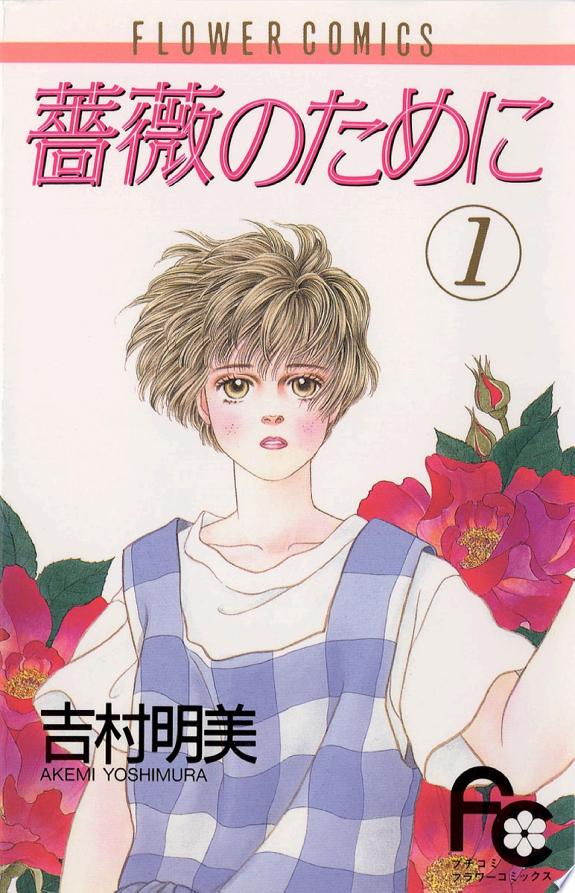
Bara no Tame ni
Bara no Tame ni follows Yuri Makurano, a plain, orphaned girl who learns her actress 'mother' is alive — along with three glamorous half-siblings — and a buried secret about her real parentage. An award-winning Shogakukan shojo drama by Akemi Yoshimura.
Romance / Drama
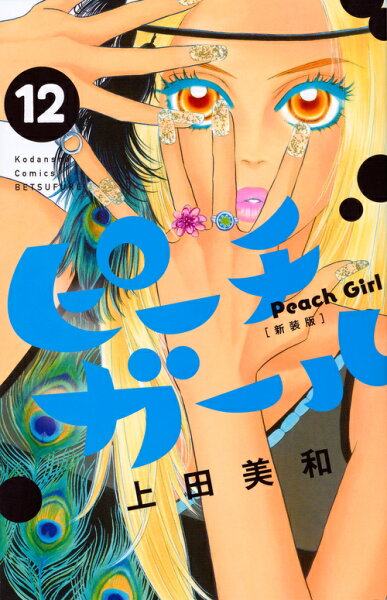
Peach Girl
Yu's review of Peach Girl — Momo Adachi's tan skin from swimming makes others assume she's a gyaru; her best friend Sae is actually her manipulative enemy; she is caught between two boys while Sae engineers situations against her.
Romance / Comedy
Ouran High School Host Club
Yu's review of Ouran High School Host Club — a scholarship student at an elite school accidentally breaks a vase and must join the Host Club to pay off the debt, in a manga that satirizes shojo tropes while being genuinely charming.
Romance / Drama
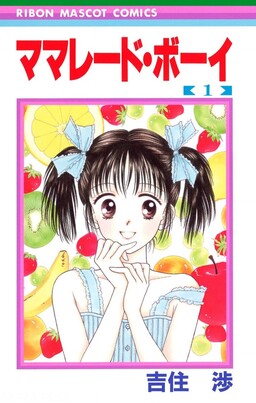
Marmalade Boy
Yu's review of Marmalade Boy — Miki Koishikawa's parents announce they are divorcing and remarrying other people; the other couple happens to have a son, Yuu, who moves into the same house; the series follows Miki's developing feelings for Yuu in this extremely unusual living situation.
Romance / Drama
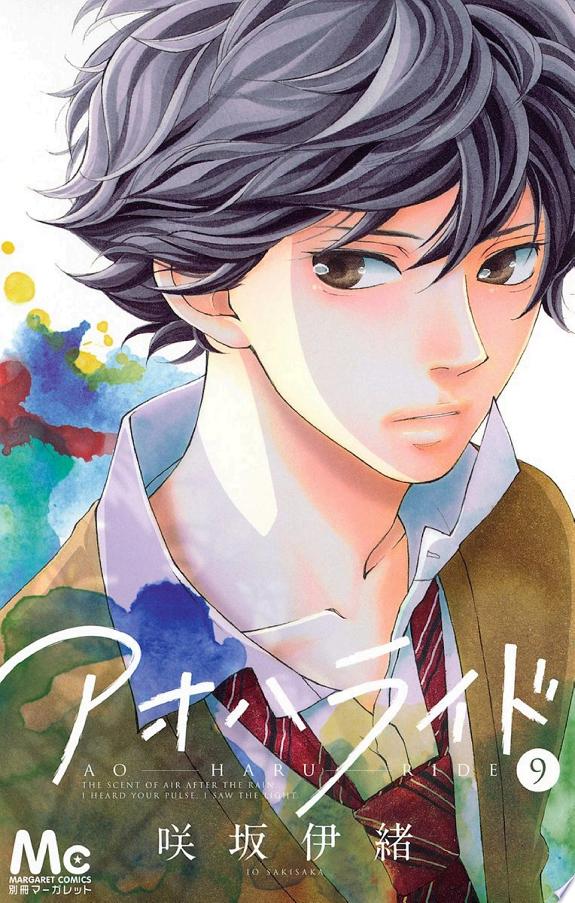
Ao Haru Ride
Yu's review of Ao Haru Ride — Futaba liked a boy named Tanaka in middle school. He vanished. She finds him again in high school as Kou Mabuchi, colder and changed, and spends the series trying to understand what happened to him.
Written by
Yu
Manga Enthusiast from Japan
I grew up in Japan and manga literally saved me during a tough time in elementary school. My English isn't perfect, but my love for manga is real — and I want to share it with you.
Disclosure: This post contains affiliate links. As an Amazon Associate, I earn from qualifying purchases at no extra cost to you.