
Boys Be... Review: First Love From the Side That Usually Doesn't Get to Talk
by Masahiro Itabashi (story), Hiroyuki Tamakoshi (art)
Read the first volume. If it doesn't hook you, put it down. It'll hook you.
Buy Boys Be... on Amazon →*Affiliate link — I earn a small commission at no extra cost to you.
When I was fifteen, I had a whole confession planned out for a girl who sat two desks ahead of me. I wrote it down. I rehearsed it walking home. And when the moment came, on the stairs by the shoe lockers, I said something so garbled that she just blinked and asked if I was okay. That was it. That was the whole event. Nothing happened, and I thought about it for years.
What I never had back then was a manga that told me this was normal — that the boy fumbling on the stairs was a worthy subject for a story, not a punchline. Boys Be... is built almost entirely out of those moments. It is romance told from the side that, in most manga of its era, only got to stand around in the background being clueless. The first time I read it I felt a little seen, and a little embarrassed, which is probably the correct response.
Quick Take
- A long-running Kodansha anthology of first-love stories told from the male point of view — clumsy confessions, near-misses, and the kind of love you remember more than you ever lived
- Six recurring high schoolers anchor it, but it works as a collection of short, mostly self-contained romantic episodes rather than one continuous plot
- Age rating: T (Teen) — romantic situations, some fan service, and frank teenage feelings, but nothing graphic
Story Overview
Boys Be... ran in Kodansha's Weekly Shōnen Magazine and grew into one of the longest romance properties in shōnen — the first series alone covers 32 volumes, followed by 2nd Season (20 volumes) and L Co-op (6 volumes). It is structured as an anthology: most chapters or short arcs zoom in on one boy and one feeling, and you can read a stretch of it almost like a short-story collection about being seventeen and hopeless.
The connective tissue is a cast of six recurring characters whose romantic lives loop around each other. The emotional center is Kyoichi Kanzaki, an art-leaning high schooler, and Chiharu Nitta, his childhood friend and a runner on the track team. Their slow, stop-start orbit — neither of them able to say the obvious thing — is the closest the series has to a spine.
But the dominant mode is bittersweet rather than triumphant. Confessions land badly. Timing is wrong. A boy realizes the girl he idealized has her own life that doesn't include him. The series keeps returning to the gap between what a boy feels and what he can actually get out of his mouth, and it treats that gap as the real subject — not the eventual kiss.
Characters
Kyoichi Kanzaki — The recurring lead. Earnest, art-minded, and frequently a step behind his own heart. His arc isn't a clean climb to happiness: one of his lowest points is witnessing Chiharu with another boy, and he later spends time in a brief relationship with Shoko Sayama. He's the closest thing the anthology has to a protagonist precisely because he keeps not getting it right.
Chiharu Nitta — Kyoichi's childhood friend and a track star. She's the gravitational center of the ongoing thread, and her feelings for Kyoichi run through indirect gestures rather than declarations. During a summer training stretch she becomes involved with a college student, Okazaki, which throws the Kyoichi dynamic into open conflict instead of comfortable stalemate.
Makoto Kurumizawa — The girl-obsessed one, who literally keeps a database of attractive schoolmates and cycles through failed attempts at romance. His running joke pays off when he ends up with Yumi — the last pairing the data ever predicted.
Yumi Kazama — A sarcastic, glasses-wearing girl who openly mocks romance and the people chasing it. She falls for Makoto during a stretch of mock-dating "practice," which is a very Boys Be... way to fall in love: sideways, while pretending you're above it.
Yoshihiko Kenjo — Athletically gifted but bored by sport until other interests (and people) pull him in, including a memorable, accidental-kiss encounter with exchange student Aya Kurihara.
Aki Mizutani — The romantic idealist of the group, maintaining a long-distance relationship with a photographer boyfriend up in Hokkaido. She's the counterweight to Yumi's cynicism.
Art Style
Tamakoshi draws clean, soft, expressive characters that suit the register completely. The strength is faces — small, specific emotional states caught without overstatement, the difference between embarrassment and heartbreak rendered in the set of an eyebrow. It's not formally adventurous artwork, but for a series whose entire engine is feelings nobody can articulate, having an artist who can put the unsaid thing on a character's face is exactly the right tool. Be aware the series leans into fan service in places, more openly than the gentle tone might suggest.
What I Love About It
I find the failures far more interesting than the wins.
The chapters where the boy doesn't get the girl — where the confession misfires, where the timing is off, where he realizes he was in love with a version of her he built in his own head — are more honest and more affecting than any of the clean happy endings. Kyoichi is the recurring proof of this. His arc isn't a smooth ascent; it includes watching Chiharu with someone else and a relationship with Shoko Sayama that doesn't fix the thing he actually wants fixed. The series is willing to let its lead spend long stretches losing, and to treat that as worth your time.
What stays with me is how Boys Be... understands that first love is frequently about the feeling inside you rather than the actual person in front of you. The Makoto-and-Yumi thread says the same thing from the comic angle: a boy with a literal spreadsheet of crushes ends up falling for the one girl who refused to be on it, during a fake-dating exercise that stops being fake somewhere neither of them noticed. The anthology keeps finding new shapes for one idea — you rarely fall for who you think you're falling for — and that's the thing I keep coming back for.
Memorable Scene ⚠️ Spoiler Warning
The summer-training arc is the one I think about. Chiharu, away at training, becomes involved with the college student Okazaki — and that, not a dramatic confession, is what finally cracks the Kyoichi-and-Chiharu stalemate open. For volumes the two of them have coasted on "childhood friends" as a way of never risking anything. Okazaki ends that. Suddenly the unspoken thing has a deadline and a rival, and the comfortable ambiguity Kyoichi has been hiding inside is gone.
What makes it land is that the series refuses to make it tidy. There's no villain — Okazaki isn't a cartoon. Chiharu isn't punished for having a life of her own. It's just the ordinary, unbearable mechanics of watching someone you never claimed get claimed by somebody else, and realizing the only person to blame is the one who never spoke up. That's the scene that told me Boys Be... actually meant what it said about looking at romance from the side that usually stays quiet.
What English-Speaking Fans Say
The English fanbase is small but fond. Most readers found it through Tokyopop's mid-2000s release of Boys Be: Second Season (the publisher chose the second series, calling it the more contemporary and mature one) and remember it warmly as an unusually grounded romance for its shelf. The recurring frustration is the same one I hit: the English run stopped at 17 volumes and the license lapsed in 2009, so the collection is incomplete and out of print, and the original 32-volume first series was never localized at all.
Pros & Cons
Pros
- Honest, grounded treatment of teenage male emotional life — rare for its era and genre
- Anthology format means individual stories work as satisfying standalone reads
- Warm, expressive art that nails the unspoken feeling
- The recurring cast gives the episodic structure just enough continuity
Cons
- The English release is incomplete (17 volumes of 2nd Season) and out of print
- The original 32-volume first series was never officially translated
- Anthology structure means shallower character development than a focused single romance
- The fan service won't be to every reader's taste
- The episodic rhythm can feel repetitive across a long run — that's either restful or monotonous depending on you
Is Boys Be... Worth Reading?
Yes, with eyes open. The honest, boy's-eye view of first love and the bittersweet near-misses are genuinely worth encountering, and the individual stories hold up. Just know going in that the official English version is incomplete and out of print, so tracking it down — and finishing the larger saga — takes real effort.
Similar Manga
| Title | Its Approach | How Boys Be... Differs |
|---|---|---|
| I''s | One boy's continuous, aching crush across a single story | Boys Be... spreads the ache across an anthology of many boys and many failures |
| Video Girl Ai | Teen romance with a supernatural hook | Boys Be... stays fully grounded and realistic |
| Kare Kano (His and Her Circumstances) | Double perspective on a high school couple | Boys Be... stays in the male point of view and is episodic rather than serialized |
Reading Order / Where to Start
Start with Boys Be: Second Season, Volume 1 — that's the series Tokyopop actually licensed in English. The official release covers 17 of its 20 volumes before the license lapsed, so you can read a long, satisfying stretch in English even though you can't officially finish it.
Where to Buy
Read the first volume. If it doesn't hook you, put it down. It'll hook you.
This post contains affiliate links. If you purchase through these links, I may earn a small commission at no extra cost to you. As an Amazon Associate, I earn from qualifying purchases.
*Affiliate link — I earn a small commission at no extra cost to you.
More Manga You Might Like
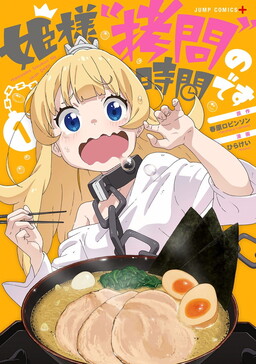
Romance / Comedy
'Tis Time for 'Torture,' Princess
Yu's review of 'Tis Time for 'Torture,' Princess — the Princess is captured by the Demon King's forces; the Three Hell Executives interrogate her to get information about the kingdom's defenses; the 'torture' they use is things she actually enjoys — delicious food, comfortable beds, adorable animals — and she almost gives up information every time.
Romance / Slice of Life
Happy-Go-Lucky Days
A review of Happy-Go-Lucky Days by Wandering Son's Takako Shimura — a collection of short BL stories about love found in everyday moments.
Romance / Comedy
My Love Mix-Up!
Yu's review of My Love Mix-Up! — Aoki has a crush on his classmate Hashimoto; he borrows her eraser and notices it says 'Ida' on it, which he assumes means she likes their classmate Ida; when Ida catches him looking at the eraser, he assumes Aoki likes him; Aoki, rather than correct this misunderstanding, goes along with it — and discovers his feelings are more complicated than he thought.

Romance / Slice of Life
My Dress-Up Darling
Yu's review of My Dress-Up Darling — Wakana Gojo is a quiet boy learning to make traditional hina dolls who believes his interests make him weird; Marin Kitagawa is an outgoing, beautiful girl who wants to cosplay as characters from eroge games she loves; she asks Wakana to make her costumes; the series follows their collaboration and the relationship that develops.
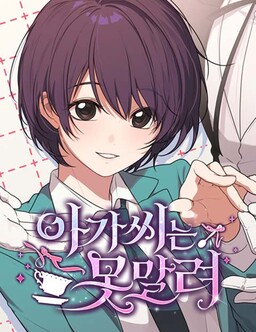
Romance / Drama
I Cannot Reach You
Yu's review of I Cannot Reach You — Kakeru is perfect: good at everything, well-liked, seemingly without needs; his best friend Yamato has been in love with him since childhood but has convinced himself that someone like Kakeru is beyond his reach; the series is about the gap between who Yamato thinks Kakeru is and who Kakeru actually is.

Romance / Comedy
Fly Me to the Moon
Yu's review of Fly Me to the Moon (Tonikaku Kawaii) — Nasa Yuzaki saves a girl from a traffic accident; she agrees to marry him on the spot if he can find her; when they reunite, they marry immediately; the series follows their married life as Nasa gradually learns who his wife Tsukasa actually is and why she proposed so quickly.
Written by
Yu
Manga Enthusiast from Japan
I grew up in Japan and manga literally saved me during a tough time in elementary school. My English isn't perfect, but my love for manga is real — and I want to share it with you.
Disclosure: This post contains affiliate links. As an Amazon Associate, I earn from qualifying purchases at no extra cost to you.