Boku Girl Review: A Bored God Turns a Heartbroken Boy Into the Girl Everyone Already Saw
by Akira Sugito
Read the first volume. If it doesn't hook you, put it down. It'll hook you.
Buy Boku Girl on Amazon →*Affiliate link — I earn a small commission at no extra cost to you.
When I was in middle school, kids decided what I was before I ever opened my mouth. Quiet, weird, easy to ignore — that was my label, and nothing I did changed it. So I have a soft spot for stories about someone who is treated as one thing while being something else underneath. Boku Girl hooked me on exactly that nerve: a boy who is read as a girl by everyone he meets, until a god decides to make the misreading literal.
I went in expecting a dumb ecchi gag manga. I came out genuinely moved by the last volume. That gap — between what I assumed and what I got — is the whole reason I want to write about it.
Quick Take
- A heartbroken boy with a girlish face is turned into a real girl by Loki, the Norse trickster god, who does it purely because he is bored and Mizuki is "the perfect prank material."
- It looks like a throwaway gender-bender ecchi comedy, but across 11 volumes it builds toward a surprisingly sincere ending about choosing your own gender and your own feelings.
- Age rating: M (Mature) — there is steady fan service and sexual comedy built into the transformation premise.
Story Overview
Mizuki Suzushiro is a first-year high schooler from a family that runs an aikido dojo — he is an aikido practitioner himself and desperately wants to be seen as a normal, masculine guy. The problem is his face: he is so girlish-looking that strangers constantly mistake him for a beautiful girl. He works against it. It doesn't matter.
The story starts with a gut-punch. Mizuki confesses to his crush, classmate Yumeko Fujiwara — and gets turned down, because Yumeko likes his childhood friend, Takeru Ichimonji. Heartbroken, Mizuki catches the eye of Loki, the trickster god, who watches the human world looking for entertainment. Loki stings him with a strange bee-like insect, and Mizuki wakes up as an actual girl.
That's the setup, not the story. Loki doesn't fix it and leave — he enrolls at Mizuki's school disguised as a foreign transfer student to watch the experiment up close. The central question becomes: now that the physical reality matches how everyone always read him, what does Mizuki actually want? Takeru, the one person who always treated him as "just a normal guy," starts seeing him differently. Yumeko stays in the picture as the girl Mizuki once loved. And Mizuki spends the series insisting he wants his old body back — while the manga quietly asks whether that's the truth or a lie he's telling himself.
The ending pays it off. Loki finally hands Mizuki an hourglass and forces him to choose his gender before the sand runs out. Mizuki chooses to remain a girl.
Characters
Mizuki Suzushiro — The protagonist, and the whole reason the premise works. He starts the series performing masculinity — aikido, "I have to be a man" self-talk — partly because the world keeps refusing to let him. His arc is the slow, painful admission that the version of himself he's been fighting might be the one he actually wants. He spends most of the series claiming he'll change back, and only at the very end stops lying to himself.
Takeru Ichimonji — Mizuki's childhood friend, and originally the only person who saw Mizuki as an ordinary guy rather than a pretty girl. That's exactly why his shift hurts and lands: the one person whose gaze Mizuki trusted starts falling for him. His confession in chapter 104 is the emotional spine of the back half of the series.
Yumeko Fujiwara — The class committee member Mizuki confessed to in chapter one. She likes Takeru, which is the rejection that kicks everything off. She isn't a villain or a simple obstacle; by the end she functions as the "person Mizuki admired," and her presence is part of what finally pushes Mizuki to decide.
Loki — The Norse trickster god who caused all of it, here drawn as a centuries-old being in a girlish form who enrolls as a transfer student to enjoy the show. He's the engine of the comedy and the one who, at the climax, refuses to let Mizuki dodge the choice any longer.
What I Love About It
What I love is that Boku Girl is honest about being a horny comedy and still respects its own premise. A lot of gender-bender manga use the body swap purely as an excuse for fan service and never let the protagonist have an inner life. This one does both at once. The jokes are loud and the fan service is constant — but underneath, it's tracking one real question across 11 volumes: is Mizuki resisting the change because it's wrong for him, or because he's scared of admitting it isn't?
The thing that won me over is the framing device. Loki turns Mizuki into a girl not to teach a lesson but because he's bored — there's no moral, no curse-with-a-purpose. That randomness is what makes the emotional payoff feel earned instead of preachy. Nobody is telling Mizuki who to be. The god just removed the excuse, sat back, and let Mizuki argue with himself for eleven volumes until he finally answered the question on his own terms. For a series that opens looking like pure gag material, getting there feels like a small miracle.
Memorable Scene ⚠️ Spoiler Warning
Two beats, close together at the very end, are what stuck with me.
The first is Takeru's confession in chapter 104 — fans literally call it a name-in-the-history-books romcom moment, "a man showing what he's made of." After a whole series of Mizuki insisting he's going back to being a boy, Takeru lays his feelings bare anyway, refusing to treat Mizuki's identity as a temporary glitch.
The second is the answer. In chapter 106, Mizuki finally stops performing — finally stops saying he'll change back — and replies, "I love you too" (僕も…好き), then tells Takeru to take responsibility for it. And the final chapter closes not on the romance but on Mizuki's own monologue: that he has come to love himself as a girl. After 107 chapters of a boy fighting how the world saw him, the ending isn't the world winning — it's Mizuki choosing, on his own, the self he'd been denying. That landing is why I remember this series at all.
Pros & Cons
Pros
- A gender-bender comedy that actually commits to an emotional arc and a real ending
- Mizuki's internal conflict — fear of admitting what he wants — is treated with real care
- Takeru's confession and Mizuki's answer genuinely pay off the long build
- Complete in 11 volumes; it doesn't sprawl forever
Cons
- Heavy, constant fan service that is baked into the premise — not optional flavor
- The "want my old body back" plot stalls for several volumes before resolving
- Loki's god-experiment framing can feel contrived if you don't buy into it
- The mix of loud ecchi comedy and sincere identity drama won't land for everyone — you have to be willing to take both at once.
Is Boku Girl Worth Reading?
Yes, if you can take an ecchi comedy that means more than it lets on. It's an 11-volume gender-bender romcom that looks disposable and quietly turns into a story about choosing your own gender and your own feelings. If constant fan service is a dealbreaker, skip it; if you can sit with it, the ending earns the ride.
Content Warnings & Age Rating
Age Rating: M (Mature) Content Warnings: Ongoing gender transformation as the central premise; steady fan service and sexual comedy; identity and gender themes; romantic situations.
The fan service here is not occasional — it's structural to the premise. Treat this as a mature ecchi title.
Similar Manga
| Title | Its Approach | How Boku Girl Differs |
|---|---|---|
| Ranma ½ | Gender-swap played as long-running martial-arts gag comedy with no real resolution | Boku Girl commits to a single emotional arc and an actual ending about identity |
| Kashimashi: Girl Meets Girl | A boy reborn as a girl, played as gentle romance drama | Boku Girl is far hornier and more comedic, but reaches a similar place on accepting oneself |
| Prunus Girl | A "boy who looks like a girl" romcom about perception and attraction | Boku Girl makes the misreading literal via transformation rather than leaving it ambiguous |
Official English Translation Status
There is no licensed English edition of Boku Girl. Despite a healthy fanbase in English, the series was never picked up for an official North American release — it's a Shueisha title, and no English publisher has licensed it. The only legitimate way to read it is the Japanese print or digital edition.
Where to Buy
No English release yet. That just means you find it before everyone else does.
The Japanese edition (all 11 volumes) is the only official way to read it:
Find Boku Girl on Amazon.co.jp →
This post contains affiliate links. If you purchase through these links, I may earn a small commission at no extra cost to you. As an Amazon Associate, I earn from qualifying purchases.
*Affiliate link — I earn a small commission at no extra cost to you.
More Manga You Might Like

Romance / Comedy
Kaguya-sama: Love Is War
Aka Akasaka's 28-volume romantic comedy (2015–2022) about Miyuki Shirogane and Kaguya Shinomiya, two student council officers at Japan's most elite high school who are both in love and both certain that whoever confesses first loses. Complete in English from VIZ Media.
Romance / Comedy
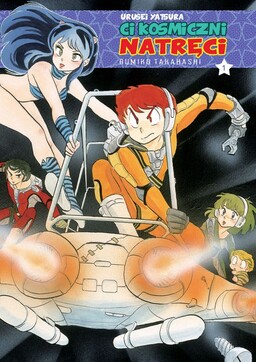
Urusei Yatsura
Yu's review of Urusei Yatsura — Earth is invaded by aliens; a random lottery selects Ataru Moroboshi to compete against the alien princess Lum in a game of tag; he wins by grabbing her horns; his victory declaration is mistaken for a marriage proposal; Lum moves into his house; Ataru continues to chase every other girl he sees while Lum insists on being his wife.

Romance / Comedy
Toradora!
Yu's review of Toradora! — a delinquent-looking boy and a tiny, terrifying girl make a deal to help each other confess to the other's best friend, and discover they had the wrong target all along.

Romance / Comedy
'Tis Time for 'Torture,' Princess
Yu's review of 'Tis Time for 'Torture,' Princess — the Princess is captured by the Demon King's forces; the Three Hell Executives interrogate her to get information about the kingdom's defenses; the 'torture' they use is things she actually enjoys — delicious food, comfortable beds, adorable animals — and she almost gives up information every time.
Romance / Comedy
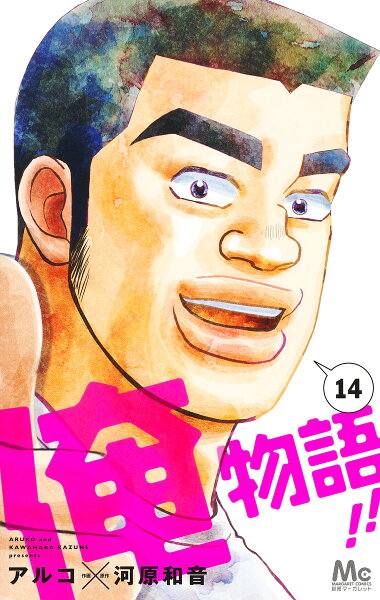
My Love Story!!
Yu's review of My Love Story!! — a huge, scary-looking boy with no luck with girls saves a girl from a groper on the train, and she falls in love with him — not his handsome best friend.

Romance / Comedy
My Love Mix-Up!
Yu's review of My Love Mix-Up! — Aoki has a crush on his classmate Hashimoto; he borrows her eraser and notices it says 'Ida' on it, which he assumes means she likes their classmate Ida; when Ida catches him looking at the eraser, he assumes Aoki likes him; Aoki, rather than correct this misunderstanding, goes along with it — and discovers his feelings are more complicated than he thought.
Written by
Yu
Manga Enthusiast from Japan
I grew up in Japan and manga literally saved me during a tough time in elementary school. My English isn't perfect, but my love for manga is real — and I want to share it with you.
Disclosure: This post contains affiliate links. As an Amazon Associate, I earn from qualifying purchases at no extra cost to you.