
Boarding School Juliet Review: What If Romeo Just Told Juliet in Chapter One?
by Yousuke Kaneda
Read the first volume. If it doesn't hook you, put it down. It'll hook you.
Buy Boarding School Juliet on Amazon →*Affiliate link — I earn a small commission at no extra cost to you.
When I was a kid, the loudest fights I ever saw weren't about anything real. Two groups of boys, one from my side of the schoolyard and one from the other, who hated each other because that was just how it had always been. Nobody could have told you why. I remember thinking even then how stupid it was — and how impossible it felt to be the one person who stepped across that line.
That's the whole emotional engine of Boarding School Juliet, and it's why I expected to roll my eyes at it and instead read all 16 volumes in a weekend. The gimmick is right there in the title: it's Romeo and Juliet, played as shonen comedy. But Yousuke Kaneda does something I didn't expect. Instead of milking the will-they-won't-they, he has Romio confess in chapter one. Juliet says yes in chapter one. And then the real story begins — not "will they get together," but "two people in love inside a system built to keep them apart, trying to survive long enough to change it."
Quick Take
- Romeo and Juliet rebuilt as shonen comedy romance — the confession happens immediately, so the tension comes from keeping the relationship secret, not from whether it'll happen
- Kaneda lets Juliet have her own political goal (changing a law that bars women from inheriting noble rank) so she's never just the love interest
- 16 volumes, complete in English from Kodansha, rated T (Teen) — slapstick rivalry violence and light romantic content, nothing graphic
Story Overview
Dahlia Academy is an elite boarding school where students from two warring nations share one campus. The Touwa Empire kids live in the Black Dog dormitory; the Principality of West kids live in the White Cat dormitory. The two dorms despise each other on sight. That hatred is the established order of the school, enforced by the students themselves.
Romio Inuzuka leads the Black Dog first-years — strong-armed, hot-headed, terrible at studying and at swimming, but fiercely sincere. Juliet Persia leads the White Cat first-years — disciplined, capable, a noble's daughter who can do almost anything except cook. They've been in love for a long time. In the opening chapter Romio confesses, Juliet accepts, and they become a couple inside the one institution where their being together is socially unthinkable.
From there the series is the long game of a secret relationship under pressure. The early Sports Festival arc sets the tone: Juliet gets hurt in dorm faction infighting, Romio retaliates against the person responsible, and the fallout costs him his leadership position. Later, the Prefect election arc in their second year is the real turning point — their relationship gets exposed, but instead of being destroyed, they turn the moment around with the help of the allies they've earned, and each becomes Head Prefect of their own dorm. The West Principality school trip takes the conflict to its root: Juliet's father, and a duel Romio has to win to be taken seriously. By the finale the secret is gone entirely. Seven years after graduation, the cast gathers back at Dahlia for Romio and Juliet's wedding — staged as a public symbol of peace between the two nations they were born to keep apart.
Characters
Romio Inuzuka — The shonen heart of the thing. He's bad at hiding his feelings, which is most of the comedy, but his defining trait is that he means it. When he tells Juliet he'll change the world for her, the series treats that as a real promise and spends 16 volumes cashing it. His arc is the dumb-but-loyal hothead slowly becoming someone with the standing to actually do it — ending the manga as a politician working for reconciliation between the nations.
Juliet Persia — The reason the manga works better than its premise. She's not waiting around to be chosen. She has a goal of her own: the Principality of West bars women from inheriting noble rank, and she wants to change that law. The relationship and her ambition aren't in competition — she wants both, and Kaneda takes that seriously instead of forcing her to pick. Her duel-shadowed homecoming to West, facing her own father, is where that ambition gets tested hardest.
Hasuki Komai — Romio's childhood friend, a shrine maiden, energetic and dependable. She carries feelings for Romio while loyally supporting him and (eventually) the relationship — one of the secondary threads that gives the back half its emotional weight.
Char (Chartreux Westia) — Princess of West and Juliet's close friend, immensely capable, who carries her own affection for Juliet. She's the strongest example of how Kaneda lets the supporting cast have real interior lives rather than existing only to react to the leads.
What I Love About It
What I love is that Juliet's arc is never subordinate to Romio's. The default failure mode of secret-relationship stories is that the whole thing becomes the boy's anxiety — his fear of getting caught, his scheming to hide it, the girl reduced to the prize he's protecting. Boarding School Juliet refuses that. Juliet's project to change the inheritance law of West is given the same narrative seriousness as the romance, and crucially, her two goals aren't framed as a choice. She wants to be with Romio and she wants to reform her country. The manga's answer is: why not both, and here's the work it takes.
That choice pays off at the structural level. By the ending, their relationship being made public isn't just a happy resolution to a love story — it's the political symbol that the two nations needed. The wedding that closes the series, seven years after graduation, lands because Kaneda built Juliet as someone whose love and whose ambition were always the same project. Romio ending up as a politician working toward reconciliation, Juliet having pushed against the system that defined her — the personal and the political resolve together. For a manga that opens as a goofy confession comedy, that's a more coherent payoff than I expected, and it's why the romance feels earned rather than just cute.
Memorable Scene ⚠️ Spoiler Warning
The Prefect election in their second year is the chapter I keep coming back to. For most of the series the secret has been the engine — the constant comedic and emotional threat of discovery. Then it happens: their relationship is exposed in front of the whole school, the thing the entire premise was structured to prevent. And instead of the catastrophe the genre trains you to expect, Romio and Juliet turn it around. The allies they've quietly built across both dorms rally behind them, and the two of them come out of it not destroyed but elevated — each elected Head Prefect of their own house.
What makes it stick is that it inverts the Shakespeare it's named after. Romeo and Juliet is a tragedy because the lovers can never make their love public without dying for it. Kaneda spends his whole series asking the opposite question — what if making it public is the win? — and this is the chapter where the answer arrives. The exposure that should have ended everything becomes the moment they gain real power inside the system. It's the hinge the back half of the manga swings on, and it earns the wedding it's building toward.
Pros & Cons
Pros
- Romeo and Juliet premise executed with real comedic intelligence — confession in chapter one frees the story to be about something
- Juliet has a genuine arc and political goal; she's never just the love interest
- Strong ensemble — Hasuki, Char, Scott and others develop alongside the leads
- Complete in 16 volumes with a finale that actually pays off the setup
Cons
- Secret-relationship comedy can get repetitive in the middle volumes
- Some of the dorm-rivalry subplots are weaker than the central relationship
- The premise is familiar territory if you've read a lot of shonen romance — the gimmick works, but it is a gimmick, and that won't land for everyone
Is Boarding School Juliet Worth Reading?
Yes — if you want a shonen romance that knows exactly what it is and finishes the job. The Romeo-and-Juliet framing could have been a one-note joke, but Kaneda turns it into a real question about whether love can be made public instead of buried, and gives Juliet enough agency that the romance never feels one-sided. The middle sags a little and the gimmick is a gimmick, but it's complete, it's satisfying, and it sticks the landing.
Who Is This Manga For?
- Readers who want shonen romance where the comedy is the primary mode
- Anyone curious how the secret-relationship structure plays out over a full, completed series
- Fans of ensemble casts where the supporting couples actually develop
- People who want a romance manga with a real ending, not an open-ended hang
Similar Manga
| Title | Its Approach | How Boarding School Juliet Differs |
|---|---|---|
| Nisekoi | Fake-relationship comedy that stretches the central tension for dozens of volumes | Resolves the "will they" in chapter one and makes the secret, not the uncertainty, the engine |
| Kaguya-sama: Love Is War | Romance as a battle of pride between two leads too stubborn to confess | The leads confess immediately; the war here is against the world, not each other |
| We Never Learn | School ensemble romance from the same magazine era with multiple love interests | Commits to one central couple from the start and gives the female lead her own political arc |
Official English Translation Status
Kodansha Comics published the complete English series — all 16 volumes, in print and digital. The translation is finished, so you can read the whole thing without waiting on releases.
Where to Buy
Read the first volume. If it doesn't hook you, put it down. It'll hook you.
This post contains affiliate links. If you purchase through these links, I may earn a small commission at no extra cost to you. As an Amazon Associate, I earn from qualifying purchases.
*Affiliate link — I earn a small commission at no extra cost to you.
More Manga You Might Like
Romance / Comedy
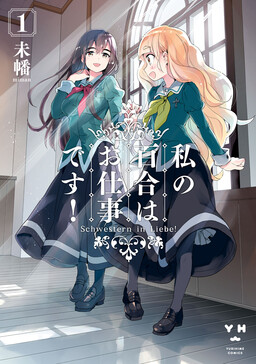
Yuri Is My Job!
Yu's review of Yuri Is My Job! — Hime Shiraki's entire identity is performing perfect femininity for public approval; working at Liebe Girls Academy café requires her to act out romantic yuri relationships with her coworkers for customers; her assigned partner Mitsuki hates her genuinely, and Hime begins to develop feelings that are not performance.

Romance
Shikimori's Not Just a Cutie
Yu's review of Shikimori's Not Just a Cutie — Izumi is a boy with the worst luck who is dating Shikimori, a girl who is sweet and feminine most of the time; but when Izumi is in danger, Shikimori shifts into a cool, intense mode that is completely different from her usual self, and which Izumi finds extremely appealing.

Romance
Papillon
Yu's review of Papillon — Hana Mizuki has spent her life being overshadowed by her beautiful, popular twin sister Ageha; when a school counselor named Ryusei challenges her to become who she actually is rather than who she's been hiding, a transformation and a romance begin.

Romance / Comedy
Don't Toy With Me, Miss Nagatoro
Yu's review of Don't Toy With Me, Miss Nagatoro — Nagatoro is a first-year girl who discovers the art club room where a shy, isolated second-year boy (Senpai) retreats; she begins teasing him mercilessly, returns every day to do more of it, and it gradually becomes clear to everyone except possibly both of them that this is entirely how she expresses that she likes him.

Romance / Slice of Life
Love in Focus
Yu's review of Love in Focus — Mako moves to a new city after her grandfather's death and joins the photography club; she keeps encountering and photographing Kei, a boy from a different school who seems to appear wherever she points her camera; what starts as coincidence becomes something deliberate.

Romance / Comedy
Last Game
Yu's review of Last Game — Yanagi Naoto has been trying to beat Kujou Mikoto since elementary school, when this ordinary girl showed up and outdid him in everything; now in university, he is still competing with her and still losing — and has finally realized the competition was never the point.
Written by
Yu
Manga Enthusiast from Japan
I grew up in Japan and manga literally saved me during a tough time in elementary school. My English isn't perfect, but my love for manga is real — and I want to share it with you.
Disclosure: This post contains affiliate links. As an Amazon Associate, I earn from qualifying purchases at no extra cost to you.