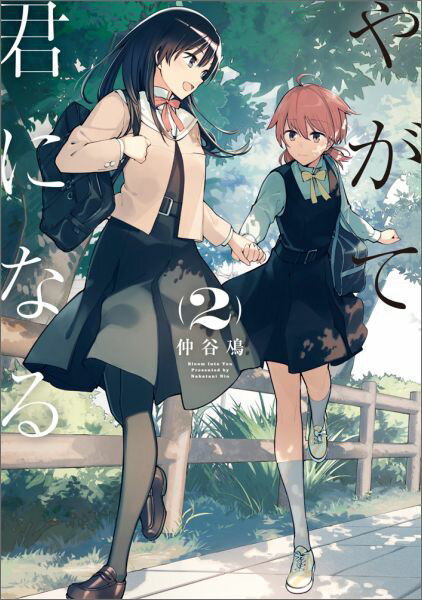
Bloom Into You Review: She's Loved Because She Can't Love Back — Until That Stops Being True
by Nio Nakatani
Read the first volume. If it doesn't hook you, put it down. It'll hook you.
Buy Bloom Into You on Amazon →*Affiliate link — I earn a small commission at no extra cost to you.
I read shoujo romance for years before I admitted something to myself: I didn't actually feel any of it. The fluttering hearts, the "I can't stop thinking about him" — I understood the grammar of those feelings the way you understand a foreign language you can read but can't speak. I assumed something was just late arriving for me. So when I opened the first volume of Bloom Into You and met Yuu Koito — a girl who has read the same romance manga, waited for the same feeling, and felt nothing when a boy confessed to her — I went very still. I had never seen myself written down before.
And then the manga does something I didn't expect. It doesn't fix her. It doesn't hand her the feeling and say "see, you had it all along, you just needed the right person." It sits with her absence, takes it seriously, and lets another girl fall in love with that absence on purpose. That's where this story actually begins.
Quick Take
- The best yuri manga in English right now — a love story where one girl can't feel romantic love, and another loves her because of that, until both premises quietly collapse
- Nio Nakatani draws emotional interiority with a precision I haven't seen matched in any romance manga: the gap between a face and what's behind it is the whole drama
- 8 volumes, complete in English from Seven Seas; rated T (Teen) — emotionally serious, never explicit
Story Overview
Yuu Koito starts high school waiting for the feeling everyone promised her. A middle-school boy confessed before graduation; she said she'd answer in high school, and she keeps waiting for her heart to do something. It doesn't.
Then she watches Touko Nanami — second-year, future student council president, effortlessly admired — turn down a confession of her own with total calm. Yuu, relieved to find someone who seems to feel nothing either, goes to her for advice. And Touko falls for her on the spot. Touko's confession comes with a condition that reframes the entire series: she loves Yuu because Yuu can't love her back. Touko doesn't want to be loved in return. Being loved means being seen, and being seen terrifies her. Yuu, who can offer closeness with no romantic feeling attached, is the one safe person in the world.
So Yuu agrees. She'll be loved and not love back. That's the deal.
The transition point is slow and devastating: somewhere in the student council work, the festival play, the after-school quiet, Yuu starts to feel the thing she was certain she'd never feel. Which means she is now the one threat to the only arrangement that lets Touko exist. The back half of the series is the two of them circling that impossible truth — and the wreckage of a misread confession that nearly ends them.
Characters
Yuu Koito — Her arc isn't "girl learns to love." It's "girl who genuinely felt nothing slowly discovers a feeling she no longer has the vocabulary to want." What makes her remarkable is that her absence is never framed as broken — Nakatani treats it as real and valid, not a problem to solve. When the feeling does arrive, it's a complication, not a cure, because loving Touko means breaking the one promise that made Touko feel safe.
Touko Nanami — Behind the perfect student council president is a girl who has decided to become her dead older sister, Mio. Mio was the admired one, the president, the one who was supposed to lead the cultural festival play before she died in a traffic accident. Touko has spent years erasing herself to wear Mio's life. She tells Yuu she'd rather die than give up being Mio. Her arc is the slow, frightening question of whether there's a person left underneath the performance — and whether that person is allowed to be loved.
Sayaka Saeki — The vice president, and the series' quietest heartbreak. Sayaka has loved Touko for a long time and knows, with painful clarity, that she's watching Yuu take the place she wanted. On the second-years' class trip to Kyoto she finally confesses — and Touko gently turns her down, naming her feelings for Yuu out loud. Sayaka isn't destroyed by it. She grieves with a grace that's almost harder to watch than collapse, and walks forward into her own life.
Seiji Maki — A first-year who, like early Yuu, doesn't experience romantic attraction — but unlike Yuu, he's at peace with it and prefers to watch other people's dramas from the outside. He's the one who first nudges Yuu toward noticing that her feelings have changed.
What I Love About It
The script rewrite. Of every quiet move in this manga, this is the one I keep returning to.
The student council is staging a play for the festival — the same play Touko's sister never got to perform. In the original script, the protagonist loses her memory and, learning about herself from the people visiting her hospital room, chooses in the end to become the version of herself that her lover describes. To erase what she's lost and become who someone else needs. It's Touko's whole life written as a stage direction. And Touko, of course, has cast herself to play it.
So Yuu goes to Koyomi, the friend writing the script, and asks her to change the ending. Not the version where the girl becomes someone else's idea of her — instead, the protagonist decides to be whoever she feels she is right now, in the moment, without sacrificing a part of herself for anyone. Yuu can't say "stop trying to be your dead sister" to Touko's face; Touko would shatter. So she smuggles the message inside a role, and makes Touko stand on a stage and speak, out loud, in front of everyone, the words you're allowed to just be yourself.
What gets me is that this is the most romantic thing in a romance manga, and it isn't a confession or a kiss. It's a girl loving someone so carefully that she rebuilds a fictional ending so the person she loves can rehearse her own survival. Yuu doesn't ask Touko to become lovable. She quietly insists Touko already is.
Memorable Scene ⚠️ Spoiler Warning
The confession that breaks before it lands.
Yuu, finally certain of what she feels, tells Touko she loves her — and it goes wrong in the cruelest way. Touko, whose entire selfhood depends on Yuu not loving her back, can't accept it. The feeling she built the relationship to never receive is the one thing that threatens to dissolve her. So Yuu's confession doesn't open a door; it nearly closes one, and for a stretch the thing between them looks like it might end on a misunderstanding neither of them can speak through.
What makes the eventual resolution land — the two of them in the student council room, finally saying it plainly, becoming an actual couple — is that the series never cheats to get there. Touko doesn't get magically fixed by being loved. She has to first decide that the girl Yuu loves, the one underneath Mio, is allowed to exist at all. The epilogue, years later, shows them in college, rings catching the light, the secret long since over. It earns every page of the slow burn that came before it.
What English-Speaking Fans Say
In the English yuri community, Bloom Into You is consistently named one of the best romance manga available in any genre, not just within yuri. Readers single out the psychological precision and Nakatani's art, and the ending is praised for being exactly right rather than convenient. The anime adaptation is well regarded, and the spinoff light novel series Regarding Saeki Sayaka is frequently recommended to fans who want Sayaka's interior life expanded beyond what the main manga had room for.
Pros & Cons
Pros
- 8 volumes, complete and fully in English
- A premise about the absence of romantic feeling that I've never seen handled with this much care
- The script-rewrite arc is some of the most emotionally intelligent storytelling in any romance
- Sayaka's unrequited arc would carry an entire lesser series on its own
- The ending resolves without cheating
Cons
- The burn is genuinely slow — much of the drama is internal and unspoken
- Touko's codependent need can read as uncomfortable, which is intentional but won't sit well with everyone
- Readers wanting explicit romance should look elsewhere; this is restrained by design
If you need momentum and external plot, the quiet interiority here may feel like nothing's happening — that's either the flaw or the entire point, depending on who you are.
Is Bloom Into You Worth Reading?
Yes — and especially if you've ever felt out of step with the feelings everyone insists are universal. It's a complete, beautifully drawn romance that treats both the inability to love and the fear of being loved as serious emotional realities, then resolves them honestly. If you want a slow, internal, psychologically precise love story, there's nothing better in English yuri.
Similar Manga
| Title | Its Approach | How Bloom Into You Differs |
|---|---|---|
| Sweet Blue Flowers | Foundational yuri drama of friendship sliding into love | Bloom Into You builds its whole premise on the absence and fear of love rather than its gradual arrival |
| Given | Same-sex romance rooted in grief and music | Bloom Into You's grief is about identity replacement, not loss of a partner, and it's a girls' love story |
| Adachi and Shimamura | Yuri told through drifting, low-key daily mood | Bloom Into You is sharper and more deliberate, structured around a single destabilizing premise |
Official English Translation Status
Seven Seas Entertainment released all 8 volumes (2017–2020), so the full main series is available in English. Seven Seas also licensed the Regarding Saeki Sayaka light novels and the official anthology for readers who want more.
Where to Buy
Read the first volume. If it doesn't hook you, put it down. It'll hook you.
This post contains affiliate links. If you purchase through these links, I may earn a small commission at no extra cost to you. As an Amazon Associate, I earn from qualifying purchases.
*Affiliate link — I earn a small commission at no extra cost to you.
More Manga You Might Like

Romance / Drama
Sweet Blue Flowers
Yu's review of Sweet Blue Flowers — Fumi Manjoume and Akira Okudaira were childhood best friends who lost contact; they meet again in high school; Fumi is going through a heartbreak and beginning a new relationship with a senior girl while discovering who she is; Akira watches, loves, and cannot yet name it.

Romance / Drama
Girl Friends
Yu's review of Girl Friends — Mari Kumakura is a quiet, bookish girl with no real friends; Akko Oohashi is pretty, popular, and inexplicably interested in her; their friendship grows into something more complicated than either of them has words for, which is the point.
Romance / Drama
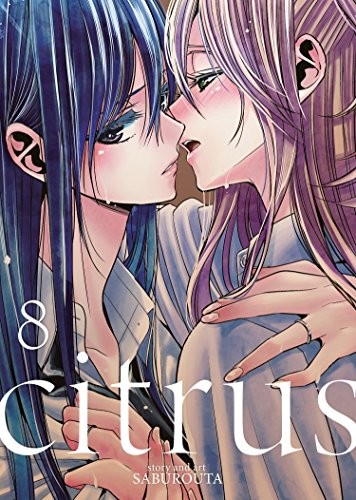
Citrus
A review of Citrus, Saburouta's yuri manga about a fashionable gyaru who falls for her stern, cold student council president stepsister at a strict all-girls academy.
Romance / Slice of Life
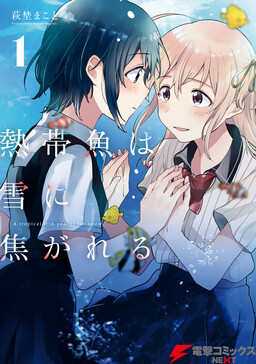
A Tropical Fish Yearns for Snow
Yu's review of A Tropical Fish Yearns for Snow — Konatsu Amano moves to a new town after her father is transferred abroad; she joins her new school's aquarium club, which has only one other member: Koyuki Honami, a capable and quietly withdrawn girl who runs it alone; their friendship becomes something more specific as they teach each other about themselves.
Romance / Drama
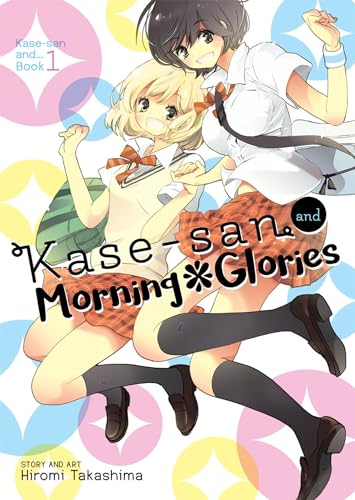
Kase-san and Morning Glories
Yu's review of Kase-san and Morning Glories — Yamada is a soft, gardening-focused girl; Kase-san is the school's star runner; they fall in love; the series follows their high school relationship with warmth and honest physical and emotional development.

Romance / Comedy
Yuri Is My Job!
Yu's review of Yuri Is My Job! — Hime Shiraki's entire identity is performing perfect femininity for public approval; working at Liebe Girls Academy café requires her to act out romantic yuri relationships with her coworkers for customers; her assigned partner Mitsuki hates her genuinely, and Hime begins to develop feelings that are not performance.
Written by
Yu
Manga Enthusiast from Japan
I grew up in Japan and manga literally saved me during a tough time in elementary school. My English isn't perfect, but my love for manga is real — and I want to share it with you.
Disclosure: This post contains affiliate links. As an Amazon Associate, I earn from qualifying purchases at no extra cost to you.