
Arisa Review: The Shojo That Switches Out Romance for a Suicide Note in Chapter One
by Natsumi Ando
Read the first volume. If it doesn't hook you, put it down. It'll hook you.
Buy Arisa on Amazon →*Affiliate link — I earn a small commission at no extra cost to you.
I picked up Arisa expecting a soft, breezy shojo about twins. I was in one of those moods where I wanted something gentle, the kind of manga you read curled up with the lights low. Volume 1 has the cute cover, the sparkly Nakayoshi art, the reunion of two sisters who haven't seen each other in three years. I was settling in.
Then, maybe forty pages in, one of those twins reads a note that says "Arisa is a traitor" and throws herself out of a second-floor window.
I actually flinched. I remember sitting up straighter. Whatever I thought this manga was, it wasn't that. And that whiplash — the prettiness of the art against how ugly the story gets — is the exact reason I kept reading. Arisa is a thriller wearing a shojo's clothes, and it never once apologizes for the bait-and-switch.
Quick Take
- A mystery-thriller disguised as a cute shojo — the genre swerve in chapter one is the whole point
- Tsubasa going undercover as her own comatose twin gives every chapter a ticking-clock tension
- Complete at 12 volumes; ageRating T+ (Older Teen) for a suicide attempt, self-harm, and psychological violence
Story Overview
Tsubasa Uehara and Arisa Sonoda are identical twins split between their divorced parents three years ago. When they finally reunite, the sweet, popular, seemingly-perfect Arisa suggests a game: switch places for one day. Tsubasa goes to Arisa's school as Arisa.
While she's there, Tsubasa finds a folded note in her sister's shoe locker. It reads: "Arisa is a traitor." She brings it home and hands it over. That night, Arisa walks to the window and jumps. She survives, but falls into a coma.
That's the engine of the whole series. Tsubasa, desperate and guilty, keeps pretending to be Arisa — going back to that school day after day — to find out what happened to her sister. What she uncovers is "King Time": once a week, students text wishes to an anonymous figure called the King, and the King grants one of them. The wishes start petty and curdle fast into bullying, sabotage, and outright violence.
The back half of the series is the slow, paranoid hunt for the King's identity. Suspicion lands on Arisa's best friend Mariko, then the cold transfer student Rei Kudo — both misdirects. The real revelation has two layers: Arisa herself was the original King, running a harmless wish system until she crossed a line by stealing exam answers. Then Midori — her devoted, gentle-seeming boyfriend — discovered this, took the role for himself, and escalated it into something cruel. His motive traces back to childhood abandonment and the death of his own twin. The ending pulls back from the horror into reconciliation: Arisa wakes, the sisters and their mother come back together, and Arisa confesses the love that started all of it.
Characters
Tsubasa Uehara — The tomboy twin, loud and brash, the opposite of the demure Arisa everyone knows. Her whole arc is built on impersonation: she has to be her sister convincingly while having no idea who her sister really was. The guilt of having handed Arisa the note that pushed her out the window is what drives her past every reason to quit.
Arisa Sonoda — The "perfect" twin who, we slowly learn, was drowning under the image of perfection. The reveal that she was the first King recolors everything about her — the popular girl wasn't a victim of the class's dark game, she invented it, and lost control of it.
Midori Yamashita — Arisa's boyfriend, presented for most of the series as the kind, steady love interest. He's the second King. His turn from comfort to threat — drugging Tsubasa, orchestrating violence — is the series' central betrayal, and his backstory of a dead twin and an absent mother is what the whole thing is really about.
Akira Manabe — Arisa's classmate who figures out early that "Arisa" is actually Tsubasa. Instead of exposing her, he becomes her co-investigator, the one person she can be honest with. Rei Kudo, the transfer student, plays as a suspect but is the King's messenger; Mariko Takagi, Arisa's best friend, is a manipulated red herring.
What I Love About It
It's the dramatic irony of the disguise that I keep coming back to. Tsubasa is sitting in a classroom full of people who think they're talking to Arisa, while she — and we — know Arisa is unconscious in a hospital bed because of something that happened in that exact room. Every casual conversation is a minefield. A classmate references a shared memory and Tsubasa has to fake recognition. The King texts "Arisa" expecting her to know the rules of a game she's never played. Ando builds suspense not from gore but from the constant terror of being found out, and that's a much smarter engine than I expected from the cover.
The other thing I love is how completely the "perfect class" premise functions as horror. Arisa's class advertises total harmony, 100% satisfaction — and the manga's whole project is to show you that the harmony is enforced, that the price of everyone being happy is an anonymous tyrant deciding who gets hurt this week. That's a genuinely sharp idea about group pressure and the cost of disrupting it, dressed up in shojo sparkle so it sneaks up on you.
Memorable Scene ⚠️ Spoiler Warning
The window. It's the first big beat and it's the one that defines the series. Tsubasa hands Arisa the note — "Arisa is a traitor" — half-expecting her sister to laugh it off. Instead Arisa goes quiet, says that her life isn't the happy thing Tsubasa imagines, and pushes herself backward out the window. Ando draws it almost serenely, which is what makes it land like a punch: there's no scream, no struggle, just a girl letting herself fall. Everything after it — the impersonation, the King hunt, the whole 12 volumes — exists because of those few panels.
The other scene that stuck with me is Midori drugging Tsubasa during a kiss. Up to that point he's been the warm, safe presence in a story full of suspicion, the one corner of the manga that felt gentle. Watching that gentleness reveal itself as a weapon — the love interest as the villain — is the moment the shojo mask fully comes off.
Pros & Cons
Pros
- The genre swerve in chapter one is genuinely jolting
- Undercover-as-your-own-twin premise generates real, sustained tension
- "Perfect classroom as horror" is a sharp social idea
- Complete at 12 volumes — no dangling threads
Cons
- The suicide attempt, self-harm, and psychological abuse make it heavier than the cover suggests
- The thriller plotting leans melodramatic, and the suspense can feel telegraphed
- Some readers find the King's mechanics and the cast's motivations hard to fully buy
- If you came for shojo romance, the romance is mostly a delivery system for the mystery — that's either the appeal or a deal-breaker depending on you
Is Arisa Worth Reading?
Yes, if you want a shojo that's actually a paranoid thriller and you're not put off by dark content. Tsubasa's undercover hunt for the King is suspenseful and the chapter-one swerve is the best hook in the series. It's not airtight — the melodrama and some shaky character logic keep it from greatness — but as a complete, propulsive, easy-to-binge mystery, it delivers.
Content Warnings & Age Rating
Age Rating: T+ (Older Teen) Content Warnings: Suicide attempt and self-harm (graphic in early chapters), psychological manipulation, bullying, drugging, and violence.
This is not a gentle read despite the art style. The suicide attempt happens early and self-harm recurs. Older teen and up.
Yu's Rating
| Category | Score |
|---|---|
| Story Depth | ★★★★☆ |
| Art Style | ★★★★☆ |
| Character Development | ★★★★☆ |
| Accessibility for Non-Japanese Readers | ★★★★★ |
| Reread Value | ★★★☆☆ |
Similar Manga
| Title | Its Approach | How Arisa Differs |
|---|---|---|
| Another | School-set horror mystery with a hidden deadly rule and mounting deaths | Arisa trades supernatural dread for a human anonymous tyrant, and runs it through shojo art and an undercover-twin POV |
| Death Note | Cat-and-mouse thriller about an anonymous figure deciding who gets hurt | Arisa keeps the "anonymous arbiter" idea but grounds it in classroom social pressure rather than grand morality |
| Liar Game | Psychological game manga built on manipulation and shifting suspicion | Arisa is a single sustained mystery driven by a sister's guilt, not an episodic game structure |
Where to Buy
Read the first volume. If it doesn't hook you, put it down. It'll hook you.
This post contains affiliate links. If you purchase through these links, I may earn a small commission at no extra cost to you. As an Amazon Associate, I earn from qualifying purchases.
*Affiliate link — I earn a small commission at no extra cost to you.
More Manga You Might Like

Romance / Comedy
Kaguya-sama: Love Is War
Aka Akasaka's 28-volume romantic comedy (2015–2022) about Miyuki Shirogane and Kaguya Shinomiya, two student council officers at Japan's most elite high school who are both in love and both certain that whoever confesses first loses. Complete in English from VIZ Media.
Romance / Thriller
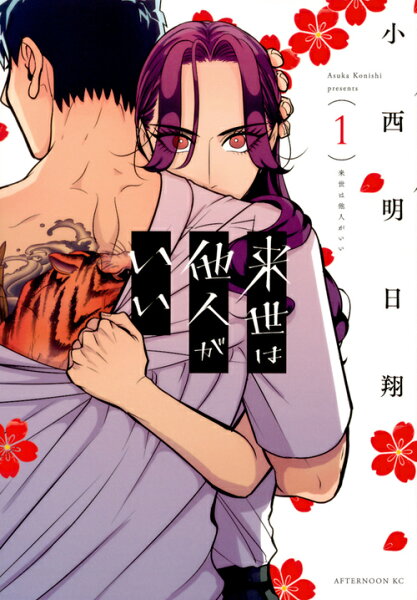
Raise wa Tanin ga Ii
Raise wa Tanin ga Ii follows Yoshino Somei, granddaughter of a yakuza boss, who is placed in an arranged marriage with Miyama Kirishima — another boss's grandson who is terrifyingly, smilingly dangerous. Their courtship is a psychological chess match between two people who understand exactly what they're doing.

Romance
The Bride Was a Boy
Yu's review of The Bride Was a Boy — manga artist Chii tells her own story: growing up feeling wrong in her body, realizing she was a woman, transitioning in Japan, and marrying her husband who stayed with her through the entire process.

Romance / Slice of Life
House of the Sun (Taiyou no Ie)
Yu's review of House of the Sun (Taiyou no Ie) — Mao Motomiya, whose home life fell apart when her father remarried, finds herself staying at the house of Hiro, her cheerful childhood friend; his large, warm family gradually becomes the home she didn't know she needed, and the romance that develops is built on that foundation.
Romance / Slice of Life
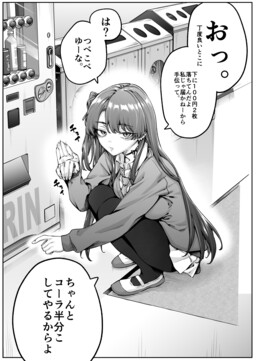
A Sign of Affection
Yu's review of A Sign of Affection — Yuki is a deaf college student whose world is small by necessity; when a tall stranger at a train station asks her for help and she cannot explain her deafness in time, a classmate named Itsuomi translates — and Itsuomi is curious about Yuki's world in a way no one usually is.
Romance / Drama
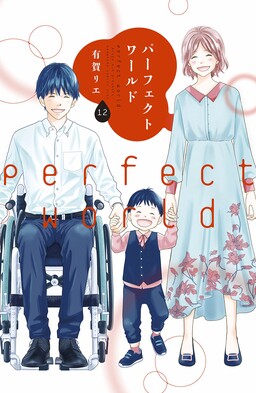
Perfect World
Yu's review of Perfect World — Tsugumi Kawana reconnects with her high school crush Itsuki Ayukawa, now an architect who uses a wheelchair after a spinal cord injury; the manga follows their relationship with honest attention to the practical, emotional, and social dimensions of disability in a romantic relationship.
Written by
Yu
Manga Enthusiast from Japan
I grew up in Japan and manga literally saved me during a tough time in elementary school. My English isn't perfect, but my love for manga is real — and I want to share it with you.
Disclosure: This post contains affiliate links. As an Amazon Associate, I earn from qualifying purchases at no extra cost to you.