
Blue Box Review: The Shonen Jump Romance Where Being Kind Is the Whole Point
by Kouji Miura
Read the first volume. If it doesn't hook you, put it down. It'll hook you.
Buy Blue Box on Amazon →*Affiliate link — I earn a small commission at no extra cost to you.
When I was a kid I had exactly one talent, and it was showing up early. Not being good — just being there before everyone else, in the empty gym, when the lights were still half on and the floor was cold. I wasn't waiting for anything. I just liked the quiet, and I liked that for an hour nobody could tell me I didn't belong.
That's the image Blue Box opens on, and it's why it got me in the first chapter. Taiki Inomata gets to school early to practice badminton, and Chinatsu Kano — a basketball player one year above him — is always already there, alone, taking shots. He loves her partly because she's the one person who's there before he is. He never tells her. He just keeps showing up.
I've read a lot of Weekly Shonen Jump over the years, almost all of it about people punching, throwing, or screaming their way to victory. Blue Box is the one I reach for when I want to remember that quiet, earnest effort can carry a whole story. Let me tell you why this one stuck with me.
Quick Take
- An honest, slow-burn sports romance that ran in Weekly Shonen Jump of all places — and earns every beat
- The "crush moves into your house" premise sounds cheap; Kouji Miura plays it with restraint and real consequences
- Age rating: T (Teen) — mild romantic content and one genuinely painful rejection scene, nothing graphic
Story Overview
Taiki Inomata is a second-year badminton player at an athletics-focused high school. Every morning he shows up early to train, and Chinatsu Kano — the girls' basketball ace, a grade above him — is always there first, practicing alone. He's been quietly in love with her for that exact reason. In the first chapter he takes a stray basketball to the face, she apologizes and hands him a candy bar, and his best friend Kyo Kasahara flatly tells him marrying Chinatsu is never going to happen: she's popular and gifted, Taiki is a nobody.
Then the premise kicks in. Chinatsu's parents move abroad for work, and because of a long-standing family connection, she moves into Taiki's house. Overnight his unreachable crush becomes the person eating breakfast across from him and walking to school beside him. The series mines this not for cheap fan-service but for the specific awkwardness of living with the person you can't admit you love.
The middle stretch is where it stops being just sweet. Hina Chono — Taiki's childhood friend on the rhythmic gymnastics team — confesses to him, fully aware he loves Chinatsu, and asks for nothing in return. Taiki turns her down. Both leads keep grinding toward national-level competition, and the romance creeps forward through small, real moments: a Christmas Eve hug, a tense New Year's apart where each privately realizes the feeling is mutual. It finally breaks open when they meet at Konami Lake and Taiki confesses — and, in the chapter after, Chinatsu confesses back. They start dating. The series keeps running from there, following two athletes who are now also a couple, which is a much harder thing to write than the chase.
Characters
Taiki Inomata — The reason the manga works. He's an average badminton player who improves only through stubborn, unglamorous work, and the story refuses to secretly make him cool. He respects Chinatsu's space when she moves in, he agonizes over whether texting her on New Year's is too much, and when Hina confesses he doesn't enjoy the attention — he hurts over having to be honest. His arc is learning that decency and persistence are not consolation prizes.
Chinatsu Kano — Not a trophy. She's a basketball player who clawed her way up through practice, carries her own pressure as the team's anchor, and only gradually realizes how much Taiki has come to matter to her. Her arc is quieter than Taiki's but real — the slow shift from "the underclassman in my house" to actually choosing him back at the lake.
Hina Chono — Taiki's theatrical, teasing childhood friend on the gymnastics team, and the character who nearly steals the series. She confesses knowing she'll lose, gets rejected at the training camp, and then has to keep seeing Taiki every day. Her arc is the brutal, grown-up work of deciding to bury her feelings on purpose so she and Taiki can rebuild their friendship — and so they can both go love other people.
Kyo Kasahara — Taiki's badminton teammate and best friend. Dry, observant, the one who tells Taiki the hard truth in chapter one and keeps quietly backing him anyway.
What I Love About It
What I love about Blue Box is that it commits to a male lead who is just good, and never apologizes for it or undercuts it.
Taiki isn't the most talented player on his team. He has no secret cooler self waiting to be revealed. He's exactly the person you meet on page one — someone who trains alone in the morning, takes a basketball to the face, says thank you for a candy bar, and keeps working. In most Jump series that protagonist gets a power-up. Here, the story's entire bet is that showing up, every morning, while caring about the people around you, is itself the arc. The reward isn't sudden competence. It's Chinatsu, slowly, choosing to see him.
And it makes that bet honest by making kindness cost something. The clearest proof is Hina. The lazy version of this manga lets Taiki enjoy two girls liking him. Blue Box instead makes him reject someone he genuinely cares about, and then makes him live next to her pain. His decency isn't free — it's a wound he and Hina both have to carry. That's the texture I keep coming back for: a romance that treats being good as difficult, not as a personality trait you get for nothing.
Memorable Scene ⚠️ Spoiler Warning
The one that flattened me is Hina's rejection during the training camp.
Hina has already confessed earlier, telling Taiki he doesn't have to answer, knowing he loves Chinatsu. At the camp, by the bonfire, he finally gives her the answer — a clear, direct no. There's no villain here, no misunderstanding to undo it later. It's just two people who've known each other their whole lives, one being honest because the alternative is crueler, the other absorbing it in real time. The anime adaptation underscores the moment with a song cue and firelight, but the manga panels already carry it: the way Hina holds her face together, the way Taiki can't hide that this hurts him too.
What makes it unforgettable is the aftermath. Hina doesn't vanish from the story. She has to see Taiki in gym class, at school, every single day. Eventually she chooses — out loud — to lock her feelings away and rebuild their friendship so they can both be with the people they love. That's not how teen romance manga usually treats the "losing" girl. It treats her like a person, and it lets her decision be the brave thing in the chapter. I didn't expect a Jump series to give the rejected character the most adult arc in the book.
Pros & Cons
Pros
- Genuinely kind leads — reading it feels warm without feeling weightless
- The sports arcs carry real stakes alongside the romance, not as decoration
- The roommate premise is handled with restraint and actual consequences
- Hina's arc gives the rejected-love-interest the dignity most series deny her
Cons
- It's ongoing — if you need a finished romance, you'll be waiting
- The pace is slower than almost anything else in Jump
- The lack of big dramatic conflict reads as gentle to some and uneventful to others — that's either the appeal or the dealbreaker, depending on you
Is Blue Box Worth Reading?
Yes — if you want a slow, sincere sports romance built on character rather than melodrama. It's the rare Jump series whose whole argument is that quiet effort and basic decency are enough to build a story on, and it backs that up by making kindness genuinely costly. If you need fast resolution or constant conflict, the pace will test you. Everyone else should start it.
Similar Manga
| Title | Its Approach | How Blue Box Differs |
|---|---|---|
| Kaguya-sama: Love Is War | Comedic war of wills between two prideful leads | Blue Box drops the games — its tension is closeness and honesty, not strategy |
| Ao Haru Ride | Shojo slow-burn driven by past wounds and reunion | Blue Box pairs its romance with serious competitive sports and a Jump sensibility |
| Haikyuu!! | Sports drama with deep athletic stakes | Blue Box keeps the athletic seriousness but centers the romance |
Where to Buy
Read the first volume. If it doesn't hook you, put it down. It'll hook you.
This post contains affiliate links. If you purchase through these links, I may earn a small commission at no extra cost to you. As an Amazon Associate, I earn from qualifying purchases.
*Affiliate link — I earn a small commission at no extra cost to you.
More Manga You Might Like

Romance / Comedy
Cheeky Brat
Yu's review of Cheeky Brat (Namaikizakari) — Yuki Machida manages the basketball team and hides her heart behind a calm face, until Sho Naruse, a brash first-year, decides he can see right through her.
Romance / Comedy
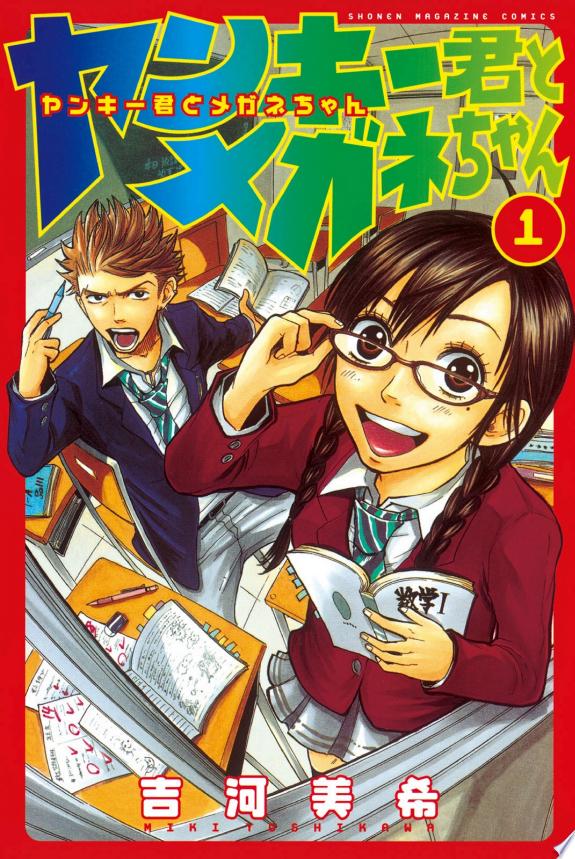
Yankee-kun to Megane-chan
Yankee-kun to Megane-chan follows Daichi Shinagawa, a delinquent who wants to be left alone, and Hana Adachi, the class representative with a secret — a comedy about two people who are both performing a role they didn't choose.

Romance / Comedy
We Never Learn
Yu's review of We Never Learn — a scholarship student agrees to tutor three geniuses, each brilliant in one field but failing in the subjects they want to pursue, while navigating the increasingly complicated feelings everyone develops.

Romance / Slice of Life
Horimiya
Yu's review of Horimiya — the popular girl hides her domestic home life, the quiet boy hides his piercings and tattoos, and when they accidentally discover each other's real selves, something begins.

Romance / Sports
Waiting for Spring
Yu's review of Waiting for Spring — shy, socially withdrawn Mizuki Haruno becomes friends with the school's popular basketball players after a chance meeting; she falls for one of them while another falls for her, and managing friendships and feelings in high school is harder than she expected.
Romance / Comedy
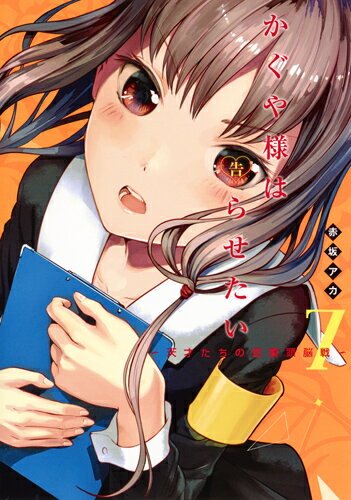
Kaguya-sama: Love Is War
Aka Akasaka's 28-volume romantic comedy (2015–2022) about Miyuki Shirogane and Kaguya Shinomiya, two student council officers at Japan's most elite high school who are both in love and both certain that whoever confesses first loses. Complete in English from VIZ Media.
Written by
Yu
Manga Enthusiast from Japan
I grew up in Japan and manga literally saved me during a tough time in elementary school. My English isn't perfect, but my love for manga is real — and I want to share it with you.
Disclosure: This post contains affiliate links. As an Amazon Associate, I earn from qualifying purchases at no extra cost to you.