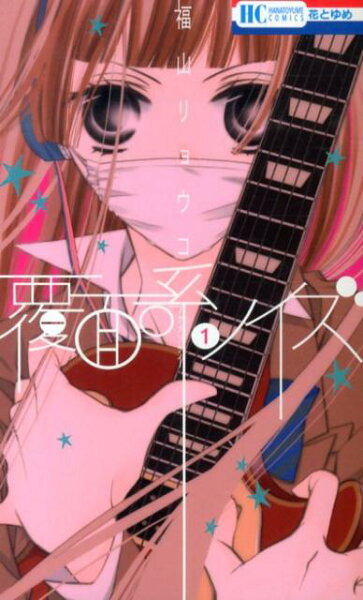
Anonymous Noise Review: The Girl Singing on the Beach, the Boy Who Hid Her Behind a Mask
by Ryoko Fukuyama
Read the first volume. If it doesn't hook you, put it down. It'll hook you.
Buy Anonymous Noise on Amazon →*Affiliate link — I earn a small commission at no extra cost to you.
The first time I read the opening of Anonymous Noise, I had to put my phone down and breathe. There's a girl on a beach screaming a song into the wind, and the reason she's screaming is that a boy once told her she sang too quietly to be heard — so now she sings as loud as her body will let her, every day, in case he's somewhere out there still listening. I grew up not being heard either, just in the quieter way of a kid nobody sat with at lunch. I didn't sing. But I understood instantly what it means to throw your whole voice at the world and hope one specific person catches it. That image of Nino on the sand at Yuigahama is what hooked me, and the manga earns it across all 18 volumes.
Quick Take
- A shojo music romance where the heroine's voice is both her gift and her wound — she sings too loud because the people she loved disappeared, and singing was how she tried to reach them
- A love triangle with real stakes on both sides: Momo, the childhood love who vanished, and Yuzu, the composer who builds a whole masked band around her without letting her be seen as herself
- Complete at 18 volumes from VIZ Media; rated T (Teen) — intense unrequited love and one non-consensual kiss, but nothing graphic
Story Overview
Nino Arisugawa sings too loud, and she has a reason. As a child she was inseparable from a boy named Momo — they sang together constantly — until his family's debts forced them to move away without warning. Before he left, the idea took root in her that if she just sang loudly enough, he'd be able to find her again. So she keeps doing it, screaming songs at the sea at Yuigahama beach, hiding behind a surgical mask the rest of the time so she won't simply scream her grief out loud.
Then she meets a second boy: Kanade Yuzuriha — "Yuzu" — a young composer whose music finally gives her loud voice something to hold onto. He nicknames her "Alice," pulled from the "Arisu" in Arisugawa. And then he vanishes too.
The story's hook is the reunion. In high school, both boys come back into her life at once. Yuzu is now the songwriter and masked frontman of an Alice-in-Wonderland-themed indie band called in NO hurry to shout, and Nino becomes its secret vocalist — the real voice behind a band that, structurally, keeps her hidden. Momo, meanwhile, has become a successful professional composer under the name Momo Kiryuu, writing for the rival band SILENT BLACK KITTY, and carrying guilt over a song he once wrote for Nino and sold away.
From there it's a long, slow tangle: Nino's heart still belongs to Momo, Yuzu loves Nino but keeps choosing to conceal rather than confess, and Momo keeps pushing her away to protect both her and his own buried feelings. The series runs the love triangle out to its full length and lands on a bittersweet resolution — Nino ends up with Momo, while telling Yuzu that her singing voice will always be his. Yuzu leaves to study music at a conservatory abroad. Nobody gets a clean, costless ending, and that's the point.
Characters
Nino Arisugawa ("Alice") — The heart of the series. Her voice is uncontrollably powerful — she can't really modulate it, she can only let it out — and that lack of control is the whole metaphor. She's spent years singing to be found by people who left. The series is the story of what happens when both of them actually come back, and she has to figure out whether the singing was for Momo, for Yuzu, or finally for herself.
Kanade Yuzuriha ("Yuzu") — The composer. His music was stalled until Nino's voice unlocked it, and he builds in NO hurry to shout around her — masks and all — partly to protect her and partly because letting her be seen means letting her go. His arc is the most painful in the book: he loves her openly to the reader and never quite lets her see it clearly, even after he kisses her while she's crying and lets her believe it was nothing.
Momo Sakaki (Momo Kiryuu) — The first love who vanished. He resurfaces already established in the industry, hardened, and deliberately cold to Nino because he thinks distance is the kind thing. Underneath is guilt — over leaving, over selling the song he made for her. The series takes his coldness seriously rather than treating him as the villain of the triangle, which is why his eventual honesty lands.
The band — Yoshito Haruno and Ayumi Kurose round out in NO hurry to shout, and Miou Suguri sings for SILENT BLACK KITTY. The two rival bands give the romance a stage and a structure: the boys fight for Nino partly through the music they make.
What I Love About It
The single best idea in this manga is that the band built to showcase Nino's voice is also the band that erases her. in NO hurry to shout puts everyone in masks. Nino, who has worn a mask since childhood to swallow her own screaming, finally gets to scream on purpose — but anonymously, as "Alice," with her actual face and name hidden from the audience. Yuzu engineered that. He gave her the one thing she needed, a place to be that loud, and wrapped it in the exact thing that keeps her invisible. That contradiction is the engine of the whole story, and Fukuyama never lets you forget it: every concert where Nino is most alive is also a concert where nobody knows it's her.
What gets me is that this isn't just a clever premise — it maps directly onto how the romance hurts. Yuzu's whole relationship with Nino runs on that same logic: give her everything, keep her hidden, never let himself be seen as a real option. The masks aren't decoration. They're the love triangle made literal. I've reread the early band arcs a few times now just to watch that idea click into place, and it holds up better than most "the music IS the feelings" shojo manages.
Memorable Scene ⚠️ Spoiler Warning
The one that stuck with me is the kiss. Nino is in a vulnerable, crying state, and Yuzu kisses her — and confesses — but lets her interpret it as a friend comforting a friend, and she takes the easier reading because she can't yet afford the truth. It's not a triumphant shojo kiss. It's a quietly devastating one, because Yuzu gets to say the thing and still keep himself hidden, and Nino gets kissed by the person she'll ultimately not choose. Some readers (fairly) flag it as crossing a line, since she's in no state to consent. I think the manga knows that — it's of a piece with everything Yuzu does, taking what he wants from her while keeping her from seeing him clearly.
It pays off at the very end. When Nino has chosen Momo, she tells Yuzu that her singing voice will always belong to him — and that's the closest he ever gets to a happy ending. He goes abroad to study, carrying that. The masked confession at the start and the unmasked goodbye at the end rhyme, and that's the kind of structural patience that made me trust the whole run.
Pros & Cons
Pros
- An unusually active shojo heroine — Nino's power is literal, her voice, not just "she's nice"
- The masked-band premise is a genuinely strong metaphor that pays off in the romance
- Both love interests have real reasons; neither is a strawman
- 18 complete volumes, fully available in English from VIZ
Cons
- The triangle is stretched across all 18 volumes — if you want a quick resolution, this isn't it
- Yuzu's kiss-while-she's-crying is genuinely uncomfortable and not everyone will forgive it
- The bittersweet ending is divisive; Yuzu fans in particular took it hard
- The slow-burn intensity is either the appeal or the dealbreaker — that depends entirely on you.
Is Anonymous Noise Worth Reading?
Yes, if you want a music shojo with a heroine who's powerful rather than passive and a love triangle where both sides actually hurt. The masked-band concept gives it a spine most romance manga don't have. Just go in knowing it's a long, slow, bittersweet burn — and that one early scene is meant to make you uneasy.
Similar Manga
| Title | Its Approach | How Anonymous Noise Differs |
|---|---|---|
| Nana | Two women, rival bands, love and music tangled into something darker and adult | Anonymous Noise stays in shojo register and centers one voice as both gift and wound |
| Given | Music and romance with grief at the core, in a BL frame | Anonymous Noise builds its romance as a het love triangle staged through competing bands |
| Your Lie in April | Music as the vehicle for processing loss, with a tragic shape | Anonymous Noise is about being found through volume, not about a single fading talent |
Where to Buy
Read the first volume. If it doesn't hook you, put it down. It'll hook you.
This post contains affiliate links. If you purchase through these links, I may earn a small commission at no extra cost to you. As an Amazon Associate, I earn from qualifying purchases.
*Affiliate link — I earn a small commission at no extra cost to you.
More Manga You Might Like

Romance / Comedy
Takane & Hana
Yu's review of Takane and Hana — sixteen-year-old Hana Nonomura attends an omiai in her sister's place as a prank; the man waiting is Takane Saibara, heir to a corporate empire, who has rejected every previous meeting; Hana argues with him immediately; he finds her refreshing and wants to see her again.

Romance / Drama
Wolf Girl and Black Prince
Yu's review of Wolf Girl and Black Prince — Erika Shinohara lied to her friends about having a boyfriend and used a stranger's photo as proof; that stranger turns out to be the most popular boy in school, Kyoya Sata; he agrees to play her boyfriend in exchange for her acting as his dog — a romance that starts from a deeply uncomfortable power imbalance.

Romance / Drama
Your Lie in April
Yu's review of Your Lie in April — a piano prodigy who lost his ability to hear his own music after his mother's death meets a violinist who plays like she is throwing everything she has at the sky.
Romance / Slice of Life
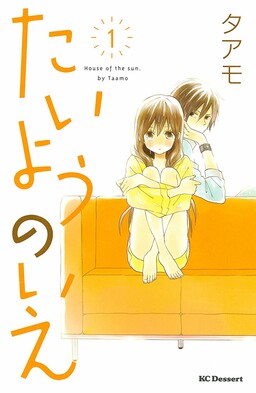
House of the Sun (Taiyou no Ie)
Yu's review of House of the Sun (Taiyou no Ie) — Mao Motomiya, whose home life fell apart when her father remarried, finds herself staying at the house of Hiro, her cheerful childhood friend; his large, warm family gradually becomes the home she didn't know she needed, and the romance that develops is built on that foundation.

Romance / Drama
Sweet Blue Flowers
Yu's review of Sweet Blue Flowers — Fumi Manjoume and Akira Okudaira were childhood best friends who lost contact; they meet again in high school; Fumi is going through a heartbreak and beginning a new relationship with a senior girl while discovering who she is; Akira watches, loves, and cannot yet name it.

Romance / Drama
Sand Chronicles
Yu's review of Sand Chronicles — Ann Uekusa moves from Tokyo to rural Shimane after her parents' separation; her mother's death by suicide shapes everything that follows; the series follows Ann from childhood through adulthood with unflinching attention to grief, depression, and the slow work of becoming a whole person.
Written by
Yu
Manga Enthusiast from Japan
I grew up in Japan and manga literally saved me during a tough time in elementary school. My English isn't perfect, but my love for manga is real — and I want to share it with you.
Disclosure: This post contains affiliate links. As an Amazon Associate, I earn from qualifying purchases at no extra cost to you.