
Amagami: Precious Diary Review — The Honor Student Was Lying to Everyone But Him
by Tarō Shinonome (based on the game by Enterbrain)
Read the first volume. If it doesn't hook you, put it down. It'll hook you.
Buy Amagami: Precious Diary on Amazon →*Affiliate link — I earn a small commission at no extra cost to you.
I have a soft spot for the kind of person who is one thing in public and a completely different thing the moment the door closes. Growing up the way I did — invisible, friendless — I spent a lot of time watching the popular kids and wondering what they were actually like behind the smiles they handed out so easily. So when I finally read Amagami precious diary, the thing that grabbed me wasn't the romance-game pedigree. It was Tsukasa Ayatsuji: the perfect honor student everyone admires, who turns out to be hiding a self she would do almost anything to keep buried.
Amagami started as a 2009 dating-sim by Enterbrain, and it spawned a small pile of manga. This one — precious diary, drawn by Tarō Shinonome — is the one I want to talk about, because instead of trying to cram all six heroines in, it picks two and actually commits.
Quick Take
- An adaptation of the Amagami game that drops the harem structure and tells two full routes: Tsukasa Ayatsuji and Kaoru Tanamachi.
- The Tsukasa arc — a "perfect" honor student with a hidden, calculating second face — is the reason to read this.
- Age rating: T (Teen). School romance with light comedy and mild fanservice; nothing graphic.
Story Overview
The setup comes straight from the game. Two years ago, Junichi Tachibana got stood up on a Christmas Eve date — the girl never showed — and he has been gun-shy about romance ever since. Now a high-schooler, he gets pulled back into it as the holidays roll around again.
Precious diary is built as an omnibus: each heroine gets her own self-contained continuity rather than competing in one timeline. Shinonome's version commits to two of the game's girls. The first stretch belongs to Tsukasa Ayatsuji; the back half shifts to Kaoru Tanamachi. Across roughly 43 chapters and five collected volumes (serialized in Hakusensha's Young Animal Island from 2009 to 2012), each route runs from first awkward contact to the two of them becoming an actual couple — confession, first kiss, the works. The fifth volume gathers up special side-chapters rather than continuing a single thread.
The structure means there's no "loser." Nobody gets strung along. You read Tsukasa's ending, then you read Kaoru's, and both are treated as the real one.
Characters
Junichi Tachibana — The protagonist, carried over from the game. He's a slightly perverted but fundamentally decent guy whose old Christmas-Eve rejection left a dent. He's reactive more than driven, which actually works here: he's the steady, kind presence that lets each heroine's personality do the heavy lifting.
Tsukasa Ayatsuji — The standout. On the surface she's the flawless student council type: top grades, good at sports, kind to everyone, popular with boys and girls alike. Underneath, she's calculating, sharp-tongued, and quietly ruthless — and she keeps that "mask" locked down so hard that being exposed terrifies her. Her whole arc is the slow, prickly process of letting exactly one person see the real her, and then deciding whether she can stand to be vulnerable in front of him.
Kaoru Tanamachi — Junichi's childhood friend, the bright, energetic tomboy he's known since middle school. She's tired of the half-in, half-out "more than friends, less than lovers" limbo, so she stops waiting and starts coming on strong. Her route flips the usual dynamic: she's the aggressor, and Junichi is the one left flustered as he realizes he's actually attracted to a girl he'd filed away as "just a buddy."
What I Love About It
It's the Tsukasa route, and specifically the gap. Shinonome plays her public face completely straight — for the early pages she really does read as the too-good-to-be-true honor student — so that when the mask slips, it lands like a different manga broke through. The fun isn't that she's secretly mean; it's watching Junichi recalibrate everything he thought he knew about her in real time, and watching her panic at having been seen.
What sells it is that the "real" Tsukasa isn't a villain reveal — she's just a person who decided long ago that the perfect version of herself is safer than the actual one. The romance becomes about her learning that the one guy who knows the ugly stuff likes her anyway, and her route earns its softness precisely because she fought it so hard. After a stretch of sharp, scary Tsukasa, the moments where she lets her guard down genuinely hit.
Memorable Scene ⚠️ Spoiler Warning
The turning point of the Tsukasa arc is the planner. Junichi accidentally comes into possession of her personal notebook — and sees what's written inside, the stuff that does not match the spotless honor-student image at all. The reaction is the part that stuck with me: Tsukasa corners him, drops the sweet voice entirely, and — with a cold face — yanks him by the necktie while she interrogates him about exactly what he saw. She flat-out says it's the kind of thing that would make it impossible for her to stay at this school if it got out.
It's a great scene because it's the hinge the whole route swings on. One page she's the girl everyone trusts; the next she's pulling a boy in by his collar with murder in her eyes. From that moment Junichi becomes the only person alive who's seen behind the mask — and that secret, held between just the two of them, is what the entire romance is built on.
Pros & Cons
Pros:
- The Tsukasa "perfect-girl-with-a-hidden-face" hook is genuinely fun and well-paced.
- Two complete routes instead of an unresolved harem — no one gets strung along.
- Kaoru's role-reversed, girl-takes-the-lead route balances out Tsukasa's edge.
Cons:
- It only adapts two of the game's six heroines — fans of the others (Haruka, Rihoko, Ai, Sae) need a different Amagami manga.
- The shared-protagonist omnibus format makes the two routes' openings feel a little same-y.
- It assumes you're at least a little curious about the source material; as a standalone romance it's pleasant but slight. This won't work for everyone — if you want one continuous epic rather than two short, breezy routes, look elsewhere.
Is Amagami: Precious Diary Worth Reading?
If you like the "public mask vs. private self" trope, yes — the Tsukasa route alone is worth it, and Kaoru's gives you a fun, lower-stakes chaser. If you came hoping to see all six game heroines, or you want a long, single-throughline romance, this two-route omnibus will feel too small.
Similar Manga
| Title | Its Approach | How Amagami: Precious Diary Differs |
|---|---|---|
| Nisekoi | One protagonist, many girls, all in a single tangled timeline | Splits its heroines into separate complete routes instead of one harem |
| The Quintessential Quintuplets | Multiple heroines but a single canonical winner | Treats each heroine's ending as equally "real," with no losers |
| Kaguya-sama: Love Is War | Two clever people hiding their true feelings as a battle of wits | Centers on hiding a true self, not just true feelings — the mask is the romance |
Official English Translation Status
There is no official English-language release of Amagami precious diary. The manga ran in Japan via Hakusensha and has seen a Chinese (Taiwan) edition, but no English publisher has licensed it. The Japanese print and digital volumes are the only legitimate way to read it.
Where to Buy
No English release yet. That just means you find it before everyone else does.
The Japanese edition (print and digital) is available on Amazon Japan:
Find Amagami precious diary on Amazon.co.jp →
This post contains affiliate links. If you purchase through these links, I may earn a small commission at no extra cost to you. As an Amazon Associate, I earn from qualifying purchases.
*Affiliate link — I earn a small commission at no extra cost to you.
More Manga You Might Like

Romance / Comedy
Kaguya-sama: Love Is War
Aka Akasaka's 28-volume romantic comedy (2015–2022) about Miyuki Shirogane and Kaguya Shinomiya, two student council officers at Japan's most elite high school who are both in love and both certain that whoever confesses first loses. Complete in English from VIZ Media.

Romance / Comedy
Love★Com
Love★Com follows tall girl Risa and short boy Otani, always mistaken for a comedy duo, as they help each other with their love lives and slowly realize their feelings for each other.

Romance / Comedy
Toradora!
Yu's review of Toradora! — a delinquent-looking boy and a tiny, terrifying girl make a deal to help each other confess to the other's best friend, and discover they had the wrong target all along.

Romantic Comedy
Kaguya-sama: Love Is War
Yu's review of Kaguya-sama: Love Is War — 28 volumes about two geniuses who are in love but won't admit it. Funnier than it has any right to be, smarter than it looks, and one of the most satisfying romance arcs in manga history.

Romance / Comedy
Midori Days
A review of Midori Days — Kazuro Inoue's eight-volume romantic comedy about high school delinquent Seiji Sawamura who wakes up one morning to find a miniature girl named Midori has replaced his right hand.
Romance / Comedy
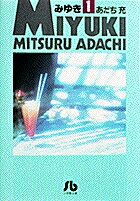
Miyuki
Miyuki follows high school student Masato Wakamatsu who is secretly in love with his neighbor Miyuki Kashima, while also living with his quiet stepsister — who is also named Miyuki.
Written by
Yu
Manga Enthusiast from Japan
I grew up in Japan and manga literally saved me during a tough time in elementary school. My English isn't perfect, but my love for manga is real — and I want to share it with you.
Disclosure: This post contains affiliate links. As an Amazon Associate, I earn from qualifying purchases at no extra cost to you.