
Ai Yori Aoshi Review: A Childhood Promise Between Two Heirs Becomes a Quiet Love Story
by Kou Fumizuki
Read the first volume. If it doesn't hook you, put it down. It'll hook you.
Buy Ai Yori Aoshi on Amazon →*Affiliate link — I earn a small commission at no extra cost to you.
Most romance manga are about whether two people will end up together. Ai Yori Aoshi answers that question in the first chapter. Aoi Sakuraba arrives at Kaoru's apartment in a kimono, holding a childhood photo, and her love for him is immediately clear and total. The series is not about whether. It is about the quality of a love that has already arrived — and whether the person being loved can believe he deserves it.
That is a more interesting question.
Quick Take
- A romance manga where the central couple's love is established completely in chapter one — the drama comes from everything surrounding it, not from will-they-won't-they tension
- The traditional Japanese domestic warmth — Aoi's kimono, her household skills, the arranged marriage context — is treated with genuine respect
- Age Rating: T+ (Older Teen) — 17 volumes complete; serialized in Young Animal from 1998 to 2005
Who Is This Manga For?
- Readers who want romance where the love is established early and sincerely rather than deferred across dozens of volumes
- Anyone interested in traditional Japanese domestic culture depicted warmly and with knowledge
- Fans of ensemble romance manga where a central couple is surrounded by supporting characters
- Readers who want a completed 17-volume series with romantic resolution
Content Warnings & Age Rating
Age Rating: T+ (Older Teen) Content Warnings: Fanservice throughout, consistent with Young Animal publication; arranged marriage and traditional family structure themes; ensemble of female characters who develop feelings for the male protagonist
The T+ rating reflects the fanservice content appropriate to the source magazine.
Story Overview
Kaoru Hanabishi left his wealthy family's household after his grandfather's death, unable to continue under the family's rigid expectations. He is now a college student living alone in Tokyo.
Aoi Sakuraba travels from Kyoto to find him. She arrives in a kimono, carrying a photo of a young boy — the boy who was her family's arranged betrothal partner since childhood. That boy is Kaoru. Aoi has loved him since she was nine years old, when they were promised to each other. Kaoru had forgotten. Aoi had built her entire life around remembering.
Their reunion is not simple: both families have complications, and their relationship cannot be made public. Aoi's family provides a large house, where she begins managing the household and where Kaoru's college friends gradually discover the situation and move in. The household expands; the series develops the ensemble.
The central arc is quieter than the setup suggests: Kaoru's gradual acceptance of a love he does not believe he deserves, given what his family put him through. His estrangement from the Hanabishi family — the decision to abandon the inheritance and live as an ordinary person — is resolved in the final volumes when he accepts a reconciliation, not for the family's sake, but on his own terms. He and Aoi are married five years after the events of the main story.
Two anime seasons were produced by J.C. Staff in 2002 and 2003.
Characters
Aoi Sakuraba — A heroine whose absolute devotion to Kaoru is handled with sincerity rather than as a punchline. She is skilled in traditional domestic arts — cooking, household management, kimono-wearing — and the series presents these skills as valuable expressions of who she is rather than limitations. Her choice to leave her family's expectations behind to find Kaoru is the series' foundational act of courage.
Kaoru Hanabishi — A protagonist whose estrangement from his family has made him wary of everything the Hanabishi household represented. His gradual belief that he is allowed to be happy — that Aoi's love is something he can accept rather than something he does not deserve — is the series' emotional arc.
The ensemble — Several women in the household develop various degrees of feeling for Kaoru. Each has a distinct personality and distinct relationship to the central couple. The series manages the harem structure by making clear, from the beginning, that the central relationship is settled.
Art Style
Fumizuki's art is warm and detailed — Aoi's kimonos are drawn with genuine attention to their specific designs, the domestic settings are cozy, and the character designs are distinct within the ensemble. The visual style reflects the series' tone: graceful, unhurried, attentive to the specific textures of traditional domestic life.
Cultural Context
Traditional Japanese domestic culture — kimono wearing, specific household arts, the structure of family arrangements — is depicted with genuine knowledge and respect. The tension between traditional family structures and individual choice runs quietly through the series. Aoi's choice to act on her own feelings against her family's management of her is framed as the series' primary act of agency, even as it leads her into a traditional domestic role.
What I Love About It
The moments when Kaoru and Aoi are simply alone in the house together, with no audience, no performance required. The series' depiction of two people comfortable in each other's presence — not needing anything to happen, just existing in the same space — is the warmest work Fumizuki does. It is also the series' core argument: love as a quality of daily life, not as an event.
Memorable Scene ⚠️ Spoiler Warning
Aoi leaving her family's household in Kyoto and traveling alone to Tokyo to find Kaoru — with nothing but a photo and a childhood promise — is the series' most important moment and it happens before chapter one. Everything that follows is the consequence of that single act of decision. The series earns its warmth because we know what it cost her to get there.
Similar Manga
| Title | Its Approach | How Ai Yori Aoshi Differs |
|---|---|---|
| Maison Ikkoku | Classic apartment romance, similar domestic warmth | Maison Ikkoku is more comedic and the love develops more slowly |
| Love Hina | Harem romance from same era, same publisher | Love Hina is louder and more slapstick; Ai Yori Aoshi is quieter and more tender |
| My Dress-Up Darling | Modern romance with established affection | My Dress-Up Darling is more contemporary in style; Ai Yori Aoshi is more traditional |
Pros & Cons
Pros
- Central couple's love is established early and treated with genuine sincerity
- Traditional domestic culture depicted with knowledge and warmth
- Complete 17-volume run with a full resolution
- Aoi is a distinctive heroine
Cons
- Ensemble harem elements may not appeal to all readers
- Traditional cultural context requires some familiarity for full appreciation
- Tokyopop's closure means physical copies require hunting
Is Ai Yori Aoshi Worth Reading?
For readers who want romance built on certainty rather than tension — yes. The series delivers something unusual: a love story where the love is never in doubt, and the question is whether the person being loved will believe in it. Aoi's warmth and the series' domestic register make it one of the more distinctive entries in its era.
Where to Buy
Read the first volume. If it doesn't hook you, put it down. It'll hook you.
This post contains affiliate links. If you purchase through these links, I may earn a small commission at no extra cost to you. As an Amazon Associate, I earn from qualifying purchases.
*Affiliate link — I earn a small commission at no extra cost to you.
More Manga You Might Like
Romance / Comedy
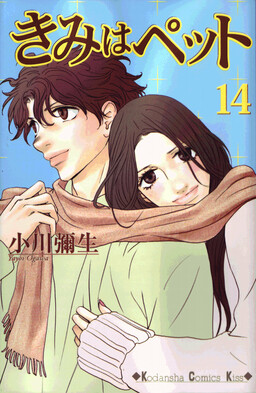
Tramps Like Us
Yu's review of Tramps Like Us (Kimi wa Pet) — Sumire Iwaya is a successful career woman whose life is going exactly wrong: demoted, broken up with, alone; she finds a young man in a cardboard box and takes him in as her 'pet' Momo; the relationship explores power dynamics, vulnerability, and what people need from each other through a deliberately unconventional frame.

Romance / Comedy
Moteki
Yu's review of Moteki — Yukiyo Fujimoto, 25, unemployed temp worker, has never been in a relationship; his 'moteki' (a period of romantic popularity) arrives when multiple women from his past suddenly show interest; he is entirely unprepared and consistently fails to handle it well.
Romance / Comedy
Wild Act
Yu's review of Wild Act — Yuniko Sakuragi is devoted to Ryu Eba, a legendary classic actor who died before she was born; when she encounters Shunsuke Arisaka, a young actor who is the spitting image of Eba, she kidnaps him — the beginning of a relationship that is complicated by who he might actually be.
Romance
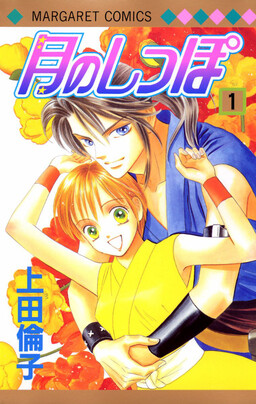
Tail of the Moon
Yu's review of Tail of the Moon — Usagi is the granddaughter of the leader of Iga and is supposed to be an elite kunoichi, but she keeps failing her ninja exams; she falls for the cold, competent Hanzo; Rinko Ueda's historical ninja romance about an underachieving heroine's determination to improve.
Romance / Comedy
Rent-a-Girlfriend
Yu's review of Rent-a-Girlfriend — Kazuya Kinoshita is dumped, rents a girlfriend service on an app, meets Chizuru Mizuhara who is perfect at her job, and then lies to his grandmother that they are real — a lie that spirals for 30 volumes.

Romance / Comedy
Me and My Brothers
Yu's review of Me and My Brothers — Sakura Miyata, fourteen, lived with her grandmother after losing her parents; after her grandmother's death, four stepbrothers she didn't know existed claim her; the oldest is protective, the second is cheerful, the third is tsundere, the fourth is childlike — and the story follows their developing family dynamics.
Written by
Yu
Manga Enthusiast from Japan
I grew up in Japan and manga literally saved me during a tough time in elementary school. My English isn't perfect, but my love for manga is real — and I want to share it with you.
Disclosure: This post contains affiliate links. As an Amazon Associate, I earn from qualifying purchases at no extra cost to you.