
Ai Ore! Review: A Feminine Boy and a Fierce Girl Fall in Love Across Every Convention That Says They Shouldn't
by Mayu Shinjo
Read the first volume. If it doesn't hook you, put it down. It'll hook you.
Buy Ai Ore! on Amazon →*Affiliate link — I earn a small commission at no extra cost to you.
There is a long tradition in Japanese romance manga of playing with who looks like what. But most series that use gender ambiguity use it as a costume — the character eventually settles into convention. What I appreciate about Ai Ore! is that it refuses to do that. Akira stays beautiful and gentle throughout the series. Mizuki stays tall and fierce. The romance is built around who they actually are rather than who the genre suggests they should become.
Quick Take
- A gender-subversion romance that commits to its premise — the conventionally feminine partner is male, the conventionally masculine partner is female, and neither of them drifts toward convention
- The band context gives the series a visual world that distinguishes it from standard school romance
- Age Rating: M (Mature) — 8 volumes, complete; the romantic content is more present than typical school romance at this rating
Who Is This Manga For?
- Readers who want romance that plays seriously with gender presentation rather than just referencing it
- Anyone interested in inverted romantic dynamics where the boy is the protected one
- Fans of school romance with music and performance elements
- Readers who want complete, distinctive romantic comedy
Content Warnings & Age Rating
Age Rating: M (Mature) Content Warnings: Gender-subversion romance with mature romantic content throughout; school gang-adjacent setting; the M rating reflects the content level, which is more present than typical school romance
The rating is accurate — this is more mature than T-rated school romance.
Story Overview
Akira Shirogane is beautiful. His features are delicate, his manner is gentle, and he is consistently taken for female by people who encounter him for the first time. He is the vocalist of an all-girls band at his all-boys school — brought in specifically because he reads female enough to perform with them — and the situation is normal to him.
Mizuki Sakurazaka is tall, fierce, and the informal authority for the delinquent element at the girls' school across the street. She is consistently taken for male. When she first encounters Akira, she mistakes him for a girl.
The series follows what happens after the mistake is corrected and both of them have to decide what to do with the attraction that preceded it. Their relationship inverts standard romance positioning — Mizuki is protective and decisive in ways typically gendered male; Akira is gentle and beautiful in ways typically gendered female — and the series is aware of this at every point.
The band (Blaue Rosen) is the context for their continued interaction and provides the series' central dramatic set piece: a concert where Akira publicly acknowledges that he is male, which changes the dynamic of everything around him.
The series appeared on the New York Times manga bestseller list multiple times and was adapted into a 2012 live-action film.
Characters
Akira Shirogane — A protagonist whose femininity is genuine rather than performed. He is not cross-dressing; he is not pretending. His appearance simply falls outside masculine convention, and the series treats this matter-of-factly without making it a problem to solve.
Mizuki Sakurazaka — A female character whose masculinity is equally genuine — her leadership role, her physical confidence, her protective instincts toward Akira. The series does not require her to become more conventionally feminine as the relationship develops.
The band and school communities — Supporting casts that provide social texture and test the central relationship's stability.
Art Style
Shinjo's art is detailed, with particular attention to Akira's beauty — his visual appeal is the series' core premise and the art commits to it fully. The contrast between Akira's delicacy and Mizuki's physical presence is consistent throughout and carries the series' central argument about what gender presentation means.
Cultural Context
Ai Ore! ran in Sho-Comi from 2006 to 2010. The series draws on shoujo manga's long engagement with gender ambiguity — from the Takarazuka theatrical tradition to the bishōnen (beautiful boy) conventions of romance manga — and applies those elements to a contemporary school setting with full awareness of the genre history it is working within.
What I Love About It
The series' refusal to resolve. Akira does not become more masculine as volumes progress. Mizuki does not become more feminine. They remain who they are. The romance is built around who they actually are — not around eventual convergence with convention. That commitment is rarer than it should be.
Memorable Scene ⚠️ Spoiler Warning
The concert scene where Akira acknowledges his gender publicly — not as a confession but as a statement, in front of everyone who has been treating him as female — and the way Mizuki responds is the series' most committed moment. It does not go the way the genre might expect. Both of them remain exactly themselves.
Similar Manga
| Title | Its Approach | How Ai Ore! Differs |
|---|---|---|
| W Juliet | Gender-subversion with cross-dressing premise | W Juliet uses costume as the device; Ai Ore! uses genuine presentation |
| Ouran High School Host Club | Gender ambiguity, comedy, school | Ouran is lighter and more comedic; Ai Ore! takes its premise more seriously |
| His and Her Circumstances | School romance with dynamic subversion | Kare Kano is more psychological; Ai Ore! is more focused on the gender dynamic |
Pros & Cons
Pros
- Gender subversion committed to throughout without resolution into convention
- Akira and Mizuki are genuinely distinctive characters
- Band context gives the series visual distinctiveness
- Complete at 8 volumes
Cons
- M rating content may exceed what some readers expect from school romance
- Some volumes feel structurally repetitive in the romantic conflict
- The premise requires engagement with the gender dynamics — if that is not interesting to you, neither is this
Is Ai Ore! Worth Reading?
For readers specifically interested in gender-subversion romance, yes — this is one of the more committed examples of the form. It does not use gender ambiguity as costume or as comedy backdrop; it uses it as the series' actual subject. The M rating is accurate; be prepared for more content than T-rated school romance.
Where to Buy
Read the first volume. If it doesn't hook you, put it down. It'll hook you.
This post contains affiliate links. If you purchase through these links, I may earn a small commission at no extra cost to you. As an Amazon Associate, I earn from qualifying purchases.
*Affiliate link — I earn a small commission at no extra cost to you.
More Manga You Might Like
Romance
Butterflies, Flowers
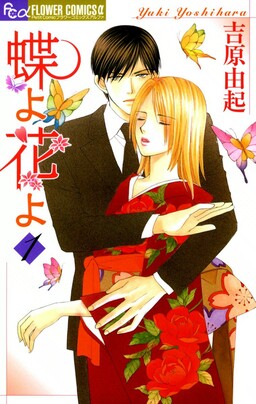
Yu's review of Butterflies, Flowers (蝶よ花よ) — Choko Kuze's wealthy family went bankrupt, so she takes an office job at a real estate firm and finds her new tyrant boss, Domoto, is the son of her family's old chauffeur — the servant boy who once worshipped her. At work he's a dictator; off the clock he reverts to her devoted butler. Yuki Yoshihara's screwball josei romance about a power dynamic that flips twice a day.

Romance / Comedy
Happy Hustle High
Yu's review of Happy Hustle High — Hanabi Ozora attends an all-girls school that merges with an all-boys school; the students resist the change; Hanabi, who is all energy and enthusiasm, decides to bring the two groups together — which puts her in contact with Yasuaki Garaku, the student body president of the boys' school who finds her impossible.

Romance / Comedy
Ai Kora
Yu's review of Ai Kora — Hachibe Maeda has an impossibly specific physical ideal: particular eyes, a particular voice, a particular figure, particular legs. When he moves to Tokyo and ends up in a co-ed dormitory, he finds all four components in four different girls — and then finds out what he actually wants.

Romance / Comedy
Kaguya-sama: Love Is War
Aka Akasaka's 28-volume romantic comedy (2015–2022) about Miyuki Shirogane and Kaguya Shinomiya, two student council officers at Japan's most elite high school who are both in love and both certain that whoever confesses first loses. Complete in English from VIZ Media.
Romance / Comedy
Toradora!
Yu's review of Toradora! — a delinquent-looking boy and a tiny, terrifying girl make a deal to help each other confess to the other's best friend, and discover they had the wrong target all along.

Romance / Comedy
My Love Mix-Up!
Yu's review of My Love Mix-Up! — Aoki has a crush on his classmate Hashimoto; he borrows her eraser and notices it says 'Ida' on it, which he assumes means she likes their classmate Ida; when Ida catches him looking at the eraser, he assumes Aoki likes him; Aoki, rather than correct this misunderstanding, goes along with it — and discovers his feelings are more complicated than he thought.
Written by
Yu
Manga Enthusiast from Japan
I grew up in Japan and manga literally saved me during a tough time in elementary school. My English isn't perfect, but my love for manga is real — and I want to share it with you.
Disclosure: This post contains affiliate links. As an Amazon Associate, I earn from qualifying purchases at no extra cost to you.