
Ai Kora Review: A Boy With a Very Specific Ideal Moves to Tokyo and Finds All the Parts in Different Girls
by Kazurou Inoue
Read the first volume. If it doesn't hook you, put it down. It'll hook you.
Buy Ai Kora on Amazon →*Affiliate link — I earn a small commission at no extra cost to you.
The premise of Ai Kora is absurd in a precise way. Hachibe Maeda does not want a girl — he wants a composite ideal: a specific kind of eyes from one person, a specific kind of voice from another, a specific figure, specific legs. He has itemized his attraction like a shopping list. Moving to Tokyo, he ends up in a co-ed dormitory and discovers all four items in four different girls. This should be the setup for a pure fanservice comedy. What makes it more interesting is that the series watches him realize the items were never the point.
Quick Take
- A harem dormitory comedy with an unusually specific premise — Hachibe's component-based ideal is the series' joke, but the series develops genuine feeling alongside it
- Twelve volumes, complete; VIZ Media published the full English series
- Age Rating: T (Teen) — mild ecchi content appropriate for Weekly Shonen Sunday
Who Is This Manga For?
- Readers who want harem comedy with a slightly more unusual setup than the standard
- Anyone who enjoys ensemble romance comedy set in a shared living situation
- Fans of Weekly Shonen Sunday's approach to romantic comedy
- Readers looking for completed harem manga with a real ending
Content Warnings & Age Rating
Age Rating: T (Teen) Content Warnings: Harem comedy; physical attraction is the explicit subject of the premise; co-ed dormitory setting; mild ecchi content within Sunday magazine parameters
Appropriate for its rating. Nothing graphic.
Story Overview
Hachibe Maeda is moving to Tokyo for high school and has one criterion for the experience: to find a girl with all the specific physical qualities he has catalogued. He ends up at Ayame House, a co-ed dormitory, where he discovers the situation the series was built around: each quality he wanted exists, separately, in four different girls.
Sakurako has the eyes. Tsubame has the voice. Yukari has the figure. Motoko has the legs.
Hachibe immediately declares himself devoted to each "part" — which is as strange and off-putting to everyone around him as it sounds. The dormitory is the setting for the comedy that follows: Hachibe's component-based approach to attraction running into the actual personalities of four actual people who do not want to be itemized.
The series' real story is Hachibe's gradual shift from component-attraction to genuine feeling. The main heroine, Motoko Honjou, is the character this shift centers on. By the end of the series — all seventeen Japanese volumes, though VIZ's English run stopped at thirteen — Hachibe has understood that what he was cataloguing was a way of avoiding the actually complicated thing, which is wanting a specific person.
Characters
Hachibe Maeda — A protagonist whose original framework for attraction is the premise's joke, but who is given a sincere arc. His growth from component-collector to someone capable of loving a whole person is the series' character development.
Motoko Honjou — The main heroine, who has the legs and the patience to put up with Hachibe's behavior longer than anyone reasonable would. Her gradual actual feelings for him develop alongside her exasperation, which is a combination that works.
Sakurako, Tsubame, Yukari — Each has the quality Hachibe was originally attracted to and a personality that extends well beyond it. The series does not flatten them into their assigned component.
Art Style
Inoue's art is clean shonen comedy — clear character designs, expressive faces for comedic timing, panel compositions that serve the ensemble situations. The character designs make the dormitory cast visually distinct.
Cultural Context
Ai Kora ran in Weekly Shonen Sunday from 2005 to 2008. The dormitory co-ed living setting has a long history in Japanese romantic comedy — it creates natural proximity and natural comedy from proximity — and this series works within that tradition while making the protagonist's specific fixation more unusual than the standard harem setup.
What I Love About It
The moment when Hachibe is asked what he actually feels — specifically, about Motoko, as a person rather than as a component — and cannot answer in component language anymore. The framework that started the series has outlived its usefulness, and watching him realize that in real time is the character work that justifies the setup.
Memorable Scene ⚠️ Spoiler Warning
Hachibe's first clear statement that he loves Motoko — not any part of her, her — is the series' emotional payoff. Coming after volumes of component language, the directness of "I love you, specifically" lands harder than it would in a series that had not spent so long avoiding it.
Similar Manga
| Title | Its Approach | How Ai Kora Differs |
|---|---|---|
| Love Hina | Dormitory harem romance, longer run | Love Hina is more action-comedy; Ai Kora is more focused on the specific premise |
| To Love-Ru | Harem romance from similar era | To Love-Ru is more escalating fanservice; Ai Kora is more grounded |
| My Bride Is a Mermaid | Harem comedy with supernatural elements | Seto no Hanayome is louder and more chaotic; Ai Kora is more character-focused |
Pros & Cons
Pros
- The specific premise distinguishes it from generic harem setups
- Hachibe develops beyond his original framework in a genuine way
- Dormitory setting creates good ensemble situations
- The series has a real ending; complete in both Japanese and English
Cons
- The physical-component premise requires some tolerance
- Art is functional rather than distinctive
- Character development is slower than the premise suggests it will be
Is Ai Kora Worth Reading?
Yes, if you like harem comedy and can engage with a premise built around physical attraction becoming real feeling. The journey from components to a person is the series' actual subject, and it lands in the complete 12-volume run.
Where to Buy
Read the first volume. If it doesn't hook you, put it down. It'll hook you.
This post contains affiliate links. If you purchase through these links, I may earn a small commission at no extra cost to you. As an Amazon Associate, I earn from qualifying purchases.
*Affiliate link — I earn a small commission at no extra cost to you.
More Manga You Might Like

Romance / Comedy
Happy Hustle High
Yu's review of Happy Hustle High — Hanabi Ozora attends an all-girls school that merges with an all-boys school; the students resist the change; Hanabi, who is all energy and enthusiasm, decides to bring the two groups together — which puts her in contact with Yasuaki Garaku, the student body president of the boys' school who finds her impossible.

Romance / Comedy
My Love Mix-Up!
Yu's review of My Love Mix-Up! — Aoki has a crush on his classmate Hashimoto; he borrows her eraser and notices it says 'Ida' on it, which he assumes means she likes their classmate Ida; when Ida catches him looking at the eraser, he assumes Aoki likes him; Aoki, rather than correct this misunderstanding, goes along with it — and discovers his feelings are more complicated than he thought.
Romance / Comedy
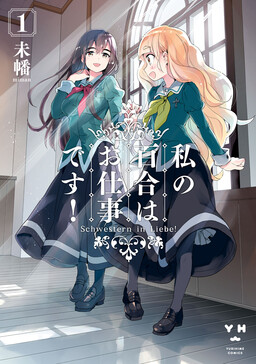
Yuri Is My Job!
Yu's review of Yuri Is My Job! — Hime Shiraki's entire identity is performing perfect femininity for public approval; working at Liebe Girls Academy café requires her to act out romantic yuri relationships with her coworkers for customers; her assigned partner Mitsuki hates her genuinely, and Hime begins to develop feelings that are not performance.

Romance / Comedy
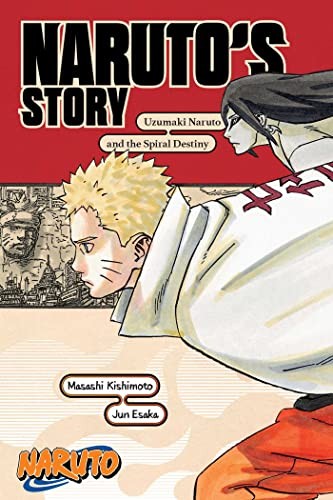
We Never Learn
Yu's review of We Never Learn — a scholarship student agrees to tutor three geniuses, each brilliant in one field but failing in the subjects they want to pursue, while navigating the increasingly complicated feelings everyone develops.
Romance
Ultra Romantic
Yu's review of Ultra Romantic — Tsurezure Ito is so shy his face literally overheats when flustered; Rika Yakumo is so direct she'll say anything she's thinking; together they are trying to figure out their feelings; Bolze's Jump romance comedy about two extremes finding each other.
Romance
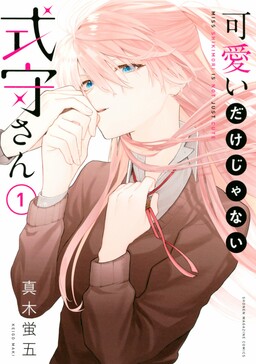
Shikimori's Not Just a Cutie
Yu's review of Shikimori's Not Just a Cutie — Izumi is a boy with the worst luck who is dating Shikimori, a girl who is sweet and feminine most of the time; but when Izumi is in danger, Shikimori shifts into a cool, intense mode that is completely different from her usual self, and which Izumi finds extremely appealing.
Written by
Yu
Manga Enthusiast from Japan
I grew up in Japan and manga literally saved me during a tough time in elementary school. My English isn't perfect, but my love for manga is real — and I want to share it with you.
Disclosure: This post contains affiliate links. As an Amazon Associate, I earn from qualifying purchases at no extra cost to you.