
Adachi and Shimamura Review: Two Girls Skip Class Together, and Neither of Them Can Name What Happens Next
by Hitoma Iruma (story) / Non (art)
Read the first volume. If it doesn't hook you, put it down. It'll hook you.
Buy Adachi and Shimamura on Amazon →*Affiliate link — I earn a small commission at no extra cost to you.
I have always been drawn to stories that are about the space before anything is said. Before the confession, before the declaration, before the relationship has a name — that period where two people are in each other's lives and neither of them knows yet what to do about it. Adachi and Shimamura is the best manga I have read about that specific period. It is not about whether they will end up together. It is about what it feels like to be inside the not-yet.
Quick Take
- A yuri romance about two girls who skip class together, do not name what they are to each other, and gradually have to
- The emotional register is slower and quieter than almost any other romance manga; the interiority is the point
- Age Rating: T (Teen) — 5-volume manga adaptation (complete); the original light novel series by Hitoma Iruma runs longer and is also available from Yen Press
Who Is This Manga For?
- Readers who want yuri romance with genuine psychological depth rather than event-driven plotting
- Fans of slow-burn stories where the development is earned across the entire series, not rushed
- Anyone who wants completed yuri manga with a distinctive visual and emotional style
- Readers who are fine with a story where the most important things happen without announcement
Content Warnings & Age Rating
Age Rating: T (Teen) Content Warnings: Yuri romance; both characters are emotionally somewhat isolated; the slow emotional development is gentle but real
Nothing explicit. The emotional weight is significant but the surface is calm.
Story Overview
Adachi is skipping class. She finds the gym loft — above the gymnasium, away from teachers and classmates — and sits there. Shimamura is already there.
They start spending time together because that is where they both are. There is no agenda. They play badminton. They talk about nothing much. The time they spend together is not about anything in particular, and then it is.
Adachi realizes she is in love with Shimamura. She identifies this clearly, to herself. She does not say it. Her relationship to her own feelings — she knows; she does not know what to do with this knowledge; she monitors the distance between them constantly — is the manga's most developed interiority.
Shimamura's relationship to her own feelings is different and longer. She is someone who has many acquaintances and does not connect deeply with any of them. She processes slowly, deflects instinctively, cares genuinely without fully knowing how much. Her gradual understanding of what Adachi means to her is the series' central question.
The summer festival arc is the story's turning point: Adachi confesses. Shimamura does not process it immediately, then gradually does. Their movement toward each other is quiet and careful and consistent with who they both are.
A supporting character named Yashiro — a small girl in a spacesuit who claims to be an alien from the future — adds a deliberately unreal element that works as a kind of emotional tuning fork for the story's more oblique feelings.
The 2020 anime adaptation by Tezuka Productions is faithful and beautifully made.
Characters
Adachi Sakura — Her specific relationship to her own feelings — she knows she loves Shimamura; she is monitoring every interaction for signals; she is terrified of closing the distance and equally terrified of it staying the same — is the series' most complete interiority. Her growth is about learning to act on what she knows rather than simply holding it.
Shimamura Hougetsu — Her specific relationship to her own feelings — she processes slowly, she deflects, she cares genuinely and does not always know how much — is the series' most interesting character question. She is not cold. She is not unfeeling. She simply experiences emotional depth differently than Adachi does, and the series takes that seriously.
Yashiro — The self-proclaimed time-traveling alien in the spacesuit. Whether she is what she says she is the manga leaves deliberately unanswered. She functions as the story's unreal element — the part of the series that exists outside the careful realism of Adachi and Shimamura's interiority.
Art Style
Non's art is exceptional. The character designs are expressive in a restrained way that matches the material's register. Significant white space; the panels breathe. The gym loft — the specific quality of light, the sense of being above and away — is rendered as a place you believe in. The series' most important emotional moments are conveyed through small shifts in posture and expression rather than large reactions.
Cultural Context
The yuri genre has a tradition of depicting girls' relationships in a specific emotional space — intense, close, and not yet named — that this series inhabits deliberately and with full awareness of the genre history it is working within. The light novel by Hitoma Iruma, the source material, is a more extended version of the same story with additional arcs.
What I Love About It
The gym loft. Every time the series returns to that space — where Adachi and Shimamura first were together, doing nothing in particular — it feels like returning to the center of what the story is about. The physical space is the relationship's origin and its baseline. There is something precise about using a place where people go to be away from things as the place where two people find each other.
Memorable Scene ⚠️ Spoiler Warning
The summer festival. Adachi in a yukata, the crowd, the specific circumstances that make the confession possible. What she says and how Shimamura receives it — not with an immediate response but with the beginning of a longer process — is the series' clearest statement of who these two people are. Adachi acts. Shimamura processes. The movement toward each other is real even if it is slow.
Similar Manga
| Title | Its Approach | How Adachi and Shimamura Differs |
|---|---|---|
| Bloom Into You | Yuri with psychological depth, introspective | Bloom Into You is more plot-driven; Adachi and Shimamura is more purely interior |
| Sweet Blue Flowers | Yuri, foundational work, gentle | Sweet Blue Flowers has more external plot; Adachi and Shimamura is quieter throughout |
| Kase-san | Yuri romance, warmer tone, more expressive | Kase-san is more openly emotional; Adachi and Shimamura sits longer in unspoken feeling |
Pros & Cons
Pros
- 5 volumes, complete — the commitment is achievable
- Non's art is exceptional and perfectly matched to the material
- The emotional interiority is developed with genuine care
- The slow burn is earned, not padded
Cons
- Very slow pacing; not for readers who want plot or event-driven movement
- The manga covers less story than the light novel
- The quiet register requires patience — it does not accelerate to reward you
Is Adachi and Shimamura Worth Reading?
For readers who can work at the series' pace, yes — it is one of the more carefully made yuri manga available in English, and Non's art is reason enough. If you want faster movement toward the relationship, the light novel covers more ground and might suit you better. If you want to sit inside the not-yet, this is the manga for it.
Where to Buy
Read the first volume. If it doesn't hook you, put it down. It'll hook you.
This post contains affiliate links. If you purchase through these links, I may earn a small commission at no extra cost to you. As an Amazon Associate, I earn from qualifying purchases.
*Affiliate link — I earn a small commission at no extra cost to you.
More Manga You Might Like

Romance / Drama
Sweet Blue Flowers
Yu's review of Sweet Blue Flowers — Fumi Manjoume and Akira Okudaira were childhood best friends who lost contact; they meet again in high school; Fumi is going through a heartbreak and beginning a new relationship with a senior girl while discovering who she is; Akira watches, loves, and cannot yet name it.

Romance / Drama
I Cannot Reach You
Yu's review of I Cannot Reach You — Kakeru is perfect: good at everything, well-liked, seemingly without needs; his best friend Yamato has been in love with him since childhood but has convinced himself that someone like Kakeru is beyond his reach; the series is about the gap between who Yamato thinks Kakeru is and who Kakeru actually is.

Romance / Drama
Girl Friends
Yu's review of Girl Friends — Mari Kumakura is a quiet, bookish girl with no real friends; Akko Oohashi is pretty, popular, and inexplicably interested in her; their friendship grows into something more complicated than either of them has words for, which is the point.
Romance / Drama
Bloom Into You
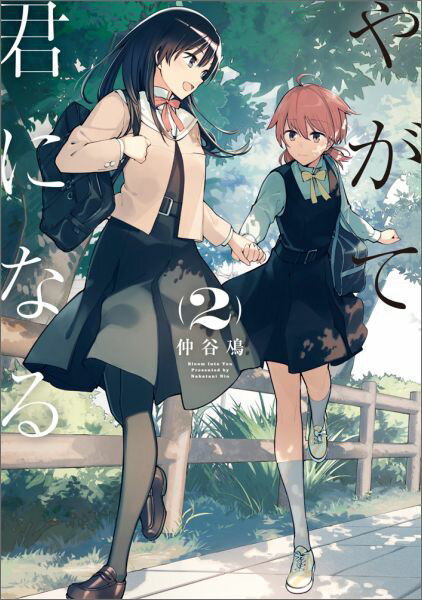
Yu's review of Bloom Into You — Yuu Koito has never felt the romantic love everyone describes, and Touko Nanami confesses to her precisely because Yuu can't love her back. The series follows what happens when that arrangement quietly becomes a lie.

Romance
Your Name (Kimi no Na wa)
Yu's review of Your Name — Taki and Mitsuha swap bodies unpredictably while sleeping; a Tokyo high school boy and a rural shrine maiden from a small mountain town; Ranmaru Kotone's manga adaptation of Makoto Shinkai's film about two people connected across distance, time, and the limits of what they can reach.

Romance
Weathering With You (Tenki no Ko)
Yu's review of Weathering With You — Hodaka runs away from his island home to Tokyo; the city has been raining without end; he meets Hina, a girl with the power to temporarily clear the sky; Nikki Asada's manga adaptation of Makoto Shinkai's film about a boy who has to choose between a person and the world.
Written by
Yu
Manga Enthusiast from Japan
I grew up in Japan and manga literally saved me during a tough time in elementary school. My English isn't perfect, but my love for manga is real — and I want to share it with you.
Disclosure: This post contains affiliate links. As an Amazon Associate, I earn from qualifying purchases at no extra cost to you.