
Absolute Boyfriend Review: She Ordered a Perfect Boyfriend Online — and Perfect Turned Out to Be the Problem
by Yuu Watase
Read the first volume. If it doesn't hook you, put it down. It'll hook you.
Buy Absolute Boyfriend on Amazon →*Affiliate link — I earn a small commission at no extra cost to you.
I have always been suspicious of the idea that if you could design the perfect partner, you would want them. Absolute Boyfriend is the manga that tests that suspicion with a specific scenario: a girl who has failed at every real relationship gets a robot built to be exactly what she asked for. He is everything. He is kind, attentive, beautiful, completely devoted. And the series spends six volumes showing why that is not the same as love.
Quick Take
- A girl accidentally activates a perfect boyfriend robot on a three-day free trial; the trial becomes indefinite; what follows is an argument about what love actually requires
- From Yuu Watase (Fushigi Yugi, Ceres: Celestial Legend) — her most emotionally precise work in her most concentrated format
- Age Rating: T (Teen) — 6 volumes, complete; the ending delivers something unexpected
Who Is This Manga For?
- Readers who want short, complete romance manga with a distinctive premise
- Fans of Yuu Watase who want her emotional range in six volumes rather than twenty
- Anyone interested in the question of whether manufactured love is real love
- Readers who can handle an ending that does not give everyone what they want
Content Warnings & Age Rating
Age Rating: T (Teen) Content Warnings: Romantic and mildly suggestive content — Night is programmed to be the perfect boyfriend in all respects; the premise includes physical themes handled at a T rating level
Not graphic, but the premise is present throughout.
Story Overview
Riiko Izawa has a perfect record of romantic failure. She has confessed to three boys and been rejected three times. When she receives a catalog from a company called Kronos Heaven advertising customizable life-size boyfriend robots on a three-day free trial, she signs up without reading the terms. She enters her ideal preferences. Night arrives: beautiful, devoted, calibrated precisely to what she asked for.
The three-day free trial becomes indefinite when she discovers what returning him would cost. Night is perfect. He cooks, he listens, he never loses his temper, he loves her completely and without condition. The salesman who manages Night's account — Goshi Namikiri — is a constant presence, monitoring the situation and managing the contract.
Night's existence forces a specific question about Riiko's childhood friend, Soshi Asamoto. Soshi is present before Night arrives and remains present throughout. He is imperfect in all the ways Night is not: frustrated, jealous, sometimes unkind, occasionally impossible. His feelings for Riiko are real in the specific messy way that real feelings are. The series runs this comparison — perfect manufactured love against imperfect human feeling — across six volumes, and its answer is clear but not easy.
Night himself develops. He was programmed to love Riiko. What happens to that programming when love requires something it did not account for is the series' final question.
The drama was adapted for television in Japan in 2008 and later remade in Taiwan (2012) and South Korea (2019).
Characters
Riiko Izawa — A protagonist whose flaw is not knowing what she wants until she has it. Her arc is the discovery that what she thought was the obstacle to love — imperfection, difficulty, messiness — was actually love. She is not always sympathetic. She often takes Night for granted precisely because he cannot be anything else. This is accurate.
Night Tenjo — More interesting than his premise should allow. He develops in ways that feel genuine rather than programmed, and his specific limitation — he can love only in the way he was configured — is what the series uses to define what human love actually is by contrast.
Soshi Asamoto — The childhood friend whose complicated, imperfect, sometimes-frustrating actual feelings are the series' real argument. He is there before Night and he is still there.
Goshi Namikiri — The salesman/contract manager, whose relationship to Night is more complicated than his professional role suggests.
Art Style
Watase's art is characteristic shojo — expressive, detailed designs, strong emotional sequences. Night's visual presentation — beautiful in the specific way an idealized boyfriend would be — deliberately contrasts with Soshi's more ordinary appearance. The visual distinction carries the series' argument.
What I Love About It
The malfunction scene. Night malfunctions at some point in the series, and Riiko's response is fear — not because the malfunction is dangerous but because it has made visible that Night is something that can stop. The moment she understands that his devotion has limits she did not know about is the moment the series' actual content becomes legible. Before that scene, this is a romantic comedy. After it, it is something more honest.
Memorable Scene ⚠️ Spoiler Warning
Night's final scenes — what he chooses to do when love requires something his programming did not prepare him for, and what that choice means about whether his love was real — are the series' most emotionally resonant sequence. Whether what he does counts as love is the question Watase leaves you with. I think it does. The series earns that answer.
Similar Manga
| Title | Its Approach | How Absolute Boyfriend Differs |
|---|---|---|
| Chobits | AI romantic partner, philosophical | Chobits is more serious about consciousness; Absolute Boyfriend is warmer and more romantic |
| Fruits Basket | Love, healing, what love requires | Fruits Basket is about real people; Absolute Boyfriend uses the artificial to define the real |
| His and Her Circumstances | School romance, unconventional premise | Kare Kano is more comedic about dysfunction; Absolute Boyfriend is more tender |
Pros & Cons
Pros
- 6 volumes — compact and completely self-contained
- The premise is used to ask a genuine question, not just for comedy
- Night is a more interesting character than a robot boyfriend should be
- The ending is unexpected and earned
Cons
- The ending will not satisfy all readers — it is affecting rather than happy
- Some content reflects early 2000s shojo conventions
- The three-way dynamic can feel compressed in six volumes
Is Absolute Boyfriend Worth Reading?
Yes. Watase does more with this premise in six volumes than most shojo series do in twenty. If you want the question "was that love?" to stay with you after the last page, this is the manga for it.
Where to Buy
Read the first volume. If it doesn't hook you, put it down. It'll hook you.
This post contains affiliate links. If you purchase through these links, I may earn a small commission at no extra cost to you. As an Amazon Associate, I earn from qualifying purchases.
*Affiliate link — I earn a small commission at no extra cost to you.
More Manga You Might Like

Romance / Comedy
Ultra Maniac
Yu's review of Ultra Maniac — Nina is a witch from the Magic Kingdom studying abroad at a regular Japanese middle school; she is terrible at concealing her magic; Ayu, her only friend who knows her secret, tries to manage the chaos while pursuing her own low-key romance.

Romance / Comedy
Switch Girl!!
Yu's review of Switch Girl — Nika Tamiya is perfectly put-together at school and a lazy slob at home; her neighbor Arata Kamiyama accidentally discovers her real self; he has his own switch — impressive at school, feral at home — and they become an unlikely pair built on mutual knowledge of each other's real selves.

Romance / Comedy
Monkey High!
Yu's review of Monkey High — Haruna Aizawa transfers to a new school after her politician father's scandal; she expects to keep her distance from her new classmates; Masaru, the class's short, energetic leader who reminds everyone of a baby monkey, is entirely impossible to keep at a distance.

Romance / Comedy
Beauty Pop
Yu's review of Beauty Pop — Kiri Koshiba is a half-asleep hairdressing genius who quietly fixes bullied girls' hair while wanting nothing to do with the spotlight; when she defeats the school's flashy Scissors Project in disguise, she's dragged into a styling team led by the insufferable Narumi, and a one-sided rivalry slowly turns into a ten-years-later marriage.
Romance
Tail of the Moon
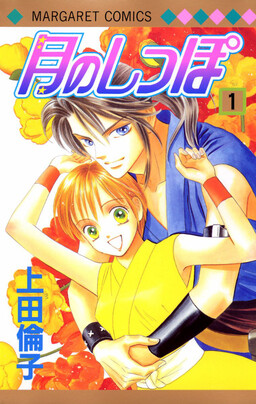
Yu's review of Tail of the Moon — Usagi is the granddaughter of the leader of Iga and is supposed to be an elite kunoichi, but she keeps failing her ninja exams; she falls for the cold, competent Hanzo; Rinko Ueda's historical ninja romance about an underachieving heroine's determination to improve.

Romance
Cactus's Secret
Yu's review of Cactus's Secret (サボテンの秘密) by Nana Haruta — Miku Yamada has crushed on clueless Kyohei Fujioka since middle school, but when she tries to confess he treats it as a joke and nicknames her 'cactus' for being so prickly around him. A breezy four-volume Ribon romance where the girl makes the first move.
Written by
Yu
Manga Enthusiast from Japan
I grew up in Japan and manga literally saved me during a tough time in elementary school. My English isn't perfect, but my love for manga is real — and I want to share it with you.
Disclosure: This post contains affiliate links. As an Amazon Associate, I earn from qualifying purchases at no extra cost to you.