
A Girl on the Shore Review: Two Teenagers Enter a Relationship Neither of Them Can Name
by Inio Asano
Read the first volume. If it doesn't hook you, put it down. It'll hook you.
Buy A Girl on the Shore on Amazon →*Affiliate link — I earn a small commission at no extra cost to you.
Inio Asano is not trying to make you feel better. Every manga he makes is about the specific way people avoid the thing they actually need, and A Girl on the Shore is him at his most concentrated — two volumes, two teenagers, a physical relationship that neither of them will call what it is. I read it in one sitting and felt like I had been watching something I wasn't supposed to see.
Quick Take
- Asano (Goodnight Punpun, Solanin) at his most concentrated — adolescent relationship dynamics depicted with honesty that is uncomfortable because it is accurate
- Koume uses Isobe as a substitute; Isobe is genuinely in love; neither of them can stop
- Age Rating: M (Mature) — 2 volumes, complete; adult readers only
Who Is This Manga For?
- Adult readers who want manga that depicts adolescent emotional complexity honestly, without romanticizing it
- Fans of Asano who want a shorter, more concentrated version of his sensibility
- Readers who can engage with explicit content that is in service of psychological truth rather than titillation
- Anyone who has ever been in a relationship where you knew what it was and still couldn't leave
Content Warnings & Age Rating
Age Rating: M (Mature) Content Warnings: Explicit sexual content throughout; teenage characters; emotional manipulation; Isobe's brother's suicide is a background element; adolescent psychological complexity handled without resolution
M rating — adult readers only. The explicit content is central to the work, not peripheral.
Story Overview
Koume Sato is rejected by the boy she was in love with — Misaki, an upperclassman. The same day, she finds Isobe, a classmate. They sleep together. It starts as a substitute arrangement: Koume feels something, and Isobe is available. Neither of them calls it anything.
Isobe is in love with Koume. He knows this clearly and cannot say it, because she has told him what this is — what they are to each other. The gap between what he feels and what he is allowed to express is the series' central emotional tension.
Isobe is also carrying his own weight: his brother died by suicide, and the grief is present in him without being processed. This detail changes the texture of his need — he is not simply in love with Koume, he is clinging to something real in the aftermath of a loss that has not resolved.
The story does not move toward romantic resolution. It moves toward Koume developing her own understanding of what she wants and why she has been using Isobe as a buffer between herself and that question. By the end she has not solved anything, but she has looked at herself more honestly than she was looking at herself at the beginning. The 2016 Angoulême International Comics Festival gave the work significant recognition.
Characters
Koume Sato — A protagonist who begins the series in retreat from her own feelings and ends it slightly less in retreat. Asano does not give her a clean arc. She causes real damage to Isobe and the manga does not forgive her for it, but it also does not condemn her — her behavior is shown as comprehensible rather than monstrous.
Isobe — A character who seems simpler than he is. His love for Koume is clear; his inability to claim it creates the power imbalance the series lives in. His grief over his brother is underplayed in exactly the right way — it explains his need without being used as an excuse.
Art Style
Asano's photorealistic backgrounds make the seaside town feel like a real place. The characters feel like real people inside it. His ability to draw the specific quality of emptiness — two people in proximity to each other who are not connecting — is the main technical tool the series uses.
What I Love About It
The precision about what the relationship is not. Asano does not let either character pretend it is something it isn't, and he does not let them pretend it is nothing, either. The series lives in the discomfort of that middle space, and that discomfort is earned rather than exploited.
The moment when one of them has to decide what they actually feel — when the comfortable ambiguity becomes a specific question — is handled without announcement. Asano trusts the reader to notice when something has shifted.
Memorable Scene ⚠️ Spoiler Warning
The scene where Isobe finally tells Koume what he actually wants from their relationship — not obliquely, directly — and her immediate retreat from that honesty is the series' most precise emotional moment. Her response is not cruelty. It is self-protection that looks like cruelty. The distinction matters, and Asano draws it exactly.
Similar Manga
| Title | Its Approach | How A Girl on the Shore Differs |
|---|---|---|
| Goodnight Punpun | Asano's longer, more ambitious work | Punpun covers more ground; A Girl on the Shore is more concentrated and sexually explicit |
| Inside Mari | Adolescent psychological complexity, identity | Inside Mari is more surreal; A Girl on the Shore is more realistic |
| Flowers of Evil | Adolescent emotional damage, honest depiction | Flowers of Evil is more dramatic; A Girl on the Shore is quieter |
Pros & Cons
Pros
- Adolescent relationship dynamics depicted with genuine accuracy
- Asano's art is exceptional — the setting is as present as the characters
- Complete in 2 volumes — the format matches the story's scale
- Internationally recognized (Angoulême 2016)
Cons
- Explicit M-rated content throughout — not a warning to skip, a genuine description
- Teenage characters in sexual situations; this is the content, not the context
- Does not offer resolution; ends in a realistic place, not a satisfying one
- The discomfort is intentional — it won't work if you want to feel better at the end
Is A Girl on the Shore Worth Reading?
For the right reader — yes. If you can engage with difficult content handled seriously, this is Asano doing what he does best in the most direct format he has worked in. If you want resolution or comfort, this is not the right manga.
Where to Buy
Read the first volume. If it doesn't hook you, put it down. It'll hook you.
This post contains affiliate links. If you purchase through these links, I may earn a small commission at no extra cost to you. As an Amazon Associate, I earn from qualifying purchases.
*Affiliate link — I earn a small commission at no extra cost to you.
More Manga You Might Like

Romance / Drama
Mars
Yu's review of Mars — Kira Aso is a quiet art student who has withdrawn from people; Rei Kashino is a reckless motorcycle racer whose fearlessness on the track conceals what he's afraid of; they begin a relationship that requires both of them to confront what they've been avoiding.

Romance / Drama
After the Rain
Yu's review of After the Rain — Akira Tachibana, a high school track star sidelined by injury, works part-time at a family restaurant and develops feelings for her 45-year-old manager Masami Kondo; the series takes both characters' inner lives seriously without romanticizing the age gap.
Romance / Fantasy
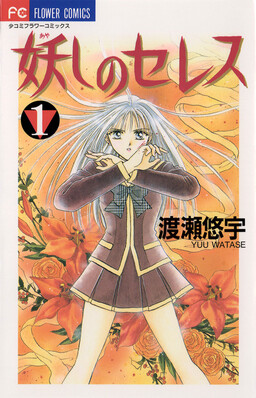
Ceres: Celestial Legend
Yu's review of Ceres: Celestial Legend — on her 16th birthday Aya Mikage learns she is the reincarnation of the celestial maiden Ceres, and that her own family tests and kills its children to stop Ceres's revenge. Yuu Watase's darkest, most adult shojo.
Romance / Drama
Video Girl Ai
Yu's review of Video Girl Ai — Yota Moteuchi is heartbroken after the girl he loves confesses her feelings to his best friend; he rents a video from a magical shop and the girl on the tape, Ai Amano, steps out of his television — damaged by his worn VCR, with a personality different from what was intended, and developing real feelings he wasn't supposed to create.

Romance / Drama
Even Though We're Adults
Yu's review of Even Though We're Adults — Akari is a schoolteacher who runs into Ayano, her first love from high school, at a bar; they reconnect; Ayano is not married, but Akari is; the series follows two adult women navigating a love that is real but has a cost.
Romance / Drama
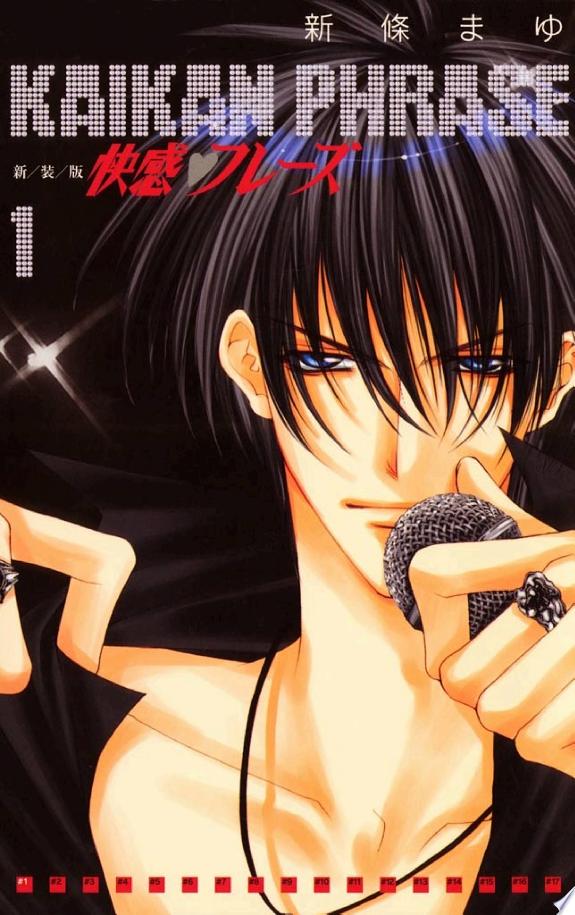
Sensual Phrase
A review of Mayu Shinjo's Sensual Phrase — 18 volumes in Shōjo Comic. Aspiring lyricist Aine Yukimura's words catch the attention of rock star Sakuya; they become entangled in a passionate and complicated relationship against the backdrop of 1990s J-rock. VIZ Media's English edition is complete.
Written by
Yu
Manga Enthusiast from Japan
I grew up in Japan and manga literally saved me during a tough time in elementary school. My English isn't perfect, but my love for manga is real — and I want to share it with you.
Disclosure: This post contains affiliate links. As an Amazon Associate, I earn from qualifying purchases at no extra cost to you.