
Zeni Geba Review: The Money-Obsessed Manga That Asked What Survival Costs
by George Akiyama
Read the first volume. If it doesn't hook you, put it down. It'll hook you.
Buy Zeni Geba on Amazon →*Affiliate link — I earn a small commission at no extra cost to you.
He learned that money was the only thing that wouldn't betray him. He was wrong about everything that decision led to.
Quick Take
- George Akiyama's 1970-1971 manga — Futaro Gamagori's descent from poverty into murderous greed
- A foundational work of dark social-critique manga, asking what poverty does to morality
- Brutal, uncompromising, and one of the manga that defined Akiyama's reputation as a writer of darkness
Who Is This Manga For?
- Dark seinen readers who want manga that doesn't soften its critique
- Social commentary fans who want fiction with genuine anger about class and poverty
- Classic manga readers who want to understand 1970s seinen at its most ambitious
- Anyone willing to sit with a story that does not redeem its protagonist
Content Warnings & Age Rating
Age Rating: M (Mature) Content Warnings: Violence, murder, poverty depicted unflinchingly, psychological deterioration. Heavy content throughout.
For mature readers prepared for relentless darkness.
Yu's Rating
| Category | Score |
|---|---|
| Story Depth | ★★★★★ |
| Art Style | ★★★★☆ |
| Character Development | ★★★★☆ |
| Accessibility for Non-Japanese Readers | ★★★☆☆ |
| Reread Value | ★★★☆☆ |
Story Overview
Futaro Gamagori grows up in poverty so severe that his mother dies because the family cannot afford medical care. The injustice — that money would have saved her, and the lack of it killed her — becomes the foundation of his worldview. From that moment, Futaro decides that money is the only thing worth pursuing, and he will pursue it by any means.
The series follows his ascent. He swindles, he steals, he kills. Each step up the economic ladder requires another moral compromise, and Futaro does not flinch from any of them. By the time he has accumulated wealth, he has destroyed everyone around him and emptied himself of anything human. The conclusion is not redemption.
What gives the series its weight is that Akiyama refuses to make Futaro simply evil. The poverty that produced him was real. The system that allowed his mother to die was real. Futaro's monstrousness is the system's monstrousness reflected back at it. The reader cannot dismiss him without dismissing the world that made him.
Characters
Futaro Gamagori: A protagonist whose every choice is internally consistent with the moment his mother died — and whose internal consistency does not redeem him from what he becomes.
The victims: Each rendered with enough humanity to make Futaro's actions matter — Akiyama doesn't reduce them to obstacles.
Art Style
Akiyama's art has the rough, urgent line quality of 1970s gekiga — emotion takes precedence over polish, faces twist into expressions of greed or terror, the visual register matches the moral darkness of the content. The art doesn't beautify what it shows.
Cultural Context
Zeni Geba ran in Weekly Shonen Sunday from 1970 to 1971 — a striking choice given the magazine's typically lighter content. The series belongs to the gekiga tradition of socially critical, adult-oriented manga that emerged in the 1960s and matured in the 1970s.
The phrase "Zeni Geba" entered Japanese vernacular as a term for someone obsessively focused on money — the manga's title became cultural shorthand.
What I Love About It
I love that the manga doesn't apologize.
A modern adaptation might soften Futaro's arc, give him a moment of redemption, suggest that beneath the greed there was still humanity that could be reached. Akiyama refuses. The point is that the system produced him completely, and partial redemption would let the system off the hook. The refusal is the work's moral courage.
What English-Speaking Fans Say
Known among classic manga enthusiasts and gekiga readers. Recognized as one of the foundational dark social-critique manga of the 1970s. Limited general awareness but high regard among those familiar with it.
Memorable Scene ⚠️ Spoiler Warning
The scene where Futaro's mother dies for lack of medical funds — the moment that produces every subsequent choice. The scene is short and unsentimental, which makes it heavier rather than lighter.
Similar Manga
| Title | Its Approach | How Zeni Geba Differs |
|---|---|---|
| Ashita no Joe | Boxing tracking poverty-to-fame trajectory | Joe finds purpose; Futaro finds only emptiness |
| Lone Wolf and Cub | Period revenge with moral complexity | Modern setting and economic critique rather than period vendetta |
| Hakai | Society's discrimination producing tragedy | Akiyama's manga is more brutal in its moral conclusions |
Reading Order / Where to Start
Volume 1. The 2 volumes are a complete arc.
Official English Translation Status
Zeni Geba has no official English translation.
Pros & Cons
Pros
- Among the most morally serious manga of its era
- Akiyama's refusal to redeem his protagonist gives the work its critical force
- Compact at 2 volumes
- The social critique remains relevant to contemporary economic conditions
Cons
- No English translation
- Unrelenting darkness — no relief, no redemption
- 1970s gekiga style is an acquired taste
- Won't satisfy readers needing hope or character growth
Is Zeni Geba Worth Reading?
For dark seinen readers who want social-critique manga at its most uncompromising, yes — this is a foundational work. For readers needing hope, redemption arcs, or any kind of relief, the manga deliberately refuses to provide them. As pure moral fiction, it earns its difficulty.
Format Comparison
| Format | Notes |
|---|---|
| Physical | Japanese editions available |
| Digital | Available in Japanese |
| Omnibus | Collected editions available |
Where to Buy
No English release yet. That just means you find it before everyone else does.
*Affiliate link — I earn a small commission at no extra cost to you.
Reading Guides
More Manga You Might Like
Horror
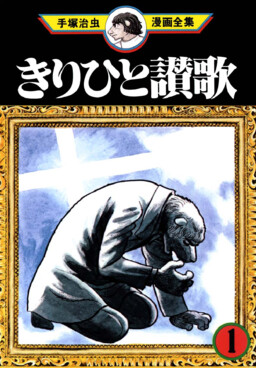
Ode to Kirihito
Yu's review of Ode to Kirihito — Dr. Osanai Kirihito investigates Monmow disease, a mysterious illness that transforms its victims into dog-like creatures; the medical establishment suppresses his findings; Osamu Tezuka's 1970 medical horror manga about a doctor reduced to subhuman status while searching for a scientific truth powerful people want hidden.

Horror / Drama
Barbara
Yu's review of Barbara — Osamu Tezuka's adult psychological horror about Yosuke Mikura, a celebrated novelist who takes in a filthy, drunken muse named Barbara and descends through black masses, perversion, and madness as he loses the ability to tell art from destruction.

Horror / Drama
Kasane
Kasane follows a girl whose face society refuses but whose lipstick can swap her face with another's — a 14-volume Evening psychological drama where every act of becoming someone else is also an act of erasure.
Horror / Survival
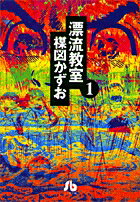
The Drifting Classroom
Yu's review of The Drifting Classroom — a Japanese elementary school and all its students and teachers are suddenly transported to a desolate future Earth; the children must survive without adult leadership as food runs out and monsters appear.

Horror
MW
Yu's review of MW — Yuki Michio is a beautiful, charming, amoral man who survived exposure to a chemical weapon as a child; the event destroyed his conscience; he works toward mass destruction while maintaining the appearance of a successful society member; a priest who loves him tries to hold him back; Osamu Tezuka's 1976 thriller about a man without conscience.
Horror / Dark Fantasy
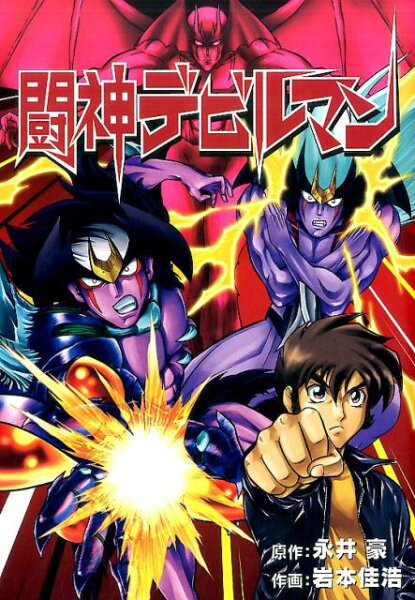
Devilman
Yu's review of Devilman — a gentle boy merges with the demon Amon, becomes Devilman to protect the people he loves, and then watches those same people tear the world apart from the inside.
Written by
Yu
Manga Enthusiast from Japan
I grew up in Japan and manga literally saved me during a tough time in elementary school. My English isn't perfect, but my love for manga is real — and I want to share it with you.