
Umineko When They Cry Manga Review: The Locked-Island Mystery That Refuses to Tell You Whether the Witch Is Real
by Ryukishi07 (story) / various artists per episode
Read the first volume. If it doesn't hook you, put it down. It'll hook you.
Buy Umineko When They Cry on Amazon →*Affiliate link — I earn a small commission at no extra cost to you.
I read the Umineko manga the way most people my age read the Umineko manga: episodes scattered across years, in the wrong order, with the visual novel as a parallel argument running in my head the whole time. Yen Press did me the favor of releasing the English omnibus volumes in a consistent format, so my shelf doesn't look as chaotic as my actual reading order felt.
I'm Yu. I have spent more time arguing about Umineko online than I have spent arguing about any other manga. It is one of two or three works that genuinely changed how I read mystery fiction.
Quick Take
- The manga adaptation of Ryukishi07's Umineko no Naku Koro ni visual novel (07th Expansion, 2007–2010) — 8 episodes (4 Question Arcs + 4 Answer Arcs), each drawn by a different artist, totaling 21 tankōbon volumes in Japanese.
- Yen Press released the complete English manga across all eight episodes; the series is complete in English.
- Rated M (Mature) — on-page murder including dismemberment, family abuse, child endangerment, and a sustained psychological cruelty that the visual novel was famous for.
Story Overview
October 4, 1986. The Ushiromiya family, an enormously wealthy clan, gathers at their private island of Rokkenjima for their annual conference. The patriarch, Kinzo, is dying. His four adult children are circling the inheritance. Their spouses, their teenage children, and the household staff are along for the ritual. A typhoon settles over the island and cuts it off from the mainland.
Eighteen people on Rokkenjima. Then a letter appears, signed by the Golden Witch Beatrice, declaring she has come to collect on a contract Kinzo made decades ago. Then the killings start, in patterns that map exactly to a sacrificial ceremony from a fictional grimoire.
The structure of Umineko is what makes it not a normal mystery. The first four episodes (the Question Arcs) present each iteration of the Rokkenjima massacre as a "gameboard" — a sealed-room murder scenario being run as a debate between Battler Ushiromiya, the protagonist, and Beatrice, the witch. Beatrice claims the murders were magic. Battler must construct a human explanation. If he cannot, Beatrice wins; magic exists. The Answer Arcs (episodes 5–8) gradually shift the game itself — bringing in new witches (Lambdadelta, Bernkastel, Erika Furudo), changing the rules, and asking, finally, what Battler actually wants the answer to be.
The 21-volume manga adaptation parallels and in some places clarifies the visual novel. Different episodes are drawn by different artists working under Ryukishi07's supervision; the art shifts between episodes in a way that makes each "gameboard" feel like its own world.
Characters
Battler Ushiromiya — Eighteen years old, returning to Rokkenjima after years away. His refusal to accept magic — even when his family is dying around him — is initially read as denial. Across eight episodes it becomes a thesis. The manga lets his stubbornness mature into an actual epistemological position.
Beatrice — The Golden Witch. Antagonist, opponent, eventually something more complicated. Her arc — from gloating cosmic figure to a character whose interiority the series develops with terrible patience — is what made the visual novel famous and the manga preserves it. She is not what she appears to be in episode 1. None of what that means is simple.
Maria Ushiromiya — Nine years old. Carries a black cat doll, talks to it, knows things about Beatrice she should not know. The manga's most disturbing character — not because she is malicious, but because what her mother does to her at home is the quietest cruelty in the cast and Ryukishi07 refuses to look away from it.
Ange Ushiromiya — Battler's younger sister, who in the Answer Arcs is the audience surrogate for the whole question — the only Ushiromiya alive in 1998 who survived Rokkenjima, looking back twelve years on a massacre nobody can solve.
Erika Furudo — Introduced in the Answer Arcs. A "detective" character whose investigation methodology forces the structure of the games to evolve. One of the most polarizing characters in the entire visual novel community, for good reason.
Lambdadelta and Bernkastel — Higher-tier witches who run the gameboard from outside. The connection to Higurashi When They Cry (Bernkastel) is the bridge between Ryukishi07's two big works.
What I Love About It
What I love about Umineko — and what the manga clarifies in places the visual novel left tangled — is that it is the only mystery I've read that takes seriously the idea that the choice of explanation is itself a moral act.
If you can explain a murder with a human culprit, you must. If you cannot, "magic" is what's left, but choosing magic is also choosing what you want the world to be. The series is rigorous about this: every Question Arc has a human-culprit solution that fits the evidence, and Ryukishi07 plays fair. There is no cheating. There is also a witch's solution that fits the same evidence. Both fit. And Battler's job, eventually, is not just to disprove magic but to confront what he is choosing when he insists on the human one.
The Answer Arcs — particularly Episode 7, Requiem of the Golden Witch — turn this argument inward. Why does Battler need the human explanation? What is he protecting by refusing magic? What is Beatrice's actual stake in his answer? The manga's adaptation of Episode 7 is, for me, the most emotionally devastating part of the whole adaptation. It rearranges everything you thought the series was about. It made me cry in a Lawson at 1AM during my college years and I am not embarrassed.
Memorable Scene ⚠️ Spoiler Warning
The moment in Episode 7 — without naming names — when the manga finally shows the prior version of the story underneath the murders. The reveal is not a whodunit answer. It is a "why does this story exist at all" answer. The Ushiromiya family, the inheritance, the witches, the gameboards — all of it is recontextualized as a story being told by a specific person about a specific event, for a specific reason that has more to do with mourning than with mystery.
I have not seen a mystery do that move before or since. The whole series is about whether magic is real, and the answer Episode 7 gives is, essentially: the question was the wrong question, and asking it the way you did was the cost.
Pros & Cons
Pros:
- The most intellectually rigorous mystery manga I have ever read; the human/witch debate is genuinely double-sided.
- Different artists per episode is structurally meaningful, not just a production accident.
- Yen Press's English omnibus format is well-produced and complete across all eight episodes.
Cons:
- Twenty-one volumes is a commitment, and the Question Arcs withhold so much that early volumes can read as opaque.
- The art quality varies sharply between episodes; Episodes 1 and 4 have particularly distinct visual styles that some readers prefer over others.
- The graphic violence in the early arcs is real. The series is not "horror" in the Higurashi sense but it is not light reading.
Is Umineko Worth Reading?
Yes, if you want a mystery that asks more of you than "guess the killer." Skip it if you want a clean solved-in-one-volume case; this is the opposite of that.
Who Is This Manga For?
- Higurashi When They Cry readers ready for Ryukishi07's other major work.
- Readers of Edogawa Ranpo, S. S. Van Dine, Agatha Christie, and the broader honkaku mystery tradition who want to see a game played with those rules.
- Mystery fans who liked Monster's long-form structure.
- Visual novel adaptation fans who want to see how a 100-hour VN translates to manga.
Reading Order / Where to Start
Episode 1: Legend of the Golden Witch, Volume 1. The episodes are released in numerical order; reading them out of sequence breaks the structure deliberately. Reading Higurashi When They Cry first is recommended but not strictly required; Bernkastel's role makes more sense if you have Higurashi context.
Official English Translation Status
Yen Press published the complete English manga across all eight episodes between 2012 and 2018. The English release is in an omnibus format — each English volume collects multiple original Japanese volumes — and totals 21 books at the original Japanese count. The series is complete in English.
Where to Buy
The Yen Press English omnibus editions are the most accessible way to read this in order. Available in print and digital through major retailers; some early-episode print volumes occasionally go out of stock and need a used-market detour.
This post contains affiliate links. If you purchase through these links, I may earn a small commission at no extra cost to you. As an Amazon Associate, I earn from qualifying purchases.
*Affiliate link — I earn a small commission at no extra cost to you.
Reading Guides
More Manga You Might Like
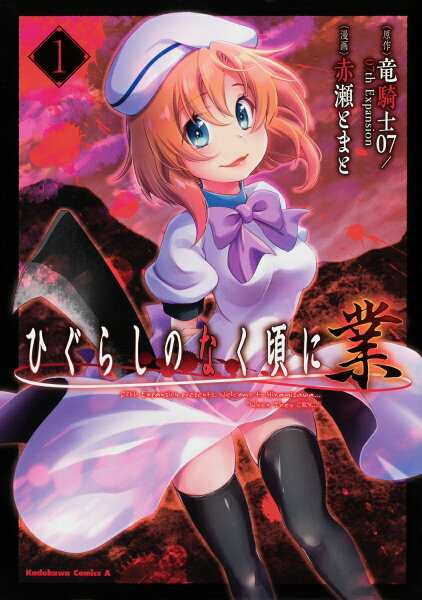
Horror / Mystery
Higurashi When They Cry
Yu's review of Higurashi When They Cry — Keiichi Maebara moves to the rural village of Hinamizawa and discovers that every year, during the village festival, someone dies and someone disappears; the story resets across multiple arcs, each showing different versions of the same events as Keiichi and his friends try to understand and survive what the village is doing to them.
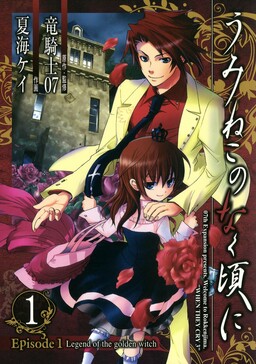
Horror / Mystery
Umineko: When They Cry
On the private island of Rokkenjima in 1986, the Ushiromiya family gathers for an annual meeting. A typhoon traps them. The murders begin. Then they repeat. A golden witch named Beatrice claims responsibility — and the manga spends 53 volumes across 8 Episodes arguing about whether magic exists. Adapted from Ryukishi07's visual novel.
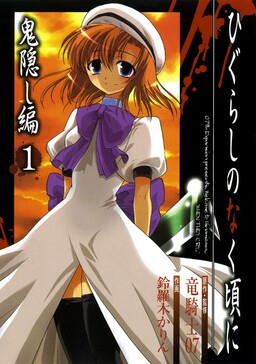
Horror / Mystery
Higurashi: When They Cry
Yu's review of Higurashi: When They Cry — Keiichi Maebara moves to the small village of Hinamizawa and befriends a group of girls; every June, during the annual Watanagashi Festival, someone dies and someone disappears; the story resets and repeats from different perspectives, each time revealing more of what is actually happening.
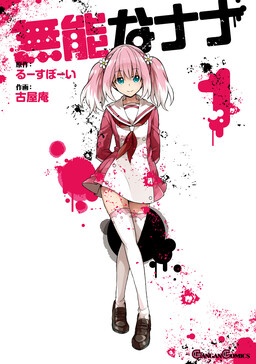
Horror / Thriller
Talentless Nana
Yu's review of Talentless Nana — at a school for students with supernatural powers, sweet transfer student Nana Hiiragi appears to be a normal girl; the series reveals in its first volume that Nana is an assassin sent to kill the students; the manga becomes a psychological thriller about Nana's mission, her growing complications, and the students who begin to suspect her.
Horror / Mystery
Godchild
Yu's review of Godchild — Cain Hargreaves, the young Earl of Hargreaves, possesses knowledge of poisons and an aristocratic curse that draws murder and tragedy to him; set in Victorian England, he and his devoted manservant Riff investigate dark cases while the shadow of his sinister father looms over everything.
Adventure / Mystery
The Summit of the Gods
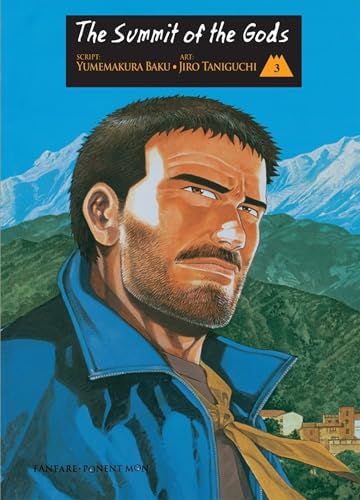
Yu's review of The Summit of the Gods — a photojournalist in Kathmandu may have found the camera of George Mallory, who disappeared on Everest in 1924; the mystery pulls him into the story of Habu Joji, a climber of legendary ability who disappeared years earlier.
Written by
Yu
Manga Enthusiast from Japan
I grew up in Japan and manga literally saved me during a tough time in elementary school. My English isn't perfect, but my love for manga is real — and I want to share it with you.
Disclosure: This post contains affiliate links. As an Amazon Associate, I earn from qualifying purchases at no extra cost to you.