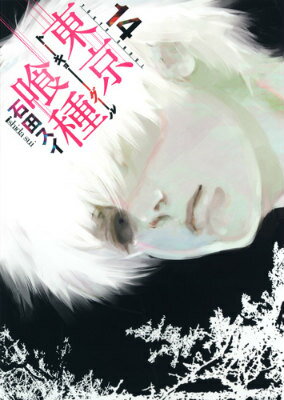
Tokyo Ghoul Review: What Does It Mean to Be Human When You're Both?
by Sui Ishida
Read the first volume. If it doesn't hook you, put it down. It'll hook you.
Buy Tokyo Ghoul on Amazon →*Affiliate link — I earn a small commission at no extra cost to you.
Quick Take
- 14 volumes about identity, survival, and what it costs to exist in a world that wants you dead
- The first half is one of the most emotionally powerful dark fantasy stories in manga
- Brutal and not for everyone — but if it connects, it connects deeply
Who Is This Manga For?
Tokyo Ghoul is for you if:
- You want a story that takes seriously the experience of feeling like you don't belong in either world
- You love dark, literary horror that uses its monsters as a metaphor
- You can handle genuinely graphic content in service of a human story
- You want a complete series with a definitive ending
Content Warnings & Age Rating
Age Rating: M (Mature) Content Warnings: Extreme violence and gore, extended torture sequence (a major story arc involves prolonged torture of the protagonist), psychological horror, body horror, disturbing themes throughout
This is one of the more graphic series in mainstream manga. The torture arc in particular is extremely difficult to read. If you have sensitivity to depictions of extreme suffering, be aware before starting.
Yu's Rating
| Category | Score |
|---|---|
| Story Depth | ★★★★☆ |
| Art Style | ★★★★☆ |
| Character Development | ★★★★☆ |
| Accessibility for Non-Japanese Readers | ★★★★☆ |
| Reread Value | ★★★☆☆ |
Story Overview
Ken Kaneki is a bookish, gentle college student in Tokyo. He has a crush on a girl who shares his taste in literature. He asks her out. She accepts. On their date, she tries to eat him.
She is a ghoul — one of a hidden population of creatures that look human but survive by eating human flesh. The attack leaves Kaneki critically injured, and the only way to save his life is to transplant organs from the ghoul who attacked him. He survives. But he is no longer fully human.
Half-ghoul, half-human, Kaneki can no longer eat ordinary food without becoming violently ill. He needs to eat human flesh to survive, but the thought disgusts him. He can pass as human, but his new instincts frighten him. He is between two worlds, belonging fully to neither, and both sides want something from him.
What follows is a story about survival, identity, and what it costs to maintain your humanity when the world insists you don't have any.
Characters
Ken Kaneki — One of manga's most affecting protagonists. He starts as genuinely gentle and becomes something harder under extreme pressure — the transformation is documented carefully enough to feel real. His arc from bookish student to "white-haired Kaneki" is one of the most memorable character evolutions in dark fantasy manga.
Touka Kirishima — A ghoul who helps Kaneki navigate his new existence. Fierce and initially hostile, her relationship with Kaneki is the emotional core of the early series.
Rize Kamishiro — The ghoul responsible for Kaneki's transformation. Her presence continues to haunt him psychologically throughout the series in ways that drive much of his internal conflict.
Yoshimura — The manager of Anteiku, the café that becomes Kaneki's refuge. His backstory and role in the larger narrative is one of the story's best-kept secrets.
Juuzou Suzuya — A CCG investigator with a deeply disturbing personal history. One of the most unusual and memorable characters in the series.
Art Style
Ishida's art is distinctive — looser and more expressive than typical manga, with an almost watercolor sensibility in certain scenes. His panel compositions are unconventional in ways that heighten the psychological disorientation his protagonist experiences.
The ghoul designs — particularly the "kagune" (the predatory organs that emerge from ghouls' bodies) — are inventive and visually striking. Each kagune type has a different visual language, making fights visually distinctive.
The art improves significantly over the series. By the later volumes, Ishida's visual storytelling is genuinely beautiful even in scenes of extreme violence.
Cultural Context
Ghouls as discrimination metaphor — Tokyo Ghoul's central premise maps directly onto experiences of marginalized communities: hiding your true nature, being unable to safely exist in public, having your existence criminalized, being hunted by state institutions. Ishida drew on these real-world dynamics deliberately.
The CCG (Commission of Counter Ghoul) functions as a state institution that is presented with moral complexity — its investigators are often sympathetic people doing a terrible job. The critique of dehumanization goes both ways.
Anteiku — the ghoul-run coffee shop that tries to exist peacefully — represents the possibility of coexistence that the larger world refuses to permit. This tension drives the plot.
What I Love About It
There is a scene where Kaneki, alone, is trying to eat a piece of normal food — a meal he used to love. He can't. His body rejects it.
He sits there, unable to eat human food, unwilling to eat ghoul food, hungry and alone in a way that is both literal and completely not.
I understood that scene immediately. Not because I have experienced what Kaneki has, but because I know what it feels like to be between worlds — to not belong fully anywhere, to have the thing that sustains other people feel impossible to you.
Tokyo Ghoul uses its horror premise to articulate something true about that experience. That's what makes it worth the difficulty.
What English-Speaking Fans Say
Tokyo Ghoul has a large Western fanbase that largely arrived through the anime adaptation. The manga is generally considered superior — particularly the final arc, which the anime adaptation handled poorly.
Common discussion: the first half of the manga (roughly volumes 1–7) is very highly regarded. The second half, particularly the :re continuation, has a more divided reception. The ending is controversial.
The consensus: read the original Tokyo Ghoul (14 volumes). Tokyo Ghoul :re (the sequel) is for committed fans.
Memorable Scene ⚠️ Spoiler Warning
Kaneki's awakening after the torture arc.
After volumes of increasingly brutal captivity and psychological destruction, Kaneki reaches a breaking point. What emerges from that breaking point is a different person — cold, white-haired, finally capable of doing what survival requires.
The transformation sequence is harrowing and cathartic simultaneously. It's the moment the manga commits fully to what it's actually about: what happens to a person when the world refuses to let them be gentle.
Similar Manga
If you liked Tokyo Ghoul, try:
- Chainsaw Man — Similar outsider-fighting-to-survive structure, similarly dark
- Parasyte — Also about a human host merged with something inhuman, more sci-fi in tone
- Berserk — Much longer, similarly dark, similarly concerned with what trauma does to people
- Dorohedoro — Dark fantasy, similarly questions who the monsters actually are
Reading Order / Where to Start
Start from Volume 1. Tokyo Ghoul: the original series is 14 volumes and tells a complete story. Tokyo Ghoul :re is a separate sequel series that continues Kaneki's story.
Reading order: Tokyo Ghoul (vols. 1–14) → Tokyo Ghoul :re (vols. 1–16) if you want the full story.
Official English Translation Status
Status: Complete English Volumes: 14 (all volumes available) Translator: VIZ Media Translation Quality: Good throughout
Pros & Cons
Pros
- One of the most emotionally resonant dark fantasy premises in manga
- Kaneki's character arc is genuinely powerful
- The art becomes increasingly beautiful as the series progresses
- Complete at 14 volumes
Cons
- Very graphic content — not suitable for many readers
- The second half of the series is less focused than the first
- The ending divides readers
- The sequel series (:re) is significantly more polarizing
Format Comparison
| Format | Volumes | Price per vol. (approx.) | Best for |
|---|---|---|---|
| Paperback (individual) | 14 vols | ~$11–13 | Collecting |
| Kindle | 14 vols | ~$7–9 | Quick read |
| Complete Box Set | 1 box | ~$100–120 | Physical collection |
Where to Buy
Read the first volume. If it doesn't hook you, put it down. It'll hook you.
This post contains affiliate links. If you purchase through these links, I may earn a small commission at no extra cost to you. As an Amazon Associate, I earn from qualifying purchases.
*Affiliate link — I earn a small commission at no extra cost to you.
Reading Guides
More Manga You Might Like
Horror / Comedy
Voynich Hotel
Yu's review of Voynich Hotel — Taizou Kuzuki, a man with a shady past, arrives at a remote island hotel staffed by witch maids and surrounded by assassins, ghosts, and other supernatural complications; Douman Seiman's dark comedy-horror is compact, strange, and genuinely funny in ways that shouldn't work.

Horror / Sci-Fi
Vampire Hunter D
Yu's review of Vampire Hunter D — set 12,000 years in the future in a world where vampires ruled humanity and have since fallen; D is a half-human half-vampire dhampir who hunts his own father's kind; stoic, nearly invincible, and accompanied by a parasitic demon in his hand, he is one of horror manga's most iconic loners.
Horror
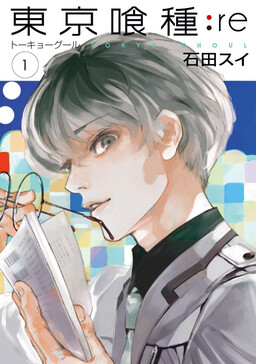
Tokyo Ghoul:re
Yu's review of Tokyo Ghoul:re — Haise Sasaki is a half-ghoul CCG investigator with no memory of his past; he is, in fact, Ken Kaneki — the protagonist of Tokyo Ghoul — with his identity surgically suppressed; Sui Ishida's continuation of Tokyo Ghoul follows Kaneki's reconstruction through Haise as the war between humans and ghouls reaches its final scale.
Horror / Drama
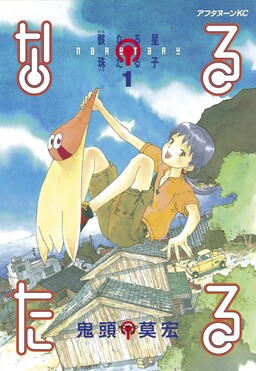
Narutaru
Yu's review of Narutaru — Shiina Tamai finds a star-shaped creature she names Hoshimaru; the story appears to begin as a creature-companion adventure and becomes something much darker, examining what happens when children with real grievances are given real power.
Horror / Romance
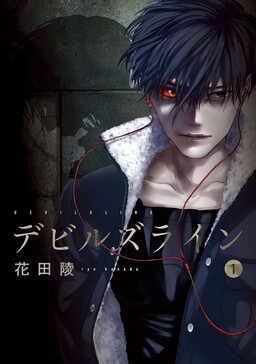
Devils' Line
Yu's review of Devils' Line — in a modern Japan where vampires called devils live hidden among humans, half-devil detective Yuuki Anzai falls for graduate student Tsukasa Taira while fighting the bloodlust her presence awakens. A vampire romance that treats the monster as a genuine, ongoing danger instead of mystique.
Horror / Drama
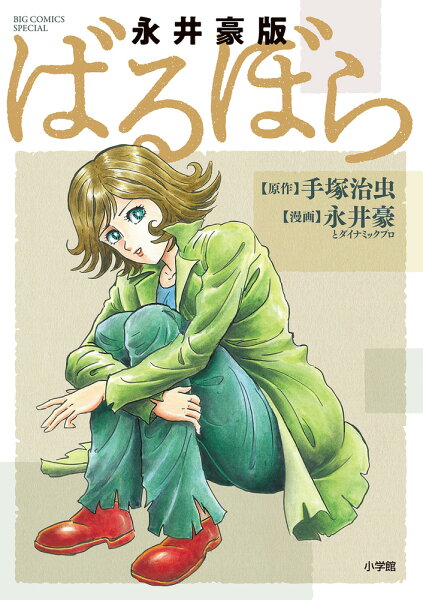
Barbara
Yu's review of Barbara — Osamu Tezuka's adult psychological horror about Yosuke Mikura, a celebrated novelist who takes in a filthy, drunken muse named Barbara and descends through black masses, perversion, and madness as he loses the ability to tell art from destruction.
Written by
Yu
Manga Enthusiast from Japan
I grew up in Japan and manga literally saved me during a tough time in elementary school. My English isn't perfect, but my love for manga is real — and I want to share it with you.
Disclosure: This post contains affiliate links. As an Amazon Associate, I earn from qualifying purchases at no extra cost to you.