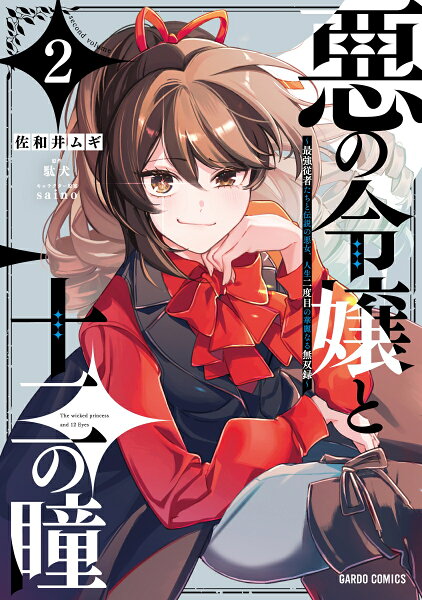
The Flowers of Evil Review: The Manga That Made Me Uncomfortable in the Best Way
by Shuzo Oshimi
Read the first volume. If it doesn't hook you, put it down. It'll hook you.
Buy The Flowers of Evil on Amazon →*Affiliate link — I earn a small commission at no extra cost to you.
This is not a manga about flowers. It's about the specific shame of adolescence — how we become capable of things we can't take back.
Quick Take
- A slow-burn psychological horror that operates entirely through social discomfort and shame
- Nakamura is one of the most compelling antagonist-protagonists in contemporary manga
- The final arc completely reframes everything you thought the story was about
Who Is This Manga For?
- Readers who want manga that actually disturbs them — not with gore, but with psychological truth
- Fans of Oshimi's other work (Inside Mari, Blood on the Tracks)
- People who remember middle school as something survivable but not pleasant
- Adults who want to understand a certain kind of teenage self-destruction from the inside
Content Warnings & Age Rating
Age Rating: M (Mature) Content Warnings: Psychological manipulation, disturbing behavior, references to self-harm, sexual themes, scenes involving minors in uncomfortable situations
This is genuinely unsettling content. Know what you're getting into.
Yu's Rating
| Category | Score |
|---|---|
| Story Depth | ★★★★★ |
| Art Style | ★★★★★ |
| Character Development | ★★★★★ |
| Accessibility for Non-Japanese Readers | ★★★★☆ |
| Reread Value | ★★★★☆ |
Story Overview
Takao Kasuga is an eighth grader obsessed with Baudelaire. He considers himself different from his classmates — more sensitive, more literary, destined for something larger than the small town he lives in. This is the kind of self-image that middle schoolers are very good at constructing and very bad at testing.
Then he steals his classmate Saeki's gym clothes. On impulse. Without understanding why.
Nanako Nakamura sees him do it. Instead of telling anyone, she blackmails him: wear the gym clothes under your own clothes, and do whatever I say. Kasuga, terrified of being exposed, agrees.
What follows is a slow, nauseating descent into humiliation, connection, and something that might be love — or might be two lonely people destroying each other because they don't know another way to reach out.
Oshimi's genius is that Nakamura is not simply a villain. She's someone who has decided that conventional life is a lie, that "normies" (her word) are frauds, and that the only honest thing is to break everything open. She sees in Kasuga's theft evidence that he secretly agrees with her. She might be right. He might not be able to live with what that means.
The story is divided roughly in half. The first half is middle school: intimate, claustrophobic, almost unbearably tense. The second half jumps years ahead and recontextualizes everything. The adult Kasuga looking back at his eighth-grade self is a completely different kind of horror.
Characters
Takao Kasuga — Thinks he's exceptional. Is, in fact, ordinary — which is both his tragedy and eventually his salvation. His arc is about the distance between who we tell ourselves we are and who we actually become.
Nanako Nakamura — Cruel, perceptive, genuinely strange. She's the most interesting character Oshimi has ever written. Her worldview is coherent, even when her actions are destructive. You can understand her without agreeing with her, which is the most disturbing thing about her.
Nanako Saeki — The girl whose clothes were stolen. Sweet, earnest, genuinely kind — everything Nakamura hates about conventional goodness. Her relationship with Kasuga is a mirror to the Nakamura relationship: what genuine connection might look like versus what Kasuga actually has with Nakamura.
Art Style
Oshimi's early work has a deliberately ugly quality. The faces are distorted when emotion peaks — stretched, gaping, wrong in the way that raw feeling is wrong when you see it on someone's face. This is intentional. He's drawing shame and obsession, and shame doesn't look pretty.
As the story moves into its second half and adult years, the art softens slightly. The control becomes more visible. You get the sense that Kasuga has learned to contain himself — and the art reflects that.
The famous sequence where Kasuga and Nakamura run through town, screaming, tearing things apart — it's one of the most visually intense sequences I've ever read in a manga that contains no violence.
Cultural Context
Japanese middle school culture has specific social pressures that the manga uses: the homeroom classroom as a contained social ecosystem, the way individual transgression becomes community scandal, the particular loneliness of someone who decides they don't belong to the group and then discovers that not belonging is its own kind of prison.
The Baudelaire obsession is important. Les Fleurs du Mal (The Flowers of Evil) is Baudelaire's collection of poems about beauty found in decay, transcendence found in transgression. Kasuga reads it without quite understanding it. Nakamura understands it better than he does. Part of the tragedy is figuring out which one is right.
What I Love About It
I've thought about this manga for years since I finished it.
Not because it's comfortable to think about. Because Nakamura said something that I couldn't unhear. There's a moment where she essentially describes the social performance of being a "good person" as a form of cowardice — choosing comfort and approval over honesty about what you actually want and feel. And she's partly right. The part of me that agreed with her was unsettling.
Oshimi doesn't vindicate Nakamura's methods. He doesn't punish them either, not simply. What he does is show you what it costs to choose her path and what it costs to choose the other one. The final volumes are about a man in his twenties trying to understand what he did and didn't do at age fourteen. That reckoning feels honest in a way that made me deeply uncomfortable.
That's what great horror is supposed to do.
What English-Speaking Fans Say
This is a divisive manga on Reddit and Goodreads. Some readers find Nakamura's behavior impossible to sympathize with, and find the experience of watching Kasuga enable her unpleasant without sufficient payoff. Others — myself included — think the discomfort is the point.
The 2013 anime adaptation (using rotoscoping, which gave it a deeply unsettling visual quality) is also discussed alongside the manga. Most agree the manga ending is far more complete.
Memorable Scene ⚠️ Spoiler Warning
The scene where Kasuga, as an adult, finally meets Nakamura again — and she doesn't remember him the way he remembers her — is the quiet gutpunch the whole story was building toward. Not dramatic. Not violent. Just the specific horror of discovering that the relationship that defined your adolescence didn't define the other person's the same way. She was doing something to him. He was doing something entirely different.
Similar Manga
| Title | Its Approach | How The Flowers of Evil Differs |
|---|---|---|
| Blood on the Tracks | Mother-son psychological horror | Flowers of Evil focuses on peer relationships and adolescent transgression |
| Inside Mari | Identity and obsession in high school | Flowers of Evil is more explicitly about shame and social performance |
| I Am a Hero | Psychological unease that becomes physical horror | Flowers of Evil stays entirely in the psychological register |
Reading Order / Where to Start
Volume 1, straight through. The story requires the accumulated weight of everything before it to land. Do not skim.
Official English Translation Status
Vertical Comics published all 11 volumes in English. Complete and fully available. Digital editions exist.
Pros & Cons
Pros
- One of the most psychologically honest manga about adolescence ever written
- Nakamura is a genuinely compelling, original character
- Art perfectly calibrated to the story's emotional register
- The second half rewards everything you endured in the first
Cons
- Genuinely uncomfortable reading experience — intentionally so, but not for everyone
- Kasuga can be frustrating as a protagonist if you need your leads to make good choices
- The middle volumes can feel repetitive — the same loop of shame and transgression
- If you need catharsis, this may not deliver it cleanly
- Some readers find the ending unsatisfying — healing is quiet here, not triumphant
Is The Flowers of Evil Worth Reading?
Yes — if you can stomach discomfort. It's one of the most psychologically honest manga I've read, and the kind of story that keeps working on you after you've finished it. The discomfort is the point. That's either a feature or a deal-breaker, depending on who you are.
Format Comparison
| Format | Pros | Cons |
|---|---|---|
| Physical | Best way to experience Oshimi's detailed linework | Mature content makes it less shareable |
| Digital | Private reading experience | Fine linework benefits from larger screens |
| Omnibus | No omnibus available | — |
Where to Buy
Read the first volume. If it doesn't hook you, put it down. It'll hook you.
This post contains affiliate links. If you purchase through these links, I may earn a small commission at no extra cost to you. As an Amazon Associate, I earn from qualifying purchases.
*Affiliate link — I earn a small commission at no extra cost to you.
Reading Guides
More Manga You Might Like
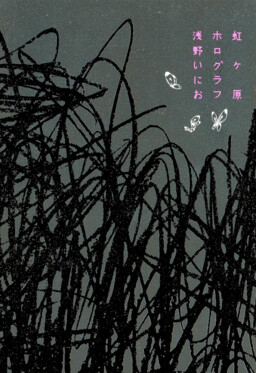
Horror
Nijigahara Holograph
Yu's review of Nijigahara Holograph — two timelines, childhood and adulthood, converge around a group of children who threw a girl into a tunnel; what lives at the bottom of the tunnel, and what the act of throwing her in did to everyone involved; Inio Asano's most formally complex and disturbing work.
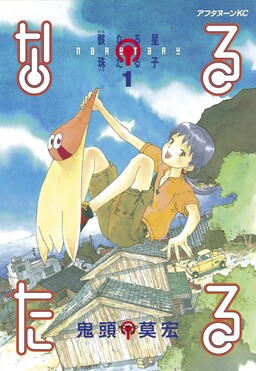
Horror / Drama
Narutaru
Yu's review of Narutaru — Shiina Tamai finds a star-shaped creature she names Hoshimaru; the story appears to begin as a creature-companion adventure and becomes something much darker, examining what happens when children with real grievances are given real power.
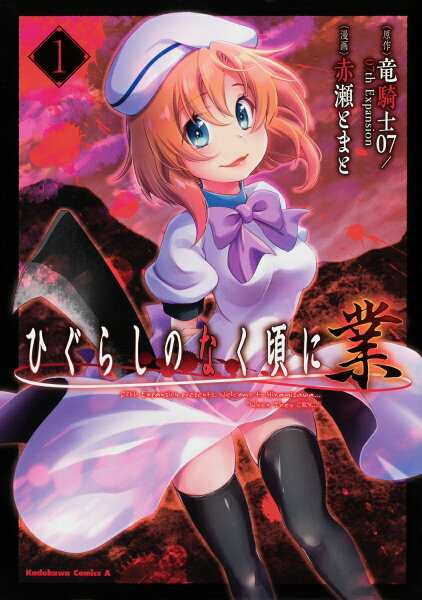
Horror / Mystery
Higurashi When They Cry
Yu's review of Higurashi When They Cry — Keiichi Maebara moves to the rural village of Hinamizawa and discovers that every year, during the village festival, someone dies and someone disappears; the story resets across multiple arcs, each showing different versions of the same events as Keiichi and his friends try to understand and survive what the village is doing to them.
Horror / Drama
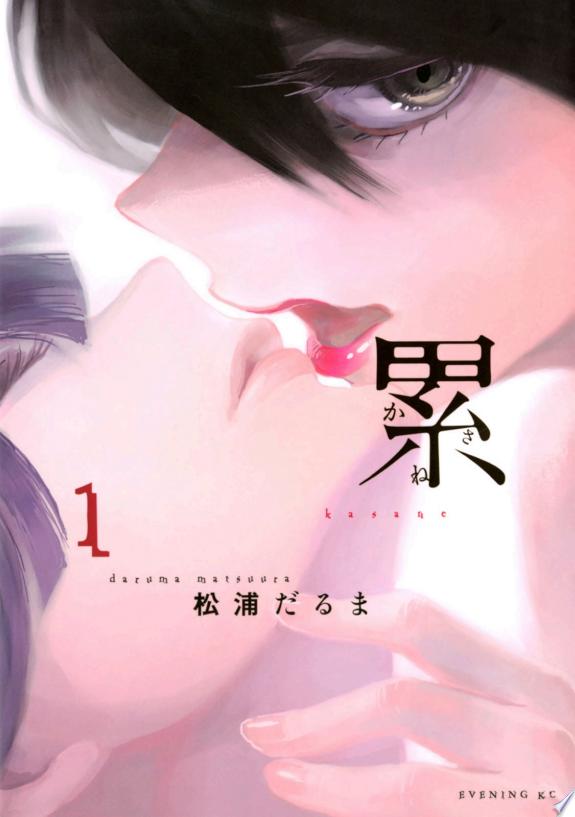
Kasane
Kasane follows a girl whose face society refuses but whose lipstick can swap her face with another's — a 14-volume Evening psychological drama where every act of becoming someone else is also an act of erasure.
Horror / Mystery
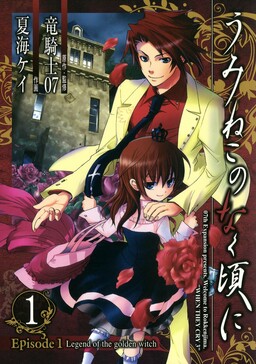
Umineko: When They Cry
On the private island of Rokkenjima in 1986, the Ushiromiya family gathers for an annual meeting. A typhoon traps them. The murders begin. Then they repeat. A golden witch named Beatrice claims responsibility — and the manga spends 53 volumes across 8 Episodes arguing about whether magic exists. Adapted from Ryukishi07's visual novel.
Horror
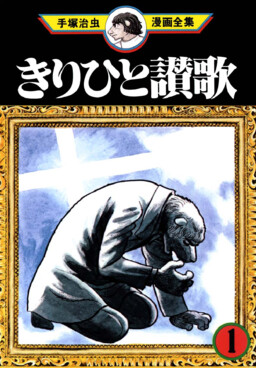
Ode to Kirihito
Yu's review of Ode to Kirihito — Dr. Osanai Kirihito investigates Monmow disease, a mysterious illness that transforms its victims into dog-like creatures; the medical establishment suppresses his findings; Osamu Tezuka's 1970 medical horror manga about a doctor reduced to subhuman status while searching for a scientific truth powerful people want hidden.
Written by
Yu
Manga Enthusiast from Japan
I grew up in Japan and manga literally saved me during a tough time in elementary school. My English isn't perfect, but my love for manga is real — and I want to share it with you.
Disclosure: This post contains affiliate links. As an Amazon Associate, I earn from qualifying purchases at no extra cost to you.