
Spiral: The Bonds of Reasoning Review: A Mystery That Dares to Admit It Has No Answer
by Kyo Shirodaira (story), Eita Mizuno (art)
Read the first volume. If it doesn't hook you, put it down. It'll hook you.
Buy Spiral: The Bonds of Reasoning on Amazon →*Affiliate link — I earn a small commission at no extra cost to you.
What do you do when every answer you find leads to a deeper question — and the deepest question is whether finding the answer is even worth it?
Quick Take
- High-concept detective mystery with a supernatural backbone
- The "Blade Children" — cursed, brilliant, dangerous — are some of manga's most memorable tragic figures
- The ending is polarizing for a reason: it's honest about what the story was always really asking
Who Is This Manga For?
- Mystery fans who want more than just the puzzle — they want the philosophy underneath it
- Readers who liked Detective Conan but want something darker and more existential
- People who enjoy stories about characters who are exceptionally capable and deeply broken
- Anyone willing to sit with a story that refuses easy resolution
Content Warnings & Age Rating
Age Rating: T (Teen) Content Warnings: Violence, death, psychological themes, discussion of suicide and predetermined fate
Heavy themes, handled thoughtfully. Not gratuitous.
Yu's Rating
| Category | Score |
|---|---|
| Story Depth | ★★★★★ |
| Art Style | ★★★★☆ |
| Character Development | ★★★★☆ |
| Accessibility for Non-Japanese Readers | ★★★★☆ |
| Reread Value | ★★★★☆ |
Story Overview
Ayumu Narumi's older brother Kiyotaka was a brilliant detective — so brilliant that people called him a genius beyond human limits. Then Kiyotaka disappeared, leaving only a message: "The Blade Children. Find them." Now Ayumu, himself gifted but always in his brother's shadow, is left to figure out who or what the Blade Children are.
They are children born under a specific star alignment, marked by a physical trait: one rib missing from the right side. They are exceptional — physically, intellectually, creatively — and they know, with absolute certainty, that the universe intends for them to die before their potential is fulfilled. Not as prophecy. As the shape of reality.
The mystery structure is elegant. Each arc presents Ayumu with a seemingly impossible situation — a locked-room murder, a battle of wits, a countdown — and he finds the solution through observation and reasoning. But the solutions are always secondary to the question underneath: why do the Blade Children keep testing him? What are they looking for? Is it possible to save people who have already decided they can't be saved?
The companion manga Spiral Alive resolves the dangling threads that the main series leaves deliberately open.
Characters
Ayumu Narumi — Smart, deadpan, perpetually irritated by people who are less smart than him. His genuine warmth is deeply buried. His investment in the Blade Children is personal — he sees in them a version of his own experience of living in a shadow he can't escape.
Hiyono Yuizaki — Ayumu's self-appointed partner and information broker. Cheerful to a suspicious degree. Her real motivations take a long time to fully surface, and when they do, they reframe her entire characterization.
Kanone Hilbert and Eyes Rutherford — The two Blade Children who define the story's emotional core. They've made opposite choices about how to live with what they are, and watching them represent different answers to the same impossible question is the heart of the manga.
Art Style
Eita Mizuno's art is clean and functional — character designs are distinctive, action sequences are clear, and the detective-puzzle layouts are drawn with precision. It's not the most visually expressive manga, but it never gets in the way of the story. The Blade Children are uniformly beautiful in a way that feels intentional: gorgeous things that are going to break.
Cultural Context
The Blade Children concept is interesting from a Japanese cultural perspective. Fate and destiny are recurring themes in Japanese fiction, but Spiral takes them seriously as a philosophical problem: if you know what you are supposed to become, are you still free to choose otherwise? The conflict between accepting fate and defying it echoes through a lot of classical Japanese literature in a way that feels native rather than imported.
The detective genre (tantei mono) has a huge tradition in Japan, and Spiral positions itself within it while also critiquing it — Ayumu's detective skills don't save everyone, don't answer everything, and the manga is honest about what detection is actually good for.
What I Love About It
The Blade Children got to me.
There's a specific kind of tragedy in being exceptional and knowing it means nothing. The Blade Children are each the best in the world at something — music, combat, strategy — and each of them carries the knowledge that this excellence is preparation for something they can't escape. They've been given enough rope to understand the length before it runs out.
What Spiral does with this is ask whether it matters. If someone is exceptional and fated to die, does their life still have meaning? Is it better to fight a fate you'll lose or to accept it and find peace in acceptance? Is Ayumu's insistence on saving them a kindness or a cruelty — forcing people to keep hoping when hope is a source of pain?
I don't think the manga answers these questions. I think it's honest about not answering them. That took courage.
What English-Speaking Fans Say
Divided responses on the ending. Many readers feel the series set up questions it had an obligation to answer more clearly, and found the ending — which relies heavily on the companion manga Spiral Alive — incomplete. Others appreciate the deliberate ambiguity and think the thematic content justifies the structural choice.
There's broad agreement that the middle arcs — particularly the Eyes Rutherford confrontation — are excellent.
Memorable Scene ⚠️ Spoiler Warning
The concert scene with Eyes Rutherford — where he plays piano while everything falls apart around him, with an expression that contains absolute peace — is the image that stays with me. He's decided something. He's at rest with it. And Ayumu watching him, unable to reach him in this moment, unable to use intellect to bridge what's actually a difference in how they've chosen to understand their own lives — that's the manga's truest moment.
Similar Manga
| Title | Its Approach | How Spiral Differs |
|---|---|---|
| Detective Conan | Classic mystery puzzles with an ongoing conspiracy | Spiral is darker, more philosophical, and builds toward a single culminating question |
| Fullmetal Alchemist | Fate, sacrifice, and the price of power | Spiral is smaller in scale but more focused on individual choices |
| Pandora Hearts | Fate and predetermined tragedy with gothic atmosphere | Spiral is more grounded and intellectual, less operatic |
Reading Order / Where to Start
Read Spiral: The Bonds of Reasoning (15 volumes) first. Then read Spiral Alive (5 volumes) to get the resolution. The two together make a complete story; the main series alone leaves deliberate gaps.
Official English Translation Status
Yen Press released all 15 volumes in English. Complete and available. Spiral Alive was not officially released in English.
Pros & Cons
Pros
- Intelligent mystery structure with genuine philosophical weight
- The Blade Children are unforgettable characters
- Each volume's mystery arc is satisfying on its own terms
- The big picture builds to something meaningful
Cons
- The main series ending is incomplete without Spiral Alive, which has no English release
- Some early arcs feel more like standalone puzzles than part of the larger story
- Ayumu's cold personality can make him hard to connect with initially
- The thematic payoff requires patience across 15 volumes
- Won't satisfy readers who want clean mystery resolution
Is Spiral: The Bonds of Reasoning Worth Reading?
Yes — with the caveat that the main series ending is genuinely incomplete without Spiral Alive. If you can accept a story that raises more questions than it answers (or find Spiral Alive fan-translated), this is one of the more philosophically interesting mystery manga in English.
Format Comparison
| Format | Pros | Cons |
|---|---|---|
| Physical | Clean art reads well in print | Out of print; may require used copies |
| Digital | Easier to find | — |
| Omnibus | No omnibus available | — |
Where to Buy
Read the first volume. If it doesn't hook you, put it down. It'll hook you.
This post contains affiliate links. If you purchase through these links, I may earn a small commission at no extra cost to you. As an Amazon Associate, I earn from qualifying purchases.
*Affiliate link — I earn a small commission at no extra cost to you.
Reading Guides
More Manga You Might Like
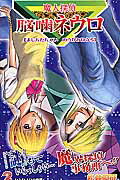
Mystery / Supernatural
Majin Tantei Nougami Neuro
A review of Majin Tantei Nougami Neuro, the supernatural mystery manga by Assassination Classroom's Yusei Matsui — about a demon who feeds on the mysteries of human crime.
Horror / Mystery
Another
Yu's review of Another — a horror mystery adapted from Yukito Ayatsuji's novel, about a transfer student who joins a class haunted by a decades-old curse: every year an extra person who is secretly already dead joins Class 3-3, and people start dying gruesomely.
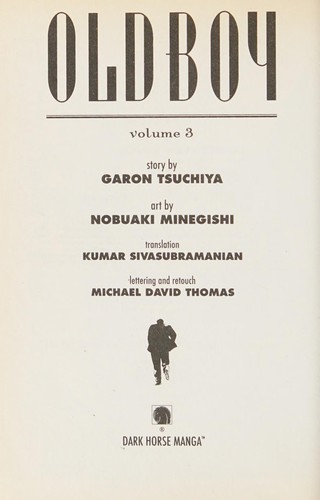
Crime / Mystery
Old Boy
A man is locked in a private prison for ten years. When he's released, he wants to know why — and Park Chan-wook turned this manga into one of cinema's great revenge films.

Horror / Mystery
Umineko: When They Cry
On the private island of Rokkenjima in 1986, the Ushiromiya family gathers for an annual meeting. A typhoon traps them. The murders begin. Then they repeat. A golden witch named Beatrice claims responsibility — and the manga spends 53 volumes across 8 Episodes arguing about whether magic exists. Adapted from Ryukishi07's visual novel.
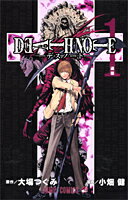
Psychological Thriller
Death Note
Yu's review of Death Note — 12 volumes of the tightest psychological thriller in manga. A bored honor student finds a notebook that kills, and the world's greatest detective comes looking. Neither one of them will stop.
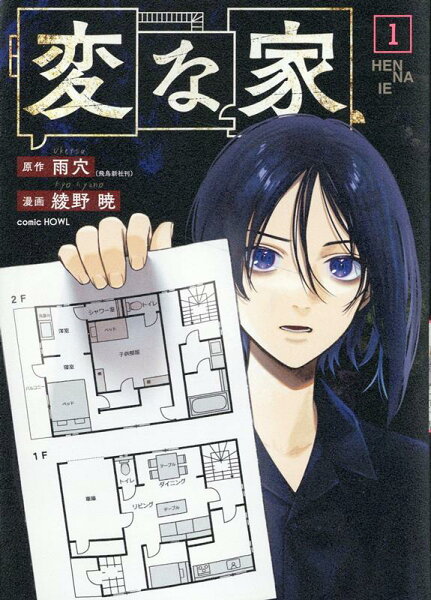
Horror / Mystery
Strange House
A review of Takumi Yai's Strange House — 2 volumes from Manga Plus. A man asks an architectural friend to explain why a house's floor plan makes no sense; the answer is much darker than any real estate concern. Adapted from Yai's viral web novel. VIZ Media's English edition is complete.
Written by
Yu
Manga Enthusiast from Japan
I grew up in Japan and manga literally saved me during a tough time in elementary school. My English isn't perfect, but my love for manga is real — and I want to share it with you.
Disclosure: This post contains affiliate links. As an Amazon Associate, I earn from qualifying purchases at no extra cost to you.