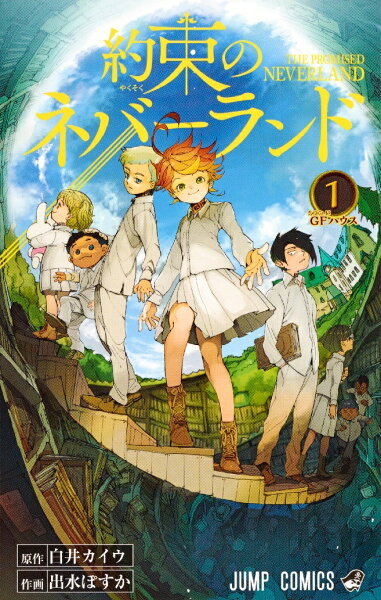
The Promised Neverland Review: The Manga That Made Me Afraid of a Happy Childhood
by Kaiu Shirai (story) / Posuka Demizu (art)
Read the first volume. If it doesn't hook you, put it down. It'll hook you.
Buy The Promised Neverland on Amazon →*Affiliate link — I earn a small commission at no extra cost to you.
Quick Take
- Orphan children at a perfect orphanage discover they are being raised as livestock for demons — and the woman they call Mom is their captor
- The first arc (volumes 1–5) is some of the most perfectly constructed suspense in manga history
- Be aware: quality drops significantly in the second half, but the opening is worth experiencing regardless
Who Is This Manga For?
- Readers who love psychological cat-and-mouse thrillers and puzzle-solving under pressure
- Fans of survival stories where the protagonists have to outsmart opponents, not outfight them
- Anyone who wants a horror manga they can share with a younger teen (the horror is psychological, not gory)
- Readers who don't mind an uneven second half in exchange for an exceptional beginning
Content Warnings & Age Rating
Age Rating: T (Teen) Content Warnings: Death of children (implied/off-page), dark themes, psychological horror, some violence
Less graphically violent than most horror manga. The horror here is about knowledge — understanding what your life actually is — more than blood.
Yu's Rating
| Category | Score |
|---|---|
| Story Depth | ★★★★☆ |
| Art Style | ★★★★★ |
| Character Development | ★★★★☆ |
| Accessibility for Non-Japanese Readers | ★★★★★ |
| Reread Value | ★★★☆☆ |
Story Overview
Grace Field House looks like a paradise. Thirty-odd children live in a beautiful mansion with a woman they call Mom. They eat good food, play freely, and study hard. The only rules: never go past the gate, and always wear your tracker.
When twelve-year-old Emma and her friend Norman discover what happens to children who are "adopted" — they are shipped to demons who eat them — the comfortable world they knew becomes a prison. Mom is not their mother. The gate keeps them in, not others out. And the two brightest children in the house are racing to find a way to escape before their names come up next.
The first five volumes are a masterclass in suspense. Every chapter is a chess match between children who cannot reveal what they know and an adult who cannot reveal what she knows. The stakes are absolute and the tension never lets up.
The second half, where the children survive outside the farm and navigate a larger world of demons and human politics, is significantly weaker. Many readers feel the ending is rushed and unsatisfying. This is worth knowing before you start.
Characters
Emma — Optimistic, physically gifted, driven by love for her family. She refuses to leave anyone behind even when it would be strategically correct to do so. Her kindness is both her greatest strength and a constant complication.
Norman — The smartest child at Grace Field, calculating and calm. His relationship with Emma is one of the emotional cores of the series.
Ray — Quiet, analytical, secretly carrying the heaviest burden of the three. His backstory, revealed gradually, reframes everything you thought you knew about Grace Field.
Isabella ("Mom") — One of the great antagonists in recent manga. She loves the children, genuinely, and also cannot allow them to escape. That contradiction makes her more frightening than any demon.
Art Style
Posuka Demizu's art is extraordinary — expressive faces that communicate micro-emotions, intricate demon designs, and a visual language for tension that makes pages feel claustrophobic even in open spaces. The first arc's art is particularly strong. Her demons are original and genuinely unsettling.
Cultural Context
Japanese horror often plays with the uncanny — the thing that seems safe but isn't. A loving home that is a cage, a mother who is a jailer: these inversions of domestic safety hit differently in a culture where home and family carry specific emotional weight. The manga's demons are drawn from Japanese folklore aesthetically, though the worldbuilding is entirely original.
What I Love About It
The first volume of The Promised Neverland is one of the best first volumes of any manga I have read. It establishes a world, makes you love it, and then destroys it completely by the last page. The moment Emma and Norman understand what the orphanage really is — the look on their faces, drawn by Demizu with heartbreaking precision — is an image I will not forget.
I want to be honest: I was disappointed by the second half. But the disappointment only exists because the first half set such an impossible standard. The first five volumes alone are worth reading.
What English-Speaking Fans Say
Western fans are deeply divided on this manga, but divided in an interesting way: almost everyone agrees the first arc is exceptional, and the debate is about how much the weaker second half affects the overall experience. Reddit manga communities frequently recommend reading through volume 5 or 6 and then deciding whether to continue. The consensus is that the early volumes are essential reading regardless of where the story goes.
Memorable Scene ⚠️ Spoiler Warning
The end of chapter 1 — when Emma opens the gates and finds what happened to her little sister Conny, and sees Mom standing there — is the moment the manga's premise lands with full weight. Everything before it has been establishment. Everything after it is consequence. It is a perfect chapter ending.
Similar Manga
- Attack on Titan — Humans trapped behind walls, hunted by monsters; similar survival energy
- Beastars — Predator/prey society examined with more character nuance
- Parasyte — Human/monster boundary questioned from the other direction
- Uzumaki — If you want purer, more atmospheric horror
Reading Order / Where to Start
Volume 1 is the only place to start. Read through volume 5 or 6. Then decide for yourself whether to continue — you'll know if the second arc is working for you by that point.
Official English Translation Status
VIZ Media published the complete 20-volume series in English. All volumes are available. The translation is clean and handles the children's voices well.
Pros & Cons
Pros
- First arc is among the best constructed suspense in manga
- Demizu's art is consistently spectacular
- Accessible — not graphically violent, approachable for younger teen readers
- Isabella is one of the great antagonists
Cons
- Second half drops significantly in quality
- Ending feels rushed and many plot threads are abandoned
- The transition from farm to outside world loses much of what made the first arc work
Format Comparison
| Format | Notes |
|---|---|
| Individual Volumes | Standard release; fine for reading |
| Digital | Excellent for this one — Demizu's art reads well on a tablet |
| Box Set | VIZ released a box set; good if you're committed to the full run |
Where to Buy
Read the first volume. If it doesn't hook you, put it down. It'll hook you.
This post contains affiliate links. If you purchase through these links, I may earn a small commission at no extra cost to you. As an Amazon Associate, I earn from qualifying purchases.
*Affiliate link — I earn a small commission at no extra cost to you.
Reading Guides
More Manga You Might Like
Horror / Thriller
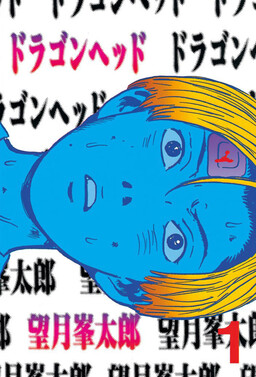
Dragon Head
Yu's review of Dragon Head — a school-trip train derails inside a mountain tunnel and three classmates crawl out into a Japan destroyed by an unexplained cataclysm. Minetaro Mochizuki's 10-volume survival horror about fear itself, the thing that breaks people faster than the disaster does.
Horror / Survival
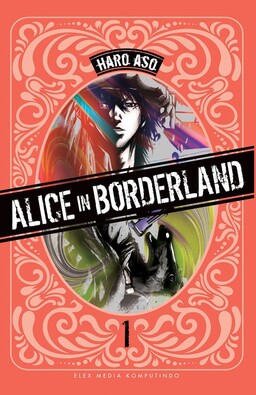
Alice in Borderland
Yu's review of Alice in Borderland — a survival horror manga where a directionless young man and his friends are pulled into a deserted Tokyo and forced to clear deadly games rated by playing cards, slowly uncovering what the Borderland actually is.
Horror / Thriller
Hideout
Yu's review of Hideout — Seiichi Kirishima takes his wife to a deserted island intending to kill her and stage it as an accident; before he can act, they encounter something on the island that alters the situation entirely; what follows is survival horror with a protagonist whose hands are already guilty.
Horror
MW
Yu's review of MW — Yuki Michio is a beautiful, charming, amoral man who survived exposure to a chemical weapon as a child; the event destroyed his conscience; he works toward mass destruction while maintaining the appearance of a successful society member; a priest who loves him tries to hold him back; Osamu Tezuka's 1976 thriller about a man without conscience.
Horror / Psychological Thriller
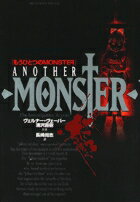
Monster
Yu's review of Monster — a brilliant surgeon saves a boy's life over a hospital director's, ruins his career, and ten years later discovers the boy he saved has become a serial killer who is now hunting him.
Horror / Thriller
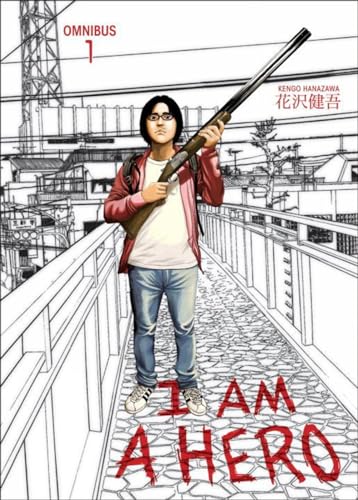
I Am a Hero
Yu's review of I Am a Hero — an unsuccessful manga artist becomes, entirely against his nature, a survivor of the Japanese zombie apocalypse.
Written by
Yu
Manga Enthusiast from Japan
I grew up in Japan and manga literally saved me during a tough time in elementary school. My English isn't perfect, but my love for manga is real — and I want to share it with you.
Disclosure: This post contains affiliate links. As an Amazon Associate, I earn from qualifying purchases at no extra cost to you.