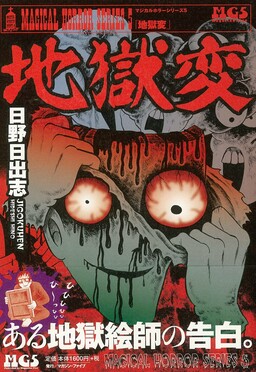
Panorama of Hell Review: A Painter Who Uses Blood for Paint Describes the World He Sees
by Hideshi Hino
Read the first volume. If it doesn't hook you, put it down. It'll hook you.
Buy Panorama of Hell on Amazon →*Affiliate link — I earn a small commission at no extra cost to you.
Quick Take
- Hideshi Hino's most significant work — a painter who uses blood describes the images he creates, and the images he creates are the world as experienced by someone born in the aftermath of Hiroshima
- The work operates simultaneously as extreme horror and as a serious statement about what atomic catastrophe means for those who survive it and are formed by it
- One volume; not genre horror but horror art; requires understanding of its context to fully engage with
Who Is This Manga For?
- Readers who engage with horror as art — this is in the tradition of Francisco Goya's Black Paintings as much as manga horror
- Anyone interested in how Japanese artists processed atomic bomb history through extreme expression
- Fans of horror manga that is simultaneously beautiful and deeply disturbing
- Readers who understand that the most demanding horror often has the most to say
Content Warnings & Age Rating
Age Rating: 18+ Content Warnings: Extreme imagery derived from atomic bomb aftermath; body horror; death depicted grotesquely; the work is designed to disturb and succeeds; the historical content (Hiroshima) is depicted without mitigation
This is among the most severe content warnings in this collection, and the historical weight of what produces it makes it more demanding than horror without that context.
Yu's Rating
| Category | Score |
|---|---|
| Story Depth | ★★★★★ |
| Art Style | ★★★★★ |
| Character Development | ★★★☆☆ |
| Accessibility for Non-Japanese Readers | ★★★☆☆ |
| Reread Value | ★★★★☆ |
Story Overview
The narrator is a painter. He paints visions of hell — not hell as a religious concept but hell as the world observed by someone whose first understanding of the world came through the aftermath of Hiroshima. He uses blood as paint. He describes his paintings as he describes his life.
The structure is autobiographical fiction — the painter is not Hino, but the images he describes connect to Hino's actual background as a child born in Manchuria during the war and returned to a Japan transformed by defeat. The visions of hell are the visions of a world that had already produced something indistinguishable from hell, and the painter's role is to document rather than to invent.
Characters
The Painter — He is less a character than a lens — a consciousness shaped by historical catastrophe who has responded by making the catastrophe visible in paint. His relationship with his family, depicted in the margins of the painting descriptions, provides human scale to the cosmic horror.
Art Style
Hino's art is among manga horror's most technically demanding and most historically significant — the grotesque imagery is rendered with extraordinary detail, and the beauty of the linework makes the content more disturbing rather than less. He draws horror that looks like it has been observed rather than invented.
Cultural Context
Hideshi Hino was born in Manchuria in 1946 and returned to Japan after the war. His work engages with the specific horror of a generation that was formed by catastrophe — the atomic bombs, the defeat, the occupation — and who grew up in a Japan that had experienced something that most of the world has not. Panorama of Hell is the most direct statement of how this history produces a certain kind of vision.
What I Love About It
The connection between the painter's visions and the historical reality that produced them — the way Hino's horror imagery connects to what atomic aftermath actually looked like — is what makes Panorama of Hell more than extreme imagery. It is documentation of a real horror translated into a personal artistic language.
What English-Speaking Fans Say
Western readers who engage with Panorama of Hell describe it as one of the few horror works that is genuinely impossible to separate from its historical context — without understanding Hiroshima, the work is extreme imagery; with that understanding, it becomes something more demanding and more significant. It is consistently described as requiring significant reader preparation.
Memorable Scene ⚠️ Spoiler Warning
The painting sequences where the hellish imagery connects most directly to atomic bomb aftermath imagery — and the painter's description of what he sees in these images — is the work's most complete statement of what horror art can do that genre horror cannot.
Similar Manga
- Litchi Hikari Club — Japanese underground horror art
- Cat-Eyed Boy — Hino's contemporary Umezu, different approach
- Barefoot Gen — Atomic bomb horror, documentary approach, different tone
- Biomega — Post-catastrophe horror, different register
Reading Order / Where to Start
Volume 1 (only volume) — complete and self-contained.
Official English Translation Status
Fantagraphics published the English edition. Complete and available.
Pros & Cons
Pros
- Among horror manga's most historically significant works
- Hino's art is extraordinary in its grotesque detail
- The connection between extreme imagery and historical fact is the work's greatest achievement
- A complete statement in a single volume
Cons
- The historical context (Hiroshima, Japanese war history) is necessary for full engagement
- The 18+ content is extreme and consistent
- Not genre horror; readers approaching it as such will be confused
- Accessibility for non-Japanese readers requires significant context
Format Comparison
| Format | Notes |
|---|---|
| Single Volume | Fantagraphics; complete |
| Digital | Limited |
Where to Buy
Read the first volume. If it doesn't hook you, put it down. It'll hook you.
This post contains affiliate links. If you purchase through these links, I may earn a small commission at no extra cost to you. As an Amazon Associate, I earn from qualifying purchases.
*Affiliate link — I earn a small commission at no extra cost to you.
Reading Guides
More Manga You Might Like
Horror / Survival
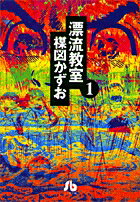
The Drifting Classroom
Yu's review of The Drifting Classroom — a Japanese elementary school and all its students and teachers are suddenly transported to a desolate future Earth; the children must survive without adult leadership as food runs out and monsters appear.
Horror
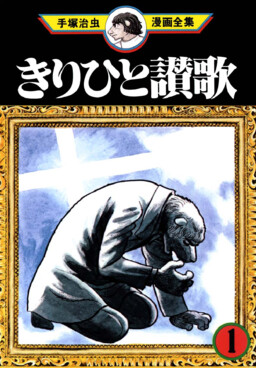
Ode to Kirihito
Yu's review of Ode to Kirihito — Dr. Osanai Kirihito investigates Monmow disease, a mysterious illness that transforms its victims into dog-like creatures; the medical establishment suppresses his findings; Osamu Tezuka's 1970 medical horror manga about a doctor reduced to subhuman status while searching for a scientific truth powerful people want hidden.

Horror
MW
Yu's review of MW — Yuki Michio is a beautiful, charming, amoral man who survived exposure to a chemical weapon as a child; the event destroyed his conscience; he works toward mass destruction while maintaining the appearance of a successful society member; a priest who loves him tries to hold him back; Osamu Tezuka's 1976 thriller about a man without conscience.
Horror / Dark Fantasy
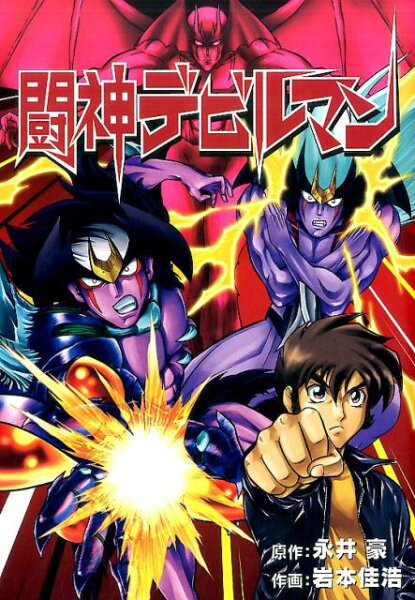
Devilman
Yu's review of Devilman — a gentle boy merges with the demon Amon, becomes Devilman to protect the people he loves, and then watches those same people tear the world apart from the inside.
Horror / Comedy
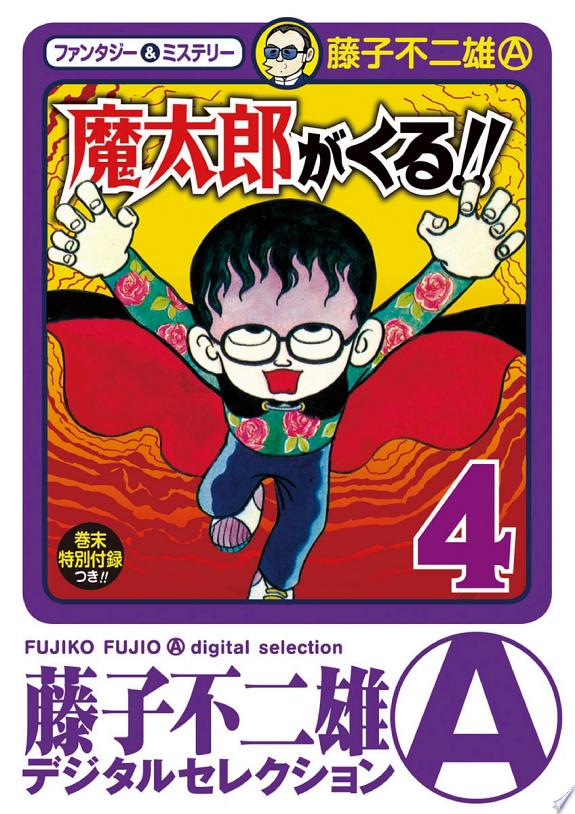
Matarou ga Kuru!!
Matarou ga Kuru!! follows Matarou Fudou, a timid boy who is constantly bullied — until he invokes a terrifying curse that punishes anyone who harms him, transforming his mild exterior into something that everyone who crosses him will come to deeply regret.
Horror / Thriller
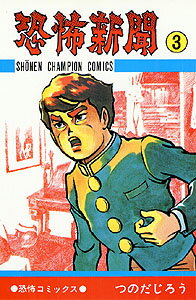
Kyofu Shinbun
Kyofu Shinbun follows Kichi Taira, a middle school student who begins receiving a supernatural newspaper delivered only to him — a newspaper that reports events before they happen, including deaths, and whose receipt shaves years from his own lifespan with each issue.
Written by
Yu
Manga Enthusiast from Japan
I grew up in Japan and manga literally saved me during a tough time in elementary school. My English isn't perfect, but my love for manga is real — and I want to share it with you.
Disclosure: This post contains affiliate links. As an Amazon Associate, I earn from qualifying purchases at no extra cost to you.