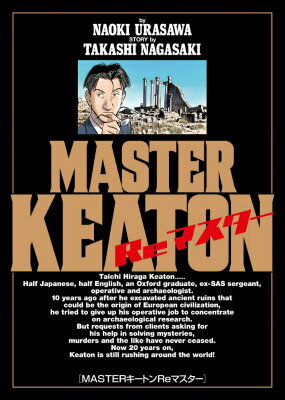
Master Keaton Review: A Survival Expert, Insurance Investigator, and Aspiring Archaeologist Solves Mysteries Across Europe
by Naoki Urasawa, Hokusei Katsushika
Read the first volume. If it doesn't hook you, put it down. It'll hook you.
Buy Master Keaton on Amazon →*Affiliate link — I earn a small commission at no extra cost to you.
Quick Take
- A half-British SAS veteran who works insurance cases across Europe while dreaming of being an archaeologist — every episode is a different mystery, a different country, a different piece of Keaton himself
- Naoki Urasawa (Monster, 20th Century Boys) at his most episodic and most humane
- 18 volumes, complete; one of the most intelligent mystery-adventure manga ever published
Who Is This Manga For?
- Readers who want episodic mystery manga with genuine intellectual content
- Fans of Urasawa who want to see where his humanist storytelling began
- Anyone who enjoys European settings, Cold War history, and archaeology in fiction
- Readers who want a protagonist who uses knowledge and observation rather than violence
Content Warnings & Age Rating
Age Rating: T (Teen) Content Warnings: Mild violence, Cold War era settings and themes, some intense investigative scenarios
Less violent than Urasawa's later work. Primarily intellectual tension.
Yu's Rating
| Category | Score |
|---|---|
| Story Depth | ★★★★★ |
| Art Style | ★★★★★ |
| Character Development | ★★★★★ |
| Accessibility for Non-Japanese Readers | ★★★★★ |
| Reread Value | ★★★★★ |
Story Overview
Taichi Hiraga Keaton is the son of a Japanese zoologist and a British woman. He was in the SAS — British Special Forces — where he became an expert in wilderness survival. Now he is an insurance investigator for Lloyd's of London, traveling across Europe to resolve claims.
He would rather be an archaeologist. He has a PhD thesis about the Danube civilization that nobody accepts. His ex-wife is a brilliant woman he lost through his own absence. His daughter Yuriko is growing up.
Each case is self-contained: a mystery, a location, a piece of history, and Keaton — who observes more than he fights, and solves problems through knowledge rather than violence.
Characters
Taichi Hiraga Keaton — One of manga's finest protagonists. He is gentle, curious, genuinely brilliant across multiple fields, and consistently choosing something other than the easy path. His SAS training appears in specific, realistic ways rather than as a general combat ability.
Yuriko Keaton — His daughter, who appears in chapters that examine his failure as a father alongside his excellence at everything else.
Daniel Doyle — His Lloyd's supervisor in London; the bureaucratic frame that places Keaton in each new situation.
Art Style
Urasawa's art is already fully formed here — his character faces are among manga's most expressive, the European settings are rendered with authentic architectural detail, and his ability to create tension through character reaction rather than action choreography is in full effect.
Cultural Context
Master Keaton is set in the late Cold War and early post-Cold War period — the late 1980s and early 1990s. The European settings, the remnant tensions, the specific ways that period's history shows up in the people Keaton meets, give the series a historical texture that rewards background knowledge.
What I Love About It
The archaeology. Keaton's dream — his unaccepted thesis, his genuine excitement about the Danube civilization, his habit of looking at landscapes and seeing what was there thousands of years ago — runs through the series as a counterpoint to everything that makes his actual life difficult. It is how Urasawa characterizes him more precisely than any action scene could.
What English-Speaking Fans Say
Western readers who discovered Master Keaton through Urasawa's later works find it more relaxed and more humane than Monster or 20th Century Boys. It is consistently cited as the best entry point to Urasawa's work for readers who want intelligence without overwhelming darkness. The European settings create particular warmth among readers from those countries.
Memorable Scene ⚠️ Spoiler Warning
The chapter involving Keaton's former SAS comrades — the ones who went into different fields, the different ways the same training expressed itself in different men — is the series' deepest look at who Keaton actually is and what he chose.
Similar Manga
- Monster — Same author; darker, more thriller-oriented
- 20th Century Boys — Same author; epic scope
- Golgo 13 — Episodic single-episode adventure
- Pluto — Same author (Urasawa and Tezuka); thematic parallel
Reading Order / Where to Start
Any volume — the episodic structure means any chapter is accessible. Volume 1 establishes the character, so it is the natural start.
Official English Translation Status
VIZ Media published the complete 18-volume series. All volumes available.
Pros & Cons
Pros
- 18 volumes, complete
- Every episode is intellectually engaging
- Keaton is one of manga's finest protagonist constructions
- European historical settings add genuine depth
Cons
- Episodic — no overarching mystery for readers who want sustained narrative
- Historical context (Cold War Europe) enhances understanding but requires some background
- Urasawa's later fans may find it less intense
Format Comparison
| Format | Notes |
|---|---|
| Individual Volumes | VIZ Media; hardcover format |
| Digital | Available |
Where to Buy
Read the first volume. If it doesn't hook you, put it down. It'll hook you.
This post contains affiliate links. If you purchase through these links, I may earn a small commission at no extra cost to you. As an Amazon Associate, I earn from qualifying purchases.
*Affiliate link — I earn a small commission at no extra cost to you.
Reading Guides
More Manga You Might Like
Adventure / Mystery
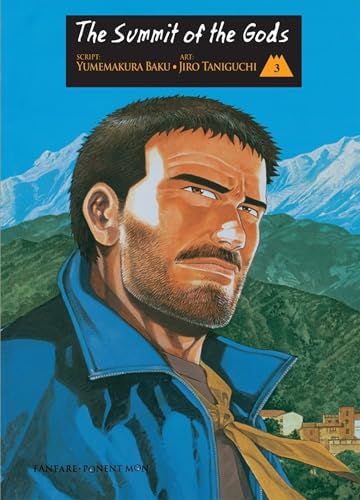
The Summit of the Gods
Yu's review of The Summit of the Gods — a photojournalist in Kathmandu may have found the camera of George Mallory, who disappeared on Everest in 1924; the mystery pulls him into the story of Habu Joji, a climber of legendary ability who disappeared years earlier.
Horror / Drama
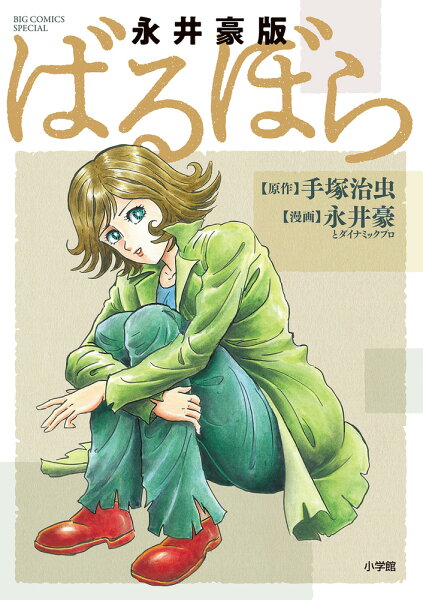
Barbara
Yu's review of Barbara — Osamu Tezuka's adult psychological horror about Yosuke Mikura, a celebrated novelist who takes in a filthy, drunken muse named Barbara and descends through black masses, perversion, and madness as he loses the ability to tell art from destruction.
Horror / Mystery
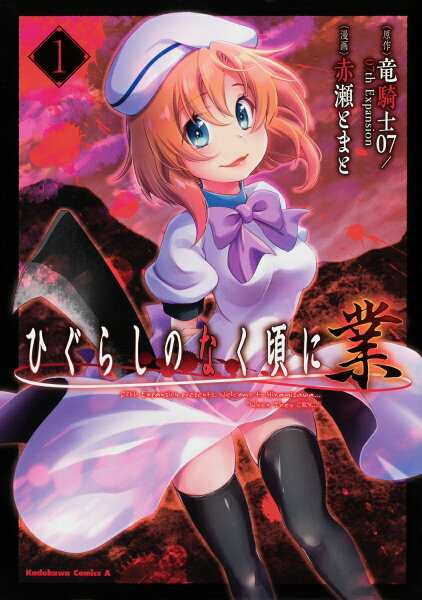
Higurashi When They Cry
Yu's review of Higurashi When They Cry — Keiichi Maebara moves to the rural village of Hinamizawa and discovers that every year, during the village festival, someone dies and someone disappears; the story resets across multiple arcs, each showing different versions of the same events as Keiichi and his friends try to understand and survive what the village is doing to them.
Horror / Mystery
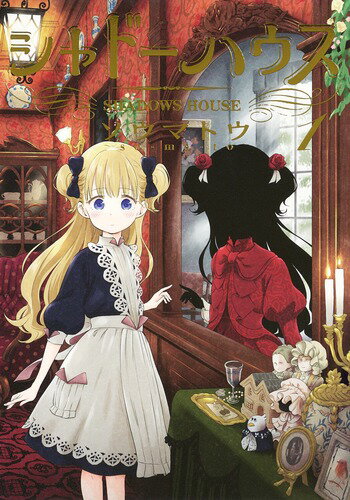
Shadows' House
Yu's review of Shadows' House — Kate is a shadow noble whose face is obscured by soot; Emilico is her 'Living Doll' — a human servant who functions as Kate's face and emotional expression; together they navigate the mysterious house and begin to understand what it truly is.
Horror / Mystery
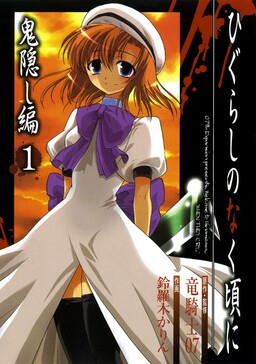
Higurashi: When They Cry
Yu's review of Higurashi: When They Cry — Keiichi Maebara moves to the small village of Hinamizawa and befriends a group of girls; every June, during the annual Watanagashi Festival, someone dies and someone disappears; the story resets and repeats from different perspectives, each time revealing more of what is actually happening.
Horror / Mystery
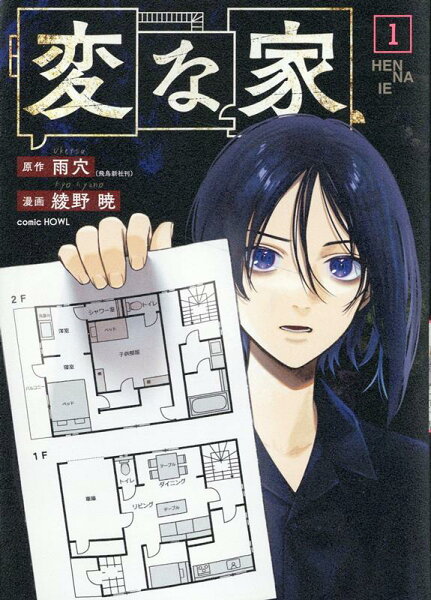
Strange House
A review of Takumi Yai's Strange House — 2 volumes from Manga Plus. A man asks an architectural friend to explain why a house's floor plan makes no sense; the answer is much darker than any real estate concern. Adapted from Yai's viral web novel. VIZ Media's English edition is complete.
Written by
Yu
Manga Enthusiast from Japan
I grew up in Japan and manga literally saved me during a tough time in elementary school. My English isn't perfect, but my love for manga is real — and I want to share it with you.
Disclosure: This post contains affiliate links. As an Amazon Associate, I earn from qualifying purchases at no extra cost to you.