
Highschool of the Dead Review — A Zombie Apocalypse That Started in Homeroom and Ended Mid-Sentence
by Daisuke Sato / Shouji Sato
Read the first volume. If it doesn't hook you, put it down. It'll hook you.
Buy Highschool of the Dead on Amazon →*Affiliate link — I earn a small commission at no extra cost to you.
Highschool of the Dead is one of the most divisive zombie manga ever published in English. The series puts an apocalypse-grade outbreak inside a Japanese high school, hands a katana to a kendo club captain, and then proceeds to draw the entire ensemble with a level of fanservice that makes the work hard to recommend without serious caveats. Underneath all of that, the manga's character writing — particularly around Saeko Busujima — is more careful than the cover art suggests.
The series is messier than its reputation suggests in both directions. It's better than the discourse around it. It's also worse. Both things are true at once.
Quick Take
- Some of the cleanest, most kinetic zombie action choreography in any manga — when it fights, it's genuinely great
- Equally committed to fanservice; whether that lands for you will decide the whole experience
- Age rating: M (Mature) — gore, sexual content, panty shots in the middle of decapitations. This is adult content top to bottom
What Is the Age Rating for Highschool of the Dead?
Yen Press rates the English release M (Mature) — 18+. That rating is fully earned and the manga should not be handed to younger teen readers. Specifically:
- Violence: zombies dismembered on-panel, human characters killed graphically, gore is consistent rather than occasional
- Sexual content: bath scenes, sexual situations, partial nudity throughout. Some panels in volumes 3–5 are very close to hentai-adjacent
- Fanservice: not optional. Panty shots, breast emphasis, and impractical clothing physics appear during action sequences, not separately from them. The series treats fanservice as a visual mode that runs concurrent with horror
If you're comparing to other zombie series: Highschool of the Dead is significantly more sexually explicit than I Am a Hero, more graphic than Attack on Titan, and on par with Gantz for gore. The closest comparison is probably the late-volume content of Apocalypse no Toride.
For parents/educators evaluating it for younger readers: this is not the manga.
Quick Plot Summary
A normal afternoon at Fujimi Private High School. A man covered in bites pushes through the front gate. A teacher tries to help him and gets killed. Within minutes the outbreak has spread through the school. By the end of the first chapter, hundreds of students and teachers are dead or "them" — the series refuses to use the word "zombie" and instead calls them 奴ら (yatsura), "them."
Seven survivors escape:
- Takashi Komuro — the protagonist, average student who finds out he's decisive under pressure
- Rei Miyamoto — his childhood friend, used a spear-club at school, now uses a real spear-rifle
- Saeko Busujima — kendo club captain, the team's best close-combat fighter
- Saya Takagi — student council, brilliant, the strategist
- Kouta Hirano — military otaku who turns out to actually know how to use firearms
- Shizuka Marikawa — the school nurse, the team's only adult, drives the Humvee
- Alice Maresato — a small girl they pick up after her father is killed
They fight out of the school, navigate a Tokyo that has lost authority and order within hours, hole up in a shopping mall, then a friend's compound, and try to figure out whether the rest of Japan is salvageable. The series ends — mid-arc — because the author Daisuke Sato died of heart disease in March 2017.
Who Is This Manga For?
- Readers who want zombie survival with the most kinetic, clearly-staged action in the genre
- Anyone who can read fanservice and horror in the same panel without one undermining the other
- Apocalypse fiction fans who can accept that this one was cut off mid-thought
- Not for: readers under 18, readers for whom heavy fanservice is a deal-breaker, readers who want closure (you will not get it)
Content Warnings & Age Rating
Age Rating: M (Mature) — 18+ Content Warnings: Extreme graphic violence and gore throughout; explicit fanservice and sexual content; the series ends without resolution due to the author's death in 2017; depictions of social collapse including civilian violence and assault
Story Overview
The structure of HOTD is essentially a survival run with set-piece chapters at each new location. The school escape is volumes 1–2. The shopping mall arc is volume 3 — and it's where the series first reveals what it really is, because the survivors hole up with a small group of office workers and discover that the breakdown of social rules is more dangerous than the dead. There's an assault scene that's hard to read and which the series treats with appropriate weight.
Volumes 4–5 are the Takagi estate arc, where Saya brings everyone home to her father, a powerful right-wing politician whose private compound has held out against the outbreak. This is the series at its most politically explicit — Daisuke Sato had specific views about Japan's military and civic structure, and they come through clearly here. Some readers like this. Some find it heavy-handed.
Volumes 6–7 are an attempted escape from the Takagi compound to find a place that might be safer. The arc was clearly setting up a longer journey. We never get the destination.
Characters
Takashi Komuro — The series gives him almost no interior life and most of his characterization is in action. What he is, in the end, is a person who decides quickly. That's enough for the series to work, but it's the thinnest piece of the cast.
Rei Miyamoto — Rei is more complicated. Her backstory involves her father being a cop, her boyfriend (Takashi's friend Hisashi) dying in the first chapter, and her grief is the most emotionally serious thread the series carries. The romance triangle with Takashi and Saeko is awkward but the grief is real.
Saeko Busujima — The character the series cares about most. She's a kendo prodigy. Volume 4 has the sequence where she and Takashi are separated from the group and spend the night in a shrine. There, she confides in him the incident she has been carrying since junior high — she was attacked by a man on her way home, she fought back with her wooden sword, and she injured him badly enough to break bones. What she has not been able to tell anyone before is that during the fight she felt something closer to pleasure than fear. She has been afraid since then that she is wrong inside. Takashi's response — that he accepts her without making the confession either dramatic or pathological — is the moment the series is at its actual best. If HOTD had been finished, Saeko would have been the emotional core.
Saya Takagi — Bright, sharp-tongued, useless in a physical fight and aware of it. The Takagi estate arc is built around her relationship with her parents and the cost of being raised by a man who treats his daughter like a project.
Kouta Hirano — The series uses him for comic relief but treats his expertise seriously. He gets one of the best individual fights in the series defending Alice from a hostile motorcycle gang.
Art Style
Shouji Sato can draw action. The fight choreography is genuinely studied — angles, weight, weapon physics, all rendered cleanly. Zombie designs vary by location and infection stage in a way most zombie media doesn't bother with. The fanservice is drawn with the same technical commitment, which is part of why discussions about the series go in circles: the same hand making one of the best swordfight sequences in horror manga is also drawing a bath panel as a centerfold.
The action panels alone justify the art rating. Whether you can read past the fanservice to get to them is the personal question.
What I Love About It
The shrine sequence in volume 4.
After the EMP destroys the survivors' equipment and the Takagi estate is overrun, the group separates. Takashi and Saeko break off together to draw the zombies away, and they end up sheltering at an abandoned shrine for the night. There, the series briefly stops being a fanservice action manga and becomes something else.
Saeko tells Takashi about an incident from her junior high school years. A man attacked her on the way home. She had her wooden sword with her. She fought back — and she did not stop fighting back when she could have. She injured him enough to break his leg and his shoulder. What she has not been able to say to anyone before is that during the fight she felt something closer to pleasure than to fear. She has spent the years since believing there is something wrong inside her.
Takashi does not fix her. He does not lecture. He listens, and then he says one specific thing that the manga has been building toward without telling you it was. The chapter is the answer to the question "why does anyone defend Highschool of the Dead." The series has more underneath the panty shots than the cover art suggests. It just doesn't always remember to show you.
What English-Speaking Fans Say
Polarized doesn't quite cover it. Reddit and MAL discussions tend to break into three camps:
- Action defenders — "best zombie action in manga, the fanservice is what it is, deal with it"
- Disengaged former readers — "I loved this in high school, I cannot read it now"
- Anti-fans — "the fanservice makes serious horror conversations impossible"
All three are correct. The anime brought the series global reach in 2010 but the manga is where the longer arcs (Saeko's confession, the Takagi compound politics) actually develop.
Memorable Scene ⚠️ Spoiler Warning
The shrine confession in volume 4 (covered in the section above) is the moment the manga earns the rest of its existence.
The choice Saeko makes at the shrine — to stop running from what she is, to fight the zombies with all of herself rather than the censored version of herself she had been performing — propagates through the rest of the series. Every Saeko action sequence after volume 4 carries the weight of that confession. The kendo prodigy who in earlier volumes was an action set piece becomes, after the shrine, a person whose violence the reader is asked to understand rather than just enjoy.
The series ends mid-arc with Daisuke Sato's death in 2017. The Saeko character arc, however, has a real resolution in volume 4 — and that resolution is enough to make the series worth defending even when so much around it is hard to defend.
Similar Manga
| Title | Its Approach | How HOTD Differs |
|---|---|---|
| I Am a Hero | Slow-burn psychological zombie horror, restrained fanservice | HOTD is louder, faster, hornier, and shorter. Less ambition, more execution |
| Apocalypse no Toride / Fort of Apocalypse | School-setting zombie survival with similar mature content | HOTD has better art and worse pacing |
| Gantz | Survival horror with high mature content and graphic violence | Gantz is sci-fi horror with a metaphysical core; HOTD is a straight zombie scenario |
Reading Order / Where to Start
Volume 1. There's only one way in.
Official English Translation Status
Yen Press has all 7 volumes in English in print and digital. The series ends with the author's death — there is no continuation and the creators have stated they won't continue it without him. What you buy is what exists.
Pros & Cons
Pros
- Action choreography is among the best in zombie manga, full stop
- Saeko's character arc is genuinely affecting when the series leans into it
- Sato's art is technically excellent throughout
- The collapse of Japanese civic order is depicted with more thought than the premise suggests
Cons
- Heavy, constant fanservice that runs concurrent with horror, not separately from it
- The series ends mid-arc; you will not get resolution
- Some sexual content (volume 3 in particular) is genuinely uncomfortable
- This style of "horror plus heavy fanservice" is an acquired taste. It won't land for everyone.
Is Highschool of the Dead Worth Reading?
If you can read past the fanservice, yes — for the action, and for the Saeko-Takashi sequence in volume 4 alone. If you can't, no, and there's no shame in that. The series doesn't pretend to be something it isn't. What it actually has on offer is real, but you'll have to read through a lot to get to it.
Format Comparison
| Format | Notes |
|---|---|
| Physical (Yen Press) | All 7 volumes available in English. Standard tankoubon size |
| Digital | Available on Yen Press digital storefronts and Kindle |
| Omnibus | Yen Press released a series of full-color hardcover omnibus editions; out of print but findable secondhand |
Where to Buy
Read the first volume. If it doesn't hook you, put it down. It'll hook you.
This post contains affiliate links. If you purchase through these links, I may earn a small commission at no extra cost to you. As an Amazon Associate, I earn from qualifying purchases.
*Affiliate link — I earn a small commission at no extra cost to you.
Reading Guides
More Manga You Might Like
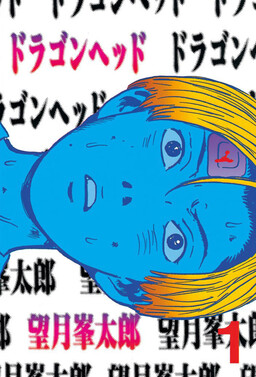
Horror / Thriller
Dragon Head
Yu's review of Dragon Head — a school-trip train derails inside a mountain tunnel and three classmates crawl out into a Japan destroyed by an unexplained cataclysm. Minetaro Mochizuki's 10-volume survival horror about fear itself, the thing that breaks people faster than the disaster does.
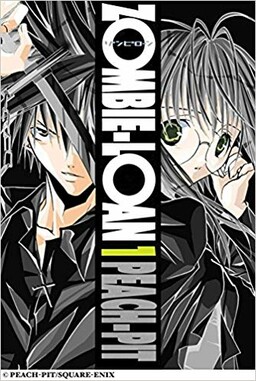
Horror / Action
Zombie-Loan
Yu's review of Zombie-Loan — Michiru Kita has the shinigami eyes ability to see death rings around people's necks; two boys at her school, Chika Akatsuki and Shito Tachibana, have black rings indicating they should already be dead; they are alive because they made a contract with a Zombie-Loan office, exchanging their continued existence for debt repayment through zombie hunting.
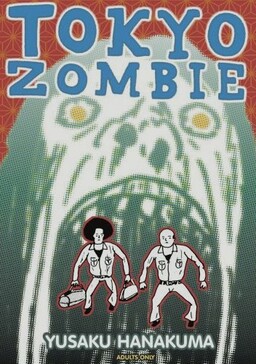
Horror / Comedy
Tokyo Zombie
Yu's review of Tokyo Zombie — Fujio and Mitsuo are factory workers who practice judo; the zombie apocalypse begins in Tokyo near a trash mountain called Dark Fuji; they fight zombies; eventually the rich use the zombie apocalypse as an opportunity to rebuild society in their favor; a one-volume black comedy that is angrier than it looks.
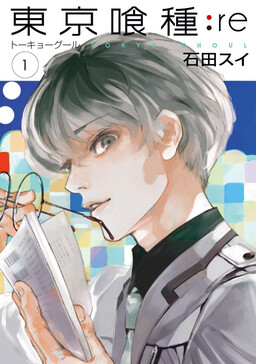
Horror
Tokyo Ghoul:re
Yu's review of Tokyo Ghoul:re — Haise Sasaki is a half-ghoul CCG investigator with no memory of his past; he is, in fact, Ken Kaneki — the protagonist of Tokyo Ghoul — with his identity surgically suppressed; Sui Ishida's continuation of Tokyo Ghoul follows Kaneki's reconstruction through Haise as the war between humans and ghouls reaches its final scale.
Horror / Action
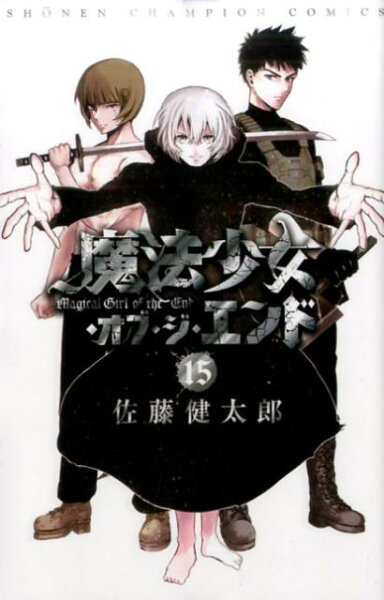
Magical Girl Apocalypse
Yu's review of Magical Girl Apocalypse — ordinary high schooler Kii Kogami watches a magical girl appear at school and kill everyone; the magical girls appear in large numbers and begin a massacre; this is an extremely violent horror manga that uses the magical girl aesthetic as the vehicle for a zombie-apocalypse-style survival story with time travel complications.

Horror / Action
Gleipnir
Yu's review of Gleipnir — Shuichi Kagaya transforms into a monster suit — a hollow mascot-like costume — and a girl named Clair climbs inside him to use his power for her own goals; she wants to find her sister, who is involved in a violent game where participants collect coins to make a wish from an alien being; the horror of the premise deepens as the game's rules become clear.
Written by
Yu
Manga Enthusiast from Japan
I grew up in Japan and manga literally saved me during a tough time in elementary school. My English isn't perfect, but my love for manga is real — and I want to share it with you.
Disclosure: This post contains affiliate links. As an Amazon Associate, I earn from qualifying purchases at no extra cost to you.