
Happiness Review: A Boy Is Turned Into a Vampire and Joins a Hidden Society of People Who Are Becoming Something Else
by Shuzo Oshimi
Read the first volume. If it doesn't hook you, put it down. It'll hook you.
Buy Happiness on Amazon →*Affiliate link — I earn a small commission at no extra cost to you.
Quick Take
- A boy is turned into a vampire and must navigate a world of people losing their humanity while trying to find the girl who changed him
- Shuzo Oshimi (Flowers of Evil) brings the same psychological precision to vampire horror
- 10 volumes, complete; the title is ironic in ways that clarify over the series
Who Is This Manga For?
- Readers who want vampire horror with genuine psychological depth
- Fans of Oshimi's other work (Flowers of Evil, Blood on the Tracks)
- Anyone who wants horror manga examining what it means to lose human appetite and replace it with something else
- Readers who can handle mature horror content
Content Warnings & Age Rating
Age Rating: M (Mature) Content Warnings: Vampire violence, blood, the transformative attack is a form of sexual assault in framing, psychological horror, body horror of transformation
The content is mature. The psychological approach is Oshimi's signature.
Yu's Rating
| Category | Score |
|---|---|
| Story Depth | ★★★★☆ |
| Art Style | ★★★★★ |
| Character Development | ★★★★☆ |
| Accessibility for Non-Japanese Readers | ★★★★☆ |
| Reread Value | ★★★★☆ |
Story Overview
Makoto Okazaki is bullied, unremarkable, trying not to be noticed. Late one night he is attacked by a vampire girl who drains him partially and then disappears. He survives but begins changing — the hunger for blood, the sensitivity to sunlight, the enhancement of senses.
He is drawn into a group of others who have been changed. Among them is Yuuki, a boy further along in the transformation whose perspective gives Makoto a glimpse of what he might become. The search for the girl who changed him becomes the series' engine.
Oshimi uses the vampire premise to examine identity transformation — what we give up when we change, whether the change is chosen, and what the word "happiness" means to someone who is no longer entirely human.
Characters
Makoto Okazaki — His transformation forces questions about who he was before and who he is becoming; his specific bullied-boy interiority makes the vampiric change more charged.
Nora — The girl who changed him; her nature and motivations are the series' central mystery.
Yuuki — The further-transformed guide whose relationship with Makoto is the series' most psychologically complex.
Art Style
Oshimi's art is exceptional — his character designs are realistic and expressive, the transformation sequences are drawn with body horror precision, and his sensitivity to psychological states is as present here as in Flowers of Evil. The blood imagery is handled with visual intentionality.
Cultural Context
Happiness draws on vampire mythology while framing it through Japanese concepts of social exclusion — the bullied boy who is changed into something that the social hierarchy cannot account for. The vampire community Makoto discovers functions as an alternative social structure.
What I Love About It
The title. Oshimi applies his signature ironic examination to the concept of happiness in this context: what does a vampire want, and can wanting blood and beauty be called happiness, and if not, what is the alternative? The question runs through the series without being answered simply.
What English-Speaking Fans Say
Western readers familiar with Oshimi's work came to Happiness with calibrated expectations and found it consistent with his psychology-forward approach. The vampire premise is cited as providing a framework for the same self-construction questions he examines in his other work.
Memorable Scene ⚠️ Spoiler Warning
The sequence where Makoto first fully gives in to the vampire hunger — what it looks like from inside his perspective, and what he feels about it afterward — is the series' most honest examination of what transformation actually means.
Similar Manga
- Flowers of Evil — Same author; psychological horror, no vampire content
- Blood on the Tracks — Same author; psychological family horror
- Vampire Knight — Vampire romance, much lighter
- Tokyo Ghoul — Human becoming monster, similar transformation theme
Reading Order / Where to Start
Volume 1 — the transformation establishes in the first chapter.
Official English Translation Status
Kodansha USA published the complete 10-volume series. All volumes available.
Pros & Cons
Pros
- 10 volumes, complete
- Oshimi's psychological approach distinguishes it from pure vampire horror
- Art is exceptional throughout
- The title's irony is handled thoughtfully
Cons
- The transformative attack framing may be difficult
- Darker than typical vampire manga
- The pacing is deliberate before the final arc
Format Comparison
| Format | Notes |
|---|---|
| Individual Volumes | Kodansha USA; standard |
| Digital | Available |
Where to Buy
Read the first volume. If it doesn't hook you, put it down. It'll hook you.
This post contains affiliate links. If you purchase through these links, I may earn a small commission at no extra cost to you. As an Amazon Associate, I earn from qualifying purchases.
*Affiliate link — I earn a small commission at no extra cost to you.
Reading Guides
More Manga You Might Like
Horror / Drama
Golden Gold
Golden Gold follows Reiko, a teenage girl on a remote island who finds a small god of fortune — and discovers that luck granted by a supernatural force does not come without cost, and that the cost is paid by those around you.

Horror / Sci-Fi
Vampire Hunter D
Yu's review of Vampire Hunter D — set 12,000 years in the future in a world where vampires ruled humanity and have since fallen; D is a half-human half-vampire dhampir who hunts his own father's kind; stoic, nearly invincible, and accompanied by a parasitic demon in his hand, he is one of horror manga's most iconic loners.
Horror / Drama
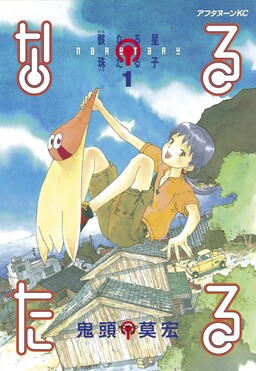
Narutaru
Yu's review of Narutaru — Shiina Tamai finds a star-shaped creature she names Hoshimaru; the story appears to begin as a creature-companion adventure and becomes something much darker, examining what happens when children with real grievances are given real power.

Horror / Drama
Lament of the Lamb
Yu's review of Lament of the Lamb — Kazuna Takashiro discovers he has inherited his family's vampiric curse: an overwhelming thirst for blood; when he finds his estranged sister Chizuna, who has been living with the curse alone, the series becomes a gothic study of two people trying not to become what they are.
Horror / Romance
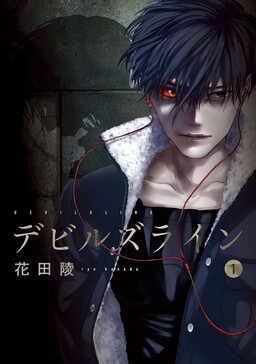
Devils' Line
Yu's review of Devils' Line — in a modern Japan where vampires called devils live hidden among humans, half-devil detective Yuuki Anzai falls for graduate student Tsukasa Taira while fighting the bloodlust her presence awakens. A vampire romance that treats the monster as a genuine, ongoing danger instead of mystique.
Horror / Drama
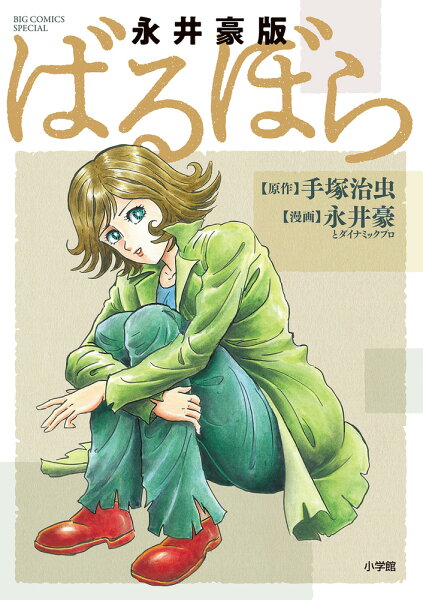
Barbara
Yu's review of Barbara — Osamu Tezuka's adult psychological horror about Yosuke Mikura, a celebrated novelist who takes in a filthy, drunken muse named Barbara and descends through black masses, perversion, and madness as he loses the ability to tell art from destruction.
Written by
Yu
Manga Enthusiast from Japan
I grew up in Japan and manga literally saved me during a tough time in elementary school. My English isn't perfect, but my love for manga is real — and I want to share it with you.
Disclosure: This post contains affiliate links. As an Amazon Associate, I earn from qualifying purchases at no extra cost to you.