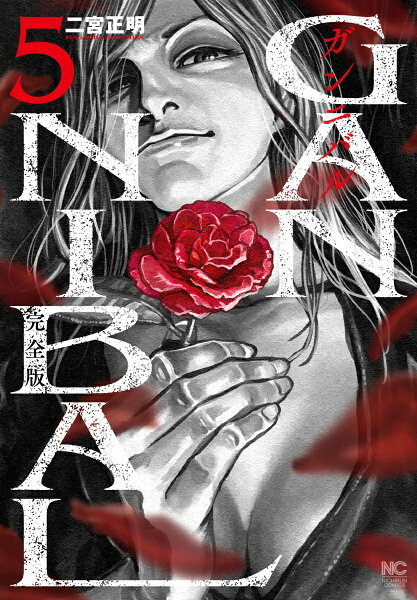
Gannibal Review — A Cop in a Mountain Village Where the Rumor Is That the Family in Charge Eats People
by Masaaki Ninomiya
Read the first volume. If it doesn't hook you, put it down. It'll hook you.
Buy Gannibal on Amazon →*Affiliate link — I earn a small commission at no extra cost to you.
I grew up in a Tokyo suburb. My grandmother lived in a village in Gifu — small, traditional, the kind of place where everyone knows everyone, and where the unspoken hierarchy is more powerful than the written law. When I visited as a kid, I noticed that one family seemed to matter more than the others. Their house was bigger. Their kids were treated differently. The older villagers spoke about them carefully.
There was nothing sinister about that family. I just remember the feeling of a place where some people are weighted more than others, and where outsiders don't get told why.
Gannibal is what that feeling looks like turned into a horror manga.
Quick Take
- A police-procedural horror that starts as social tension and gradually reveals something much worse
- Rural Japanese setting with a real cultural foundation — the closed-community dynamic is not invented
- Age rating: M (Mature) — cannibalism themes, graphic violence, child endangerment. Heavy content earned by the buildup
How Does Gannibal End? (No Spoilers)
I want to address this because "gannibal manga ending" is one of the search queries that brings readers here.
Gannibal ends. It ends well. It ends complete.
The series ran for 11 volumes from 2018 to 2022. The final volume delivers a resolution that earns the 10 volumes before it. The Goto family mystery is answered. Daigo's arc is completed. The fate of Kuge village is decided. There are no unresolved cliffhangers. There is no sequel needed. The manga is over and the ending is a real ending.
What I can say without spoilers about the ending:
- It is not a tidy law-enforcement victory where the police arrive and solve everything
- It is not a tragic everyone-dies horror ending where nothing was meant
- It is not an ambiguous "it was all in his head" ending
- It is a confrontation between Daigo and the truth of what Kuge actually is, with consequences that change him permanently
If you're worried about whether Gannibal is worth committing to: yes. The ending pays off. Seven Seas's 11-volume English edition is the complete work.
What Is Gannibal About?
Daigo Agawa is a young police officer in his early thirties. After an incident at his previous posting — the specifics are revealed across the early volumes — he is reassigned to the remote village of Kuge in the Japanese mountains. He brings his wife Yuki and their young daughter Mashiro. They move into the small police house at the edge of the village.
Kuge is a real place in the manga's logic. A traditional mountain community. A few hundred people. Limited infrastructure. The kind of village Japanese urbanites would describe as inaka — countryside, far from the cities, slow.
It is also controlled, fully and visibly, by the Goto family — a multigenerational clan whose patriarch Iwao Goto sits at the top of the village's economic, social, and ceremonial life. The Gotos own the major businesses. The Gotos run the village council. The Gotos are deferred to in every interaction. Daigo, walking through the village his first day, can feel the weight of their presence even before he understands what it is.
Within his first week:
- An elderly villager named Gin pulls Daigo aside, drunk, and whispers that the Goto family eats people
- Daigo discovers that the previous police officer assigned to Kuge — Officer Kanou — disappeared three years before, with no investigation, no body, and no records anyone will share
- Daigo's daughter has an encounter with one of the Goto children that leaves Daigo unable to sleep
- Mashiro, his daughter, witnesses something in the forest that she cannot describe but will not stop drawing
The series proceeds from there. Across 11 volumes, Ninomiya unpacks:
- Whether the rumor about the Gotos is literal or metaphorical
- What happened to Officer Kanou
- The history of Kuge village — what the village is built on and what it has been hiding
- Daigo's confrontation with the Gotos, which escalates from social to physical to existential
- The villagers themselves, who are not innocent bystanders and not simple villains — they are people who have chosen to live with what Kuge is
The horror is slow, and it earns every escalation. Ninomiya doesn't rush. The first three volumes are mostly atmospheric — the feeling of being watched, the unease of asking questions nobody wants asked. By the middle volumes, the literal horror has arrived and Daigo is no longer asking whether something is wrong; he's asking whether he can survive it. By the final volumes, the manga has become something larger — about the village as an organism, about generational complicity, and about what happens when one outsider refuses to leave.
Who Is This Manga For?
- Horror readers who prefer sustained dread over jump scares
- Fans of folk horror — Midsommar, The Wicker Man, Hereditary all share Gannibal's DNA
- Crime/thriller readers who can handle horror elements
- Anyone who watched the Disney+ live-action adaptation and wants the source
- Readers who like complete series — 11 volumes, fully resolved
Gannibal Manga vs the Disney+ Live-Action
The 2022 Disney+ adaptation (Japanese title: ガンニバル; international: Gannibal) is the second exposure point for many international readers. The show, directed by Shinzo Katayama, is a faithful but compressed adaptation:
- Season 1 (2022) covers approximately volumes 1–4 of the manga
- Season 2 (2024) continues into the middle volumes
- The show condenses some characters, alters a few plot beats, and changes the ending of the first arc somewhat
- The atmosphere of the show is excellent — Katayama's direction captures the rural dread; the cinematography of Kuge is beautiful and ominous
If you've watched the show and want more depth: the manga is the original work and has more space for the slow-burn psychological work. If you've read the manga and want a visual companion: the show is a strong adaptation.
For readers experiencing Gannibal for the first time: I'd recommend the manga first. The full 11-volume arc benefits from being read in its original pacing.
Content Warnings & Age Rating
Age Rating: M (Mature) — 18+ Content Warnings: Cannibalism (the central premise; depicted on-page in some volumes); graphic violence (sustained across the series); child endangerment (Daigo's daughter is in danger across multiple volumes); child abuse (background to the Goto family's structure); rural cult / closed-community horror; one mid-series sequence involves serious physical injury to a child character
This is genuinely heavy material. The cannibalism is not metaphorical. The child endangerment is real and recurring. Readers with sensitivity to either should be aware.
Story Overview
Volumes 1–3 — The arrival. Daigo, Yuki, and Mashiro move into Kuge. Initial impressions. Daigo meets the Gotos. Mashiro has her first unsettling encounter. The rumors begin to crystallize. The previous officer's disappearance becomes Daigo's investigation focus.
Volumes 4–6 — The escalation. Daigo's investigation forces him into direct confrontation with the Gotos. Yuki and Mashiro experience their own dimensions of the village's hostility. The horror moves from rumor to evidence to confrontation. The middle of the manga is where Ninomiya's craft is most visible — the dread is constant, the violence specific, the moral position of every character clarifying.
Volumes 7–9 — The unraveling. The history of Kuge village becomes the manga's primary subject. Why the Gotos. Why the village. How long this has been going on. The answers reframe everything in the first half of the manga. The previous officer's disappearance, Iwao Goto's presence, the villagers' fear — all of it acquires new context.
Volumes 10–11 — The reckoning. Daigo's confrontation with what Kuge actually is, and what he chooses to do with that knowledge. The ending is patient and earned.
Characters
Daigo Agawa — The protagonist whose specific flaw is the manga's most interesting choice. Daigo was transferred to Kuge because he is too easily provoked into violence; the incident at his previous posting was the consequence of his temper. Most horror protagonists are flawed by passivity. Daigo is flawed by aggression. The Kuge situation tests exactly the trait that got him reassigned. The manga's question for Daigo is whether his anger is what makes him useful or what makes him unsafe, and whether those are the same thing.
Iwao Goto — The patriarch. Ninomiya draws him with patience and care; Iwao is not a generic horror villain. He is a man who has spent decades inside a system, who has reasons for what he does, and whose presence on the page generates dread because he is psychologically coherent rather than monstrous. The conversations between Iwao and Daigo are the manga's most carefully constructed dialogues.
Keisuke Goto — Iwao's son and the most physically dangerous member of the family in the early volumes. Keisuke is the antagonist who confronts Daigo directly; his arc takes him in directions that are surprising.
Yuki Agawa — Daigo's wife. Yuki is not a passive presence. Her own arc — her relationship with the village's women, her response to what's happening to Mashiro, her judgment of Daigo's choices — runs alongside the main investigation and has its own weight.
Mashiro Agawa — Daigo and Yuki's young daughter. Mashiro's pre-verbal proximity to the horror — what she sees, what she draws, what she cannot articulate but communicates through her behavior — is one of the manga's most affecting threads. Ninomiya treats her with care.
Gin — The elderly villager who first tells Daigo about the Gotos. Gin's role expands across the series. His own history is part of what the manga eventually reveals.
The villagers — Functioning collectively as a chorus and individually as specific characters across the run. The manga is unusual in horror in that the villagers are not all complicit and not all innocent. Each has chosen a position relative to the Gotos, and those positions matter.
Art Style
Ninomiya's art is detailed, naturalistic, and built for atmosphere rather than spectacle. The mountain village is rendered with documentary care — the houses, the forest paths, the seasonal weather. The character faces carry significant emotional information; Iwao's face in particular is one of the manga's most expressive antagonist designs.
The horror imagery is restrained but specific. When the manga shows you the worst of Kuge, it shows you with clarity rather than chaos. The reader sees what is happening. The reader cannot mistake it. Ninomiya doesn't lean on shadow or implication to soften the horror; he shows you the thing and lets the visibility be the horror.
The action sequences (when they come) are competent. The manga's primary visual strength is in faces and environments, not movement.
Cultural Context
Rural Japanese horror — inaka horror (田舎ホラー) — is a recognized subgenre with deep roots. The closed community, the powerful family system, the outsider protagonist who cannot navigate the unspoken hierarchy — these are real Japanese cultural patterns. Mountain villages in Japan, especially in regions like the Japanese Alps, can have entrenched family power structures that predate the modern state and that operate semi-independently of national law enforcement.
The Goto family setup specifically draws on the historical shōya system — village headmen whose families held hereditary power in pre-modern Japan. While the formal shōya system was dissolved in the Meiji era, in some remote areas the actual social structure persisted informally into the modern period. Ninomiya is not depicting a historical situation, but he is extrapolating from a real cultural pattern.
The cannibalism rumor itself is a folk-horror archetype with Japanese variants — stories of remote villages with terrible food traditions appear in Japanese rural folklore. Gannibal weaponizes the rumor into literal narrative.
What I Love About It
The scene in volume 4 where Yuki goes to a women's gathering.
I won't spoil what happens specifically. What I'll say: while Daigo is doing the active investigation work — confronting Gotos, reading old records, getting into physical fights — Yuki has been navigating a parallel social investigation that the manga has been quietly building. The village women have invited her to a traditional gathering. Yuki goes.
What she experiences there — the conversations, the things that are said and not said, the moment she realizes that the village's women have their own knowledge of Kuge that's different from what the men know — is the manga's most quietly horrifying sequence.
What I love is that the horror isn't physical. Nothing happens to Yuki at the gathering. No threat. No violence. Just conversations. The dread comes from realizing that Yuki has been admitted, partially, into a layer of the village that Daigo cannot access. The information she gathers there — and what she decides to do with it — becomes one of the manga's most important threads.
That sequence is what makes Gannibal an exceptional horror manga rather than just a good one. The manga understands that closed communities have multiple layers of secret, that women's knowledge and men's knowledge can be different, and that the most terrifying revelation is not always the loudest one. Ninomiya gives Yuki her own horror story inside her husband's horror story, and the two stories illuminate each other without merging.
What English-Speaking Fans Say
Gannibal has been one of the most-discussed horror manga in English-language fan spaces of the past few years. The Disney+ adaptation brought wide visibility; the Seven Seas English release brought wide readership. The consensus among finishers is that the manga is among the best modern horror manga, in the same tier as Uzumaki, I Am a Hero, and Soil.
The most common praise: the slow burn, the moral complexity, the genuine resolution. The most common criticism: the middle volumes have some pacing variation; some readers find volumes 5–6 slower than they wanted.
Reading order debates: most English-language fans recommend the manga first, then the Disney+ series. A minority recommend the show first as a hook, then the manga for depth.
Memorable Scene ⚠️ Spoiler Warning
The scene where Daigo finds Officer Kanou's evidence.
Without spoiling specifics: somewhere in the middle of the manga, Daigo discovers the documentation that the previous officer (Kanou) left behind — his own notes about what Kuge is, his investigation, his fears. The documentation is not delivered to Daigo dramatically. It accumulates. Notebooks. Photographs. Cassette tapes. Records that Kanou hid where the Gotos would not find them.
What makes the sequence work is the time Ninomiya gives it. Daigo doesn't process the evidence in one chapter. He reads. He pauses. He goes home. He looks at his daughter. He goes back. He reads more. The chapter on this sequence is constructed with the rhythm of someone actually trying to absorb the worst information of his life — not the rhythm of a thriller protagonist getting plot.
When Daigo finally puts it together, his reaction is the manga's most important emotional moment. He doesn't immediately act. He doesn't immediately confront the Gotos. He sits with what he knows. The panel of him holding the last of Kanou's evidence in his hands, alone, is one of the manga's quietest and most devastating images.
The fact that he then does act — that he decides to stay in Kuge rather than flee with his family — is what makes Daigo a horror protagonist worth following. The decision is not heroic in any straightforward sense. It might be the wrong decision. The manga lets the ambiguity stand.
Similar Manga
| Title | Its Approach | How Gannibal Differs |
|---|---|---|
| Uzumaki (Junji Ito) | Cosmic/supernatural rural horror | Uzumaki is unreal; Gannibal is grounded — the horror is human |
| Higanjima | Remote-island survival horror | Higanjima has monsters; Gannibal has neighbors. The neighbors are scarier |
| I Am a Hero | Zombie survival, psychological tone | Same patience and craft; Gannibal is rural-claustrophobic where I Am a Hero is urban-collapse |
| The Drifting Classroom (Umezz) | Closed-community horror with ordinary protagonists | Umezz is the granddaddy; Gannibal is the modern descendant |
| Soil | Rural Japanese horror about a missing family | Soil is more surreal; Gannibal is more direct. Both rural-horror standouts |
Reading Order / Where to Start
Volume 1. Do not skip. The atmosphere builds and the horror earns its escalations. Skipping ahead would gut the experience.
If you're choosing between formats: manga first, then the Disney+ series. The manga has 11 volumes' worth of detail the show necessarily compresses.
Official English Translation Status
Seven Seas Entertainment published all 11 volumes in English in print and digital. The series is complete in English. The 2022–2024 Disney+ live-action adaptation is available on Disney+ internationally (subtitled or dubbed depending on region).
Pros & Cons
Pros
- Sustained dread and atmosphere at the highest level in horror manga
- The horror is grounded in human evil, which makes it more disturbing than supernatural
- 11 volumes complete with an earned ending
- Daigo is an interesting and active protagonist
- The rural Japanese setting is rendered with care and authenticity
Cons
- Heavy content — cannibalism themes, child endangerment, graphic violence
- Slow-building; readers who want immediate horror may find early volumes patient
- Middle volumes have some pacing variation
- The closed-community / folk-horror subgenre is an acquired taste. It won't land for everyone, especially readers who prefer supernatural horror.
Is Gannibal Worth Reading?
Yes — for horror readers with patience and a tolerance for heavy themes. Among the best horror manga of the late 2010s/early 2020s. The complete 11-volume arc and the earned ending make it a satisfying full-series read.
Format Comparison
| Format | Notes |
|---|---|
| Physical (Seven Seas) | All 11 volumes in English. Standard tankoubon |
| Digital | Available via Seven Seas, Kindle, ComiXology |
| Disney+ Live-Action | Two seasons (2022, 2024) available on Disney+ internationally |
Where to Buy
Read the first volume. If it doesn't hook you, put it down. It'll hook you.
This post contains affiliate links. If you purchase through these links, I may earn a small commission at no extra cost to you. As an Amazon Associate, I earn from qualifying purchases.
*Affiliate link — I earn a small commission at no extra cost to you.
Reading Guides
More Manga You Might Like
Horror / Survival
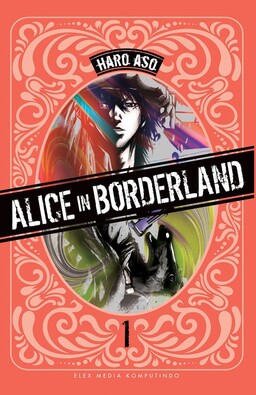
Alice in Borderland
Yu's review of Alice in Borderland — a survival horror manga where a directionless young man and his friends are pulled into a deserted Tokyo and forced to clear deadly games rated by playing cards, slowly uncovering what the Borderland actually is.
Horror / Thriller
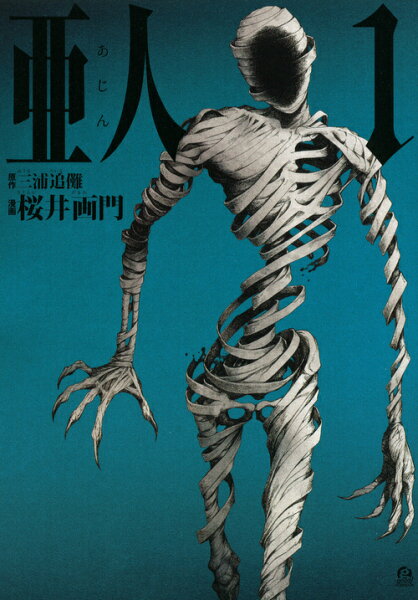
Ajin: Demi-Human
Yu's review of Ajin: Demi-Human — a horror thriller about immortal beings who cannot die, the government that experiments on them endlessly because they can't, and Satou, one of the most terrifyingly competent villains in modern manga.
Horror / Thriller
Starving Anonymous
Yu's review of Starving Anonymous — passengers on a bus wake up in a facility where they discover the horrifying truth about what they're being used for.
Horror / Thriller
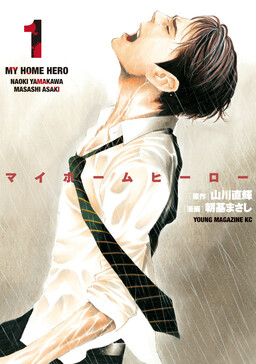
My Home Hero
Yu's review of My Home Hero — Tetsuo Tosu, an ordinary salaryman, discovers that his daughter's boyfriend is an abusive criminal; when he acts to protect her, he kills the man; what follows is a crime thriller about a completely ordinary person trying to conceal a murder while the dead man's yakuza connections start asking questions.
Horror / Crime
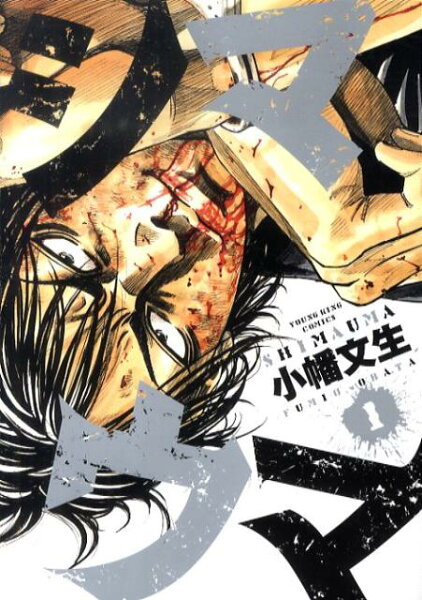
Shimauma
A man wakes up wearing a zebra mask, told he's now a hitman until his target finds him. A live-action film made it briefly famous.
Horror / Drama
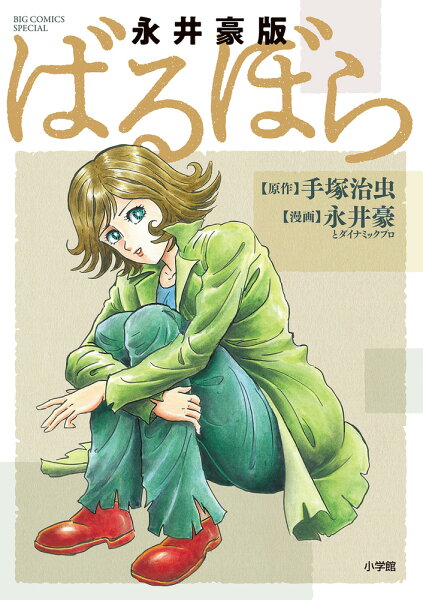
Barbara
Yu's review of Barbara — Osamu Tezuka's adult psychological horror about Yosuke Mikura, a celebrated novelist who takes in a filthy, drunken muse named Barbara and descends through black masses, perversion, and madness as he loses the ability to tell art from destruction.
Written by
Yu
Manga Enthusiast from Japan
I grew up in Japan and manga literally saved me during a tough time in elementary school. My English isn't perfect, but my love for manga is real — and I want to share it with you.
Disclosure: This post contains affiliate links. As an Amazon Associate, I earn from qualifying purchases at no extra cost to you.