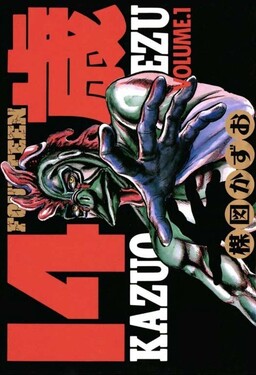
Fourteen Review: A Mutant Chicken Named Chicken George Decides to Save or Destroy the World
by Kazuo Umezu
Read the first volume. If it doesn't hook you, put it down. It'll hook you.
Buy Fourteen on Amazon →*Affiliate link — I earn a small commission at no extra cost to you.
Quick Take
- Kazuo Umezu's most ambitious and strange horror work — a grotesque chicken mutant becomes the protagonist of an environmental-apocalypse horror narrative that encompasses pollution, social collapse, and eventual global catastrophe
- Chicken George is one of manga's most singular protagonist designs: human-faced, chicken-bodied, and possessed of a specific rage about what humanity has done to itself
- 2 volumes; overwhelming in scale; Umezu at his most unrestrained and most political
Who Is This Manga For?
- Readers who want horror with genuine environmental and social critique embedded in its premise
- Anyone who has read Umezu's other work and wants to see where his sensibility goes when allowed full scale
- Fans of horror manga that operates on an apocalyptic canvas rather than an intimate one
- Readers who can engage with truly strange premises executed with complete commitment
Content Warnings & Age Rating
Age Rating: M (Mature) Content Warnings: Apocalyptic horror imagery; body horror; environmental catastrophe depicted graphically; the scale of the horror is civilizational rather than personal
The M rating is accurate. Fourteen is Umezu at his most overwhelming.
Yu's Rating
| Category | Score |
|---|---|
| Story Depth | ★★★★☆ |
| Art Style | ★★★★★ |
| Character Development | ★★★☆☆ |
| Accessibility for Non-Japanese Readers | ★★★☆☆ |
| Reread Value | ★★★☆☆ |
Story Overview
Fourteen begins in a factory where processed chicken parts are turned into food products. The conditions are what industrial food production produces. From this environment, something is born — a chicken embryo with a human face, one that grows into Chicken George, a being who has entered the world through humanity's worst systems and who emerges with the full force of what that origin generates.
The story expands from this intimate horror — a single monstrous birth — to an apocalyptic canvas encompassing environmental collapse, social fragmentation, and the specific catastrophe that results when the systems humanity has built for convenience begin to produce their logical conclusions. Chicken George is not simply a monster; he is a response to the world that made him.
Characters
Chicken George — His quality is the specific horror-as-accusation of a monster who was made rather than born from outside the human world. He knows what he is and where he came from, and this knowledge drives the narrative.
Art Style
Umezu's art at its most ambitious — the shift from factory horror to civilizational collapse requires him to render both intimate grotesquerie and large-scale apocalyptic imagery. His character designs for Chicken George and the proliferating horrors that follow are among the most remarkable in horror manga.
Cultural Context
Fourteen engages explicitly with 1990s Japanese environmental and social anxiety — the specific fears about food safety, industrial pollution, and social fragmentation that characterized that period. The environmental horror has proved accurate about the underlying anxieties even if the specific mechanism remains fiction.
What I Love About It
The moment when the narrative scale shifts — when Chicken George's story stops being intimate factory horror and begins to encompass the full scale of what Umezu is constructing — is the work's most remarkable transition. Most horror manga stays small. Fourteen refuses to.
What English-Speaking Fans Say
Western readers describe Fourteen as Umezu's most challenging work — the premise requires full commitment from the reader, and the scale can be overwhelming. Those who engage with it describe it as one of manga horror's most ambitious works. The environmental critique is noted as more resonant in retrospect than it may have seemed when published.
Memorable Scene ⚠️ Spoiler Warning
The full revelation of what Chicken George intends and what he has become capable of — and the visual of what civilizational collapse looks like rendered in Umezu's particular art style — is the work's most overwhelming sequence.
Similar Manga
- The Drifting Classroom — Umezu's other apocalyptic horror
- Cat-Eyed Boy — Umezu anthology horror
- Biomega — Post-apocalyptic horror with social critique
- Nausicaä of the Valley of the Wind — Environmental collapse, different tone
Reading Order / Where to Start
Volume 1 — the factory origin and Chicken George's emergence.
Official English Translation Status
VIZ Media published both volumes. Complete and available.
Pros & Cons
Pros
- The most ambitious scale of any Umezu work
- Chicken George is one of manga's most singular protagonist designs
- The environmental critique remains relevant
- Umezu's art handles the scale with extraordinary ambition
Cons
- The premise requires significant reader commitment
- Less accessible than Umezu's anthology work
- The apocalyptic scale can be overwhelming
- Cultural context (1990s Japanese anxieties) adds to accessibility challenge
Format Comparison
| Format | Notes |
|---|---|
| Omnibus | VIZ Media; 2 vols |
| Digital | Available |
Where to Buy
Read the first volume. If it doesn't hook you, put it down. It'll hook you.
This post contains affiliate links. If you purchase through these links, I may earn a small commission at no extra cost to you. As an Amazon Associate, I earn from qualifying purchases.
*Affiliate link — I earn a small commission at no extra cost to you.
Reading Guides
More Manga You Might Like
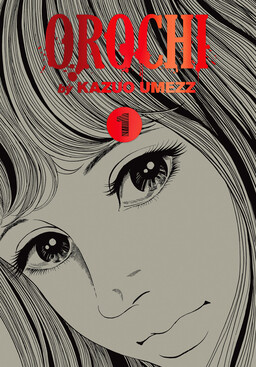
Horror
Orochi: Blood
Yu's review of Orochi — a beautiful immortal girl named Orochi drifts through human lives, observing and sometimes participating in the horror that emerges when human desires and jealousies reach extremes; Kazuo Umezu's anthology horror with a supernatural narrator defined by beauty and detachment.
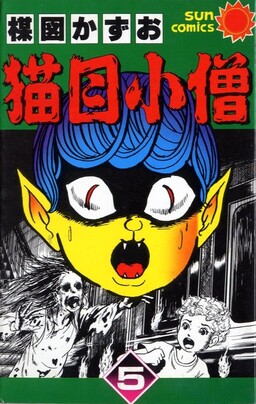
Horror
Cat-Eyed Boy
Yu's review of Cat-Eyed Boy — Kazuo Umezu's anthology horror about a half-human, half-nekomata outcast who lives in the attics of strangers and watches the supernatural and human cruelty that finds them. Disturbing, dream-logic horror with one of manga's strangest narrators.
Horror / Sci-Fi
Vampire Hunter D
Yu's review of Vampire Hunter D — set 12,000 years in the future in a world where vampires ruled humanity and have since fallen; D is a half-human half-vampire dhampir who hunts his own father's kind; stoic, nearly invincible, and accompanied by a parasitic demon in his hand, he is one of horror manga's most iconic loners.
Horror
Ode to Kirihito
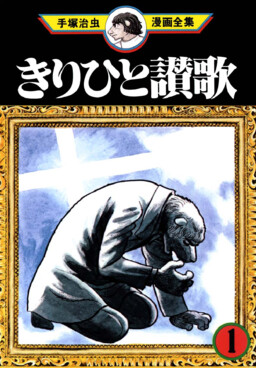
Yu's review of Ode to Kirihito — Dr. Osanai Kirihito investigates Monmow disease, a mysterious illness that transforms its victims into dog-like creatures; the medical establishment suppresses his findings; Osamu Tezuka's 1970 medical horror manga about a doctor reduced to subhuman status while searching for a scientific truth powerful people want hidden.
Horror / Literary
No Longer Human
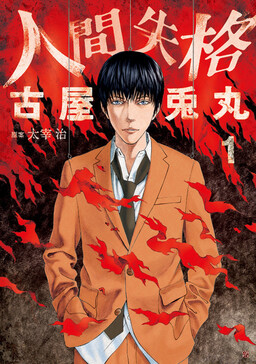
Yu's review of No Longer Human manga adaptation — Usamaru Furuya adapts Osamu Dazai's 1948 autobiographical novel into a contemporary setting; the protagonist Yozo Oba is a young man who cannot believe himself to be a human being in the same sense as the people around him; the manga follows his descent through addiction, relationships, and the inability to exist in the world.

Horror
MW
Yu's review of MW — Yuki Michio is a beautiful, charming, amoral man who survived exposure to a chemical weapon as a child; the event destroyed his conscience; he works toward mass destruction while maintaining the appearance of a successful society member; a priest who loves him tries to hold him back; Osamu Tezuka's 1976 thriller about a man without conscience.
Written by
Yu
Manga Enthusiast from Japan
I grew up in Japan and manga literally saved me during a tough time in elementary school. My English isn't perfect, but my love for manga is real — and I want to share it with you.
Disclosure: This post contains affiliate links. As an Amazon Associate, I earn from qualifying purchases at no extra cost to you.