
Elfen Lied Review: A Massacre, a Lullaby, and the Girl the Lab Made
by Lynn Okamoto
Read the first volume. If it doesn't hook you, put it down. It'll hook you.
Buy Elfen Lied on Amazon →*Affiliate link — I earn a small commission at no extra cost to you.
I have read a lot of dark manga, but Elfen Lied is one of the few that I had to put down partway through volume one, walk around my apartment, and come back to. The first chapter opens with so much blood that I almost decided it was just shock for shock's sake. I am glad I came back. Because under all of that violence is the saddest story about a lonely kid I have ever read in this medium — and that contrast is exactly why the series never left me.
I want to be honest with you up front. This is the heaviest title I have reviewed on this site. If graphic content is a hard no for you, please trust the warnings below and skip it. But if you can stand the cruelty, what Lynn Okamoto built here is something I still think about years later.
Quick Take
- A series where the most disturbing thing is not the dismemberment in chapter one — it is the orphanage flashback that explains why a little girl turned into someone who could do that
- The Lucy / Nyu split personality is not a gimmick; both halves are real, and the manga refuses to let you pick which one is "the true self"
- Rated M (Mature) — graphic violence, child abuse, animal cruelty, and sexual content. This is genuinely one of the most content-heavy mature manga I have covered
Story Overview
It begins with a slaughter. A naked young woman in a metal helmet walks out of an island research facility, and the guards who try to stop her are decapitated, split in two, and torn apart by something invisible. She is a Diclonius — a mutant human with horn-like bumps on her head and "vectors," invisible telekinetic arms that can cut through anything within their reach. Her name is Lucy. In a last attempt to stop her, the facility's director Kurama orders a sniper to fire a heavy shell at her head. It does not kill her. It knocks her into the sea and shatters her mind.
The turning point is who finds her. She washes up on Yuigahama Beach in Kamakura with no memory and only one word she can say: "Nyu." University student Kouta and his cousin Yuka take this strange, childlike girl home, naming her Nyu after the only sound she makes. They have no idea she is the creature the news is calling a monster. As the story goes on, Lucy keeps resurfacing inside Nyu's body, the facility sends other Diclonius to recapture or kill her, and the manga slowly fills in her childhood — the part that hurts the most.
The ending does not flinch. At a lighthouse, Lucy's body literally begins to fall apart from the strain of her power. She uses the last of it to heal Kouta instead of killing him, and asks him to keep a promise he made as a child: to end her life if she ever became a killer. He does. Ten years later he returns to their old meeting spot and meets two small twin girls, one named Kaede, who say they have been waiting a long time to meet their special friend. The manga leaves you to decide if that is hope or just the last cruel tease.
Characters
Lucy / Kaede / Nyu — Born Kaede, abandoned in a field as a baby because of her horns, raised in an orphanage near Kamakura where children and staff alike treated her like an animal. The "Lucy" who massacres the facility and the "Nyu" who cannot say more than one syllable are both her. The genius of the writing is that you watch the orphanage break her in real time, so the killer and the victim become the same person in your head.
Kouta — The student who takes Nyu in. He is not a stranger to Lucy, though he does not remember it at first — and the gap between what he forgot and what Lucy did to him is the engine of the whole series. His arc is about whether forgiveness is even possible when the person asking for it is the one who destroyed your family.
Yuka — Kouta's cousin, who loves him and ends up running a household full of damaged Diclonius girls. She is the closest thing to a normal human anchor in the story, and her jealousy and exhaustion make her feel real rather than saintly.
Nana and the other Diclonius — The facility breeds and tortures these girls as test subjects. Nana, raised by Kurama and desperate to be a "good girl" for the man who experiments on her, is the clearest mirror of what Lucy could have become. Each Diclonius the series introduces repeats a variation of the same wound: created, abused, and then blamed for what the abuse made them.
What I Love About It
The single sequence that made this series matter to me is the orphanage flashback — specifically, the puppy. Young Kaede has no friends. The other kids call her an animal because of her horns. The one warm thing in her entire life is a stray puppy she finds outside the orphanage, that she feeds in secret and tells no one about, because she already knows that anything she loves becomes a target. And it does. The bullies find the dog and beat it to death in front of her, in a bag, laughing. Okamoto draws Kaede's face in that moment and it is the hinge of the whole manga. That is when the killing starts.
What got me is that the series does not use this to excuse her. It uses it to make her understandable, which is much harder and much more honest. By the time you reach the facility massacre from chapter one again in your memory, you can no longer see it as random horror — you see a child who was taught, very thoroughly, by adults, that the world hates her and that she has the power to make it stop. I have read plenty of "tragic villain" backstories that feel like a checklist. This one felt like watching a specific, real loneliness curdle into something monstrous, and as someone who was a lonely kid hiding in manga, the puppy chapter is the one I cannot un-read.
Memorable Scene ⚠️ Spoiler Warning
The scene I will never shake is the train station, after the summer festival. As children, Kaede and Kouta were briefly happy together — he was the first person who said her horns were special instead of disgusting. Kouta promised to take her to the festival, but to spare her feelings he lied and told her his other "cousin" was a boy, when it was actually Yuka. When Lucy sees him comforting a crying Yuka at the festival, she believes he lied to hurt her, and something snaps.
She follows them onto the train. Then, in front of Kouta, she cuts his little sister Kanae in half at the waist, and beheads his father an instant later. Kouta asks her why, and she tells him plainly: they were friends, and that friendship is the only reason he is still alive. The way Okamoto stages it — the calm after the festival, the warmth of the family, then the panel of a child sliced in two — is the most upsetting thing in the book, and it recontextualizes everything. Kouta's amnesia, his strange dread around Nyu, his promise to "kill her if she becomes a killer" — it all leads back to this platform. It is the scene that turns a horror manga into a tragedy.
Content Warnings & Age Rating
Age Rating: M (Mature) — this is for adults only.
Content Warnings:
- Extreme graphic violence — decapitation, dismemberment, bodies cut in half, shown in detail
- Child abuse and bullying — sustained, central to the plot
- Animal cruelty — the puppy's death is depicted
- Sexual violence and nudity — including assault and frequent fan-service nudity that sits very uncomfortably next to the trauma content
Please take these seriously. The manga earns its weight, but it does not pull punches anywhere.
Pros & Cons
Pros
- A genuinely devastating tragedy hidden inside an extreme horror shell
- Lucy is one of the most fully realized "monster as victim" characters in manga
- A complete 12-volume story with a real, definitive ending (unlike the anime, which stops early and stays ambiguous)
- The flashback chapters are emotionally precise and never feel like filler
Cons
- The violence is relentless and graphic — this is not gore you can read past lightly
- The constant fan-service nudity clashes badly with the abuse themes and will feel exploitative to many readers
- Between the gore, the sexual content, and the bleakness, this won't work for everyone — and that is completely fair.
Is Elfen Lied Worth Reading?
If you can handle the content, yes — it is worth it for the way the orphanage backstory and the train station reveal turn raw shock into something heartbreaking. But go in clear-eyed: the graphic violence and the uneasy fan-service are real barriers, and there is no shame in deciding this one is not for you.
Where to Buy
Read the first volume. If it doesn't hook you, put it down. It'll hook you.
Dark Horse Comics has released the entire series in English as a four-volume omnibus set, so all twelve original volumes are available.
This post contains affiliate links. If you purchase through these links, I may earn a small commission at no extra cost to you. As an Amazon Associate, I earn from qualifying purchases.
*Affiliate link — I earn a small commission at no extra cost to you.
Reading Guides
More Manga You Might Like
Horror / Sci-Fi
Vampire Hunter D
Yu's review of Vampire Hunter D — set 12,000 years in the future in a world where vampires ruled humanity and have since fallen; D is a half-human half-vampire dhampir who hunts his own father's kind; stoic, nearly invincible, and accompanied by a parasitic demon in his hand, he is one of horror manga's most iconic loners.
Horror / Drama
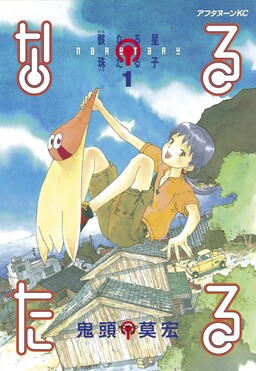
Narutaru
Yu's review of Narutaru — Shiina Tamai finds a star-shaped creature she names Hoshimaru; the story appears to begin as a creature-companion adventure and becomes something much darker, examining what happens when children with real grievances are given real power.
Horror / Thriller
Hideout
Yu's review of Hideout — Seiichi Kirishima takes his wife to a deserted island intending to kill her and stage it as an accident; before he can act, they encounter something on the island that alters the situation entirely; what follows is survival horror with a protagonist whose hands are already guilty.
Horror / Mystery
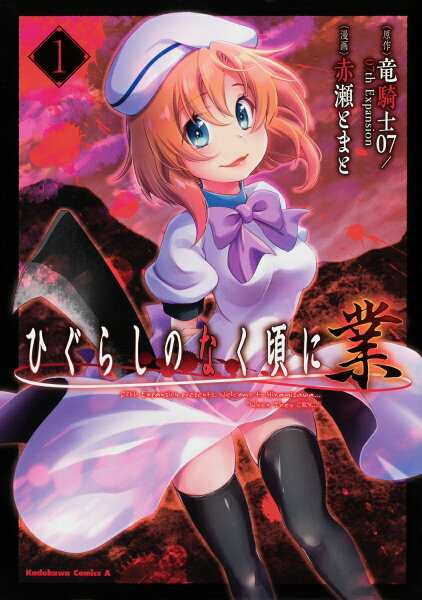
Higurashi When They Cry
Yu's review of Higurashi When They Cry — Keiichi Maebara moves to the rural village of Hinamizawa and discovers that every year, during the village festival, someone dies and someone disappears; the story resets across multiple arcs, each showing different versions of the same events as Keiichi and his friends try to understand and survive what the village is doing to them.
Horror / Literary
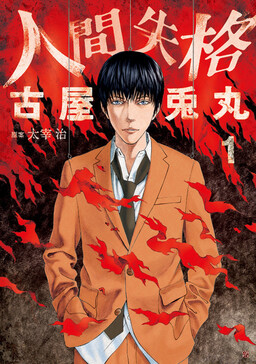
No Longer Human
Yu's review of No Longer Human manga adaptation — Usamaru Furuya adapts Osamu Dazai's 1948 autobiographical novel into a contemporary setting; the protagonist Yozo Oba is a young man who cannot believe himself to be a human being in the same sense as the people around him; the manga follows his descent through addiction, relationships, and the inability to exist in the world.

Horror
MW
Yu's review of MW — Yuki Michio is a beautiful, charming, amoral man who survived exposure to a chemical weapon as a child; the event destroyed his conscience; he works toward mass destruction while maintaining the appearance of a successful society member; a priest who loves him tries to hold him back; Osamu Tezuka's 1976 thriller about a man without conscience.
Written by
Yu
Manga Enthusiast from Japan
I grew up in Japan and manga literally saved me during a tough time in elementary school. My English isn't perfect, but my love for manga is real — and I want to share it with you.
Disclosure: This post contains affiliate links. As an Amazon Associate, I earn from qualifying purchases at no extra cost to you.