Duty After School Review: The War Webtoon That Asks Why Anyone Had to Die
by Ha Il-Kwon
Read the first volume. If it doesn't hook you, put it down. It'll hook you.
Buy Duty After School on Amazon →*Affiliate link — I earn a small commission at no extra cost to you.
I read most of Duty After School on my phone, late at night, sitting on the floor of my apartment because I told myself I would only read "one more episode" and then could not stop. I am Japanese, and I grew up on manga where a kid trains hard, believes in his friends, and wins. I love those stories — they saved me when I was small and had no friends. So when this Korean webtoon started with a normal high school classroom and then dropped these silent alien blobs into the sky, part of me waited for the part where the brave students fight back and triumph. That part never came the way I expected. By the time I finished, I was not cheering. I was just sitting there, quiet, thinking about how angry the ending made me — in the way only a really good story can.
Quick Take
- A Korean webtoon by Ha Il-Kwon where ordinary high schoolers are drafted to fight blob-like aliens, and almost none of them come home.
- It is structured like a war story but written like a protest — the real enemy turns out to be the adults who sent children to die.
- Age rating: M (Mature) — graphic deaths, psychological breakdown, and a deeply bleak tone. Not for younger readers.
Story Overview
The beginning is almost ordinary. The senior class of a Korean high school is going about normal student life — crushes, fights, the pressure of the CSAT college entrance exam — when strange spherical creatures appear in the sky. These "spheres" (sometimes translated as cells or objects) are silent blobs that grow sharp limbs in an instant and kill anything that makes noise near them. The small ones, about a meter tall and roughly human-sized, are the deadliest. Conventional forces can't hold the line, so the government does something monstrous: it conscripts high school students into the war, dressing it up as a school "activity" that earns extra credit toward their futures.
The turning point is watching the abstraction of "war" become physical. The students train, get issued rifles, and are sent out — and they start dying, messily, often because of panic and human error rather than heroism. One boy, Gook Young-soo, breaks under the pressure — after the CSAT is cancelled, the one thing he was clinging to — and turns his weapon on his own classmates, killing several. The class is hollowed out not just by aliens but by fear, guilt, and the system that put rifles in teenagers' hands.
The ending is the part I can't shake. A few weeks after the massacre, the government develops a powerful new weapon that kills most of the spheres within a short time, and the world begins returning to "normal" — though a few spheres still hang in the sky. But only a tiny handful of the original class survives — Kim Chi-Yeol, Lee Na-Ra, and No Ae-Seol among them. Two years later, Chi-Yeol walks into an exam hall to finally take the CSAT, the test they were all studying for before the world ended. And the unbearable question hangs over everything: if the adults could build a weapon that ended this, why did they send children to die first? Duty After School never lets you feel the relief of victory. It hands you survival and makes you ask what it cost.
Characters
Kim Chi-Yeol is the closest thing to a protagonist — the quiet kid with glasses who carries a crush on classmate Lee Na-Ra. He is not a hero in the shonen sense. He survives mostly by being careful, terrified, and human, and his arc is less about becoming brave than about being one of the few left to carry the memory of everyone who didn't make it. The final image of him at the exam desk turns him into a kind of witness.
Kwon Il-ha reads at first like the closest thing to an antagonist among the students — a bully who picks fights and torments classmates early on. But the story has something far crueler in store for him: he becomes a victim. After he witnesses Gook Young-soo doing something unforgivable to an unconscious classmate, Young-soo turns his rifle on him and kills him, then dumps his body in the sea. Il-ha is not a villain who gets punished; he's a kid who dies because he saw too much.
Gook Young-soo is the character who shows what real war does to an unprepared mind. He carries the story's heaviest, most tragic arc. Early on he accidentally pushes a classmate, Jang Hoon, into a sphere's killing range, and Jang Hoon dies because of it — and from then on Young-soo is haunted by guilt, suffering hallucinations of the boy he killed. Burdened by poverty and pinning every hope on the CSAT to lift his family out of it, he comes apart completely when the exam is cancelled. He kills Kwon Il-ha to bury his secret, and later cracks fully and shoots several of his own classmates, including Jang-soo. He's terrifying, but the story frames him as another casualty of the same system — a teenager handed a rifle and a level of stress no one should bear.
Lee Na-Ra and No Ae-Seol are among the only survivors. Na-Ra is the girl Chi-Yeol cares for; the slow, fragile connection between them is one of the few warm threads in the whole series, which is exactly why the story keeps it so quiet — warmth here is rationed, never guaranteed.
What I Love About It
What I love most is that Duty After School refuses to give me the catharsis I was trained to want. The thing that hit me hardest was the very end — Chi-Yeol sitting down to take the CSAT exam two years later, after the spheres are gone and the world has moved on. On the surface it's the most ordinary scene imaginable: a young man taking a college entrance test, the same test the whole class was stressing about in chapter one. But every reader knows the empty desks. We know how many of his classmates should be sitting in that hall and aren't. The story doesn't draw their ghosts or play sad music. It just shows normalcy — and the normalcy is the horror.
That choice wrecked me because it lands the series' real argument. Chi-Yeol himself questions why they were ever drafted, when the government clearly had the ability to build a weapon that ended the threat. The war wasn't a tragedy of fate; it was a decision adults made to spend children's lives, then bury the truth and move on. As someone who grew up loving stories where suffering means something, where the dead "didn't die in vain," I found it almost unbearable that this story looks me in the eye and says: maybe they did die in vain, and maybe that's the point you're supposed to be angry about. I have read a lot of war manga. Very few of them made me feel implicated the way this one did.
Memorable Scene ⚠️ Spoiler Warning
The death of Jang Hoon is the moment the series stops being a survival story and becomes a guilt story. Gook Young-soo pushes Jang Hoon during a panicked moment — and the shove sends him into the range of one of the spheres, which kills him almost instantly. It happens fast, the way real accidents do, with no dramatic build-up, and that speed is what makes it stick. One careless, ugly second, and a person is gone.
What makes it linger is the aftermath. Young-soo doesn't get a redemption montage; he gets hallucinations. The boy he killed keeps appearing to him, and his guilt eats him from the inside out — and it's this slow unraveling, more than any single battle, that sets him on the path to his final breakdown. The webtoon uses these visions to show that the spheres aren't the only thing killing this class — the psychological weight of what they're forced to do is just as lethal. I kept thinking about how a story about an alien invasion managed to make its most haunting death a matter of one teenager's conscience.
Pros & Cons
Pros:
- A genuinely unusual war narrative that uses an alien-invasion premise to attack conscription, the education system, and adults who spend children's lives.
- The ending is quiet, brutal, and earned — it reframes everything that came before.
- Deaths land hard because they're often clumsy, accidental, and human rather than heroic.
Cons:
- It is relentlessly bleak; there's very little triumph or comfort to hold onto.
- The art is functional rather than spectacular, more interested in expression and tension than in flashy action.
- It's a story built to make you feel bad on purpose, and that intentional misery won't work for everyone.
Is Duty After School Worth Reading?
Yes — if you want a war story that has no interest in making war look cool. It's bleak, it's angry, and it ends on a question instead of a victory, but that's exactly what makes it stay with you. If you only read for comfort and catharsis, this one will hurt more than it heals. For everyone else, it's one of the most honest anti-war comics I've found.
Where to Buy
Good news: the official English version of Duty After School is free. It's published as a completed WEBTOON Original in English, so you can read the whole thing legally without paying a cent — the best place to start is right at episode one on the official WEBTOON site.
If you ever want the story in print, the only physical editions are the Korean-language volumes (published by Funnism), which you can hunt down through import sellers.
This post contains affiliate links. If you purchase through these links, I may earn a small commission at no extra cost to you. As an Amazon Associate, I earn from qualifying purchases.
*Affiliate link — I earn a small commission at no extra cost to you.
Reading Guides
More Manga You Might Like
Horror
Sweet Home
A review of Sweet Home — the Korean horror manhwa about residents of an apartment building who must survive as the world outside fills with humans transforming into monsters driven by their deepest desires.
Horror / Psychological
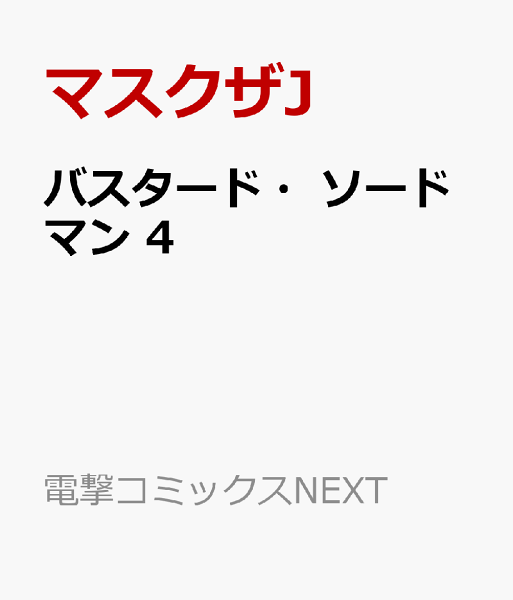
Bastard
Seon Jin is a sickly, partially disabled teenage boy in high school. He is bullied. He has no friends. He cannot fight back. He also has a secret: his charismatic, beloved, successful father is a serial killer — and Seon Jin has known this his entire life. He has survived by helping. Carnby Kim and Youngchan Hwang (Sweet Home creators) wrote one of the most acclaimed Korean horror webtoons of the 2010s. Free on Webtoons; Seven Seas now publishing the physical English release.
Horror / Romance
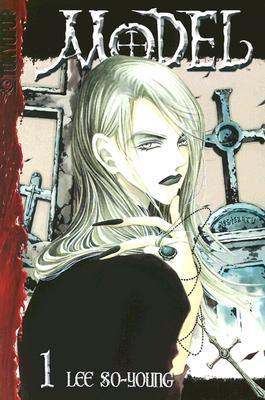
Model
A review of Model — the Korean manhwa gothic romance about a vampire who approaches a young female artist to paint his portrait, beginning a relationship that asks what an immortal creature actually wants from human connection.
Horror / Drama
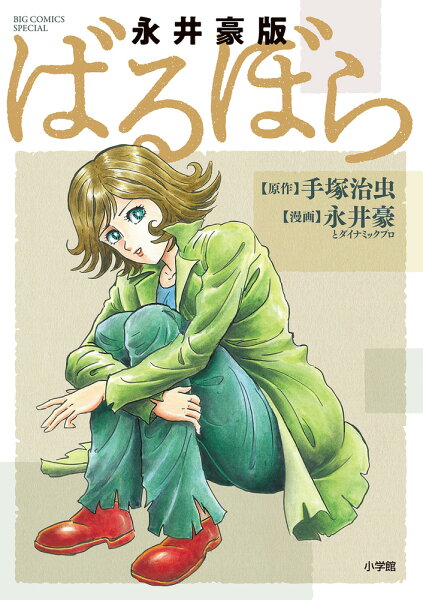
Barbara
Yu's review of Barbara — Osamu Tezuka's adult psychological horror about Yosuke Mikura, a celebrated novelist who takes in a filthy, drunken muse named Barbara and descends through black masses, perversion, and madness as he loses the ability to tell art from destruction.
Horror / Drama
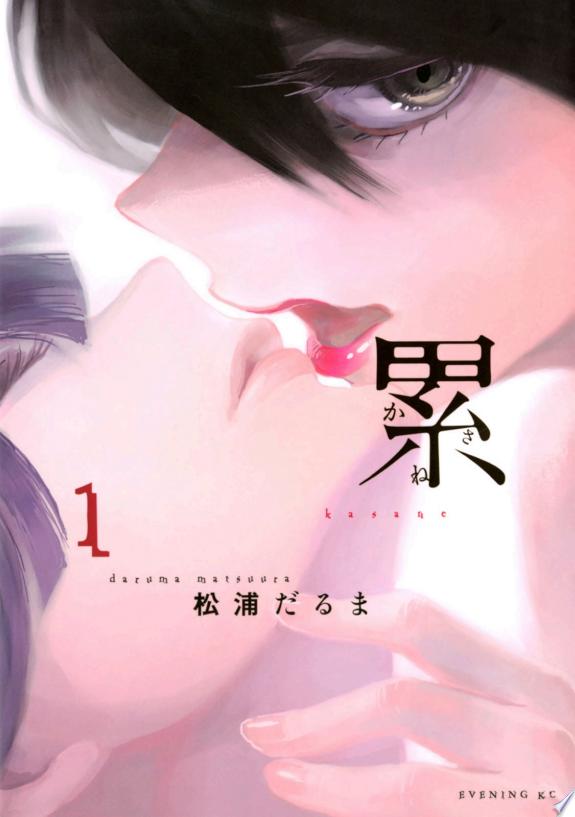
Kasane
Kasane follows a girl whose face society refuses but whose lipstick can swap her face with another's — a 14-volume Evening psychological drama where every act of becoming someone else is also an act of erasure.
Horror / Survival
The Drifting Classroom
Yu's review of The Drifting Classroom — a Japanese elementary school and all its students and teachers are suddenly transported to a desolate future Earth; the children must survive without adult leadership as food runs out and monsters appear.
Written by
Yu
Manga Enthusiast from Japan
I grew up in Japan and manga literally saved me during a tough time in elementary school. My English isn't perfect, but my love for manga is real — and I want to share it with you.
Disclosure: This post contains affiliate links. As an Amazon Associate, I earn from qualifying purchases at no extra cost to you.