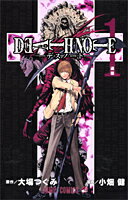
Death Note Review: The Notebook That Turned a Straight-A Student Into God
by Tsugumi Ohba / Takeshi Obata
Read the first volume. If it doesn't hook you, put it down. It'll hook you.
Buy Death Note on Amazon →*Affiliate link — I earn a small commission at no extra cost to you.
I read Death Note the wrong way the first time. I started Volume 1 on a weeknight, told myself I'd do two volumes, and then it was 4 a.m. and I had finished all twelve and my eyes hurt and I was just sitting there in the dark feeling like I'd argued with someone smarter than me and lost.
What got me wasn't the supernatural notebook. It was Light. I grew up wanting to be the hero — Naruto, Luffy, the kind of person who saves people. Light Yagami starts out looking like that kind of hero. Top of his class, handsome, sick of watching criminals walk free. And then he picks up a pen, and the manga spends twelve volumes quietly showing you how a person who is sure he's right becomes the worst thing in the story. That scared me more than any horror manga I've read.
Quick Take
- 12 volumes, complete — possibly the tightest, most perfectly paced thriller manga ever written
- A mental chess match between a teenage mass murderer and the world's greatest detective, with the planet as the prize
- Rated T (Teen) — almost no graphic violence, but the psychological content (a genius rationalizing murder until it's convincing) is the disturbing part
Story Overview
Light Yagami is a seventeen-year-old honor student who's bored out of his mind and disgusted by a world full of criminals who escape justice. Then a black notebook lands in the courtyard of his school. It belongs to Ryuk, a shinigami (death god) who dropped it into the human world out of sheer boredom.
The rules are simple: write a person's name while picturing their face, and they die of a heart attack within 40 seconds. You can specify other causes and conditions in the time given.
Light doesn't agonize over it for long. He starts killing criminals — first to test it, then on a schedule, then as a mission. The public notices a wave of criminal deaths and names the killer "Kira" (from the English word "killer"). Light's plan is enormous: cleanse the world of evil and rule the survivors as the god of a new, perfect world.
Enter L, the world's greatest detective — anonymous, eccentric, brilliant. L deduces almost immediately that Kira is in Japan, is probably a student, and has access to inside police information (Light's father is a senior detective). The first half of the series is L and Light circling each other, both pretending to cooperate while each tries to prove the other is the enemy.
The turning point is L's death. To get rid of L, Light manipulates Rem, a shinigami bound to the model Misa Amane, into writing L's real name. Rem does it to protect Misa — and dies herself as a consequence, because killing to extend a human's life costs a shinigami their own. L collapses into Light's arms mid-investigation. Light wins.
Then the story jumps forward. L's two successors from Wammy's House — Near and Mello — pick up the hunt. The finale is the Yellow Box warehouse. Light, certain he's already won, has his fanatical disciple Mikami ready to kill everyone in the room with the Death Note on cue. But Near has swapped the pages: the notebook Mikami uses is a fake. The plan collapses, Light is exposed in front of his own task force, and when he lunges to write one last name he's shot by Matsuda. He flees, bleeding and laughing and begging, and Ryuk — keeping a promise he made on page one — writes Light Yagami's name in his own notebook. Light dies on a staircase, alone.
Characters
Light Yagami — One of manga's great protagonists precisely because he is genuinely intelligent, genuinely convinced he's righteous, and genuinely monstrous in a way you only see fully in hindsight. He's not a villain who knows he's evil. He's a gifted kid who was handed absolute power and decided he deserved it. His arc is a slow, airtight slide from "I'll fix the world" to begging a death god to save his life.
L — The only mind that can keep pace with Light. He sits in a permanent crouch, eats absurd amounts of sugar, and deliberately makes himself hard to like — yet there's a buried decency in him that's the whole reason he's so dangerous to Kira. His relationship with Light, which becomes weirdly genuine even as each tries to destroy the other, is the emotional spine of the first half.
Ryuk — The shinigami who started it all. He has no stake in whether Light wins or loses; he's watching because humans are entertaining and the afterlife is dull. He told Light at the very beginning that he, Ryuk, would be the one to write Light's name when the time came — and the story pays that off exactly.
Misa Amane — A model and actress who gets her own Death Note and devotes herself completely to Light/Kira after he avenges her murdered parents. Her blind loyalty is a theme in itself, and it's her bond with the shinigami Rem that Light weaponizes to kill L.
Near & Mello — L's two heirs, raised at Wammy's House. Near is cold, methodical, almost a flat-affect echo of L; Mello is reckless and emotional and willing to work with the mafia. Together — and only together — they finish what L started.
What I Love About It
The thing I keep coming back to isn't a plot twist. It's how honest the manga is about its own argument.
Ohba could have made Light obviously crazy from page one and let us all feel safe. Instead he writes the case for Kira as well as anyone could — the failures of the justice system, the criminals who genuinely walk free, the seductive math of "a few thousand deaths for a peaceful world." And then he follows that argument all the way to its end without flinching, and shows you exactly what the person making it turns into. By the final chapter Light isn't a god. He's a sweating, shrieking man on a staircase asking a monster for mercy.
What floored me, reading it at 4 a.m., was that I couldn't fully reject Light's logic and that bothered me. I don't think I'd write a single name. I hope I wouldn't. But I understood the first step, and the manga is built so that you understand each next step too, one reasonable-sounding inch at a time, until you look up and you're somewhere horrifying. That's not a thriller trick. That's the whole point. The notebook never corrupted Light. Light was always the kind of person who'd use it — he just needed permission, and the notebook was permission.
Memorable Scene ⚠️ Spoiler Warning
L's death is the moment the whole series pivots on, and it's quieter than you'd expect for something so devastating.
For volume after volume, L has been certain — not suspicious, certain — that Light is Kira, and has said so to his face while they work side by side. Light has spent the same months smiling and pretending to help catch himself. Neither can prove it. It's a standoff between two people who fully understand each other and can't move.
Then Light closes the trap, not by outsmarting L directly but by maneuvering Rem into a corner: protect Misa, or lose her. Rem chooses Misa, writes L's real name, and pays with her own existence. In the headquarters, L is staring at his monitor when his eyes go wide. He slips out of his chair, and Light catches him. For a single panel L looks up into Light's face — and Light looks back down at him and grins. In that look L understands he was right the whole time and it didn't save him. Then his eyes close.
What guts me about it is that these two were, in their strange and hostile way, the only equal the other ever had. And the manga lets exactly one of them walk out of that room. Light got everything he wanted in that scene, and it's the precise moment the story turns him from "winning" to "doomed."
Pros & Cons
Pros
- Ruthless pacing — chapters end on revelations that make the next chapter mandatory
- The best two-genius cat-and-mouse story in manga, with both sides genuinely brilliant
- Takeshi Obata's art makes people sitting in rooms thinking feel as tense as any battle
- 12 volumes, complete, zero filler — it reads like a tightly plotted novel
Cons
- The post-L second half (Near and Mello) is widely seen as a step down from the L arc
- It can feel emotionally cold — the intellectual precision sometimes comes at a human cost
- The endgame's plan-within-a-plan logic is dense; you may need to reread late chapters
- The "is the second half as good as the first" debate is real — whether that ruins it for you depends entirely on what you came for.
Is Death Note Worth Reading?
Yes — and especially if you've only seen clips or memes. At 12 volumes it's one of the most complete, self-contained reads in all of manga: no filler, no endless arcs, just a single argument followed all the way to its conclusion. The first half (the L arc) is close to flawless thriller construction. The second half is merely very good, and the ending is the right one. If you want a story that makes you genuinely uneasy about your own sense of justice, start here.
Art Style
Takeshi Obata's art is the reason this works as a visual thriller. There are almost no action scenes — the "fights" are conversations — yet Obata stages them like a film. Close-ups on eyes, hands hovering over a pen, a half-eaten sugar cube, the exact tilt of Light's grin. His character designs are iconic: Light's polished confidence, L's permanent slouch and dark-ringed stare, Ryuk's grinning grotesque delight. He finds tension in stillness, which is exactly what a manga about two people out-thinking each other needs.
Similar Manga
| Title | Its Approach | How Death Note Differs |
|---|---|---|
| Monster (Naoki Urasawa) | A surgeon hunts a serial killer across Europe; slow-burn moral horror | Death Note is faster, tighter, and its "monster" is the protagonist |
| Liar Game | Pure game-theory mind battles between contestants | Death Note adds life-and-death stakes and a supernatural rulebook |
| The Promised Neverland | Children outwit a horrifying system using only intelligence | Death Note's genius is the antagonist you're partly rooting for |
Where to Buy
Read the first volume. If it doesn't hook you, put it down. It'll hook you.
The full 12-volume run is available from VIZ Media in single volumes, in the Black Edition (2-in-1) reprints, and as a single doorstop All-in-One omnibus if you'd rather own it in one book.
This post contains affiliate links. If you purchase through these links, I may earn a small commission at no extra cost to you. As an Amazon Associate, I earn from qualifying purchases.
*Affiliate link — I earn a small commission at no extra cost to you.
Reading Guides
More Manga You Might Like
Horror
MW
Yu's review of MW — Yuki Michio is a beautiful, charming, amoral man who survived exposure to a chemical weapon as a child; the event destroyed his conscience; he works toward mass destruction while maintaining the appearance of a successful society member; a priest who loves him tries to hold him back; Osamu Tezuka's 1976 thriller about a man without conscience.
Horror / Mystery
Higurashi When They Cry
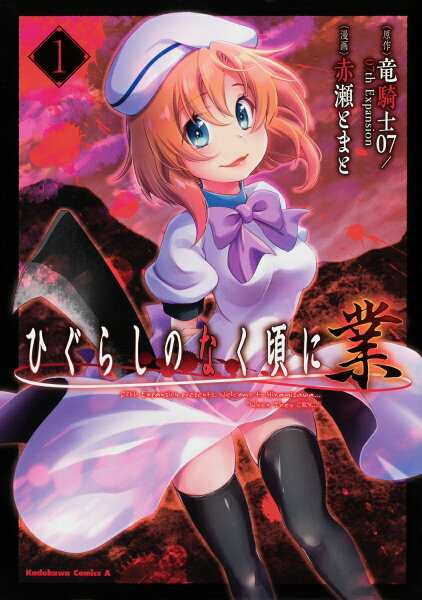
Yu's review of Higurashi When They Cry — Keiichi Maebara moves to the rural village of Hinamizawa and discovers that every year, during the village festival, someone dies and someone disappears; the story resets across multiple arcs, each showing different versions of the same events as Keiichi and his friends try to understand and survive what the village is doing to them.
Horror / Psychological Thriller
Monster
Yu's review of Monster — a brilliant surgeon saves a boy's life over a hospital director's, ruins his career, and ten years later discovers the boy he saved has become a serial killer who is now hunting him.
Horror / Thriller
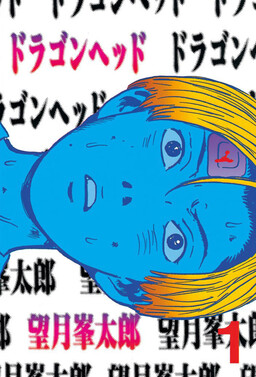
Dragon Head
Yu's review of Dragon Head — a school-trip train derails inside a mountain tunnel and three classmates crawl out into a Japan destroyed by an unexplained cataclysm. Minetaro Mochizuki's 10-volume survival horror about fear itself, the thing that breaks people faster than the disaster does.
Horror / Mystery
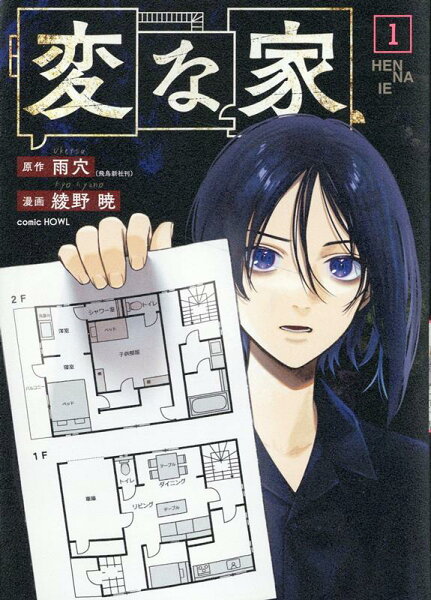
Strange House
A review of Takumi Yai's Strange House — 2 volumes from Manga Plus. A man asks an architectural friend to explain why a house's floor plan makes no sense; the answer is much darker than any real estate concern. Adapted from Yai's viral web novel. VIZ Media's English edition is complete.
Horror / Thriller
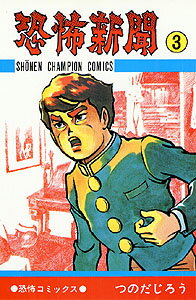
Kyofu Shinbun
Kyofu Shinbun follows Kichi Taira, a middle school student who begins receiving a supernatural newspaper delivered only to him — a newspaper that reports events before they happen, including deaths, and whose receipt shaves years from his own lifespan with each issue.
Written by
Yu
Manga Enthusiast from Japan
I grew up in Japan and manga literally saved me during a tough time in elementary school. My English isn't perfect, but my love for manga is real — and I want to share it with you.
Disclosure: This post contains affiliate links. As an Amazon Associate, I earn from qualifying purchases at no extra cost to you.