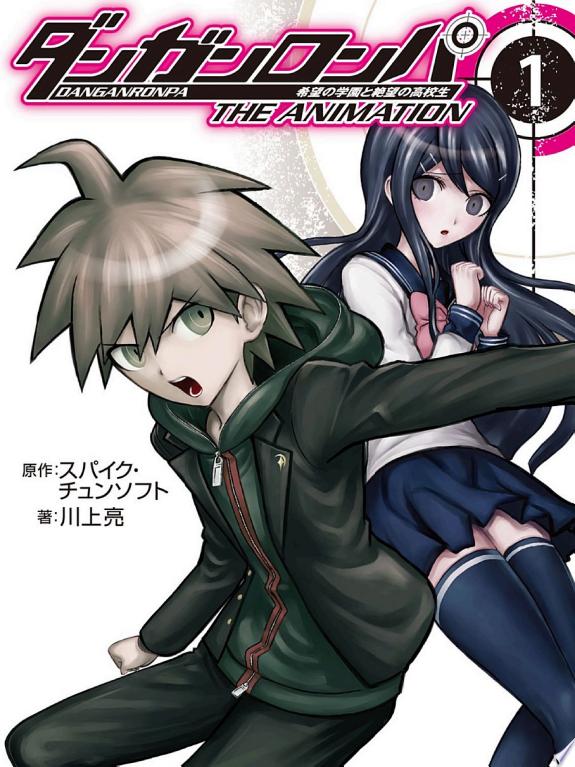
Danganronpa: The Animation Review: A Killing Game Where the Cutest Thing in the Room Wants You Dead
by Takashi Tsukimi (art), Spike Chunsoft / Kazutaka Kodaka (original story)
Read the first volume. If it doesn't hook you, put it down. It'll hook you.
Buy Danganronpa: The Animation on Amazon →*Affiliate link — I earn a small commission at no extra cost to you.
I played the first Danganronpa game late at night, alone, with the volume too low to wake my family. I remember the exact moment Monokuma popped up from behind the podium and announced the rules of the killing game — that cheerful little voice explaining that the only way out of school was to murder a classmate and get away with it. I sat there feeling sick and unable to stop. When I later found Takashi Tsukimi's manga adaptation, I wanted to know one thing: could a still page hold the same nausea the game gave me? Mostly, it can. This is not the game, and it is not trying to be. It's a fast, faithful retelling — and the bear is just as wrong on paper as he is on a screen.
This is a Mature-rated title. The executions are graphic and designed to disturb. Please read the Content Warnings before deciding.
Quick Take
- Takashi Tsukimi's 4-volume manga adaptation of the first game (by way of the anime) — a companion to the visual novel, not a replacement
- The class-trial scenes keep the frantic argue-with-evidence energy that makes Danganronpa what it is
- Age rating is M (Mature): multiple murders, graphic executions, and heavy despair themes
Content Warnings & Age Rating
Age Rating: M (Mature) Content Warnings: Multiple murders, graphic and theatrical executions, psychological manipulation, themes of despair and nihilism, violence
This earns its mature rating. The executions especially are built to be upsetting — they are colorful, cartoonish set-pieces that end in someone dying horribly, and the contrast is the point.
Story Overview
Hope's Peak Academy only admits students who are the absolute best at one specific thing — each carries an "Ultimate" title. Makoto Naegi is the exception: the Ultimate Lucky Student, chosen by random lottery. He walks through the front gate, blacks out, and wakes to find the windows bolted shut and the school sealed.
Then Monokuma arrives — a teddy bear split down the middle, one side a smiling white cub, the other a jagged red-eyed grin. He explains the rules in a sing-song voice. The students will live here forever. The only graduation is murder: kill a classmate without being caught. After a body is found, everyone gathers for a class trial, where the survivors argue over the evidence to name the culprit. Vote correctly and the killer alone is executed. Vote wrong and everyone else dies while the killer walks free.
The killing game begins almost immediately. Sayaka Maizono, the Ultimate Pop Sensation, latches onto Makoto for protection — and the early hope of trust curdles fast. The manga moves through the game's chain of murders and trials, each one peeling back another layer of who set this up and why. Beneath the bodies sits the franchise's real question: can hope survive in a place engineered specifically to manufacture despair? The manga adapts that arc across four volumes, faster and blunter than the 30-plus hour game, but with the spine intact.
Characters
Makoto Naegi — The Ultimate Lucky Student, and the reader's way in. His "talent" is deliberately empty, which lets him be ordinary in a room full of prodigies. His real trait is stubborn faith in other people, and the story keeps testing it: he watches classmates kill each other and still refuses to give up on the idea that hope means something. That refusal is the emotional engine of the whole thing.
Monokuma — The mastermind's mouthpiece and the best thing the franchise ever invented. He runs the killing game like a variety-show host, narrating murders, handing out motives, and staging executions like he's proud of them. His two-faced design — innocent and sadistic stitched together — makes him unsettling rather than just evil.
Sayaka Maizono — The Ultimate Pop Sensation, and the character whose arc detonates first. She presents as a kind, frightened idol clinging to Makoto. What she actually does in the first chapter reframes everything the story has said so far about trust, and her fall is the moment the manga stops being a setup and becomes a killing game for real.
Kyoko Kirigiri — The student who reveals almost nothing about herself and notices almost everything about everyone else. Her cold competence makes her the most magnetic survivor in the cast, and the way she steers the trials gives the investigations their backbone.
What I Love About It
Monokuma, honestly — and the way the manga lets his cheerfulness do the horror.
The thing that makes him work is the gap between tone and content. He explains the rules of a death game like he's reading the morning announcements. He hands a grieving group of teenagers a "motive" to murder each other and frames it as a fun challenge. In still panels this lands even harder than in animation, because Tsukimi can hold on a single image: the cub face beaming while he describes what happens to losers. The reader's eye sits in that contradiction with nowhere to go.
What I love is that the design itself carries the meaning. He's cute, he's a mascot, he's the face of the institution — and he runs entirely on coercion and violence. You don't need a monologue to feel that a smiling authority is the most dangerous kind. The manga doesn't lecture you about it; it just keeps drawing that grin next to a corpse and trusts you to do the math.
Memorable Scene ⚠️ Spoiler Warning
The first murder is the one that stays with me. Sayaka Maizono — the gentle idol who begged Makoto to protect her — is the one who plans to kill. She lures Leon Kuwata, the Ultimate Baseball Star, by leaving a note, then swaps her room with Makoto's and switches the door plates so that if anyone dies, the blame falls on Makoto. When Leon arrives, she attacks him with a kitchen knife.
It goes wrong. Leon grabs an ornamental sword Makoto had been storing and breaks her wrist, disarming her. She flees into the bathroom and locks it; he breaks in and kills her with her own knife. With her last strength she scrawls a dying message in her blood on the wall. The class trial pins it on Leon, and Monokuma executes him in a piece called "The 1,000 Blows" — a pitching machine cranked into overdrive firing baseballs at his body until there's almost nothing left.
What makes this scene land is the order of the reveals: first you grieve the sweet idol, then you learn she was the schemer, then you watch her killer — who never wanted to kill — get pulped by a children's-game machine. Nobody here is clean and nobody here deserved it, and the manga makes you hold all of that at once. That's the moment I understood the killing game was actually working.
Art Style
Tsukimi's linework is clean and reads fast, which suits a trial-heavy story that lives on faces reacting to evidence. The Monokuma design translates beautifully to print — the split innocent/sinister face is arguably more effective frozen than animated. Character designs stay faithful to Rui Komatsuzaki's instantly recognizable originals, and the executions are drawn with the same gleeful theatrical excess the franchise is known for.
Cultural Context
Danganronpa is built on a satire of Japanese exam-and-talent culture. Hope's Peak takes the idea that ability can be sorted, ranked, and institutionalized and pushes it to an absurd endpoint: a school that admits only the single best person at each skill, and labels each one "Ultimate." The horror grows out of that premise — meritocracy taken to its coldest conclusion, then locked in a building. Monokuma's pitch that hope is a comforting lie and despair is the honest truth reads as a recognizable strain of youth nihilism, sharpened by a culture with a particular relationship to academic pressure.
What English-Speaking Fans Say
Most English-speaking fans came to the series through the games or anime first, and the manga gets discussed as supplementary — a quick, faithful visual retelling rather than the definitive version. The most common note is about compression: characters who become beloved over a long game can die in the manga before they've had room to grow, so some deaths land softer than they do in the source. Fans who already love the franchise tend to enjoy it as a fast revisit; newcomers are usually steered toward the game first.
Pros & Cons
Pros
- Monokuma is a genuinely great, genuinely unsettling villain on the page
- Class-trial sequences keep the argue-with-evidence energy intact
- Short and complete at four volumes — easy to finish quickly
- Faithful to Komatsuzaki's designs and the franchise's tone
Cons
- Heavily compressed from a 30-plus hour game; characterization gets thinner
- Some characters die before the manga develops them enough for it to hurt
- The mysteries have less room to breathe than the game's investigations
- Best appreciated alongside the game rather than as a first encounter
- This won't work for everyone — if you want a self-contained mystery rather than a companion piece, the compression will frustrate you.
Is Danganronpa: The Animation Worth Reading?
For franchise fans, yes — it's a fast, stylish, faithful revisit that nails the tone and the executions. For total newcomers, the game or anime is probably the better entry point, but these four volumes get the theatrical dread right and read in an afternoon.
Where to Buy
Read the first volume. If it doesn't hook you, put it down. It'll hook you.
This post contains affiliate links. If you purchase through these links, I may earn a small commission at no extra cost to you. As an Amazon Associate, I earn from qualifying purchases.
*Affiliate link — I earn a small commission at no extra cost to you.
Reading Guides
More Manga You Might Like
Horror / Mystery
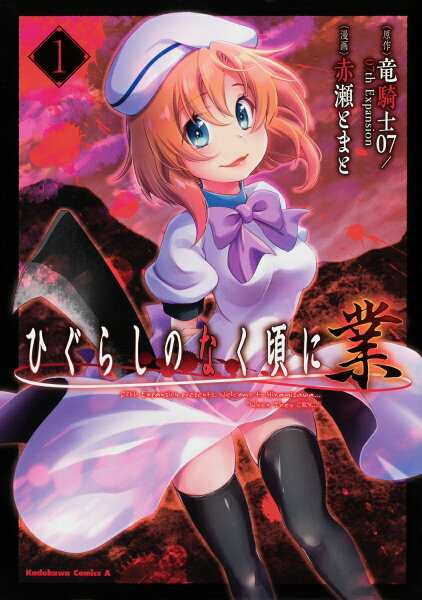
Higurashi When They Cry
Yu's review of Higurashi When They Cry — Keiichi Maebara moves to the rural village of Hinamizawa and discovers that every year, during the village festival, someone dies and someone disappears; the story resets across multiple arcs, each showing different versions of the same events as Keiichi and his friends try to understand and survive what the village is doing to them.
Horror / Mystery
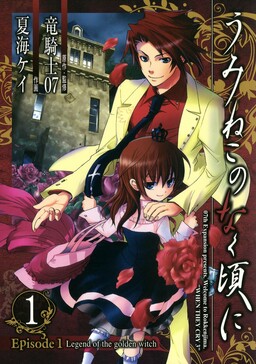
Umineko: When They Cry
On the private island of Rokkenjima in 1986, the Ushiromiya family gathers for an annual meeting. A typhoon traps them. The murders begin. Then they repeat. A golden witch named Beatrice claims responsibility — and the manga spends 53 volumes across 8 Episodes arguing about whether magic exists. Adapted from Ryukishi07's visual novel.
Horror / Psychological
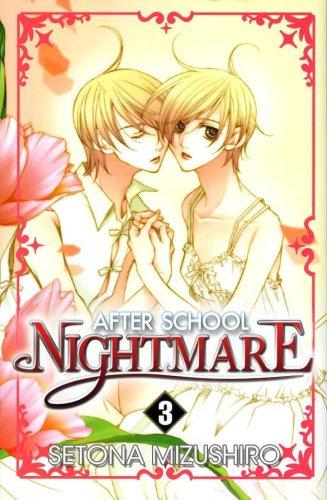
After School Nightmare
Yu's review of After School Nightmare — a psychological horror manga where students enter a shared nightmare to graduate, and the monsters they fight are made of their own deepest secrets. Mashiro Ichijo, raised as a boy but physically both, is forced to confront what he actually is.
Horror / Mystery
Another
Yu's review of Another — a horror mystery adapted from Yukito Ayatsuji's novel, about a transfer student who joins a class haunted by a decades-old curse: every year an extra person who is secretly already dead joins Class 3-3, and people start dying gruesomely.
Horror / Thriller
Secret
Yu's review of Secret — six students survive a bus accident that killed their classmates; now they're being killed one by one, and the killer is one of the survivors.
Horror
Angels of Death
Yu's review of Angels of Death — a horror manga adapted from the RPG Maker game, in which a girl with no memory and a scythe-wielding serial killer make a deal to escape a building of murderers: he'll get her out, and then she'll let him kill her.
Written by
Yu
Manga Enthusiast from Japan
I grew up in Japan and manga literally saved me during a tough time in elementary school. My English isn't perfect, but my love for manga is real — and I want to share it with you.
Disclosure: This post contains affiliate links. As an Amazon Associate, I earn from qualifying purchases at no extra cost to you.