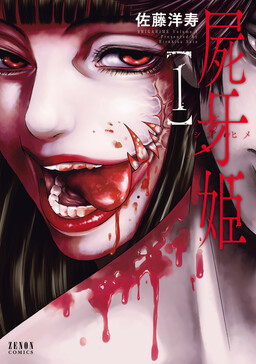
Corpse Princess Review: A Dead Girl Kills 108 Corpses for a Heaven That Was Never Promised
by Yoshiichi Akahito
Read the first volume. If it doesn't hook you, put it down. It'll hook you.
Buy Corpse Princess on Amazon →*Affiliate link — I earn a small commission at no extra cost to you.
I read a lot of horror when I was younger because it was the only genre that didn't pretend the world was kind. School had already taught me that part. So when I picked up Corpse Princess, I expected another gun-and-gore series — a cute dead girl shooting monsters, fan service, nothing underneath. What I got instead was a story about a girl who keeps killing toward a reward that, it slowly turns out, was never going to be given to her. That hit me harder than I wanted it to.
This is Yoshiichi Akahito's 23-volume series, and it earned its length. It looks like a monster-of-the-week action manga and is, for a while. But the longer Makina fights, the more the whole machine she's trapped inside reveals itself — and it's far uglier than the monsters she shoots.
Quick Take
- A horror-action series with a real emotional engine: a murdered girl earning her way to heaven by killing 108 other corpses, partnered with a living boy whose connection to her is stranger than either of them knows
- The Buddhist framework — shikabane as corpses bound by regret, the Kōgon Sect that contracts them, the 108-kill rule — isn't decoration; it's load-bearing, and the series eventually turns it inside out
- 23 volumes, complete in English (digital) via Yen Press; rated T+ (Older Teen) for graphic gun violence, body horror, and child death
Story Overview
Makina Hoshimura was murdered along with her entire family. She came back as a shikabane hime — a "Corpse Princess," a female corpse contracted to a monk of the Kōgon Sect, armed with dual submachine guns and turned loose to hunt the rogue undead. The deal is simple on paper: destroy 108 shikabane and you earn passage to heaven. Underneath that, Makina has her own reason to keep pulling the trigger — the Seven Stars (Shichisei), the seven constellation-marked shikabane who slaughtered her family.
Her first contracted monk is Keisei Tagami, who took her contract specifically to help her hunt the Seven Stars. The early arc follows the standard rhythm: a new shikabane, a new fight, Makina drawing power from Keisei's "Rune" to regenerate mid-battle. Then Keisei dies — mortally wounded, he transfers his contract to Ouri Kagami, the boy he raised, to keep Makina from going rogue.
That transfer is the hinge of the whole series. Makina doesn't want Ouri. She rejects him, even tries to kill him, before grudgingly accepting him as her monk. And as the two of them push deeper toward the Seven Stars and their silver-haired leader Hokuto, two truths surface that recontextualize everything: Ouri is not entirely human, and the heaven Makina is killing toward was never real.
Characters
Makina Hoshimura — A fifteen-year-old corpse who fights with two submachine guns and a grief she can't put down. She is a weapon and a person at once, and the series is honest that being undead has hollowed parts of her out — she can't feel what the living feel, and she knows it. Her arc is the slow, reluctant admission that revenge isn't the only thing keeping her here. Her refusal, then acceptance, of Ouri is the spine of that change.
Ouri Kagami — Raised from childhood by Keisei at the Dai-Rin orphanage, Ouri is the ordinary boy dropped into an unforgiving organization. The reveal is that Keisei was originally sent to kill Ouri's mother — a shikabane — and instead took in the child she left behind. Ouri is, himself, a child of a corpse. His strange "luck" in battle and the black cat that has followed him his whole life are tied to that origin in a way that turns his entire life into something he never chose.
Keisei Tagami — Ouri's adoptive older brother and Makina's first monk. He dies relatively early, but his death isn't a throwaway shock — it's the act that fuses Makina and Ouri together against their will, and his choices ripple through the rest of the series.
Hokuto / the Seven Stars — The antagonists who killed Makina's family. Hokuto, their silver-haired leader, is the series' most quietly devastating figure: raised from birth purely to be sacrificed, she has never known grief, pain, or happiness. She is the dark mirror of every Corpse Princess in the story.
What I Love About It
What I love is that the 108 rule turns out to be a lie. For volumes, you read Corpse Princess as a kill-counter story — Makina inching toward heaven one corpse at a time, the number ticking up like a video game. The series lets you settle into that comfort. Then it pulls the floor out: completing the 108 kills doesn't grant ascension at all. It strips the hime of her mind and turns her into a mindless engine of destruction. The reward was always bait.
That single twist reframes everything underneath it. The Kōgon Sect isn't a benevolent church saving lost souls; it's running a system that consumes the very girls it claims to be redeeming. Makina has been working, fight after fight, toward her own erasure. And what makes it land is that it reframes the relationship too — once heaven is off the table, the only thing Makina is actually moving toward is Ouri, and the bond she didn't ask for. The series spent its whole first half making me think the kill count was the point. It wasn't. The person standing next to her was.
Memorable Scene ⚠️ Spoiler Warning
The reveal of Ouri's origin is the scene that stays with me. The black cat that's trailed him his entire life is shown to be made of eleven children — kids his shikabane mother kidnapped in her grief, in her need to hold a child after death. Ouri isn't the cat's owner; he's one more victim caught in his mother's unresolved attachment, the same kind of attachment that makes any corpse rise. The children ultimately transfer their power to him and find peace.
It lands because it collapses the line the series spent twenty volumes drawing. Makina is a corpse; Ouri is the living boy who tethers her to the world. Then you learn Ouri was born out of the exact same hunger that creates shikabane — a dead mother who couldn't let go. The two of them aren't opposites. They're the same wound, one walking on each side of death. After that, the final confrontation with Hokuto — who embraces Makina even as Makina delivers the killing blow — reads less like a victory than a mercy passed between two girls made into weapons by the same cruelty.
Pros & Cons
Pros
- The 108-kill premise isn't a gimmick — the reveal that it's a trap recontextualizes the entire series
- Makina is a genuinely complex protagonist, not the gun-girl archetype the cover suggests
- The Buddhist worldbuilding (shikabane as regret-bound corpses, the Kōgon Sect, Hokuto's tragedy) is integrated, not decorative
- A complete 23-volume arc that actually pays off its setup
Cons
- The middle volumes lean hard on monster-of-the-chapter structure before the bigger picture arrives
- The Buddhist context rewards some cultural familiarity to fully land
- It's a slow burn that demands patience before the floor drops out — that's either a flaw or the entire point depending on you
Is Corpse Princess Worth Reading?
Yes — if you can sit through a monster-of-the-week first act to reach a series that quietly dismantles its own premise. It looks like disposable horror-action and turns out to be a story about two people who are the same wound on opposite sides of death, fighting toward a heaven that was bait. Patient readers get rewarded; readers who bounce off slow openings may not make it to the payoff.
Similar Manga
| Title | Its Approach | How Corpse Princess Differs |
|---|---|---|
| Bleach | Soul-cleansing combat with an afterlife bureaucracy | Corpse Princess is bleaker and smaller in scale, with the "system" exposed as predatory rather than heroic |
| Hellsing | Stylish undead gun-violence and inhuman protagonists | Corpse Princess centers grief and the cost of being undead, not power fantasy |
| Noragami | A god/human partnership across the line of death | Corpse Princess makes the corpse the lead and questions whether salvation exists at all |
Official English Translation Status
Yen Press licensed all 23 volumes and released them in English as digital editions (2015–2019). The series is complete in English but is digital-only — there's no print run from Yen Press, so you'll be reading it through e-book platforms.
Where to Buy
Read the first volume. If it doesn't hook you, put it down. It'll hook you.
This post contains affiliate links. If you purchase through these links, I may earn a small commission at no extra cost to you. As an Amazon Associate, I earn from qualifying purchases.
*Affiliate link — I earn a small commission at no extra cost to you.
Reading Guides
More Manga You Might Like
Horror / Action
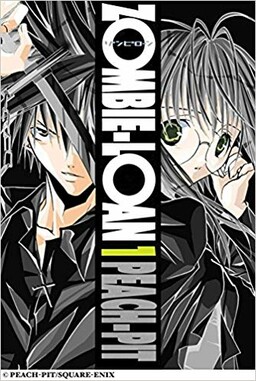
Zombie-Loan
Yu's review of Zombie-Loan — Michiru Kita has the shinigami eyes ability to see death rings around people's necks; two boys at her school, Chika Akatsuki and Shito Tachibana, have black rings indicating they should already be dead; they are alive because they made a contract with a Zombie-Loan office, exchanging their continued existence for debt repayment through zombie hunting.
Horror / Action
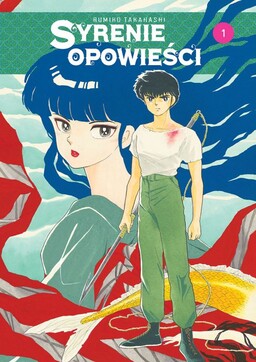
Mermaid Saga
Yu's review of Mermaid Saga — Yuta ate mermaid flesh 500 years ago and became immortal; now he searches for a way to die; each arc is a horror story about what immortality actually looks like when the people around you keep dying and the mermaid flesh keeps producing monsters; Rumiko Takahashi's horror masterwork.
Horror / Mystery
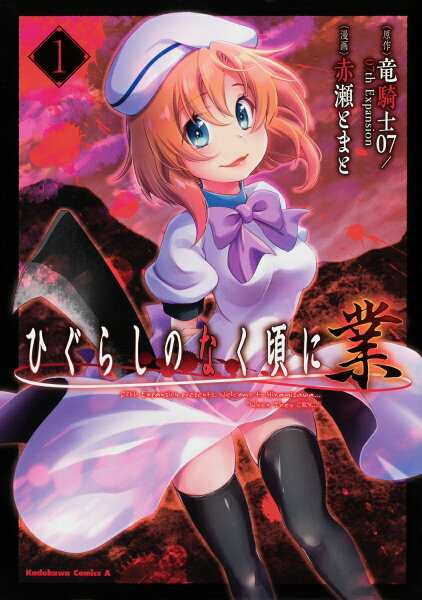
Higurashi When They Cry
Yu's review of Higurashi When They Cry — Keiichi Maebara moves to the rural village of Hinamizawa and discovers that every year, during the village festival, someone dies and someone disappears; the story resets across multiple arcs, each showing different versions of the same events as Keiichi and his friends try to understand and survive what the village is doing to them.
Horror / Action
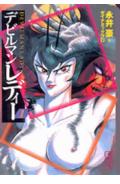
Devilman Lady
Devilman's apocalypse retold through Jun Fudo, a P.E. teacher who turns demon — Go Nagai going even darker than the original.
Horror / Action
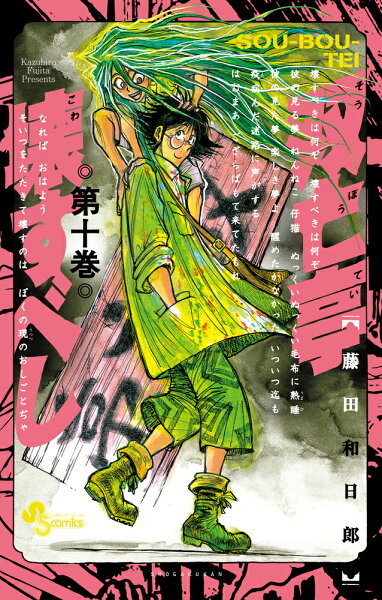
Souboutei Kowasu Beshi
Ushio and Tora's creator returns with his bleakest, most ambitious horror — a haunted mansion that swallows everyone who enters.
Horror / Supernatural
Shiki
Yu's review of Shiki — people begin dying mysteriously in a rural Japanese village during summer, and the doctors, priests, and survivors must confront what is happening and what they are willing to do in response.
Written by
Yu
Manga Enthusiast from Japan
I grew up in Japan and manga literally saved me during a tough time in elementary school. My English isn't perfect, but my love for manga is real — and I want to share it with you.
Disclosure: This post contains affiliate links. As an Amazon Associate, I earn from qualifying purchases at no extra cost to you.