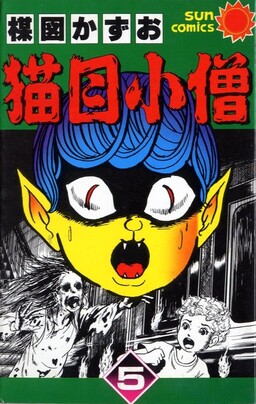
Cat-Eyed Boy Review: The Half-Monster Who Lives in Your Attic and Can't Save You
by Kazuo Umezu
Read the first volume. If it doesn't hook you, put it down. It'll hook you.
Buy Cat-Eyed Boy on Amazon →*Affiliate link — I earn a small commission at no extra cost to you.
When I was small and afraid of the dark, the scariest thing wasn't the monster under the bed. It was the idea that something was up there — in the ceiling, in the gap between the roof and the rooms where we lived — watching me without my knowing. My grandmother's old house in the countryside had a real attic, low and dusty, and I refused to sleep in the room beneath it. I never told anyone why.
Years later I read Kazuo Umezu's Cat-Eyed Boy, and the thing that lives in those attics turned out not to be a demon. It's a little boy with the eyes of a cat, half-human and half-monster, rejected by both worlds, who hides in the eaves of houses where he is not wanted. And the horror of him is not that he hurts you. It's that he watches what hurts you — and most of the time, he can't stop it.
This is old horror, drawn in the 1960s and 70s, and it reads like a nightmare you half-remember. I want to tell you why it still gets to me.
Quick Take
- Kazuo Umezu's anthology horror starring the Cat-Eyed Boy — the abandoned son of a nekomata cat-monster, born too human for the monster world and too monstrous for ours, who drifts from attic to attic and witnesses (and sometimes intervenes in) the horrors that befall the families below.
- Pure dream-logic horror: stories follow the surreal momentum of a nightmare rather than tidy cause-and-effect, blending supernatural threat, body horror, and human cruelty about appearance and outcasts.
- VIZ Media collected the complete series in two omnibus volumes (Viz Signature, 2008) and later reissued it as a two-volume Perfect Edition. The M rating is earned — this is genuinely disturbing horror.
Story Overview
The Cat-Eyed Boy is not a hero with a quest. He's a premise. Born to a nekomata (a two-tailed cat monster), he came out far more humanoid than his parents; his mother died bringing him into the world, and his father, repulsed, abandoned him at a shrine. So he wanders — town to town, house to house — sheltering in attics and crawlspaces, living off the edges of human lives. Humans who glimpse him recoil; monsters reject him as a half-breed. He belongs nowhere.
Because the work is an anthology, that setup lets Umezu run through wildly different horror registers while the Cat-Eyed Boy supplies continuity as host and observer. The first volume's stories run the gamut: "The Immortal Man," about a wealthy boy named Takeo and an ugly, regenerating stranger who claims to be his real father and hands him a severed forearm; "The Ugly Demon," about a disfigured man who plots to steal another body to revenge himself on a woman who rejected him as a teenager; "The Tsunami Summoners"; "The One-Legged Monster of Oudai"; and the sprawling, 200-page "The Band of One Hundred Monsters."
What makes the whole thing cohere is the Cat-Eyed Boy's position: he is morally gray, prideful about his monster nature, sometimes sympathetic to humans and sometimes siding with the supernatural against people he despises. He'll appear when terror manifests, watch it climb toward its worst, and only intervene when he chooses to — which is not always, and not always in time.
Characters
The Cat-Eyed Boy — His arc is the absence of an arc. He doesn't grow into a hero or earn acceptance; he stays a liminal thing, walking into one cursed household after another, carrying the same loneliness from story to story. What he has instead of growth is position — born of a monster, shaped like a child, belonging to neither side. That in-betweenness is the engine: he can sympathize with the humans he watches without ever being one of them, which is exactly why his witness feels so cold and so honest.
The Band of One Hundred Monsters — The standout antagonists of volume 1, and the most thematically pointed thing in the book. They look like demons, but they're not monsters at all — they're humans born hideously deformed, exiled by ordinary society for their faces. Their plan is to mutilate the "beautiful" people they hate so the outside finally matches what the Band believes is the ugliness within. They invite the Cat-Eyed Boy to join them. He refuses — because he's a real monster, and feels no kinship with humans no matter how monstrous they look. It's the cruelest joke in the book: even among outcasts, he's an outcast.
The Immortal Man — A regenerating stranger who insinuates himself into Takeo's wealthy family, claiming to be the boy's biological father. Umezu deliberately keeps it ambiguous — it's never made clear that the immortal man is the villain, or whose version of events to believe — and that uncertainty is the horror.
What I Love About It
I love that the Cat-Eyed Boy is so often powerless. The lazy version of this character would be a tidy supernatural avenger who shows up, dispenses justice, and leaves. Umezu refuses that. In story after story, the Cat-Eyed Boy watches a horror build and either chooses not to act or simply can't — and the chapter ends with damage already done. A narrator who fails to save is far more frightening to me than one who always wins, because it admits the thing children's horror usually hides: that being seen is not the same as being protected. That was the exact fear of my grandmother's attic — something up there, aware of me, that would do nothing.
And I love what "The Band of One Hundred Monsters" does with ugliness. Umezu — who built a career drawing grotesque faces — puts a gang of deformed humans on the page whose entire grievance is being drawn as monsters. They even target a manga artist for depicting them cruelly. It's Umezu interrogating his own genre from inside it: who gets called a monster, and who decides? The Cat-Eyed Boy rejecting them — "you're only humans" — lands like a slap, because the one being who should understand them refuses to. That tension, between sympathy and revulsion, is the whole book in a single beat.
Memorable Scene ⚠️ Spoiler Warning
The image that stuck in my skull is from "The Meatball Monster." A creature made of raw ground meat — limbless, wet, pushing itself forward on a prehensile tongue, sprouting fleshy meat-tentacles — haunts a family. It's pure body horror, surreal and physically revolting in the way only Umezu's brush can be, less a "scary monster design" than a thing your stomach reacts to before your brain does. Reviewers reach for surreal horror cinema to describe it, and that's right: it doesn't behave by monster-movie logic, it behaves by nightmare logic, oozing in from a direction the story never quite justifies.
What makes it linger isn't gore for its own sake. It's how Umezu drops something this grotesque into an ordinary domestic setting — a normal family, a normal house — so the violation feels like your own home turning against you. The Cat-Eyed Boy hovers at the edge of it, watching, the way he always does. You finish the chapter and the picture stays, dripping, in the back of your mind for days.
Pros & Cons
Pros
- One of manga horror's strangest, most distinctive narrators — a half-monster outcast who watches instead of saves
- Genuine, dream-logic horror that still disturbs decades later; the body horror in particular hits hard
- "The Band of One Hundred Monsters" turns the anthology into a real meditation on ugliness, outcasts, and who gets called a monster
- Umezu's art is at full, assured power — the faces, the creature designs, the domestic dread
Cons
- The stream-of-consciousness, dream-logic plotting means stories ramble and don't always resolve cleanly
- Anthology structure makes for uneven quality — some tales are far stronger than others
- The Cat-Eyed Boy himself doesn't develop; he's a constant, not a journey
- This is 1960s–70s horror with vintage pacing and surreal logic — that's either the appeal or a dealbreaker depending entirely on you
Is Cat-Eyed Boy Worth Reading?
Yes — if you want foundational Japanese horror manga with one of the medium's weirdest narrators, and you can meet old, dream-logic storytelling on its own terms. You're reading it for atmosphere, grotesque imagery, and Umezu's strange moral imagination, not for clean plotting. If you need every story to land and resolve, the rambling anthology format will frustrate you. For everyone else, it's an essential entry point into Umezu's horror.
Similar Manga
| Title | Its Approach | How Cat-Eyed Boy Differs |
|---|---|---|
| Orochi | Umezu's other anthology horror, narrated by a near-immortal observer who drifts into human lives | Cat-Eyed Boy's narrator is a rejected half-monster, more grotesque and morally gray than Orochi's cooler watcher |
| The Drifting Classroom | Umezu's long-form survival horror with a single sustained nightmare | Cat-Eyed Boy is episodic dream-logic dread rather than one escalating story |
| Uzumaki | Junji Ito's interconnected body-horror anthology built around a single curse | Cat-Eyed Boy is older, looser, and unified by a character rather than a concept |
Official English Translation Status
Complete. VIZ Media released the full series in two omnibus volumes under its Viz Signature imprint in June 2008, and later reissued it as a two-volume Perfect Edition. Either way, you can read the whole thing in English.
Format Comparison
| Format | Notes |
|---|---|
| Perfect Edition (2 vols) | The newer reissue; the version to seek out if you want it in print |
| Viz Signature Omnibus (2 vols) | The original 2008 English release; complete |
| Digital | Available via VIZ |
Where to Buy
Read the first volume. If it doesn't hook you, put it down. It'll hook you.
This post contains affiliate links. If you purchase through these links, I may earn a small commission at no extra cost to you. As an Amazon Associate, I earn from qualifying purchases.
*Affiliate link — I earn a small commission at no extra cost to you.
Reading Guides
More Manga You Might Like
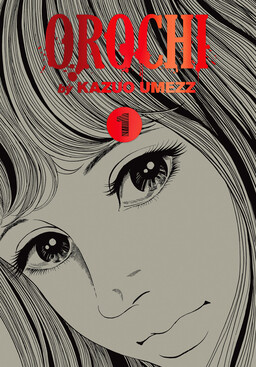
Horror
Orochi: Blood
Yu's review of Orochi — a beautiful immortal girl named Orochi drifts through human lives, observing and sometimes participating in the horror that emerges when human desires and jealousies reach extremes; Kazuo Umezu's anthology horror with a supernatural narrator defined by beauty and detachment.
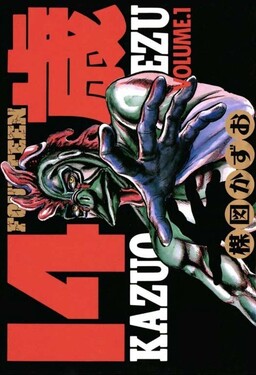
Horror / Sci-Fi
Fourteen
Yu's review of Fourteen — a mutant chicken embryo is born with a human face in a polluted food facility and grows into Chicken George, a being who has experienced human horror and decided to respond to environmental and social catastrophe; Umezu's most ambitious and strange work.
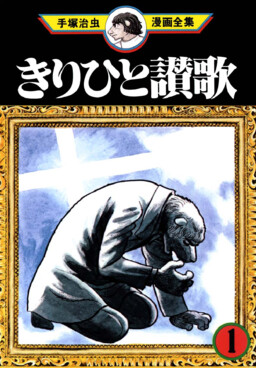
Horror
Ode to Kirihito
Yu's review of Ode to Kirihito — Dr. Osanai Kirihito investigates Monmow disease, a mysterious illness that transforms its victims into dog-like creatures; the medical establishment suppresses his findings; Osamu Tezuka's 1970 medical horror manga about a doctor reduced to subhuman status while searching for a scientific truth powerful people want hidden.
Horror / Literary
No Longer Human
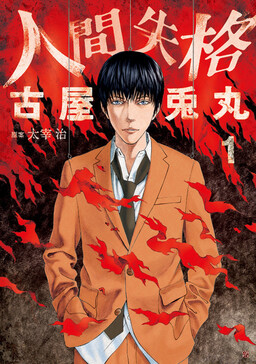
Yu's review of No Longer Human manga adaptation — Usamaru Furuya adapts Osamu Dazai's 1948 autobiographical novel into a contemporary setting; the protagonist Yozo Oba is a young man who cannot believe himself to be a human being in the same sense as the people around him; the manga follows his descent through addiction, relationships, and the inability to exist in the world.

Horror
MW
Yu's review of MW — Yuki Michio is a beautiful, charming, amoral man who survived exposure to a chemical weapon as a child; the event destroyed his conscience; he works toward mass destruction while maintaining the appearance of a successful society member; a priest who loves him tries to hold him back; Osamu Tezuka's 1976 thriller about a man without conscience.

Horror / Historical
Innocent
Yu's review of Innocent — Charles-Henri Sanson is the son of France's royal executioner, raised with privilege and the assumption that he will inherit his father's role; his sensitive nature and artistic gifts make him unfit for execution, yet circumstances force him to become one of France's most famous executioners, operating during the period leading to the French Revolution.
Written by
Yu
Manga Enthusiast from Japan
I grew up in Japan and manga literally saved me during a tough time in elementary school. My English isn't perfect, but my love for manga is real — and I want to share it with you.
Disclosure: This post contains affiliate links. As an Amazon Associate, I earn from qualifying purchases at no extra cost to you.