Black Rose Alice Review: A Vampire Saves Her Lover If She Agrees to Become a Breeding Ground
by Setona Mizushiro
Read the first volume. If it doesn't hook you, put it down. It'll hook you.
Buy Black Rose Alice on Amazon →*Affiliate link — I earn a small commission at no extra cost to you.
I read a lot of vampire romance as a teenager, and most of it lied to me in the same way. It told me being chosen by a vampire was a gift — eternal, beautiful, a little dangerous in the way that makes your stomach flip. None of it ever sat with the part where you stop being a person and become a thing that someone needs. Black Rose Alice is the one that finally did. I picked up the first VIZ volume because Setona Mizushiro wrote After School Nightmare, which gutted me, and I wanted to see what she did with vampires. What she did was refuse to make any of it comfortable.
The premise is the kind of thing that sounds lurid until you actually read it: a vampire saves your dying boyfriend in exchange for your soul, then puts that soul into a corpse he's kept for a hundred years, and tells you your job now is to pick one of his men to mate with and bear the next generation. The man you pick will die. That's not a twist — that's the rule. And the manga makes you feel the weight of it.
Quick Take
- A gothic vampire romance that treats its premise as actual horror — the deal Azusa accepts is monstrous, and Mizushiro never pretends otherwise
- Two timelines: 1908 Vienna, where the tenor Dimitri becomes a vampire, and modern Tokyo, where a schoolteacher named Azusa is reborn in a dead girl's body as "Alice"
- 6 volumes, complete in English from VIZ Media; rated M (Mature) for suicide, attempted assault, death, and dark romantic content
Story Overview
Vienna, 1908. Dimitri is a tenor — born to an aristocrat and a Romani woman, raised in servitude, gifted with a voice people fall in love with. He loves Agnieszka, a girl betrothed to another man. Shortly after her sixteenth birthday, Dimitri is killed by a horse in the street and then simply wakes up, unharmed. That night he performs, and afterward everyone who heard him sing kills themselves. A man named Maximilian finds him and explains the truth: Dimitri has taken a vampire master's seed. His voice now compels people. And vampires, Maximilian tells him, die after they breed — their bodies dissolve into the seeds of the vampires who come next.
It goes worse from there. Dimitri kills Agnieszka's betrothed with his voice, then, sick with guilt, tries to force himself on her hoping she'll be the death of him — and she stabs herself instead. Maximilian preserves her body. Dimitri carries that for a century.
Tokyo, 2008. Azusa Kikukawa is a high school teacher in a relationship with her student, Kouya. They're in a car accident, both dying. Dimitri appears in her dying mind with a bargain: he'll save Kouya if Azusa surrenders her soul. She agrees — and wakes in Agnieszka's preserved sixteen-year-old body, a grown woman's mind in a dead girl's form. Dimitri renames her Alice. Then he tells her the actual task: choose one of the vampires living in his house to be her mate. Knowing he will die for it.
Characters
Azusa / Alice — A 28-year-old schoolteacher dropped into a sixteen-year-old corpse and a role she never agreed to. Her arc isn't "learns to love being a vampire." It's the slow, ugly work of existing inside someone else's body, mourning the life she gave up, and refusing — for a long time — to choose anyone, because choosing means killing them. The grief is the throughline.
Dimitri Lewandowski — The tenor from 1908, now a century into guilt. He's the one who made the deal, who put Azusa into the body of the girl he failed, who set the whole machine in motion. His love for Alice is the most morally compromised thing in the book, because it can't be separated from what he did to create her.
Leo (Taichirou Kusonose) — A model, and the most aggressive of the candidates pursuing Alice. He carries Maximilian's seed. He's the one who pushes hardest, and his arc closes on a quiet, devastating choice: before he dies, he sleeps with a dying woman named Akari, prolonging her life so she can finish writing her book. It reframes him entirely.
Kai and Reiji — Twin brothers tangled in a shared past. Reiji can't remember it; Kai carries the guilt of it. Kai is in love with Alice but deliberately steers her toward his brother, and the truth of what happened between them and Reiji's girlfriend Akane — a confession, a storm, a gunshot — is one of the manga's darkest reveals.
What I Love About It
It's that Mizushiro never lets the romance launder the horror. The core mechanic — a woman picks a man, the man dies so a vampire can be born — is exactly as grim as it sounds, and the manga keeps making you look at it. Alice's refusal to choose isn't indecision played for harem comedy. It's a person who understands that every option in front of her ends in someone's death, and who won't pretend otherwise. The series treats her hesitation as the only sane response.
What got me is Leo's ending. He spends the book as the pushy one, the model, the guy you read as the obvious romantic rival. And then his death isn't about Alice at all — he chooses to spend it on Akari, a dying woman, buying her enough time to finish her book. A manga this committed to its bleak premise could have made his death a tragic beat in Alice's love story. Instead it gave him a death that was about someone else's unfinished work. That's the moment I understood Mizushiro wasn't building a reverse harem. She was building a story about what people do with the little time they have left.
Memorable Scene ⚠️ Spoiler Warning
The 1908 performance. Dimitri, freshly turned and not yet understanding what he is, sings the way he always has. And afterward, every single person who heard him — his lover, the theatre people, the audience — takes their own life. It's drawn as horror, not spectacle: the dawning realization that his gift, the one beautiful thing he had, is now a weapon that kills everyone who loves the sound of it. Maximilian stepping out of that wreckage to explain what Dimitri has become is the hinge the entire series swings on. Everything Dimitri does to Azusa a hundred years later — the deal, the body, the renaming — traces straight back to that night, when his voice emptied a room. It's the scene that tells you this is a horror manga wearing a romance's clothes.
Pros & Cons
Pros
- Treats its vampire premise as genuine horror instead of softening it into fantasy
- Alice's grief and refusal are written with real seriousness
- Mizushiro's art is gorgeous, especially the 1908 Vienna sequences
- Complete in 6 volumes in English — a clean, finishable arc
Cons
- The M-rated content is real: suicide, attempted assault, and a deeply uncomfortable reproductive premise
- Six volumes can feel tight for the world it builds (a sequel, D.C. al fine, later continued the story in Japan)
- The "choose a mate" structure may read as off-putting if you can't get past the premise — that's either a dealbreaker or the whole point, depending on you
Is Black Rose Alice Worth Reading?
If you want vampire romance that actually reckons with how horrifying its own premise is — a woman in a stolen body, asked to choose a man who'll die for the choice — yes, this is one of the few that delivers. If you want vampire romance that makes the fantasy feel safe and aspirational, this will unsettle you, and it's meant to.
Similar Manga
| Title | Its Approach | How Black Rose Alice Differs |
|---|---|---|
| After School Nightmare | Same author; psychological horror about identity and the body | Trades the school-nightmare frame for a vampire mythology, but keeps the same unflinching look at selfhood |
| Vampire Knight | Vampire romance with a school setting and aristocratic factions | Strips out the glamour and forces the romance to live inside a genuinely grim reproductive horror |
| Dance in the Vampire Bund | Vampire politics and romance with mature content | Smaller, more intimate, and far more interested in grief than in worldbuilding spectacle |
Official English Translation Status
VIZ Media published the complete series in English — all 6 volumes. The manga originally ran in Akita Shoten's Princess magazine from 2008 to 2011; a sequel, Black Rose Alice: D.C. al fine, later resumed the story in Shogakukan's Flowers magazine in Japan, but the core 6-volume arc is self-contained and complete in English.
Where to Buy
Read the first volume. If it doesn't hook you, put it down. It'll hook you.
This post contains affiliate links. If you purchase through these links, I may earn a small commission at no extra cost to you. As an Amazon Associate, I earn from qualifying purchases.
*Affiliate link — I earn a small commission at no extra cost to you.
Reading Guides
More Manga You Might Like
Horror / Romance
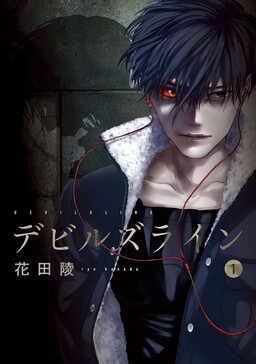
Devils' Line
Yu's review of Devils' Line — in a modern Japan where vampires called devils live hidden among humans, half-devil detective Yuuki Anzai falls for graduate student Tsukasa Taira while fighting the bloodlust her presence awakens. A vampire romance that treats the monster as a genuine, ongoing danger instead of mystique.
Horror / Literary
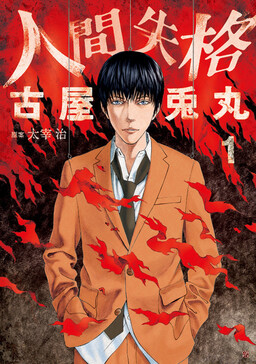
No Longer Human
Yu's review of No Longer Human manga adaptation — Usamaru Furuya adapts Osamu Dazai's 1948 autobiographical novel into a contemporary setting; the protagonist Yozo Oba is a young man who cannot believe himself to be a human being in the same sense as the people around him; the manga follows his descent through addiction, relationships, and the inability to exist in the world.

Horror / Historical
Innocent
Yu's review of Innocent — Charles-Henri Sanson is the son of France's royal executioner, raised with privilege and the assumption that he will inherit his father's role; his sensitive nature and artistic gifts make him unfit for execution, yet circumstances force him to become one of France's most famous executioners, operating during the period leading to the French Revolution.
Horror / Romance
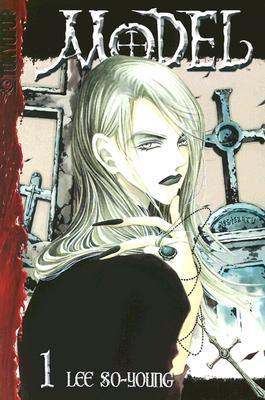
Model
A review of Model — the Korean manhwa gothic romance about a vampire who approaches a young female artist to paint his portrait, beginning a relationship that asks what an immortal creature actually wants from human connection.

Horror / Sci-Fi
Vampire Hunter D
Yu's review of Vampire Hunter D — set 12,000 years in the future in a world where vampires ruled humanity and have since fallen; D is a half-human half-vampire dhampir who hunts his own father's kind; stoic, nearly invincible, and accompanied by a parasitic demon in his hand, he is one of horror manga's most iconic loners.
Horror
Tokyo Ghoul:re
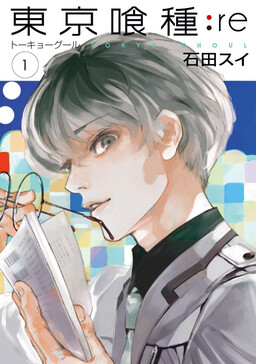
Yu's review of Tokyo Ghoul:re — Haise Sasaki is a half-ghoul CCG investigator with no memory of his past; he is, in fact, Ken Kaneki — the protagonist of Tokyo Ghoul — with his identity surgically suppressed; Sui Ishida's continuation of Tokyo Ghoul follows Kaneki's reconstruction through Haise as the war between humans and ghouls reaches its final scale.
Written by
Yu
Manga Enthusiast from Japan
I grew up in Japan and manga literally saved me during a tough time in elementary school. My English isn't perfect, but my love for manga is real — and I want to share it with you.
Disclosure: This post contains affiliate links. As an Amazon Associate, I earn from qualifying purchases at no extra cost to you.