
Bio-Meat: Nectar Review: A Garbage-Eating Creature Escapes Containment and Tokyo Has No Plan
by Yuki Fujisawa
Read the first volume. If it doesn't hook you, put it down. It'll hook you.
Buy Bio-Meat: Nectar on Amazon →*Affiliate link — I earn a small commission at no extra cost to you.
Bio-Meat: Nectar has a premise so on-the-nose it's almost satire: Japan solves its garbage and food problems at once by engineering a creature that eats anything organic and can itself be eaten for protein. What could go wrong? Everything. The creatures get out, and they don't care whether the organic matter in front of them is a trash heap or a person.
It's a relentless survival horror, and one of the better creature-disaster manga most English readers have never been able to read.
Quick Take
- A survival-horror manga where an engineered garbage-disposal organism, "BM," escapes and eats everything — including people — while breeding out of control
- A sharp creature-disaster story that doubles as a critique of the institutions that built and then mishandled the BM
- Rated M (Mature); 12 volumes complete, currently unlicensed in English
Who Is This Manga For?
- Readers who want relentless creature horror with genuine survival stakes
- Fans of disaster fiction that takes institutional failure and cover-up seriously
- Anyone who likes survival narratives where the protagonists are genuinely vulnerable
- Readers who can read Japanese or collect untranslated manga
Content Warnings & Age Rating
Age Rating: M (Mature) Content Warnings: Graphic creature violence and mass death; people eaten alive in depicted sequences; survival horror with real, frequent character mortality; institutional negligence themes
The content is genuinely brutal — the creatures eat people on-panel, and the death toll is high.
Yu's Rating
| Category | Score |
|---|---|
| Story Depth | ★★★★☆ |
| Art Style | ★★★★☆ |
| Character Development | ★★★★☆ |
| Accessibility for Non-Japanese Readers | ★★★☆☆ |
| Reread Value | ★★★☆☆ |
Story Overview
BM — "Bio-Meat" — is engineered as a solution to two of Japan's problems at once: organisms that consume organic waste, and that can then be harvested as a cheap protein source. It's the kind of elegant technological fix that obviously becomes a catastrophe the moment containment fails. And containment fails.
Released into the world, the BM eat everything organic in their path and reproduce explosively wherever there's food — which means a city full of people is, to them, an ideal breeding ground. The story follows a group of students, led by the resourceful Maaya Kan, who survive an initial outbreak and must escape across a collapsing Tokyo as the creatures multiply and the disaster scales toward the national.
A second threat runs alongside the creatures: the institutions responsible for the BM are more concerned with controlling information and limiting their own liability than with saving lives, which makes official "help" dangerous in its own way. The series escalates relentlessly over its twelve volumes, with genuine consequences for characters the reader comes to care about, building toward a confrontation with both the creatures and the people who unleashed them.
Characters
Maaya Kan — The protagonist whose apparent ordinariness — not the strongest or toughest — becomes the series' point about who actually survives a disaster: not the powerful, but the clever, adaptable, and persistent. His ingenuity under pressure drives the group's survival.
The student survivors — Kanou's classmates and companions, whose varied responses to the catastrophe — panic, courage, sacrifice, breakdown — give the survival story its human texture and make the mounting losses land.
The institutional figures — Officials and authorities whose instinct toward cover-up and damage-control rather than transparent emergency response function as the series' secondary, human antagonist.
Art Style
Fujisawa's art renders the BM with genuine menace — the design is simple enough to animate fast, chaotic action sequences but disturbing enough to work as real horror. The mass-death and feeding scenes are depicted with clarity rather than abstraction, which is exactly what makes them effective.
Cultural Context
Bio-Meat: Nectar ran in Weekly Shōnen Champion (Akita Shoten) and engages directly with specific Japanese anxieties: the seductive promise of a technological fix, corporate-and-government cooperation in covering up problems, and the question of who gets protected when a manufactured solution turns into a real crisis. The creature-disaster framework is the vehicle; the institutional critique is the substance.
What I Love About It
The series doesn't let the institutions off the hook. Too many disaster stories treat authority as a flawed system the heroes route around while ultimately trusting it to restore order in the end. Bio-Meat is more honest and more cynical: the cover-up instinct isn't a malfunction, it's the system working as designed, and the survivors have to account for that as much as they account for the creatures. That extra layer — that the people in charge are part of the disaster — is what elevates it above standard monster-survival fare.
Memorable Scene ⚠️ Spoiler Warning
The early outbreak sequence, when the BM first break loose in a crowded, ordinary setting and the cast — and the reader — grasp all at once what these creatures actually do: that they don't distinguish between garbage and people, that they're fast, and that they multiply as they eat. The shift from "contained science experiment" to "unstoppable feeding swarm" is the moment the manga declares its stakes, and it never really lets the pressure off afterward.
Similar Manga
| Title | Its Approach | How Bio-Meat Differs |
|---|---|---|
| I Am a Hero | Zombie-outbreak survival across a collapsing Japan | I Am a Hero is psychological and slow-building; Bio-Meat is fast creature-disaster |
| Highschool of the Dead | Outbreak survival with a student cast | Highschool is fanservice-driven; Bio-Meat is grimmer and more institutional |
| Parasyte | Engineered/alien organisms preying on humans | Parasyte is intimate and philosophical; Bio-Meat is large-scale disaster |
Reading Order / Where to Start
Volume 1 — the BM escape and the initial outbreak establish the premise immediately. Read straight through; the escalation is the point.
Official English Translation Status
Bio-Meat: Nectar is currently unlicensed in English. The Japanese print and digital editions (Akita Shoten) are the only legitimate way to read it.
Pros & Cons
Pros
- Relentless, genuinely scary creature-survival horror
- The institutional-failure critique gives it real thematic weight
- Effective, menacing creature design
- Complete 12-volume run with a real resolution
Cons
- Unlicensed in English — a real barrier for most readers
- Graphic creature violence and mass death are not softened
- The cynicism about rescue and authority is bleak — that's the point, but it won't comfort anyone
Is Bio-Meat: Nectar Worth Reading?
Yes, if you can access it — it's a strong, underrated creature-disaster horror with more on its mind than most. The barrier is purely availability: until it's licensed, English readers will need the Japanese editions.
Where to Buy
There's no licensed English edition yet — the Japanese release is the only legitimate way to read it.
This post contains affiliate links. If you purchase through these links, I may earn a small commission at no extra cost to you. As an Amazon Associate, I earn from qualifying purchases.
*Affiliate link — I earn a small commission at no extra cost to you.
Reading Guides
More Manga You Might Like
Horror / Sci-Fi
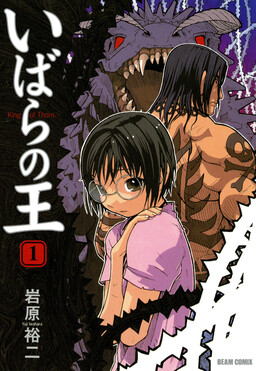
King of Thorn
Yu's review of King of Thorn — 160 people with a terminal virus are cryogenically frozen in a castle; they wake up to find the castle overgrown with massive thorns and filled with monsters; the six survivors who wake must escape while uncovering what happened during the time they were unconscious.

Horror
Sweet Home
A review of Sweet Home — the Korean horror manhwa about residents of an apartment building who must survive as the world outside fills with humans transforming into monsters driven by their deepest desires.
Horror / Survival
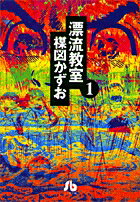
The Drifting Classroom
Yu's review of The Drifting Classroom — a Japanese elementary school and all its students and teachers are suddenly transported to a desolate future Earth; the children must survive without adult leadership as food runs out and monsters appear.
Horror / Sci-Fi
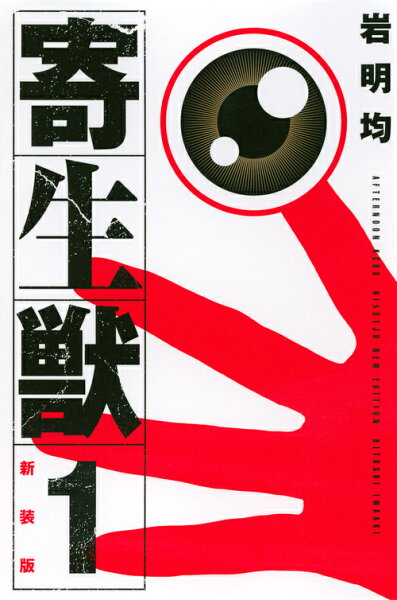
Parasyte
Yu's review of Parasyte — the manga where alien parasites invade human bodies and one boy must share his arm with the creature that failed to take his brain, raising questions about humanity, empathy, and what we owe each other.
Horror / Thriller
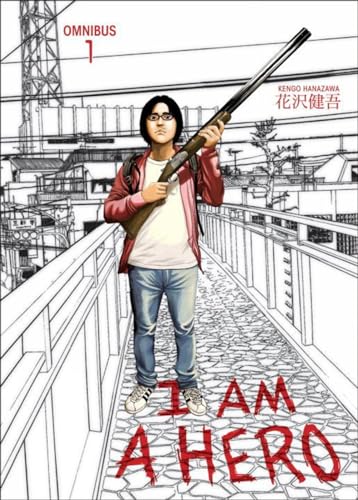
I Am a Hero
Yu's review of I Am a Hero — an unsuccessful manga artist becomes, entirely against his nature, a survivor of the Japanese zombie apocalypse.
Horror / Thriller
Emerging
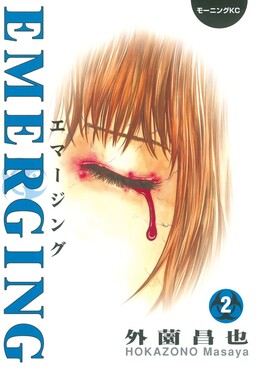
Yu's review of Emerging by Masaya Hokazono — a man collapses spraying blood at a Shinjuku crosswalk, and an unknown hemorrhagic fever called 'Japanese hemorrhagic fever' spreads while doctors and a government that would rather hide the truth scramble to respond. Medical pandemic horror serialized in 2004, years before COVID.
Written by
Yu
Manga Enthusiast from Japan
I grew up in Japan and manga literally saved me during a tough time in elementary school. My English isn't perfect, but my love for manga is real — and I want to share it with you.
Disclosure: This post contains affiliate links. As an Amazon Associate, I earn from qualifying purchases at no extra cost to you.