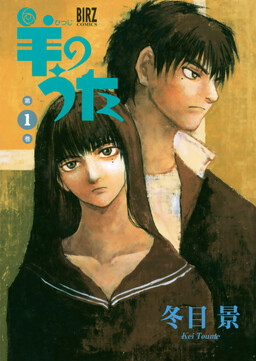
Beautiful Bones: Sakurako's Investigation Review: A Woman Who Reads the Dead by Their Bones
by Shiori Ōta (original) / Tou Mizuguchi (art)
Read the first volume. If it doesn't hook you, put it down. It'll hook you.
Buy Beautiful Bones: Sakurako's Investigation on Amazon →*Affiliate link — I earn a small commission at no extra cost to you.
I have a soft spot for detectives whose expertise is genuinely strange. Sakurako Kujou's is bones — she's an osteologist who can look at human remains and reconstruct not just how a person died but how they lived. Beautiful Bones built a popular light-novel and anime franchise on that premise. The manga adaptation is a small, two-volume distillation of it, and it's a quiet, melancholy thing worth knowing about.
Fair warning up front: the manga is unlicensed in English, so for most readers the anime is the accessible version. This review is about the manga itself.
Quick Take
- The two-volume manga adaptation of Shiori Ōta's Beautiful Bones mystery novels — forensic mysteries solved through osteology, the study of bones
- Sakurako Kujou is the draw: brilliant, socially prickly, and genuinely obsessed with bones in a way the series treats as both beautiful and slightly unnerving
- Rated T+ (Older Teen); the manga runs just 2 volumes and is currently unlicensed in English
Who Is This Manga For?
- Readers who want forensic mystery grounded in real bone science rather than crime-scene action
- Fans of the Beautiful Bones anime curious about the manga version
- Anyone who likes detectives whose expertise is unusual and whose personality is part of the puzzle
- Readers who can read Japanese or collect untranslated manga
Content Warnings & Age Rating
Age Rating: T+ (Older Teen) Content Warnings: Human remains and bones are central content, depicted clinically; crime scenes and death; some disturbing circumstances of death — but no graphic gore
The T+ rating fits. The content is clinical and melancholy rather than violent.
Story Overview
Shotaro Tatewaki is an ordinary high-school boy who becomes the companion and chronicler of Sakurako Kujou, a bone specialist from a wealthy family. Where most people see a skeleton, Sakurako sees a biography — how the person lived, what they suffered, how they died, and sometimes what was done to them afterward. Bones, to her, are a text she can read fluently and that almost no one else can.
The structure is episodic: Shotaro and Sakurako encounter remains, Sakurako analyzes them, and the truth of a death is reconstructed from physical evidence. Some deaths turn out to be accidents; some are murders; the local authorities have a wary, complicated relationship with her involvement. Beneath the cases runs the quieter throughline of Sakurako's own relationship to death and loss, and what her single-minded fascination with bones actually represents — a way of staying close, carefully, to people who are gone.
The manga adaptation is brief — two volumes — so it covers an early slice of the larger franchise rather than the full arc found in the novels and anime. As an introduction to Sakurako and her method, though, it captures the essential appeal.
Characters
Sakurako Kujou — An osteologist whose social difficulties are presented as genuine character rather than quirk, and whose obsession with bones reads as an unusual but real form of care for the dead. She is brilliant, blunt, and most alive when there's a skeleton to read. Watching her work is the point of the series.
Shotaro Tatewaki — The high-school student whose normality is the reader's entry point. His relationship with Sakurako moves from bafflement toward genuine understanding as he learns what she's actually doing when she reads a body.
Art Style
Tou Mizuguchi's manga art renders the bone anatomy with care and gives Sakurako an appropriately composed, slightly otherworldly presence. Within its short length, the adaptation balances the clinical detail of the investigations with the emotional weight underneath them.
Cultural Context
The franchise originates as a light-novel series by Shiori Ōta (with illustrations by Tetsuo); the manga by Tou Mizuguchi is one branch of its adaptation alongside the better-known anime. The setting in Hokkaido — Japan's cold, spacious northern island — gives the stories a distinct, isolated atmosphere. Sakurako's old-money family background is used to explain both her resources and her social isolation, touching on class in Japanese society.
What I Love About It
The series understands why someone might be fixated on bones specifically — not as morbidity, but as a form of respect. Sakurako's gift is essentially listening: paying close enough attention to what remains of a person to let them tell the truth about themselves one last time. There's something genuinely tender in framing forensic analysis as a way of honoring the dead rather than just catching the living, and that framing is what gives an otherwise clinical premise its warmth.
Memorable Scene ⚠️ Spoiler Warning
The recurring image of Sakurako lighting up at the sight of remains — the way her usual social coldness vanishes the instant there are bones to read, replaced by something almost joyful — is the series' defining and most unsettling note. It's played as both her gift and her strangeness: the one moment she is fully, unguardedly herself is in the presence of the dead. That tension, between her warmth toward bones and her difficulty with the living, is the character in a single image.
Similar Manga
| Title | Its Approach | How Beautiful Bones Differs |
|---|---|---|
| The Kurosagi Corpse Delivery Service | Death investigation with dark comedy | Kurosagi is supernatural and comedic; Beautiful Bones is clinical and melancholy |
| Mushishi | Quiet episodic supernatural cases | Mushishi is folkloric; Beautiful Bones is forensic and grounded |
| The Apothecary Diaries | A specialist solving mysteries via expertise | Apothecary is historical and witty; Beautiful Bones is contemporary and somber |
Reading Order / Where to Start
The manga is only 2 volumes; read from volume 1. For the fuller story, the light novels and anime cover far more of Sakurako's arc.
Official English Translation Status
The manga adaptation is currently unlicensed in English. (The anime adaptation has been released in English; the manga itself has not.) The Japanese print editions are the only way to read the manga in its original form.
Pros & Cons
Pros
- Sakurako is a genuinely original mystery protagonist
- Forensic osteology treated with real respect for the science
- A quiet, melancholy tone distinct from action detective manga
- Short and self-contained as an introduction to the franchise
Cons
- Only 2 volumes — a brief slice rather than the full story
- Unlicensed in English, so the manga is hard to access for most readers
- Human remains as central content won't suit everyone — that's the premise, not a flaw to be fixed
Is the Beautiful Bones Manga Worth Reading?
For readers who already love the franchise or who read Japanese, yes — it's a charming, melancholy distillation of Sakurako's appeal. For most English-speaking readers, the anime is the more accessible entry point, with the manga as a collector's curiosity.
Where to Buy
There's no licensed English edition yet — the Japanese release is the only legitimate way to read the manga.
This post contains affiliate links. If you purchase through these links, I may earn a small commission at no extra cost to you. As an Amazon Associate, I earn from qualifying purchases.
*Affiliate link — I earn a small commission at no extra cost to you.
Reading Guides
More Manga You Might Like
Horror / Mystery
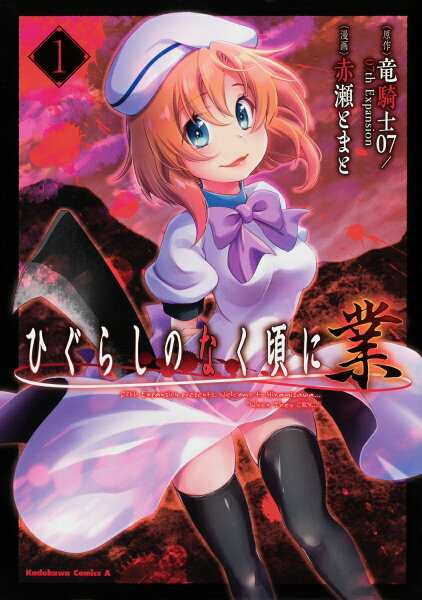
Higurashi When They Cry
Yu's review of Higurashi When They Cry — Keiichi Maebara moves to the rural village of Hinamizawa and discovers that every year, during the village festival, someone dies and someone disappears; the story resets across multiple arcs, each showing different versions of the same events as Keiichi and his friends try to understand and survive what the village is doing to them.

Mystery / Horror
Umineko When They Cry
A review of Umineko WHEN THEY CRY — the 21-volume manga adaptation of Ryukishi07's 2007–2010 visual novel, structured as 8 episodes (4 Question + 4 Answer) drawn by a different artist each. Yen Press published the complete English manga across all eight episodes.
Horror / Mystery
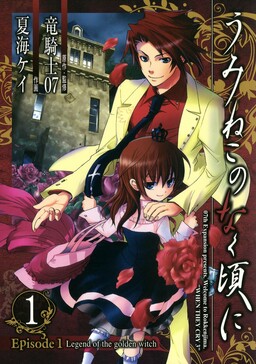
Umineko: When They Cry
On the private island of Rokkenjima in 1986, the Ushiromiya family gathers for an annual meeting. A typhoon traps them. The murders begin. Then they repeat. A golden witch named Beatrice claims responsibility — and the manga spends 53 volumes across 8 Episodes arguing about whether magic exists. Adapted from Ryukishi07's visual novel.
Adventure / Mystery
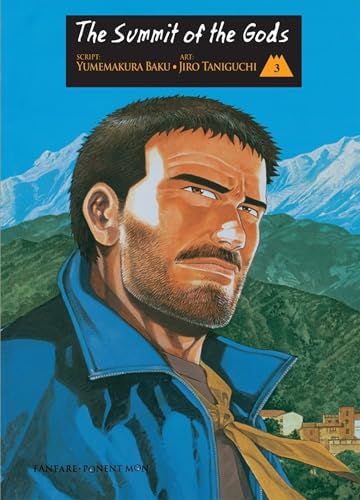
The Summit of the Gods
Yu's review of The Summit of the Gods — a photojournalist in Kathmandu may have found the camera of George Mallory, who disappeared on Everest in 1924; the mystery pulls him into the story of Habu Joji, a climber of legendary ability who disappeared years earlier.
Horror / Mystery
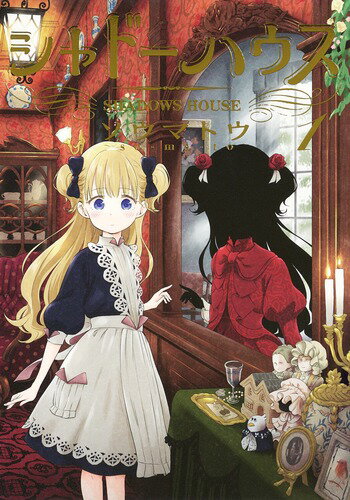
Shadows' House
Yu's review of Shadows' House — Kate is a shadow noble whose face is obscured by soot; Emilico is her 'Living Doll' — a human servant who functions as Kate's face and emotional expression; together they navigate the mysterious house and begin to understand what it truly is.
Mystery / Adventure
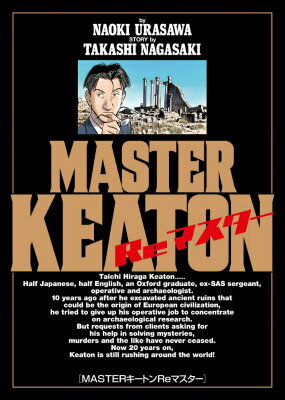
Master Keaton
Yu's review of Master Keaton — Taichi Hiraga Keaton is a half-British, half-Japanese former SAS survival expert who works as an insurance investigator for Lloyd's of London while dreaming of becoming an archaeologist; each case takes him somewhere in Europe with a different mystery.
Written by
Yu
Manga Enthusiast from Japan
I grew up in Japan and manga literally saved me during a tough time in elementary school. My English isn't perfect, but my love for manga is real — and I want to share it with you.
Disclosure: This post contains affiliate links. As an Amazon Associate, I earn from qualifying purchases at no extra cost to you.