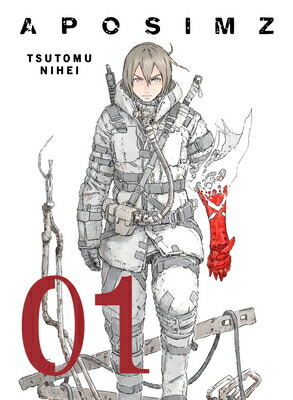
APOSIMZ Review: Survival on the Frozen Shell of a Hollow Planet, Drawn by the Master of Architectural Sci-Fi
by Tsutomu Nihei
Read the first volume. If it doesn't hook you, put it down. It'll hook you.
Buy APOSIMZ on Amazon →*Affiliate link — I earn a small commission at no extra cost to you.
Tsutomu Nihei draws scale better than almost anyone in manga. His worlds — Blame!, Knights of Sidonia — are vast, cold, and indifferent, structures so enormous that the humans inside them barely register. APOSIMZ is more accessible than Blame!, but it keeps that signature feeling: a frozen world so big and so hostile that survival itself is the whole drama.
I picked it up for the art. I stayed for the body horror.
Quick Take
- Sci-fi from Tsutomu Nihei (Blame!, Knights of Sidonia), set on the frozen surface of a hollow artificial planet
- A disease called Frame Disease turns the infected into hostile, doll-like Frames — the body horror runs alongside the action
- Rated T (Teen); 9 volumes complete, published in English by Kodansha Comics
Who Is This Manga For?
- Fans of Tsutomu Nihei's architectural, posthuman sci-fi
- Readers who want a more accessible entry point than the famously cryptic Blame!
- Anyone who loves vast mechanical design, frozen dystopias, and body-horror transformation
- Action sci-fi fans who like inventive weapons and high stakes
Content Warnings & Age Rating
Age Rating: T (Teen) Content Warnings: Sci-fi violence; body horror as humans transform into Frames; death; the cold, indifferent setting carries a constant undertone of dread
A T rating that leans toward its upper edge — the transformation horror is unsettling even when not graphic.
Story Overview
The planet Aposimz is hollow. Long ago, humanity was driven from the warm, habitable Core out onto the planet's frozen outer Shell, where survival is a daily struggle against cold and scarcity. The story follows Etherow, a young man living in a frontier settlement on the Shell, whose ordinary life is shattered when he is caught up in a violent conflict and gravely wounded.
He survives only because Titania, a small automaton envoy from the Core, grants him "Regular Frame" — a transformative power tied to the planet's strange technology — along with a cache of immensely powerful weaponized "bullets." This pulls him into a war over the planet's secrets, fought against the militaristic Rebedoa Empire and against the threat of Frame Disease: an affliction that turns infected humans into Frames, doll-like beings hostile to the living. Etherow and his companions travel the Shell, fighting the Empire's forces and uncovering the truth about Aposimz, the disease, and the divide between the Core and the surface.
It is, in Nihei fashion, a story told with sparse dialogue and overwhelming visuals — the plot communicated as much through scale, design, and action as through exposition. The world's history unfolds gradually, and the central conflict expands from one man's survival into a war over who controls the dying planet.
Characters
Etherow — A Shell-dweller thrust from ordinary frontier life into a planet-spanning conflict after being mortally wounded and granted Regular Frame and its devastating bullet-weapons. His marksmanship becomes central to the war. Like many Nihei protagonists, his interiority is conveyed through action more than dialogue.
Titania — A small mechanical automaton, the messenger of the Core, who revives the mortally wounded Etherow and grants him Regular Frame. She is his guide and partner across the Shell, not one of the disease-born Frames — her presence ties Etherow to the planet's deeper secrets.
The Rebedoa Empire — The militaristic power whose forces destroy Etherow's settlement and pursue Titania, driving the central conflict. The Empire's ambitions and its exploitation of Frames give the war its political dimension.
Art Style
This is the reason to read it. Nihei's art is unmistakable: vast, intricate architecture; sleek, weighty mechanical and Frame designs; a pervasive sense of cold scale. The Frames — doll-like, uncanny, somewhere between machine and corpse — are a perfect vehicle for his particular brand of beautiful unease. The action is kinetic and brutal, and the frozen landscapes are rendered with the overwhelming density that defines his work. APOSIMZ is more legible than Blame!, which makes the visuals easier to actually follow.
Cultural Context
APOSIMZ ran in Monthly Shōnen Sirius from 2017 to 2022, and sits within Nihei's career-long obsessions: posthuman bodies, hostile megastructures, the indifference of vast engineered worlds to the humans inside them. The doll-like Frames echo the body-horror transformations of his earlier work while giving them a new, eerier face. It is widely regarded as a more approachable on-ramp to Nihei than the deliberately opaque Blame!.
What I Love About It
The Frame Disease body horror. The idea that the infected don't simply die but become doll-like, hostile versions of themselves — beautiful and wrong, machine-smooth where a person should be — is pure Nihei: horror expressed through design rather than gore. The Frames are unsettling precisely because they're elegant. Watching a person transform into one of these uncanny dolls carries more dread than any amount of blood would, and it threads the body horror through what is otherwise a fast sci-fi action story.
Memorable Scene ⚠️ Spoiler Warning
Etherow's near-death and transformation early on — the moment his ordinary frontier life ends, he is granted Regular Frame and the cache of powerful bullets, and the scope of the story suddenly explodes outward from personal survival to a planet-wide war. Nihei stages it with his characteristic shift from the intimate to the overwhelming: a single wounded young man on a frozen frontier, abruptly revealed to be at the center of something vast. It's the moment APOSIMZ announces what kind of story it's going to be.
Pros & Cons
Pros
- Nihei's art at its best — vast scale, gorgeous mechanical and Frame design
- More accessible and legible than the famously cryptic Blame!
- Genuinely unsettling body horror via the doll-like Frames
- Complete in 9 volumes with fast, brutal action
Cons
- Sparse storytelling means plot and motivation can feel thin
- Character interiority is minimal — this is design-and-action-forward sci-fi
- Filed under horror but really action sci-fi with horror elements — set expectations accordingly
Is APOSIMZ Worth Reading?
Yes — especially for Nihei fans and for readers who want an accessible entry to his work. The body horror and the scale do the heavy lifting; if you read manga partly for art, this is a feast.
Where to Buy
Read the first volume. If it doesn't hook you, put it down. It'll hook you.
This post contains affiliate links. If you purchase through these links, I may earn a small commission at no extra cost to you. As an Amazon Associate, I earn from qualifying purchases.
*Affiliate link — I earn a small commission at no extra cost to you.
Reading Guides
More Manga You Might Like
Horror / Sci-Fi
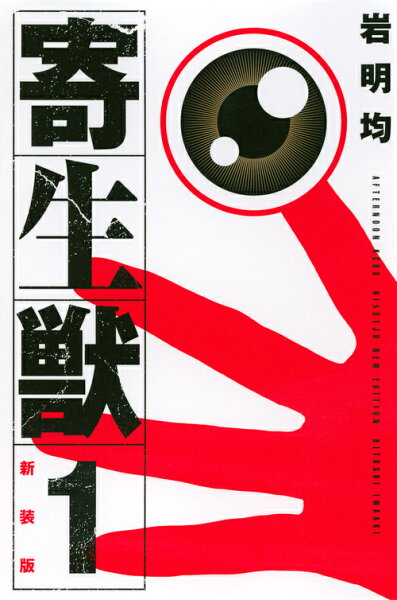
Parasyte
Yu's review of Parasyte — the manga where alien parasites invade human bodies and one boy must share his arm with the creature that failed to take his brain, raising questions about humanity, empathy, and what we owe each other.
Horror / Thriller
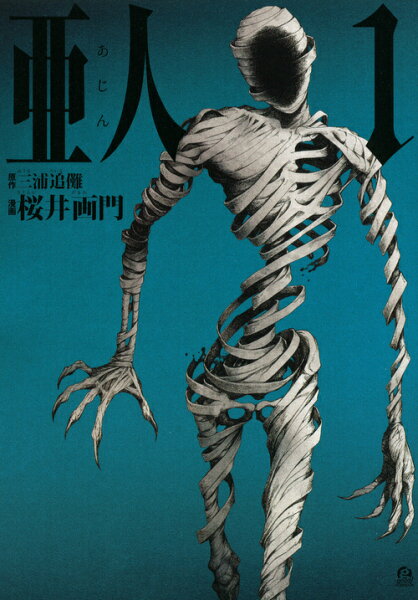
Ajin: Demi-Human
Yu's review of Ajin: Demi-Human — a horror thriller about immortal beings who cannot die, the government that experiments on them endlessly because they can't, and Satou, one of the most terrifyingly competent villains in modern manga.

Horror / Action
Higanjima
Akira Miyamoto travels to a remote island called Higanjima to find his missing brother. He discovers the island is ruled by an ancient vampire named Miyabi, and the humans on it are livestock. The English release covers the brutal first 8 volumes of a 33-volume horror epic.

Horror / Sci-Fi
Vampire Hunter D
Yu's review of Vampire Hunter D — set 12,000 years in the future in a world where vampires ruled humanity and have since fallen; D is a half-human half-vampire dhampir who hunts his own father's kind; stoic, nearly invincible, and accompanied by a parasitic demon in his hand, he is one of horror manga's most iconic loners.
Horror / Thriller
Starving Anonymous
Yu's review of Starving Anonymous — passengers on a bus wake up in a facility where they discover the horrifying truth about what they're being used for.

Horror / Action
Gleipnir
Yu's review of Gleipnir — Shuichi Kagaya transforms into a monster suit — a hollow mascot-like costume — and a girl named Clair climbs inside him to use his power for her own goals; she wants to find her sister, who is involved in a violent game where participants collect coins to make a wish from an alien being; the horror of the premise deepens as the game's rules become clear.
Written by
Yu
Manga Enthusiast from Japan
I grew up in Japan and manga literally saved me during a tough time in elementary school. My English isn't perfect, but my love for manga is real — and I want to share it with you.
Disclosure: This post contains affiliate links. As an Amazon Associate, I earn from qualifying purchases at no extra cost to you.