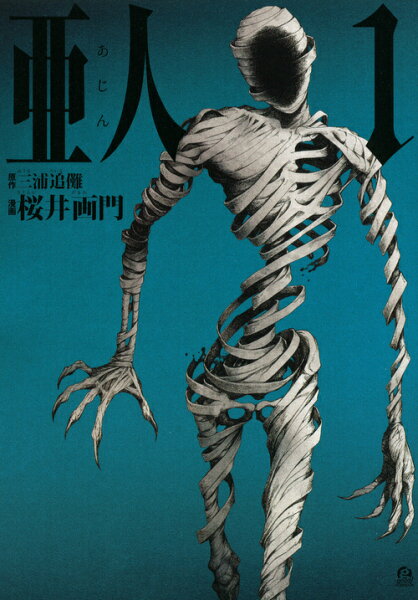
Ajin: Demi-Human Review: What If You Couldn't Die — and the Government Wanted to Dissect You Forever?
by Gamon Sakurai
Read the first volume. If it doesn't hook you, put it down. It'll hook you.
Buy Ajin: Demi-Human on Amazon →*Affiliate link — I earn a small commission at no extra cost to you.
The premise of Ajin sounds like a power fantasy — you can't die. Then you read it, and you realize it's the opposite. Immortality here means you can be killed as many times as someone wants, fully experiencing each death, and then revived to do it again. It isn't a gift. It's the perfect condition for a torture chamber.
What kept me reading wasn't the body horror, though. It was Satou.
Quick Take
- A horror-thriller where immortality is a curse — Ajin experience every death fully, which makes them ideal subjects for endless government experimentation
- Satou is one of the best villains in modern manga: calm, tactically brilliant, and treating his war on humanity like a game he can't lose
- Rated M (Mature); 17 volumes complete, published in English by Vertical
Who Is This Manga For?
- Fans of dark, morally complex thrillers where the protagonist isn't a hero
- Readers who loved the cat-and-mouse tension of Parasyte or the strategy of Death Note
- Anyone who wants horror that is cerebral and tactical rather than purely gory
- Readers who want a complete, tightly-plotted seinen series
Content Warnings & Age Rating
Age Rating: M (Mature) Content Warnings: Graphic violence and gore; repeated death and revival depicted in unsettling detail; government experimentation and torture (made worse because the subjects cannot die); body horror
The M rating is accurate. The repeated-death experimentation sequences are genuinely disturbing.
Story Overview
Kei Nagai is a high school student who discovers he is an Ajin — a rare, immortal being — when he is hit by a truck and instantly revives in front of witnesses. In this world, Ajin are not celebrated. They are classified as dangerous non-humans, hunted by the state, and subjected to experiments precisely because their inability to die makes them inexhaustible test subjects.
Kei goes on the run, initially caring about little beyond his own survival — a coldness the series treats as a real character flaw rather than cool detachment. He encounters other Ajin, including Satou, a charismatic older man who has declared open war on humanity, and Kou Nakano, a more idealistic young Ajin. Satou wants Kei to join his side.
What follows is a brutal, tactical conflict. Ajin can summon "Invisible Black Matter" — ghostly black figures (IBMs, nicknamed Black Ghosts) that only Ajin can see and control, and which can be deployed as devastating weapons. Satou uses his IBM and his immortality with terrifying precision, turning every confrontation into a problem the government and the other Ajin cannot solve. The series becomes a long strategic war in which Kei has to decide what kind of person he is willing to become to stop someone who genuinely cannot be killed.
Characters
Kei Nagai — A protagonist who begins genuinely self-interested and unlikable. The series uses his coldness deliberately: his arc is about whether he can become someone who acts for others, and it doesn't pretend the transformation is easy or complete. His tactical intelligence is his most useful trait.
Satou — The reason to read Ajin. He is terrifying because he is calm, polite, and competent beyond anyone around him. He treats his war as a game, narrates his own tactics with cheerful detachment, and is always several moves ahead. His immortality plus his ruthlessness makes him feel genuinely unstoppable, and the series earns that dread.
Kou Nakano — A younger, more straightforwardly heroic Ajin who serves as a moral contrast to Kei. His idealism is tested repeatedly.
Kaito — Kei's childhood friend, an ordinary human whose loyalty becomes one of the few things anchoring Kei to his own humanity.
What I Love About It
The horror of the experimentation sequences. The series shows what it actually means to have a subject who cannot die: a research facility kills an Ajin over and over to study the revival process, and because death resets the body completely, there is no limit to how many times it can be done. The Ajin experiences each death fully. Sakurai draws this with clinical restraint, which makes it worse. It is one of the few manga depictions of immortality that treats it as the nightmare it would actually be.
Memorable Scene ⚠️ Spoiler Warning
Any sequence where Satou demonstrates how he uses his own death as a weapon — deliberately dying to reset his body and IBM, walking into situations that would stop anyone else because for him death is just a tactical reload. The first time the series shows the full logic of this — that you cannot win a fight against someone for whom dying is a free action — Satou stops being a villain and becomes a genuine structural problem the entire cast has to think their way around. His calm during these sequences is the series' signature horror.
Pros & Cons
Pros
- Satou is an all-time great villain — calm, brilliant, and structurally unstoppable
- Immortality treated as horror rather than power fantasy
- Tight, tactical cat-and-mouse plotting across all 17 volumes
- Complete with a real conclusion
Cons
- Kei is deliberately unlikable early on — some readers bounce off him
- The art is competent but less distinctive than the writing
- The repeated-death experimentation is genuinely hard to read — that's either the point or too much depending on you
Is Ajin Worth Reading?
Yes — for fans of dark, intelligent thrillers who want a villain worth the buildup and a take on immortality that treats it as a curse. The tactical tension rarely lets up, and Satou alone justifies the read.
Where to Buy
Read the first volume. If it doesn't hook you, put it down. It'll hook you.
This post contains affiliate links. If you purchase through these links, I may earn a small commission at no extra cost to you. As an Amazon Associate, I earn from qualifying purchases.
*Affiliate link — I earn a small commission at no extra cost to you.
Reading Guides
More Manga You Might Like

Horror / Thriller
Gannibal
Daigo Agawa transfers to Kuge village — a remote mountain community in the Japanese alps — after an incident at his previous police posting. The villagers are afraid of the Goto family. A drunk old man tells Daigo the Gotos eat people. The previous officer disappeared. Masaaki Ninomiya's 13-volume rural horror (2018–2021) is being released in English by Ablaze Publishing and was adapted as a Disney+ live-action series in 2022.

Horror / Action
Devilman Lady
Devilman's apocalypse retold through Jun Fudo, a P.E. teacher who turns demon — Go Nagai going even darker than the original.
Horror / Action
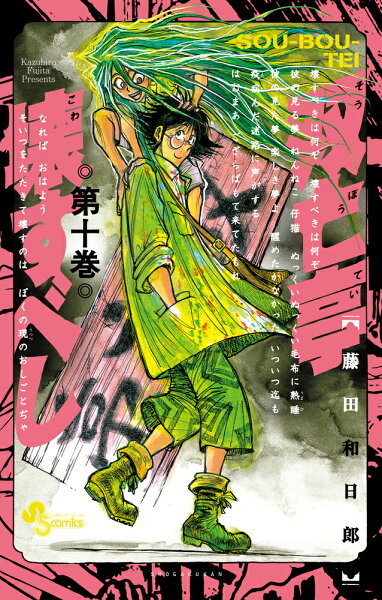
Souboutei Kowasu Beshi
Ushio and Tora's creator returns with his bleakest, most ambitious horror — a haunted mansion that swallows everyone who enters.
Horror / Drama
Golden Gold
Golden Gold follows Reiko, a teenage girl on a remote island who finds a small god of fortune — and discovers that luck granted by a supernatural force does not come without cost, and that the cost is paid by those around you.
Horror / Thriller
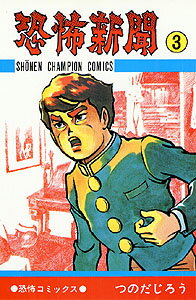
Kyofu Shinbun
Kyofu Shinbun follows Kichi Taira, a middle school student who begins receiving a supernatural newspaper delivered only to him — a newspaper that reports events before they happen, including deaths, and whose receipt shaves years from his own lifespan with each issue.
Horror / Survival
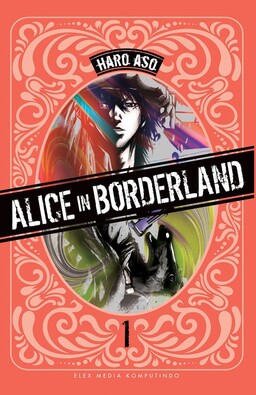
Alice in Borderland
Yu's review of Alice in Borderland — a survival horror manga where a directionless young man and his friends are pulled into a deserted Tokyo and forced to clear deadly games rated by playing cards, slowly uncovering what the Borderland actually is.
Written by
Yu
Manga Enthusiast from Japan
I grew up in Japan and manga literally saved me during a tough time in elementary school. My English isn't perfect, but my love for manga is real — and I want to share it with you.
Disclosure: This post contains affiliate links. As an Amazon Associate, I earn from qualifying purchases at no extra cost to you.